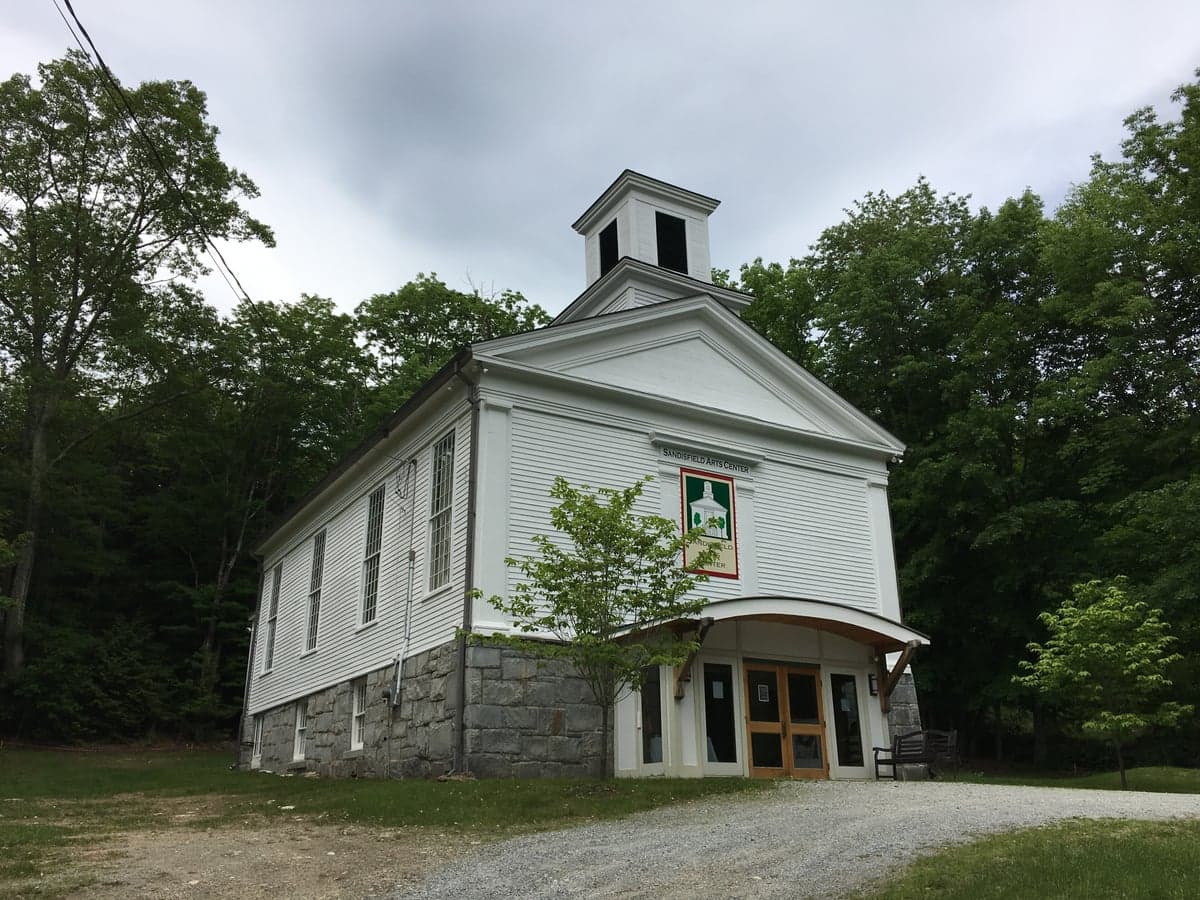
Photo: Wikipedia
Personal Sovereignty in Sandisfield, MA
Moderate friction. Expect trade-offs in some aspect of personal liberty and independence.
What does Personal Sovereignty tell us?
Personal Sovereignty measures your capacity for self-reliance and independence with minimal government friction. Higher scores mean fewer barriers between you and the way you want to live... but it assumes you have the space you need and good neighbors.
What does this tell us?
Personal Sovereignty measures your capacity for self-reliance and independence with minimal government friction. Higher scores mean fewer barriers between you and the way you want to live... but it assumes you have the space you need and good neighbors.
State Policy
Energy independence: Importer (5% of energy produced in-state)
Personal Liberty
Homesteading

Personal Liberty Analysis
Sandisfield, Massachusetts, presents a complex autonomy environment for those prioritizing personal sovereignty, where the town's rural character and low population density offer significant de facto freedom, but the state-level legal and regulatory framework imposes some of the heaviest constraints in the nation. For a conservative-leaning individual or family, the trade-off is stark: you gain substantial physical privacy and the ability to live largely undisturbed on your own land, but you operate within a system that heavily taxes property, restricts firearm ownership, and centralizes control over education and healthcare decisions. The key to thriving here is understanding that personal sovereignty in Sandisfield is less about legal latitude and more about the practical independence that comes from isolation and a tight-knit, self-reliant community.
Tax burden and regulatory posture in a rural Massachusetts town
Sandisfield's tax and regulatory environment is a study in contrasts. The town itself is lightly governed, with a small-town board of selectmen and open town meeting style that allows residents direct votes on local bylaws. However, the overarching state tax burden is among the highest in the country. Massachusetts levies a flat 5.0% state income tax on all earned income, and property taxes in Sandisfield, while moderate for the state, still represent a significant annual cost. The effective property tax rate in Sandisfield is approximately $14.50 per $1,000 of assessed value, meaning a $300,000 home carries an annual tax bill of roughly $4,350. This is lower than in Boston suburbs but higher than in many rural areas of New Hampshire or Vermont. The state also imposes a 6.25% sales tax and a 0.5% meals tax that applies to prepared food. Regulatory posture is heavy-handed at the state level, particularly regarding environmental and building codes. The Massachusetts Building Code is strict, and any new construction or major renovation requires permits and inspections that can be time-consuming. The state's wetlands protection act and Title 5 septic regulations are particularly stringent, meaning any development near water or involving septic systems will face significant bureaucratic hurdles. For a homesteader, this means you cannot simply build a cabin without state oversight—you must comply with modern codes, which raises costs and limits truly off-grid, unpermitted living.
Self-defense and gun law specifics in Berkshire County
For those prioritizing the right to self-defense, Massachusetts is one of the most restrictive states in the U.S., and Sandisfield residents must navigate these laws carefully. The state requires a License to Carry (LTC) for both open and concealed carry of handguns, and the issuing authority is the local police chief. In Sandisfield, which is served by the Massachusetts State Police barracks in Lee, the process is generally straightforward for law-abiding residents, but it is not a right—it is a privilege subject to "suitability" standards. The application includes a background check, fingerprinting, a firearms safety course, and a fee. The LTC must be renewed every six years. Massachusetts bans "assault weapons" by name and feature, including many common semi-automatic rifles like the AR-15, and magazines are capped at 10 rounds for long guns and 10 rounds for handguns. There is no state preemption of local gun laws, but Sandisfield itself has not enacted any additional restrictions beyond state law. Stand-your-ground laws do not exist in Massachusetts; the state imposes a duty to retreat if safely possible before using deadly force in self-defense outside the home. Inside the home, the Castle Doctrine applies, but the burden of proof remains on the defender to show they acted reasonably. For a conservative gun owner, this means you can legally own firearms for home defense and hunting, but the types of weapons, magazine capacities, and carry methods are heavily restricted compared to states like New Hampshire or Vermont. The practical reality in rural Sandisfield is that many residents still own firearms, but they do so within a legal framework that requires careful compliance.
Self-reliance and homesteading viability: lot sizes, zoning, and off-grid feasibility
Sandisfield's rural zoning and large lot sizes make it one of the more viable locations in Massachusetts for a self-reliant, homesteading lifestyle. The town's minimum lot size for residential development is 2 acres in most areas, and many parcels are significantly larger—10, 20, or even 50 acres are common. This low density means you can have substantial privacy and space for gardens, livestock, and small-scale agriculture without neighbors close by. Zoning is permissive for agricultural uses; keeping chickens, goats, or even a few cows is generally allowed without special permits, as long as you meet basic setback requirements. However, off-grid living faces real constraints. Massachusetts law requires all dwellings to be connected to a state-approved septic system or municipal sewer, and composting toilets are not a legal substitute for a primary residence. Solar panels are allowed and even incentivized through net metering, but you cannot legally disconnect from the grid entirely unless you have a backup generator and maintain a grid connection for safety. Rainwater collection is legal but must comply with state health codes if used for potable water. Wood stoves are common and legal, but must meet EPA emissions standards and local fire codes. The practical homesteading reality is that you can live a very self-sufficient lifestyle—growing food, raising animals, heating with wood, and generating solar power—but you must do so within a framework that requires permits, inspections, and connection to some utilities. The town's rural character means enforcement is often complaint-driven, so if you keep a low profile and maintain good relations with neighbors, you can operate with significant de facto freedom.
Personal liberties: parental rights, medical autonomy, speech, and property
On personal liberties, Sandisfield reflects the broader Massachusetts context, which is generally progressive and centralized. Parental rights in education are limited; Massachusetts has mandatory vaccination requirements for school attendance (with limited medical exemptions and no religious or philosophical exemptions), and the state's sex education framework includes LGBTQ+ inclusive content that parents cannot opt out of entirely. Homeschooling is legal but requires annual approval from the local school district, including submission of a curriculum plan and periodic progress reports. Medical autonomy is similarly constrained: Massachusetts has a state-run health insurance exchange and an individual mandate, meaning residents must carry health insurance or face a tax penalty. The state also has strict vaccine mandates for healthcare workers and schoolchildren. On speech, Massachusetts has some of the strongest anti-SLAPP laws in the country, protecting citizens from frivolous lawsuits aimed at silencing public participation, but the state also has a public records law that can expose private information. Property rights are relatively strong in terms of use, but the state's Chapter 40B law allows developers to override local zoning for affordable housing projects, which can threaten the rural character of towns like Sandisfield. The state also has a robust estate tax, with a threshold of $1 million for taxable estates, meaning even modest family farms or land holdings can trigger a state tax upon inheritance. For a conservative individual, these policies represent significant constraints on family decision-making and property control.
Overall, personal sovereignty in Sandisfield is best understood as a trade-off between high state-level control and high local-level freedom. The town's isolation, low population, and permissive rural zoning offer a degree of practical independence that is rare in Massachusetts, but the state's tax burden, gun laws, and centralized mandates on education and healthcare mean you are never truly free from government oversight. Compared to a place like Coos County, New Hampshire, or even rural Vermont, Sandisfield imposes more legal restrictions on daily life. However, for someone who values the beauty of the Berkshires, the quiet of a small town, and the ability to own significant land without suburban interference, Sandisfield offers a viable middle ground—a place where you can live largely on your own terms, provided you are willing to navigate the state's regulatory apparatus and pay the associated costs. It is not a libertarian paradise, but it is a place where a determined, self-reliant individual can carve out a meaningful degree of autonomy.

* Values derived from national, state, county, city and local statistics and may differ in a specific area. Last updated: 2026-10-20T07:51:46.000Z
Narrative content on this page is AI-generated and may contain mistakes. Verify any details that matter before acting on them.
ReloMaps may earn a commission from affiliate links at no extra cost to you.

