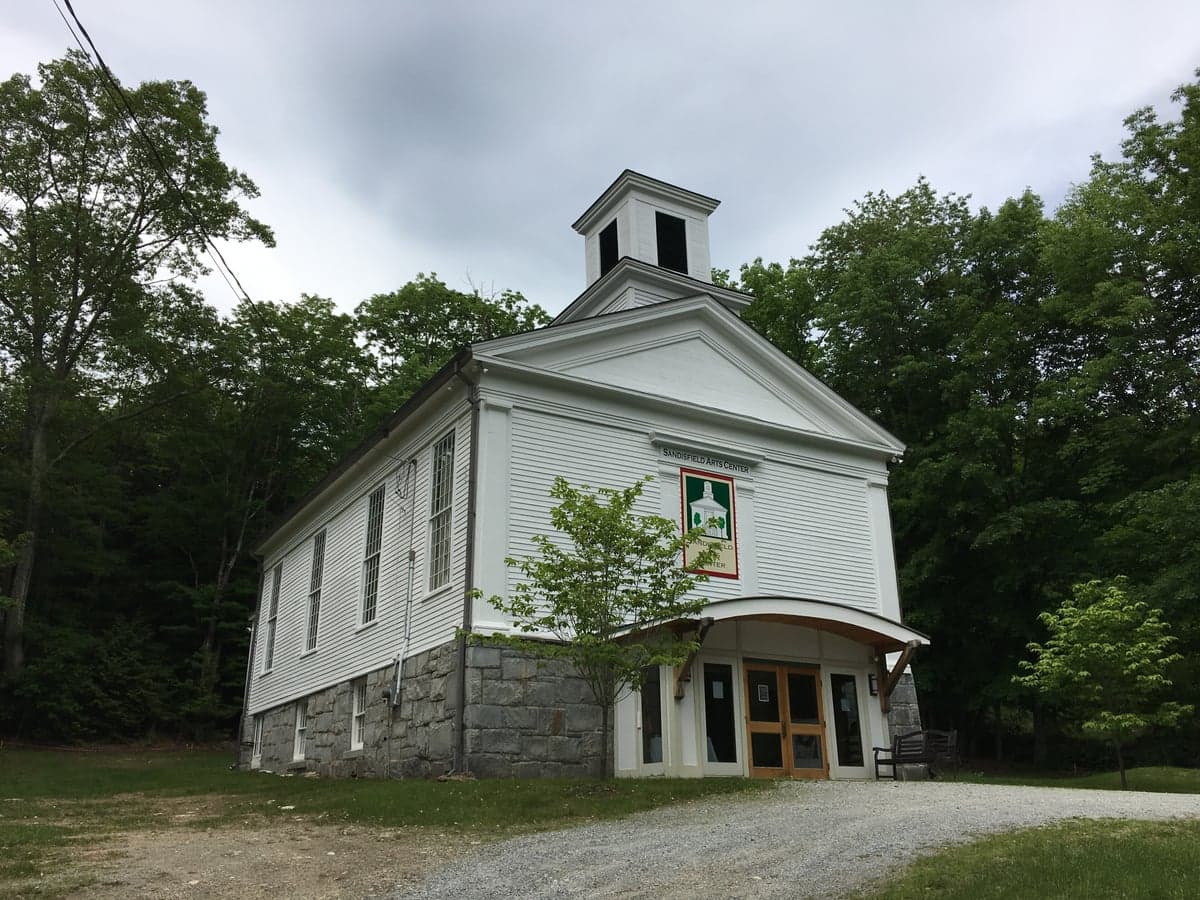
Photo: Wikipedia
Political ClimatePolitical Climate in Sandisfield, MA
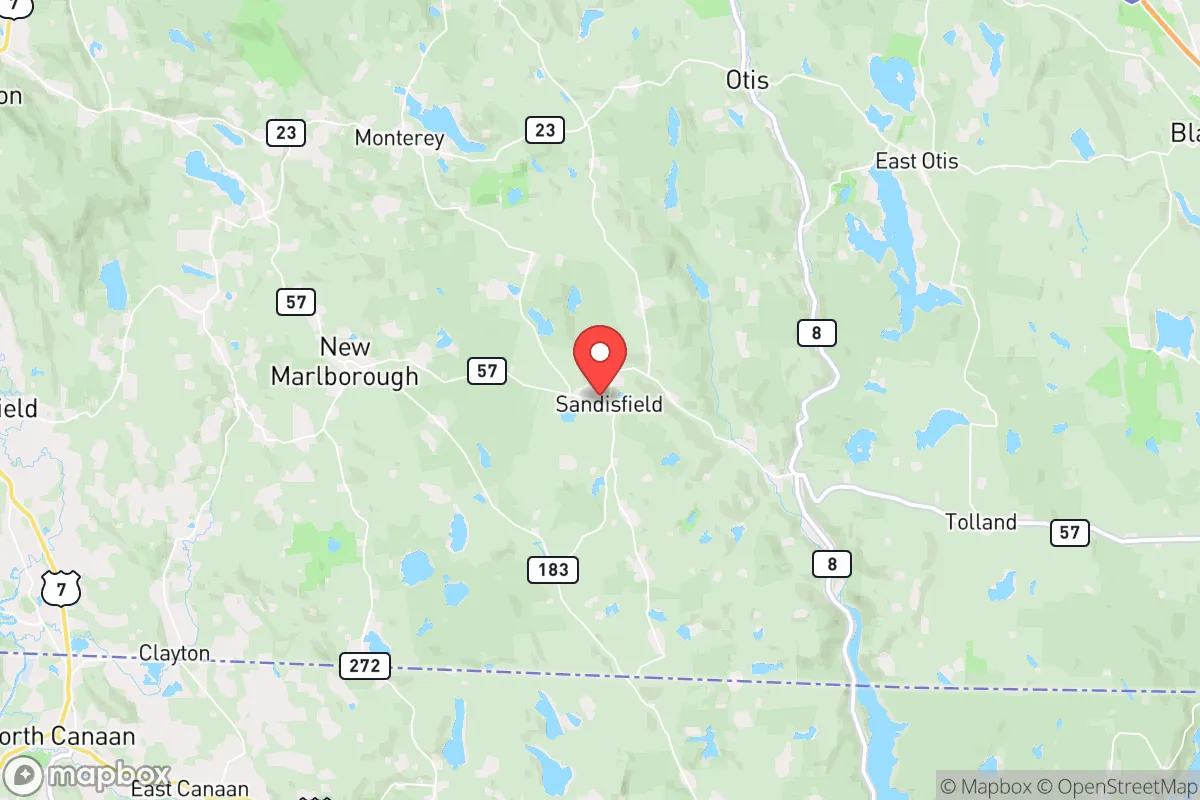
District shown is the primary district for this city’s centroid. Cities may span multiple districts.
Local Political AnalysisPolitical Analysis of Sandisfield, MA
Sandisfield, Massachusetts, is a small, rural town in the Berkshires that leans reliably Democratic, but with a distinctly moderate, independent streak that sets it apart from the deeper-blue urban centers of the state. Its Cook Partisan Voting Index (PVI) of D+8 means it votes about 8 points more Democratic than the national average, but it is notably less Democratic than Massachusetts as a whole, which carries a D+15 PVI. This gap of 7 points is significant in a state where the Democratic brand is dominant, and it reflects Sandisfield’s character as a place where local concerns—like land use, property taxes, and rural infrastructure—often trump strict party loyalty.
How it compares
Compared to the state average, Sandisfield is a relative swing town. While Massachusetts statewide elections are rarely competitive—Joe Biden won the state by 33 points in 2020—Sandisfield’s D+8 rating suggests a closer race in a hypothetical national matchup. In practice, this means you’ll see more Trump-Vance yard signs here than you would in, say, nearby Great Barrington or Lenox, both of which are more liberal and affluent. The town’s political DNA is closer to that of neighboring Otis or Tolland, where fiscal conservatism and a wariness of state mandates are common. The contrast is sharpest when you drive 30 minutes east to Springfield (D+20) or 45 minutes north to Pittsfield (D+18); Sandisfield feels like a different world, one where the local Democratic committee might be outnumbered by unaffiliated voters at a town meeting.
What this means for residents
For liberal residents, Sandisfield offers a comfortable baseline—you’re not going to feel out of step on social issues like marriage equality or climate action, which are broadly accepted in Massachusetts. But you’ll also encounter more neighbors who are skeptical of new state regulations on septic systems or solar farms, and you’ll need to build coalitions across party lines to get things done at the local level. For conservative residents, the D+8 lean means you’re in a clear minority, but not an isolated one. You’ll find allies at the town garage, at the volunteer fire department, and in the hunting clubs. The practical reality is that local elections—select board, planning board, school committee—are often decided by a few dozen votes, and they rarely break cleanly along party lines. A conservative candidate who focuses on keeping taxes low and opposing overdevelopment can win here, even in a presidential year when the town goes blue.
Culturally, Sandisfield’s political climate is shaped by its rural character and its distance from the state’s power centers. There’s a strong tradition of “live and let live” that tempers the partisan edge you’d find in Boston or Cambridge. Town meeting is the real arena of power, and it’s common to see a retired New York City transplant arguing alongside a third-generation dairy farmer about the best way to fund the road department. The biggest policy friction points are usually around property taxes (which are moderate for the region but still a burden on fixed incomes) and state environmental mandates that feel out of touch with rural life. Over the next decade, as second-home buyers from New York and Connecticut continue to move in, the town’s PVI may drift slightly leftward, but its independent, small-town ethos is likely to persist. For anyone moving here, the key takeaway is that Sandisfield is a place where your vote matters more than your party label—and where the person who plows your driveway might disagree with you on everything except the best way to keep the roads open in winter.

State Political ClimatePolitical Climate in Massachusetts
State Political AnalysisPolitical Environment in the State
Massachusetts is one of the most reliably Democratic states in the country, with a Cook Partisan Voting Index of D+15, meaning it votes about 15 points more Democratic than the national average in presidential elections. The state hasn't voted for a Republican presidential candidate since Ronald Reagan in 1984, and Democrats hold every statewide office, supermajorities in both legislative chambers, and all 11 U.S. House seats. Over the last 20 years, the shift has been toward the left, driven by the Boston metro area's explosive growth and the exodus of moderate Republicans from the suburbs, though the western and central parts of the state have held steady or drifted slightly rightward.
Urban vs. rural divide
The political map of Massachusetts is a story of two starkly different worlds. Greater Boston—including Boston proper, Cambridge, Somerville, and the inner-ring suburbs like Brookline and Newton—is the engine of the state's Democratic dominance, routinely delivering 75-85% of the vote to Democratic candidates. These areas are dense, highly educated, and increasingly diverse, with a strong progressive activist base. The rest of the state is more complicated. Worcester, the second-largest city, leans Democratic but with a working-class, more moderate flavor. The western part of the state, anchored by Springfield and Pittsfield, is reliably blue but with lower turnout and less ideological intensity. The truly rural areas—the Berkshires, the hill towns of Franklin and Hampshire counties, and the Cape Cod exurbs—are where you find the state's remaining Republican voters. Plymouth County and parts of Bristol County have seen some rightward drift, with towns like Taunton and Middleborough voting more Republican in recent cycles, but they're still outnumbered by the Boston metro's sheer weight.
Policy environment
Massachusetts has a progressive policy environment that's been in place for decades. The state has a flat income tax rate of 5% (with a 4% surtax on income over $1 million, passed in 2022), a sales tax of 6.25%, and property taxes that vary wildly by town—Cambridge has a rate of about 0.67%, while Springfield is closer to 1.8%. The regulatory posture is business-friendly in some sectors (biotech, education, healthcare) but heavily regulated in others (housing, energy, firearms). Education policy is a point of pride: Massachusetts consistently ranks first in the nation for K-12 outcomes, with strong charter school laws and a robust public university system. Healthcare is near-universal, with the state's 2006 reform serving as the model for the Affordable Care Act. Election laws are among the most accessible in the country: no-excuse mail-in voting, same-day registration, and early voting are all standard. The state also has some of the nation's strictest gun laws, including a ban on "assault weapons," a licensing system for all firearm purchases, and a "red flag" law.
Recent policy direction
Over the last five years, the legislature has moved aggressively on several fronts. In 2022, the state passed the Massachusetts Parentage Act, which modernized family law for same-sex couples, and the Work and Family Mobility Act, which allows undocumented immigrants to obtain driver's licenses. In 2023, the legislature overrode Governor Maura Healey's veto to pass a law expanding abortion access and protecting providers from out-of-state lawsuits. On gun policy, the 2024 Massachusetts Gun Safety Act further restricted firearm possession in sensitive places and tightened the licensing process. On the other side, the state has resisted some progressive impulses: it hasn't passed a "right to shelter" law for all homeless individuals, and rent control remains illegal statewide after a 1994 ballot measure. For a conservative relocator, the practical implications are clear: self-defense rights are heavily restricted, with a de facto ban on carrying in many public spaces; parental rights in education are limited, as the state mandates LGBTQ-inclusive curriculum and has no opt-out for sex education; property rights are constrained by strong zoning laws and a powerful state housing appeals board; and taxes are high, though the flat income tax is predictable. For a liberal relocator, the environment is broadly supportive, with strong protections for reproductive rights, LGBTQ+ equality, and voting access.
Civil unrest & political movements
Massachusetts has a long history of organized activism, but it's generally more institutional than confrontational. The Boston Women's March in 2017 drew over 100,000 people, and the Black Lives Matter protests in 2020 were large but largely peaceful. The state's sanctuary policy, codified in the 2017 Safe Communities Act, limits local law enforcement's cooperation with federal immigration authorities, and has been a flashpoint in towns like Framingham and Lowell, where immigration enforcement debates have been heated. On the right, the Massachusetts Republican Party is a shadow of its former self, but there are active groups like the MassFiscal Alliance and local gun rights organizations that hold rallies at the State House. Election integrity controversies have been minimal—the state's mail-in voting system was widely used in 2020 and 2022 without major issues, and there's no evidence of significant fraud. A new resident would notice the ubiquity of political signage (mostly Democratic) and the occasional protest on the Boston Common, but the overall atmosphere is more bureaucratic than volatile.
Projection
Over the next 5-10 years, Massachusetts is likely to become even more Democratic, driven by two trends. First, the Boston metro area continues to grow, attracting young, college-educated professionals from across the country and the world, who tend to vote left. Second, the state's rural and exurban areas are aging and losing population, which reduces the Republican base. The 2024 presidential election saw Donald Trump improve his margin in places like Fall River and New Bedford, but those gains were swamped by even larger Democratic turnout in the suburbs. The state's housing crisis—driven by restrictive zoning and high costs—may slow in-migration, but it's unlikely to reverse the political trajectory. A conservative moving in now should expect to live in a state where their vote for president is effectively meaningless, but where local elections in towns like Plymouth or Wrentham can still be competitive. A liberal moving in will find a state that's broadly aligned with their values, but with a high cost of living and a political establishment that can be slow to change.
For a new resident, the bottom line is that Massachusetts offers a stable, predictable political environment with strong public services, but at a high cost in taxes and regulation. Conservatives will find limited political influence at the state level but can carve out a comfortable life in the more moderate suburbs or rural towns, where local politics are less ideological. Liberals will feel at home in the cities and inner suburbs, with a government that actively supports their priorities. The key is to understand that the state's political reality is not a monolith—it's a patchwork of dense blue cities, purple suburbs, and red rural pockets, all governed by a Democratic supermajority that shows no signs of loosening its grip.
* Values derived from national, state, county, city and local statistics and may differ in a specific area. Last updated: 2026-10-20T07:51:46.000Z
Narrative content on this page is AI-generated and may contain mistakes. Verify any details that matter before acting on them.
ReloMaps may earn a commission from affiliate links at no extra cost to you.

