Photo: Wikipedia
Demographics of Sayreville, NJ
Affluence Level in Sayreville, NJ
A middle-class area roughly in line with national averages across income, home values, education, and employment.
People of Sayreville, NJ
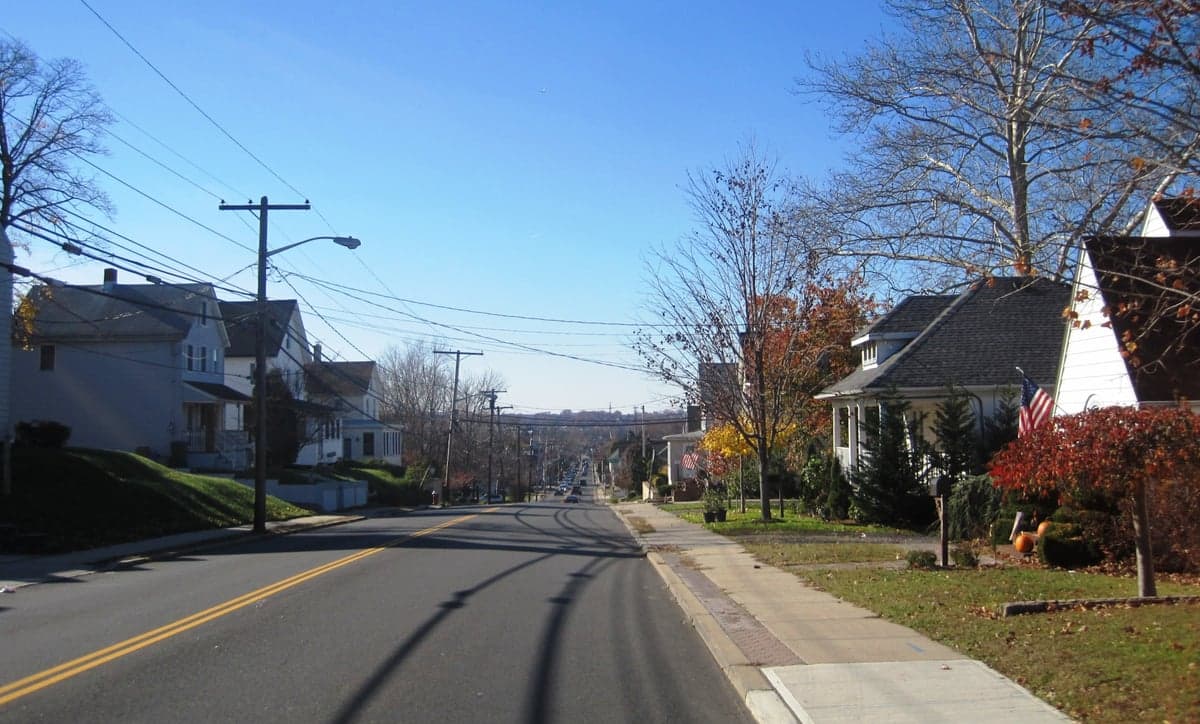
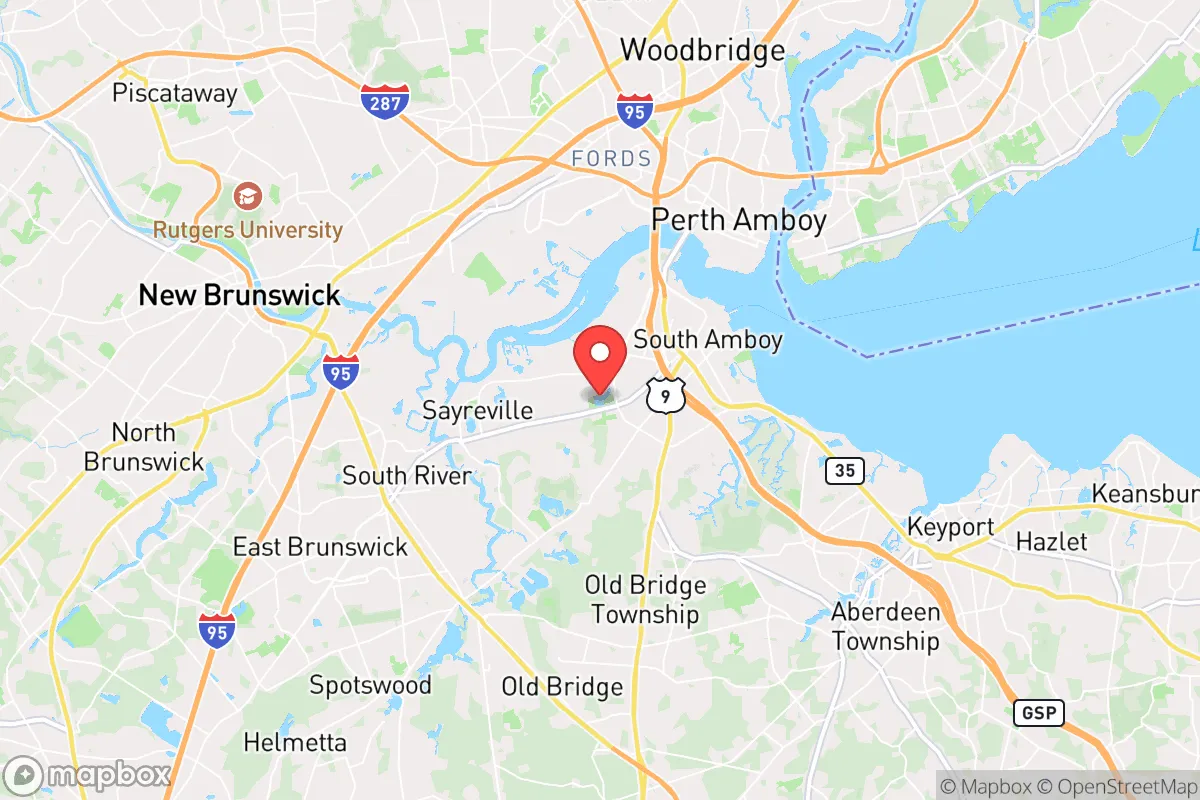
The people of Sayreville, New Jersey, today form a densely packed, ethnically diverse community of 45,237 residents, where no single group holds a majority. The city is characterized by a strong working-class identity rooted in its industrial past, now layered with significant immigrant communities from India and Latin America. With a foreign-born population of 11.5% and a college attainment rate of 36.8%, Sayreville is a transitional suburb—still affordable relative to nearby towns like Edison and Woodbridge, but increasingly attracting professionals and families seeking space near the Raritan River.
How the city was settled and grew
Sayreville’s original population was drawn by the Raritan River’s industrial potential. The area was first settled by Dutch and English farmers in the late 1600s, but the real population boom began in the 19th century with the discovery of clay and the rise of brickmaking. The Sayre and Fisher Brick Company, founded in 1850, became the world’s largest brick manufacturer and pulled in waves of Irish, German, and Italian immigrants. These groups built the original working-class neighborhoods: Morgan, a distinct village along the river where Irish and Italian families settled near the brick yards, and Laurence Harbor, a waterfront area that grew with the company’s expansion. By the early 20th century, Polish and Hungarian immigrants also arrived, clustering in the Sayreville Junction area near the railroad lines. The city incorporated in 1919, and its population remained overwhelmingly white and ethnic-European through the 1950s, peaking at around 22,000 by 1960.
Modern era (post-1965)
The 1965 Hart-Cellar Act reshaped Sayreville’s demographics, though the shift was gradual. The first post-1965 arrivals were East/Southeast Asian families—primarily Chinese and Filipino—who moved into the Parlin section in the 1980s, drawn by affordable housing and proximity to Route 9. A much larger wave began in the 1990s and accelerated after 2000: Indian immigrants from the subcontinent (India, Pakistan, Bangladesh) established a strong presence, particularly in the Sayrewoods neighborhood and the newer developments around Washington Road. Today, Indian residents make up 12.8% of the population, a share that has doubled since 2010. Hispanic residents, primarily from Puerto Rico, the Dominican Republic, and Mexico, grew to 21.2% of the population, settling in older sections like Morgan and along Main Street. The Black population, at 12.4%, includes both long-standing African American families and newer Afro-Caribbean arrivals. The white population, now 45.6%, has aged in place in neighborhoods like Laurence Harbor, while younger white families have largely moved to more distant exurbs. The city’s population density—over 2,500 people per square mile—reflects this layering of groups into distinct but overlapping enclaves.
The future
Sayreville’s population is trending toward further diversification, but not toward a single melting pot. The Indian community is the fastest-growing group, driven by tech and healthcare jobs in nearby Edison and New Brunswick, and is likely to exceed 15% of the population within a decade. This growth is concentrated in the Sayrewoods and Washington Road corridor, where new townhouse developments cater to professional families. The Hispanic population is plateauing, with second-generation families assimilating into broader suburban patterns. The white population will continue to shrink as older residents pass away or move, though the Laurence Harbor waterfront is seeing some reinvestment from younger white professionals. The East/Southeast Asian share (4.1%) is stable, with little new immigration. The city is not tribalizing into hostile enclaves, but distinct residential clusters are solidifying: Indian families in newer subdivisions, Hispanic families in older walkable areas, and white families in the waterfront and historic sections. The next 10-20 years will likely see Sayreville become a majority-minority city, with Indian and Hispanic groups forming the largest blocs, and a smaller but stable Black and white presence.
For someone moving in now, Sayreville offers a genuinely diverse, middle-class suburb where ethnic identity remains visible in neighborhood patterns. The city is becoming more Indian and Hispanic, less white, and more professional—but its industrial working-class roots still anchor the community’s character. New arrivals should expect a place where change is steady but not disruptive, and where the population is increasingly defined by immigrant ambition rather than native-born stability.

* Values derived from national, state, county, city and local statistics and may differ in a specific area. Last updated: 2026-04-30T04:30:59.000Z
Narrative content on this page is AI-generated and may contain mistakes. Verify any details that matter before acting on them.
ReloMaps may earn a commission from affiliate links at no extra cost to you.

