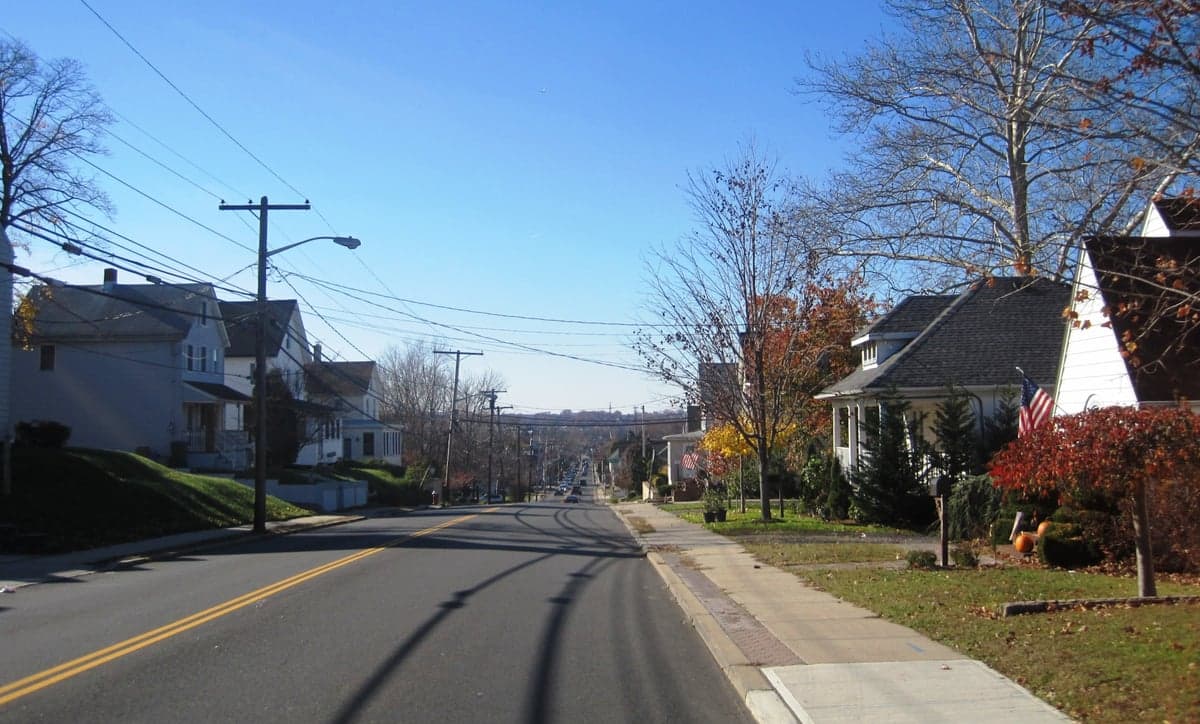
Photo: Wikipedia
Political ClimatePolitical Climate in Sayreville, NJ
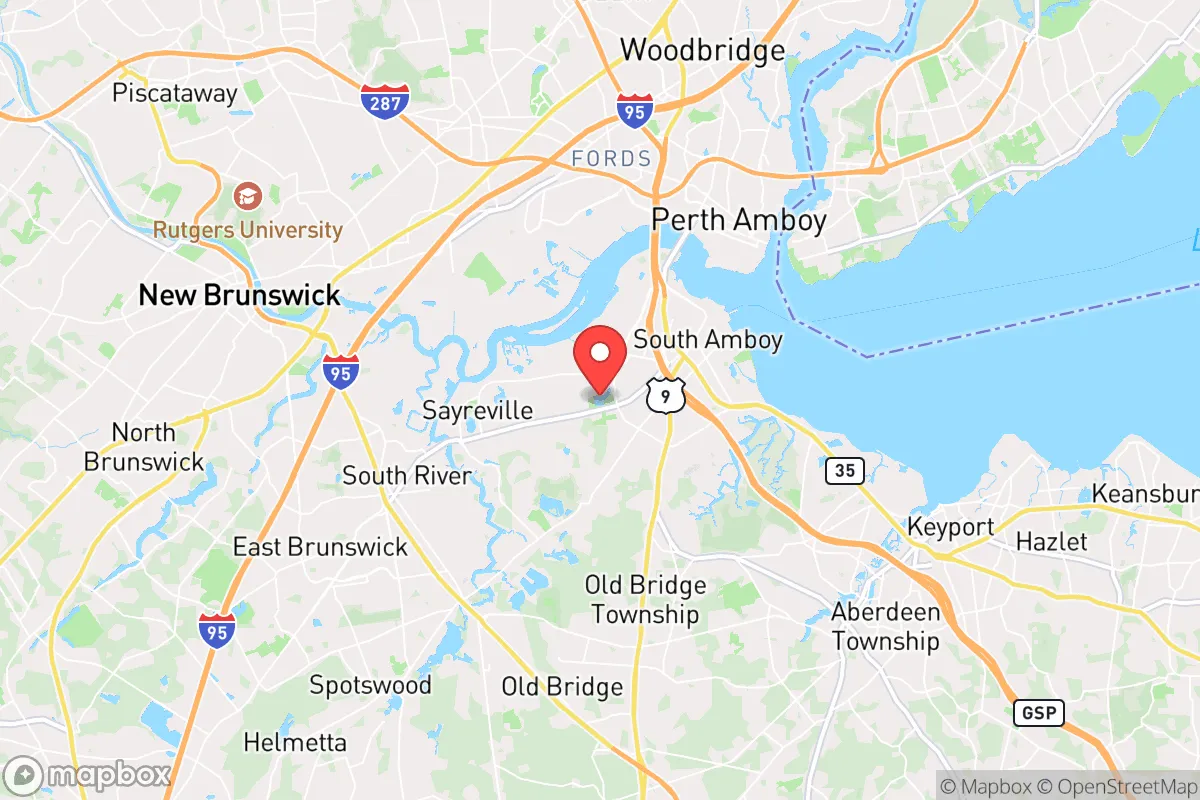
District shown is the primary district for this city’s centroid. Cities may span multiple districts.
Local Political AnalysisPolitical Analysis of Sayreville, NJ
Sayreville, New Jersey, has a Cook Partisan Voting Index of D+5, meaning it leans about five points more Democratic than the national average, but that number doesn't tell the whole story. This used to be a solidly blue-collar, union Democrat town—folks who voted for the party because it looked out for the working man, not because they bought into the whole progressive agenda. Over the last decade or so, you've seen a real shift: the old-school, "live and let live" Democrats are getting squeezed out by a younger, more activist crowd pushing policies that feel less about local concerns and more about national talking points. It's not a red town by any stretch, but the political center of gravity is moving in a direction that has a lot of long-time residents worried about government overreach and the erosion of personal freedoms.
How it compares
To really get Sayreville's vibe, you gotta look at who's next door. Head west to Old Bridge or Marlboro, and you'll find towns that are more politically balanced—places where conservative voices still have a real seat at the table, and where the local government isn't afraid to push back on state mandates. Drive a few miles south to Perth Amboy, and you're in a much deeper blue stronghold, where progressive policies on taxes, zoning, and public safety are the norm. Sayreville sits right in the middle, but it's trending toward the Perth Amboy model. The contrast is sharpest when you look at school board meetings or town council votes on things like mask mandates or property tax increases—Sayreville's leadership is increasingly comfortable with a top-down approach that feels a lot less "local control" than it used to.
What this means for residents
For the average family in Sayreville, the political drift means you're seeing more government involvement in daily life. Property taxes, already a burden in New Jersey, keep climbing to fund programs that don't always align with what the neighborhood wants. There's a growing push for "equity" initiatives in the schools that can feel like they're prioritizing ideology over academics, and you'll hear more chatter about zoning changes that could bring higher-density development into single-family home areas. The local police department still does a solid job, but you'll notice a softer tone on enforcement and a reluctance to address quality-of-life issues that used to be handled directly. For a resident who values personal responsibility and limited government, the trend is concerning—it feels like the town is being nudged toward a one-size-fits-all solution that doesn't respect the diversity of opinion that made Sayreville a decent place to raise a family.
Culturally, Sayreville still has its roots in the old ethnic clubs and the Raritan Bay waterfront, but the policy distinctions are becoming more pronounced. The town council has shown a willingness to adopt state-level progressive mandates without much local debate, from renewable energy ordinances that affect property rights to "sanctuary" policies that limit cooperation with federal immigration enforcement. If you're the kind of person who believes the best government is the one closest to the people, these moves are a red flag. The long-term trajectory, unless there's a real pushback from residents, points toward more of the same: higher taxes, more regulations, and a gradual loss of the independent, no-nonsense character that used to define this corner of Middlesex County. It's not a crisis today, but the warning signs are there for anyone paying attention.

State Political ClimatePolitical Climate in New Jersey
State Political AnalysisPolitical Environment in the State
New Jersey has long been one of the most reliably Democratic states in the nation, with a partisan lean of roughly D+15 in presidential elections over the past two decades. The dominant coalition is a mix of urban progressives, suburban moderates, and powerful public-sector unions, but the state’s political trajectory has shifted noticeably leftward since 2016. While it was once a bastion of moderate Republicanism—think Christie-era fiscal conservatism—the last ten years have seen a steady march toward progressive control, with Democrats holding both legislative chambers, the governorship, and all statewide offices. For a conservative considering relocation, the bottom line is this: New Jersey is a high-tax, high-regulation state where your personal freedoms are increasingly subject to government oversight, and the political winds are blowing further away from individual liberty.
Urban vs. rural divide
The political map of New Jersey is a textbook study in contrast. The northern and central urban corridors—Newark, Jersey City, Paterson, and Elizabeth—are deep blue strongholds, powered by dense populations, union households, and a heavy reliance on public transit and government services. These cities alone deliver hundreds of thousands of Democratic votes, often with margins exceeding 80%. Meanwhile, the suburban ring counties like Bergen, Essex, and Middlesex have shifted leftward as well, driven by an influx of younger professionals and out-of-state transplants who favor progressive social policies. The rural and exurban areas—Sussex County, Hunterdon County, Warren County, and parts of Ocean County—remain reliably Republican, but their populations are smaller and aging. Ocean County is the GOP’s strongest bastion, regularly voting +20 points red, but it’s not enough to offset the urban machine. The divide isn’t just geographic; it’s cultural. In places like Montclair or Maplewood, you’ll find progressive activism on every corner, while in Flemington or Newton, the conversation is about property taxes and school choice.
Policy environment
New Jersey’s policy environment is a cautionary tale for conservatives. The state has the highest property taxes in the nation—averaging over $9,500 annually—and a progressive income tax that tops out at 10.75% for earners over $1 million. The regulatory posture is aggressive: the state has some of the strictest environmental rules, a near-total ban on new gas stations in certain zones, and a renewable energy mandate that’s driving up utility costs. On education, the state pours billions into public schools but has resisted school choice expansion; charter schools are capped, and private school vouchers are virtually nonexistent. Healthcare is heavily regulated, with a state-based exchange and Medicaid expansion that covers nearly 20% of the population. Election laws are among the most liberal in the country: no-excuse mail-in voting, automatic voter registration, and same-day registration are all law. The state also has a “motor voter” system that registers you when you get a driver’s license. For a conservative, the message is clear: the government is deeply involved in your wallet, your children’s education, and your vote.
Trajectory & freedom
Over the past five years, New Jersey has become less free by nearly every measure. On gun rights, the state passed a sweeping gun control package in 2022 that bans carrying firearms in “sensitive places” like parks, libraries, and private businesses unless the owner explicitly allows it—effectively gutting the spirit of the Bruen decision. On parental rights, the state enacted a law in 2023 that prohibits school districts from notifying parents if a child changes their gender identity or pronouns, overriding local control. On speech, the state’s Division on Civil Rights has aggressively pursued “discrimination” complaints against businesses that refuse to host same-sex weddings, even after the 303 Creative ruling. On medical autonomy, New Jersey has one of the most permissive vaccine mandates in the country, requiring shots for school attendance with few exemptions. Property rights are under constant assault from the state’s affordable housing mandates, which force towns to rezone for high-density development. The only bright spot for conservatives is that the state has not followed California’s lead on rent control or price caps, but that’s cold comfort when your tax bill is the highest in the nation.
Civil unrest & political movements
New Jersey has seen its share of political flashpoints. The Black Lives Matter protests in 2020 were large and sustained in Newark and Trenton, leading to calls to defund the police—though actual budgets were largely untouched. The state is a “sanctuary” state, with a 2018 law that limits local law enforcement cooperation with ICE, and immigration activists regularly protest in Elizabeth and Paterson. On the right, the “Jersey Shore” Tea Party movement has faded, but there’s a growing network of parental rights groups, particularly in Ocean County and Hunterdon County, that have organized against critical race theory and LGBTQ curriculum in schools. Election integrity remains a hot-button issue: the 2020 election saw widespread use of mail-in ballots, and while no major fraud was proven, the process left many conservatives skeptical. The most visible flashpoint for a new resident would be the constant tension between local control and state mandates—towns like Jackson have fought state housing quotas in court, while Middletown has battled over school board policies. It’s a state where political activism is a daily reality, not an abstract concept.
Projection
Looking ahead five to ten years, the trajectory is clear: New Jersey will continue to move leftward. The demographic shifts are working against conservatives—the state is becoming more diverse, more urban, and more reliant on government services. In-migration from New York City and other blue states is accelerating, bringing with it progressive voters who see New Jersey as a more affordable version of the same ideology. The Republican Party is increasingly confined to a few rural and exurban counties, and even those are being diluted by development. The state’s fiscal situation is precarious—pension liabilities exceed $100 billion—and the likely response will be higher taxes, not spending cuts. For a conservative moving in now, expect to see more gun control, more parental rights restrictions, and more state interference in local zoning and education. The only wild card is a potential economic downturn that could force a reckoning with the state’s tax burden, but don’t hold your breath.
For a conservative considering New Jersey, the practical takeaway is this: you’ll be paying a premium for a state with beautiful beaches, good schools, and proximity to New York and Philadelphia, but you’ll be doing so under a government that is increasingly hostile to your values. If you value low taxes, school choice, gun rights, and local control, this is not the place for you. If you’re willing to fight for those things in a blue state, you’ll find allies in Ocean County and Hunterdon County, but you’ll be swimming against a strong tide. Choose wisely.
* Values derived from national, state, county, city and local statistics and may differ in a specific area. Last updated: 2026-04-30T04:30:59.000Z
Narrative content on this page is AI-generated and may contain mistakes. Verify any details that matter before acting on them.
ReloMaps may earn a commission from affiliate links at no extra cost to you.

