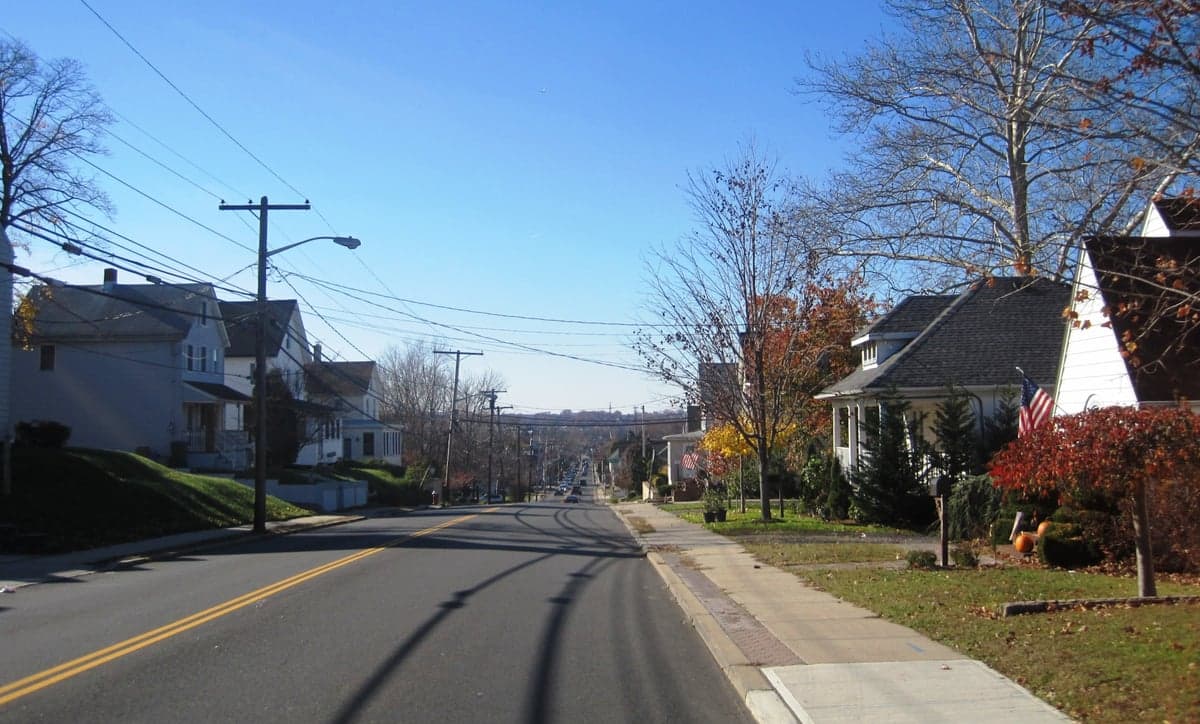
Photo: Wikipedia
Personal Sovereignty in Sayreville, NJ
Viable for self-reliance. Generally workable, though some barriers may limit total independence.
What does Personal Sovereignty tell us?
Personal Sovereignty measures your capacity for self-reliance and independence with minimal government friction. Higher scores mean fewer barriers between you and the way you want to live... but it assumes you have the space you need and good neighbors.
What does this tell us?
Personal Sovereignty measures your capacity for self-reliance and independence with minimal government friction. Higher scores mean fewer barriers between you and the way you want to live... but it assumes you have the space you need and good neighbors.
State Policy
Energy independence: Importer (8% of energy produced in-state)
Personal Liberty
Homesteading

Personal Liberty Analysis
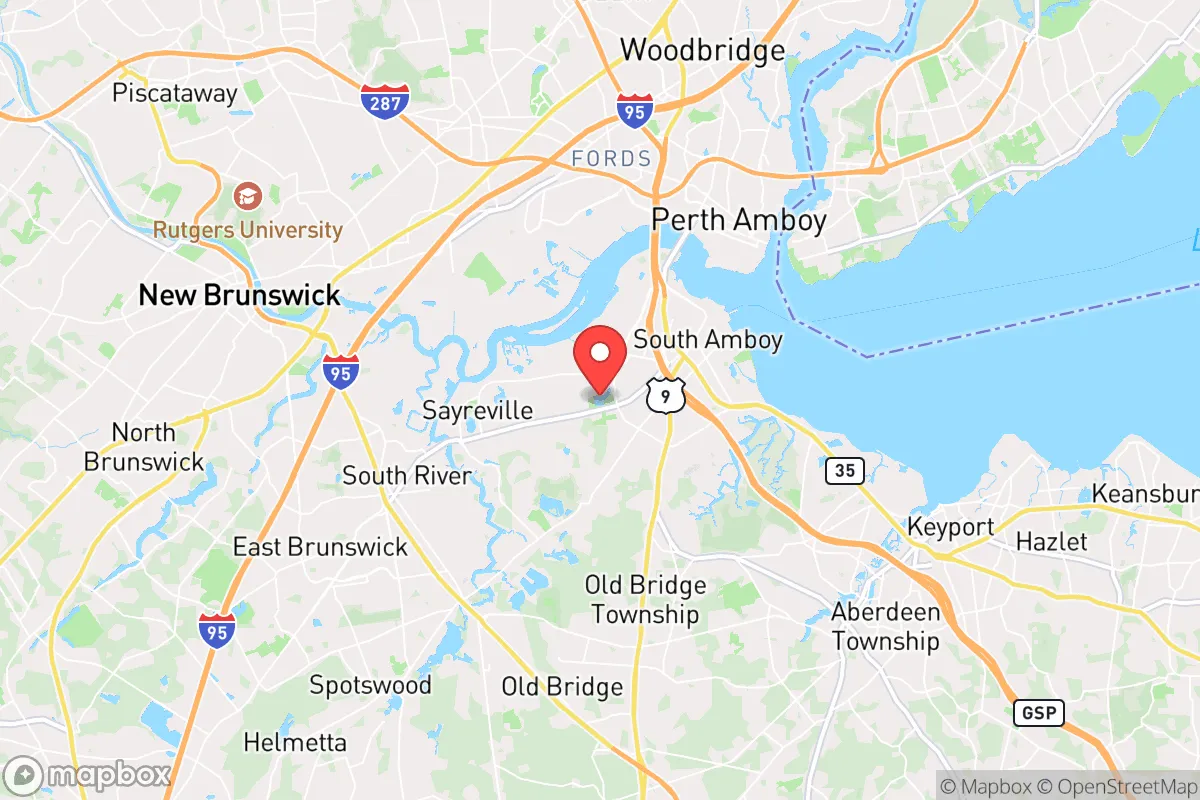
Sayreville, New Jersey, presents a challenging environment for personal sovereignty, where state-level policies significantly constrain individual autonomy in ways that may concern those with a survivalist or prepper mindset. As a Middlesex County borough situated along the Raritan River, Sayreville operates under New Jersey's dense regulatory framework, which consistently ranks among the most restrictive in the nation for gun rights, tax burden, and property use. For single individuals and parents prioritizing self-reliance and minimal government overreach, the area demands careful consideration of how state mandates—from firearm licensing to school curriculum control—directly impact daily life and long-term preparedness.
Tax burden and regulatory posture in Sayreville
New Jersey's tax burden is the highest in the United States, and Sayreville residents feel this acutely. The state's combined state and local tax burden hovers around 12-13% of income, with property taxes in Middlesex County averaging over $9,000 annually for a median-valued home. This is a significant drain on resources that could otherwise fund personal preparedness, land improvements, or emergency supplies. The regulatory posture extends beyond taxes: New Jersey imposes strict environmental regulations on waterfront properties (Sayreville has significant industrial and riverfront zones), which can limit building modifications, septic system installations, and even the ability to keep certain livestock. Zoning in Sayreville is predominantly suburban residential, with lot sizes typically 0.1 to 0.25 acres in older neighborhoods and slightly larger in newer developments. This density makes large-scale homesteading—such as keeping chickens, goats, or substantial gardens—difficult without variance approvals, which are costly and time-consuming. The state's Uniform Construction Code adds layers of permitting for any structural changes, including sheds, fences, or alternative energy systems like solar panels, which require professional installation and utility interconnection approvals. For those seeking to reduce reliance on municipal services, these regulatory hurdles are a direct impediment to self-sufficiency.
Self-defense and gun law specifics in Sayreville
New Jersey's gun laws are among the most restrictive in the country, and Sayreville residents must navigate a system that prioritizes state control over individual self-defense rights. The state requires a Firearms Purchaser Identification Card (FPID) for long guns and a separate Permit to Purchase a Handgun, each involving background checks, fingerprinting, and a 30-day waiting period. Concealed carry is governed by a "justifiable need" standard that, even after the 2022 Bruen decision, remains administratively burdensome: applicants must demonstrate a specific threat, complete a training course, and obtain approval from the local police chief. In practice, concealed carry permits are rarely issued in Middlesex County, and open carry is effectively banned. Magazine capacity is limited to 10 rounds, and "assault weapons" (defined broadly to include many common semi-automatic rifles) are prohibited. For parents, this means home defense options are legally constrained: a standard AR-15 or a high-capacity pistol magazine is not an option. Safe storage laws require firearms to be locked when not in use, which can slow access in an emergency. The state's red flag law allows for temporary seizure of firearms based on a complaint, without a criminal conviction, raising concerns about due process. For a survivalist mindset, these laws represent a significant erosion of the right to defend oneself, family, and property against both criminal threats and potential government overreach.
Self-reliance and homesteading viability in Sayreville
Sayreville's suburban character and zoning codes make traditional homesteading largely unviable. Most residential lots are under a quarter-acre, with homeowners' association (HOA) covenants in many subdivisions that restrict outbuildings, fences, and landscaping. The borough's zoning ordinance prohibits livestock (chickens, rabbits, goats) in residential zones, and even vegetable gardens may be subject to setback rules. Off-grid living is effectively impossible: New Jersey law requires connection to municipal water and sewer systems where available, and solar panel installations must be grid-tied through net metering agreements with the local utility (PSE&G). Rainwater collection is limited to non-potable uses and must comply with state Department of Environmental Protection guidelines. For those seeking to grow food, community gardens exist but are small and regulated. The soil in many parts of Sayreville, given its industrial history (including former manufacturing and chemical plants), may require testing for contaminants before gardening. Emergency preparedness is further complicated by the borough's location in a flood zone (FEMA-designated Special Flood Hazard Area along the Raritan River), which imposes mandatory flood insurance and restricts basement modifications. For a prepper, the ability to store supplies, maintain a generator, or build a root cellar is limited by both space and regulation. The state's building codes require permits for any structure over 100 square feet, and fuel storage (propane, gasoline) is capped at 25 gallons without special permits.
Personal liberties in Sayreville: parental rights, medical autonomy, speech, and property
Parental rights in New Jersey are significantly curtailed by state mandates. The state requires comprehensive sex education in public schools, including LGBTQ+ topics, with no opt-out for parents—only the ability to review materials. School curriculum decisions are largely centralized at the state level, limiting local control. Medical autonomy is constrained by New Jersey's mandatory vaccination laws for school attendance, with only narrow medical exemptions (no religious or philosophical exemptions). During public health emergencies, the governor has broad powers to mandate treatments or restrictions, as seen during COVID-19. Free speech is protected under the First Amendment, but New Jersey has enacted laws against "hate speech" that some critics argue chill political expression, particularly around controversial topics. Property rights are heavily regulated: the state's eminent domain powers are broad, and the New Jersey Department of Environmental Protection can restrict land use on wetlands or floodplains without compensation. For parents, the ability to homeschool is legal but requires annual notification and submission of a curriculum plan, with the local school district having oversight authority. The state's child welfare system has a low threshold for intervention, and parental discipline practices that involve corporal punishment can lead to criminal charges. For those concerned about government overreach, these policies represent a systematic reduction of family autonomy and individual decision-making.
Overall, Sayreville ranks poorly for personal sovereignty compared to states in the South, Midwest, or Mountain West. The combination of the nation's highest tax burden, some of the strictest gun laws, dense zoning that prevents self-sufficiency, and centralized control over education and medical decisions creates an environment where individual autonomy is heavily circumscribed. For a survivalist or prepper, the area's proximity to New York City and Philadelphia (within 45 minutes) offers economic opportunities but comes at the cost of regulatory density. Neighboring states like Pennsylvania or Delaware offer more favorable gun laws, lower taxes, and greater property freedom within a similar commute radius. For those committed to New Jersey, rural areas in Sussex or Warren counties provide larger lots and fewer restrictions, but Sayreville itself is best viewed as a location where personal sovereignty must be actively defended against a powerful state apparatus, not assumed as a baseline right.

* Values derived from national, state, county, city and local statistics and may differ in a specific area. Last updated: 2026-04-30T04:30:59.000Z
Narrative content on this page is AI-generated and may contain mistakes. Verify any details that matter before acting on them.
ReloMaps may earn a commission from affiliate links at no extra cost to you.

