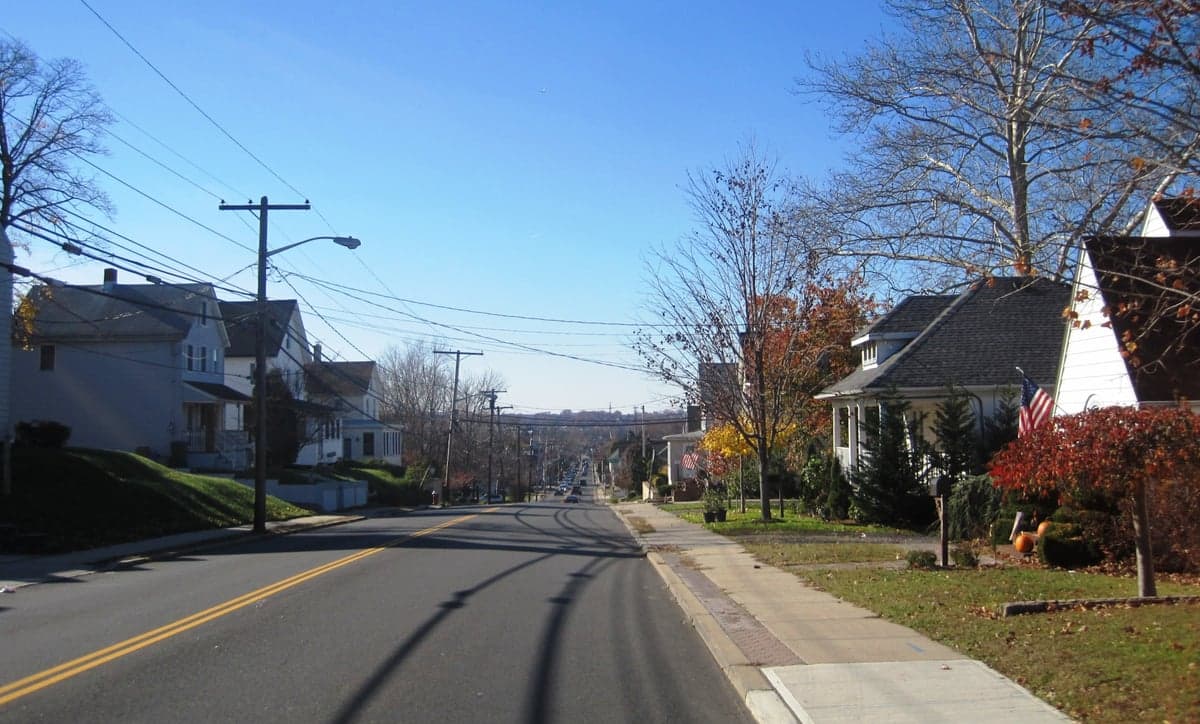
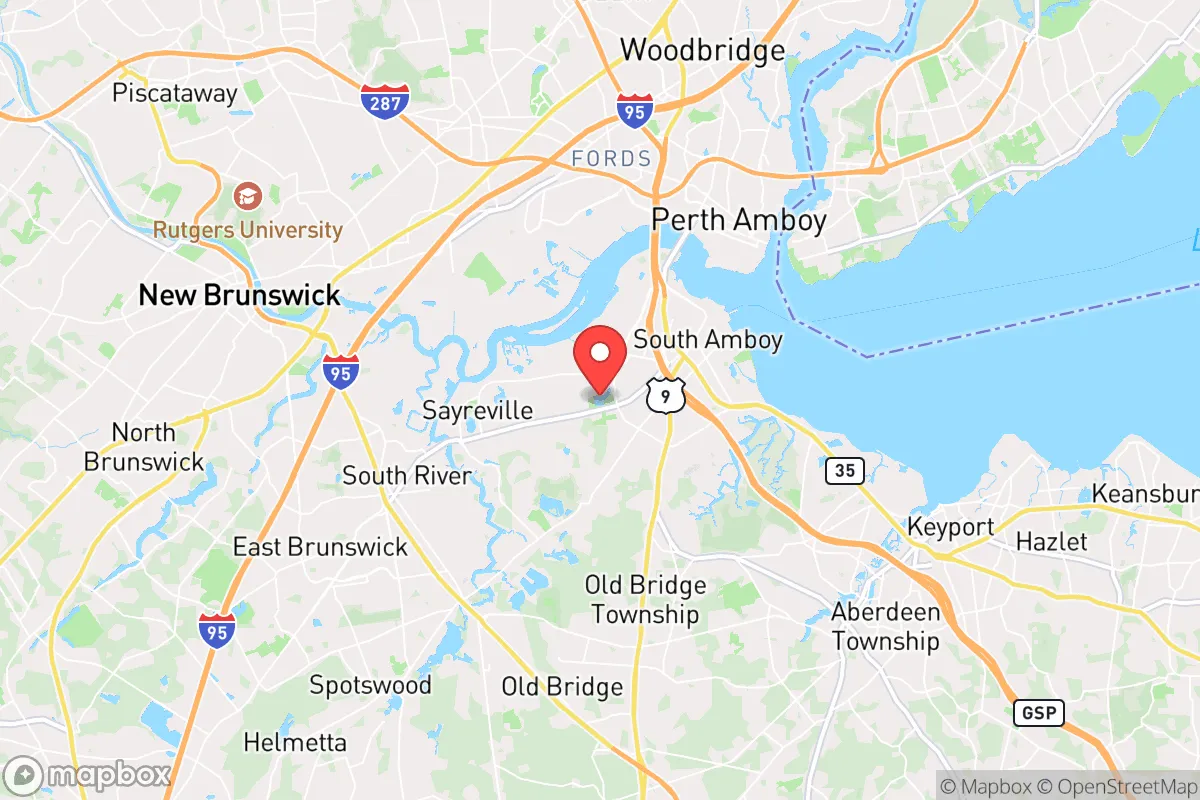
Photo: Wikipedia
Strategic Assessment of Sayreville, NJ
High tactical risk. This location is likely close to major population centers, strategic targets, or sits in a high-disaster corridor. A retreat property and careful exit planning is required.
What does the Strategic Assessment tell us?
Our Strategic Assessment grades tactical survivability of an area. Major population centers, military targets, fallout zones, natural disasters, and border exposure all drive risk — lower exposure means a more defensible position in a crisis.
This is heavily inspired by Joel Skousen's Strategic Relocation book. Highly recommended you checkout the book ($)What does this tell us?
Our Strategic Assessment grades tactical survivability of an area. Major population centers, military targets, fallout zones, natural disasters, and border exposure all drive risk — lower exposure means a more defensible position in a crisis.
This is heavily inspired by Joel Skousen's Strategic Relocation book. Highly recommended you checkout the book ($)Strategic Pillars

Key Distances
Regional Safe Places
Below is our recommended "safe zones" in New Jersey and the surrounding area based on our strategic heuristics. For most people, it's unrealistic to live in a “safe zone” full-time due to work, family or other personal reasons. They tend to be more rural. However, many of these areas are perfect for second homes and retreat properties that double as a vacation home or even a short-term rental.
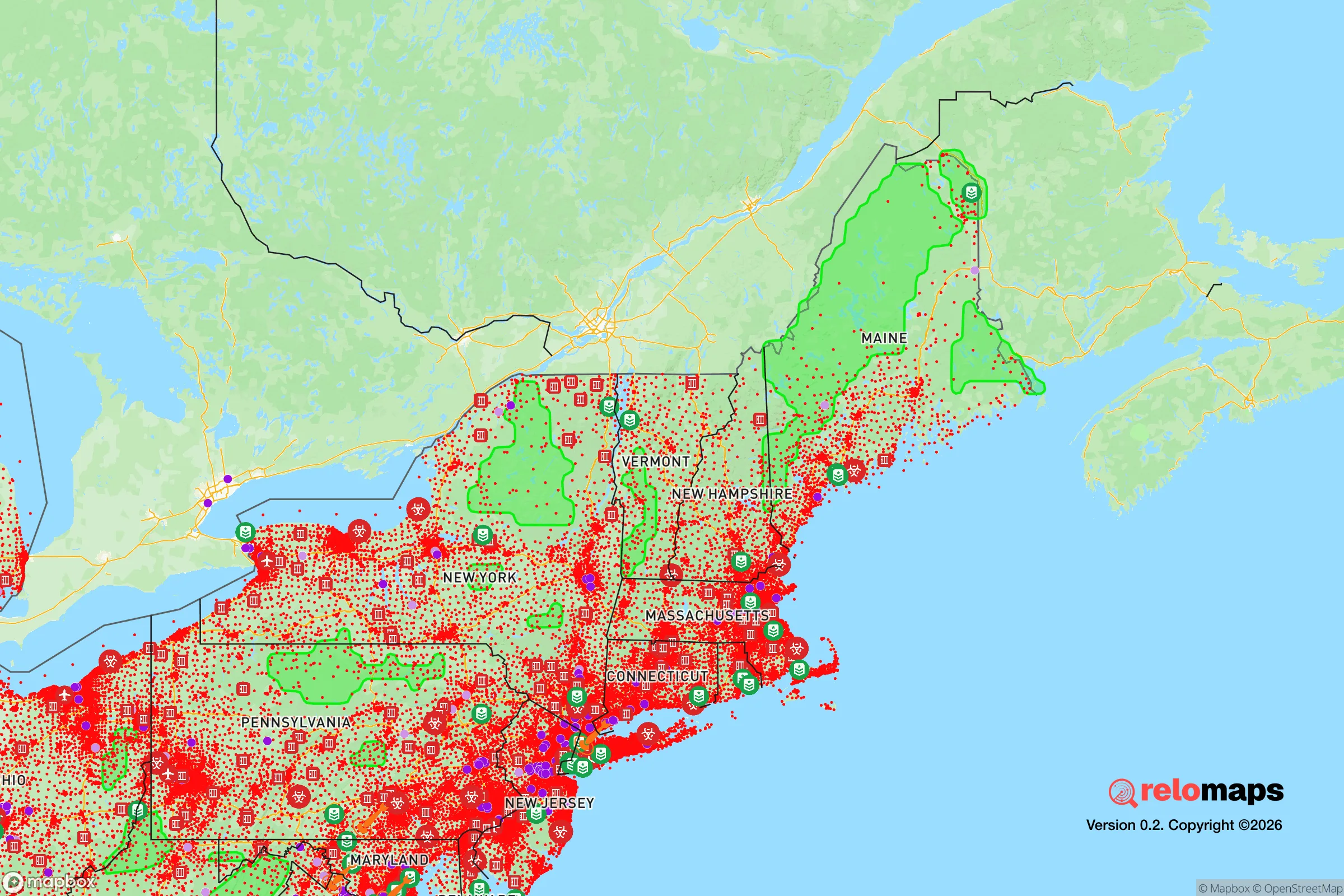
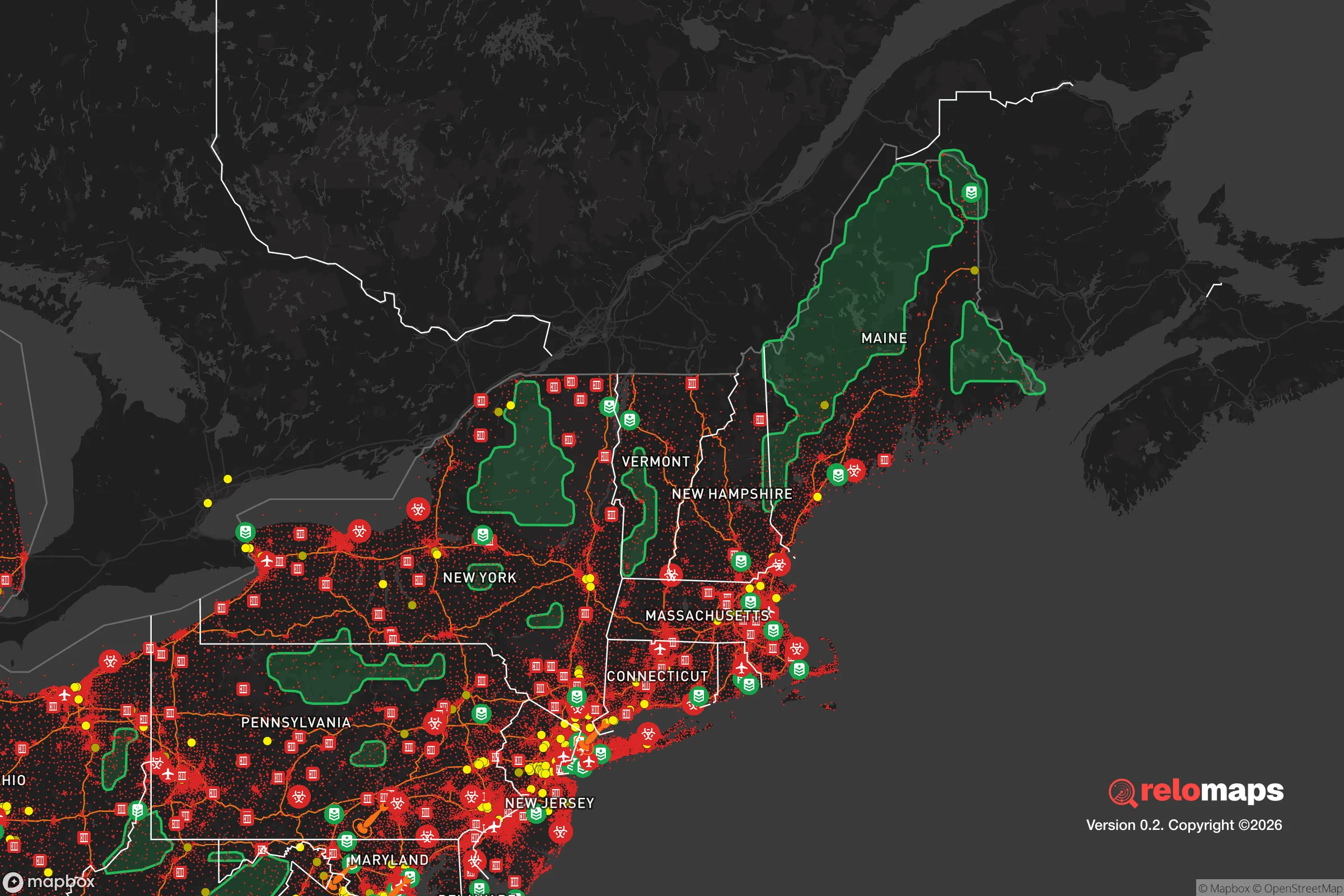


Important Note: For informational purposes only. This does not mean nothing bad ever happens in the green zones. Please use common sense. This is based on public data and modeled with AI. We tried to take a conservative approach but mistakes happen. We update this regularly as new information becomes available.
Solar Generator Recommendations
Backup power matters more here than in safer locations. We've picked three solar generators across budgets and capacity tiers — start with the budget unit if you only need a few essentials, or step up if you want to run a fridge and HVAC for days at a time.

Jackery Portable Power Station Explorer 300
Budget OptionPower on the Go: Weighing only 11 lbs, it's convenient to set up and store with book-sized foldable solar panels

BLUETTI Portable Power Station AC180
Designed for both indoor and outdoor scenarios, AC180 is highly capable as it has a robost capacity and continuous output power.

EF ECOFLOW DELTA Pro Ultra Power Station
Upgraded PickEcoFlow DELTA Pro Ultra is a whole-home energy system designed to grow with your family. Integrated with the Smart Home Panel 2, it scales to meet your evolving energy needs — keeping your home powered, intelligent, and secure through every stage of life.
We earn a commission, at no additional cost to you.
Strategic Assessment Analysis
Sayreville, New Jersey, sits in a precarious strategic position that demands a hard-eyed assessment. Its location along the Raritan River and the Garden State Parkway offers rapid access to the New York and Philadelphia metro areas, but that same proximity is a double-edged sword for anyone serious about resilience. For the prepper or survivalist, Sayreville’s advantages are real but heavily outweighed by its exposure to cascading risks from dense population centers, critical infrastructure, and environmental hazards. This is not a bug-out destination; it’s a location that requires constant vigilance and a robust plan for extraction or sheltering in place.
Geographic position and natural advantages for long-term survival
Sayreville’s geography is defined by its position on the Raritan River, roughly 10 miles from the Atlantic coast and 30 miles southwest of Manhattan. The area sits on relatively flat coastal plain, with the river providing a potential water source and a natural barrier to movement from the north. The surrounding Middlesex County offers a mix of suburban development and scattered woodlands, including the Cheesequake State Park to the east, which provides some cover and limited foraging opportunities. The region’s temperate climate supports a growing season of about 180 days, enough for small-scale gardening if soil contamination is managed. However, the natural advantages are modest: the terrain offers little in the way of defensible high ground, and the river’s tidal influence means brackish water that requires significant treatment before use. For a relocator, the primary geographic benefit is the ability to monitor movement along major transit corridors—the Garden State Parkway, Route 9, and the New Jersey Turnpike are all within a 10-minute drive, offering both escape routes and choke points that could be contested in a crisis.
Risks, exposures, and proximity to fallout-relevant landmarks
The most glaring vulnerability for Sayreville is its proximity to multiple high-value targets that would be primary in any large-scale conflict or terrorist event. The Port of Newark and Elizabeth, the largest container port on the East Coast, lies just 15 miles north. The refineries and chemical plants along the Arthur Kill and Raritan Bay—including the Phillips 66 Bayway Refinery in Linden and the numerous facilities in the Perth Amboy industrial corridor—are within a 10-mile radius. In a wartime scenario or a major industrial accident, these sites could produce toxic plumes, fires, and secondary explosions that would make Sayreville uninhabitable for days or weeks. Additionally, the region’s dense population—over 800,000 people in Middlesex County alone—means that any disruption to supply chains, power grids, or water systems would trigger rapid civil unrest. The nearby cities of Newark, Elizabeth, and New Brunswick are all potential flashpoints for riots or mass migration during a collapse. For the prepper, the risk of being caught in a refugee flow or a contaminated zone is high, and the lack of natural barriers to the west or south means escape routes could be quickly clogged.
Practical resilience for a relocator: food, water, energy, and defensibility
For someone looking to hunker down in Sayreville, the practical challenges are significant. Municipal water comes from the Raritan River and is treated at the Middlesex Water Company plant, but a prolonged power outage or contamination event would cut supply within hours. A private well is possible in some outlying areas, but most residential lots are small and suburban, limiting space for a cistern or rainwater catchment. Food storage is feasible in a typical single-family home with a basement, but the local grocery supply chain is fragile—most stores rely on just-in-time delivery from warehouses in Linden and Edison, which are themselves near critical infrastructure. Energy resilience is a mixed bag: natural gas is widely available for heating and cooking, but the grid is old and prone to outages during storms, and solar panel installation is complicated by tree cover and homeowners’ association restrictions in many neighborhoods. Defensibility is poor—Sayreville is a grid of cul-de-sacs and main roads with no natural chokepoints, and the police force of about 100 officers would be overwhelmed in a widespread emergency. The best option for a relocator is to invest in a well-secured home with reinforced doors, a backup generator, and a deep pantry, while maintaining a vehicle ready for a rapid evacuation to the Pine Barrens or the Appalachian foothills.
The overall strategic picture for Sayreville is one of calculated risk with limited upside for the serious prepper. Its location offers economic opportunity and access to urban amenities in stable times, but those same factors become liabilities when the system falters. The area’s exposure to industrial hazards, dense population, and vulnerable infrastructure means that a relocator must be prepared for a worst-case scenario that includes chemical spills, civil unrest, and supply chain collapse. For a single individual or a family willing to invest heavily in hardening a home and maintaining a go-bag, Sayreville can be a temporary base, but it is not a long-term survival location. The prudent move is to treat it as a stepping stone—a place to build resources and skills while planning a permanent move to a more defensible, less exposed region inland or to the north. In the current climate, Sayreville is a place to pass through, not to dig in.

* Values derived from national, state, county, city and local statistics and may differ in a specific area. Last updated: 2026-04-30T04:30:59.000Z
Narrative content on this page is AI-generated and may contain mistakes. Verify any details that matter before acting on them.
ReloMaps may earn a commission from affiliate links at no extra cost to you.

