 Popular

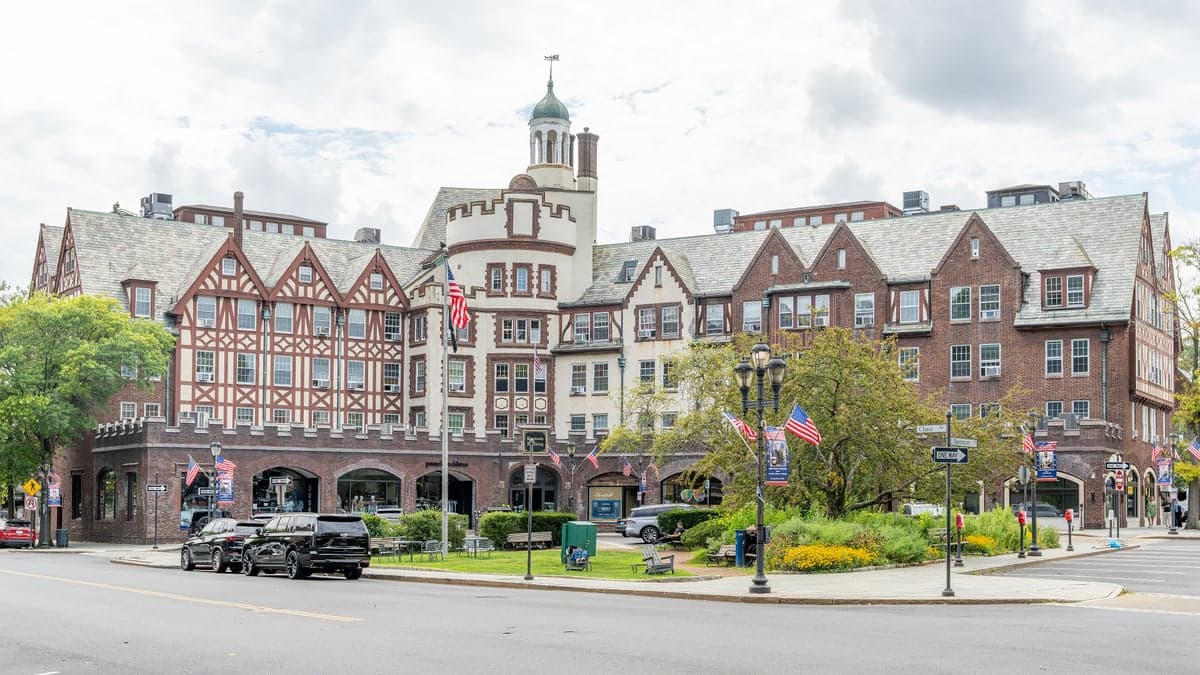
Photo: Wikipedia
Personal Sovereignty in Scarsdale, NY
Moderate friction. Expect trade-offs in some aspect of personal liberty and independence.
What does Personal Sovereignty tell us?
Personal Sovereignty measures your capacity for self-reliance and independence with minimal government friction. Higher scores mean fewer barriers between you and the way you want to live... but it assumes you have the space you need and good neighbors.
What does this tell us?
Personal Sovereignty measures your capacity for self-reliance and independence with minimal government friction. Higher scores mean fewer barriers between you and the way you want to live... but it assumes you have the space you need and good neighbors.
State Policy
Energy independence: Importer (12% of energy produced in-state)
Personal Liberty
Homesteading

Personal Liberty Analysis
Scarsdale, New York, presents a challenging environment for personal sovereignty, particularly for those with a survivalist or prepper mindset. While the village offers affluence and excellent public services, its location in Westchester County and the state of New York imposes significant constraints on individual autonomy, from heavy tax burdens to restrictive gun laws and limited self-reliance opportunities. For a conservative-leaning individual or family prioritizing freedom from government overreach, Scarsdale requires a clear-eyed assessment of where personal liberties end and state control begins.
Tax burden and regulatory posture: How New York's fiscal policies affect your autonomy
The single greatest threat to personal sovereignty in Scarsdale is the tax burden. New York State has one of the highest combined state and local tax rates in the nation, and Westchester County is among the most heavily taxed counties in the U.S. Property taxes in Scarsdale routinely exceed $30,000 annually on a median home, and the state income tax can reach nearly 9% for top earners. This fiscal posture directly reduces your ability to allocate resources toward self-reliance—whether that means building a food stockpile, investing in off-grid infrastructure, or saving for relocation. The regulatory environment is equally aggressive. New York's building codes, environmental regulations, and land-use laws are among the most stringent in the country. Permitting for any significant home modification—such as installing a backup generator, solar panels, or a rainwater catchment system—can take months and cost thousands in fees. The state's climate mandates, including the 2024 ban on gas stoves in new construction, signal a growing intrusion into household energy choices. For the prepper, this means that even basic resilience measures face bureaucratic headwinds.
Self-defense and gun law specifics: What Scarsdale residents face under New York's restrictive regime
New York's gun laws are among the most restrictive in the United States, and Scarsdale residents must navigate a dense web of regulations that severely limit self-defense options. The state's 2022 Concealed Carry Improvement Act (CCIA) requires a "proper cause" showing for a concealed carry permit, effectively giving local licensing officers broad discretion to deny applications. In practice, Scarsdale's police department and Westchester County judges have historically been reluctant to issue permits without a documented, specific threat. The law also bans firearms in "sensitive locations," which includes virtually all public spaces—parks, libraries, public transportation, and even private property unless the owner explicitly permits carry. Magazine capacity is capped at 10 rounds, and the state maintains a registry of pistol permits. For the survivalist, this means that the ability to defend your home or family in a crisis is heavily constrained by law. The state's "red flag" law allows for temporary seizure of firearms based on third-party complaints, without a criminal conviction, raising concerns about due process. While Scarsdale itself has low violent crime rates, the legal framework leaves residents dependent on law enforcement response times that may be inadequate in a grid-down scenario.
Self-reliance and homesteading viability: Lot sizes, zoning, and off-grid feasibility in Scarsdale
Scarsdale's suburban character makes traditional homesteading or off-grid living nearly impossible. Typical residential lots range from 0.25 to 1 acre, with most homes on quarter-acre plots. Zoning codes are strict: raising livestock (chickens, goats, or bees) is either prohibited or requires special permits, and even vegetable gardens may be subject to homeowners' association covenants. The village's tree preservation laws restrict cutting timber for firewood or clearing land for food production. Off-grid infrastructure faces similar hurdles. Solar panel installations require village approval and must meet aesthetic guidelines; battery storage systems are regulated by fire codes. Rainwater harvesting for potable use is technically allowed but must comply with New York State Department of Health standards that make small-scale systems impractical. Composting toilets are not permitted in homes connected to municipal sewer. For the prepper seeking food security, the growing season is short (Zone 6b, with last frost around mid-May), and soil quality in this suburban setting is often depleted from decades of lawn care. The practical reality is that Scarsdale offers little room for self-reliant food production or energy independence. Residents are almost entirely dependent on municipal water, grid electricity, and supermarket supply chains—a vulnerability that a survivalist would find unacceptable.
Personal liberties: Parental rights, medical autonomy, speech, and property in Westchester County
New York's progressive governance extends into areas of personal liberty that directly affect conservative families. Parental rights have been eroded by state mandates on school curriculum, including comprehensive sex education that begins in elementary school and does not require parental opt-in. The state's vaccination requirements for school attendance are among the strictest in the nation, with no philosophical exemption and a narrow religious exemption that is rarely granted. During the COVID-19 pandemic, New York imposed some of the most aggressive mandates in the country, including vaccine requirements for healthcare workers and public employees that led to widespread job losses. Medical autonomy is further constrained by the state's assisted suicide law (passed in 2017) and its expansive telehealth abortion access, which some conservatives view as undermining parental consent laws. Free speech protections are generally robust, but New York's hate crime statutes and social media regulation efforts have raised concerns about chilling political speech. Property rights are heavily circumscribed by zoning, historic preservation, and environmental regulations. The state's rent stabilization laws, while not directly affecting Scarsdale's mostly owner-occupied housing, signal a broader regulatory attitude that treats property as a public utility rather than a private right. For the conservative individual, these policies create an environment where personal decisions—from healthcare to education to home improvement—are subject to state oversight.
In the broader context of personal sovereignty, Scarsdale ranks poorly compared to rural areas in the South, Midwest, or even upstate New York. The combination of extreme taxation, restrictive gun laws, limited homesteading potential, and aggressive regulatory oversight makes it a difficult location for those prioritizing autonomy. For a survivalist or prepper, Scarsdale's wealth and low crime are offset by a legal and political climate that systematically reduces individual agency. If relocation is an option, areas with lower tax burdens, constitutional carry, and more permissive zoning—such as parts of Texas, Florida, or Tennessee—offer a far more favorable sovereignty profile. For those who must remain in Scarsdale, the strategy must focus on legal compliance, financial resilience, and building community networks rather than physical self-sufficiency. The village is a comfortable cage, but a cage nonetheless.

* Values derived from national, state, county, city and local statistics and may differ in a specific area. Last updated: 2026-04-23T02:50:47.000Z
Narrative content on this page is AI-generated and may contain mistakes. Verify any details that matter before acting on them.
ReloMaps may earn a commission from affiliate links at no extra cost to you.

