 Popular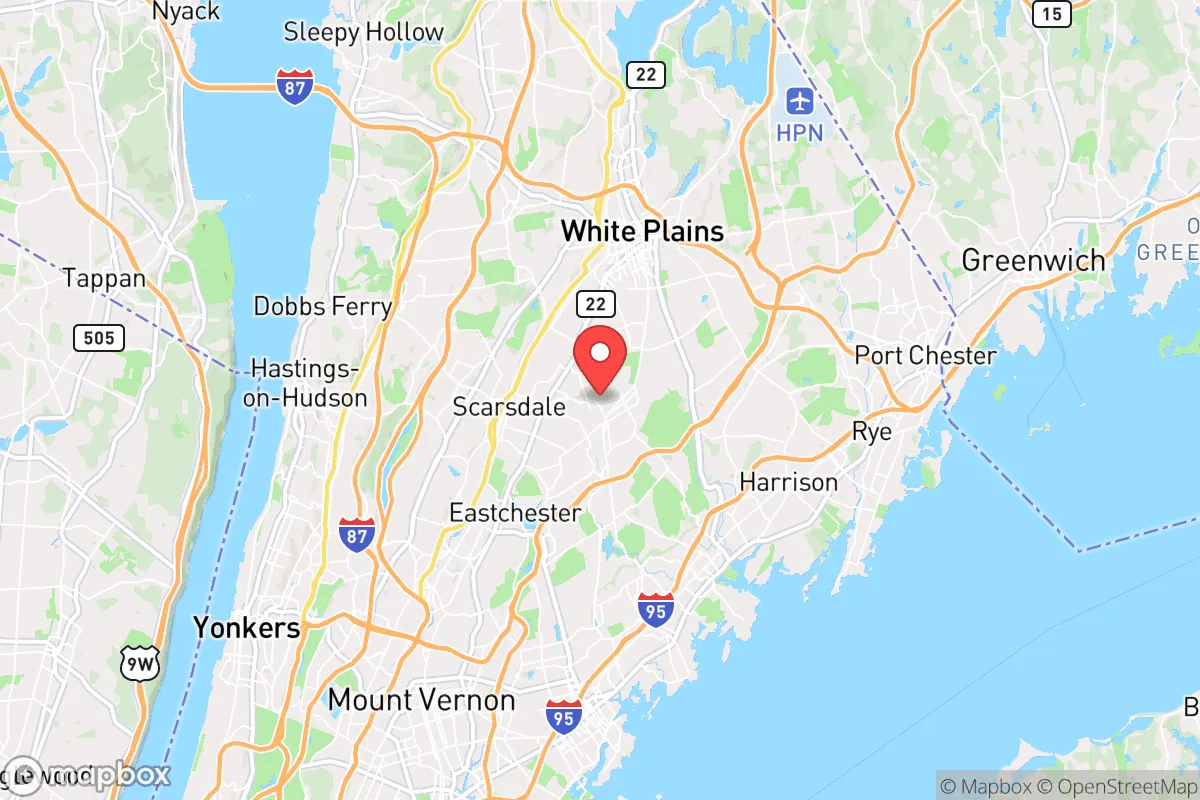

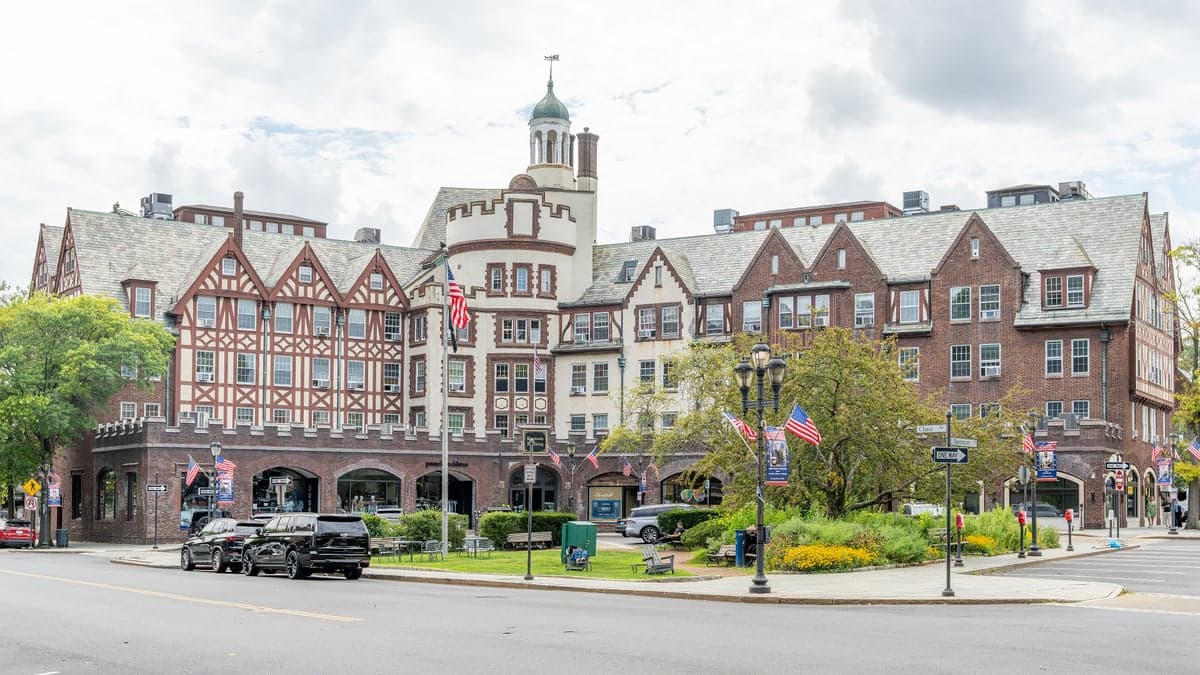
Photo: Wikipedia
Political ClimatePolitical Climate in Scarsdale, NY
District shown is the primary district for this city’s centroid. Cities may span multiple districts.
Local Political AnalysisPolitical Analysis of Scarsdale, NY
Scarsdale, New York, has a Cook PVI of D+18, making it one of the most reliably Democratic suburbs in the nation, but that number only tells part of the story. If you’ve lived here as long as I have, you remember when the local Republican club actually had a presence at the village elections, and the town board had a real debate about taxes and property rights. Today, the political lean here is solidly progressive, and the trajectory is unmistakably leftward—each election cycle seems to bring a new wave of policies that feel less about community consensus and more about top-down mandates from Albany or the county executive’s office in White Plains.
How it compares
Drive ten minutes east to New Rochelle, and you’ll find a similar Democratic stronghold, but with a more working-class, diverse base that keeps local politics focused on bread-and-butter issues like school funding and infrastructure. Head west to Hartsdale or Edgemont, and you’ll see a slightly more moderate tilt—those areas still vote blue, but they’re less eager to embrace the kind of zoning overhauls and “equity” initiatives that have become Scarsdale’s hallmark. The real contrast is with towns like Armonk or Bedford, where the Republican vote can still hit 40% in a presidential year. In Scarsdale, the GOP is practically a ghost party; the last time a Republican won a village trustee seat was over a decade ago. What’s concerning is how quickly the Overton window has shifted—what was considered a fringe progressive idea in 2015 is now standard policy here, with little pushback from the local press or civic groups.
What this means for residents
For families who value personal freedoms—like choosing your own health care, deciding what your kids learn in school, or keeping your property taxes in check—Scarsdale’s current climate can feel suffocating. The village board has embraced state-mandated housing density targets that could reshape our quiet, single-family neighborhoods, and the school district has adopted DEI training that some parents feel prioritizes ideology over academics. Property taxes are already among the highest in Westchester County, and every new progressive initiative seems to come with a price tag—whether it’s a climate action plan or a new affordable housing fund. If you’re a small business owner or a retiree on a fixed income, you’re watching your local government get more involved in your daily life, from what kind of lightbulbs you can buy to how you heat your home. The long-term trend is clear: more regulation, higher costs, and less room for dissent.
Culturally, Scarsdale still has its old-world charm—the train station, the village shops, the excellent public schools—but the political culture has become increasingly uniform. There’s a palpable pressure to conform to the prevailing progressive orthodoxy, especially in civic and school-related circles. I’ve seen long-time neighbors stop attending town hall meetings because they felt their moderate views were dismissed or mocked. The village’s recent push for a “sanctuary” designation and its vocal opposition to state-level parental notification laws are just the latest examples of a government that seems more interested in signaling its values than in protecting the rights of its residents. If you’re considering a move here, just know that the political climate is not neutral—it’s actively shaping everything from your tax bill to your child’s curriculum, and that influence is only growing.

State Political ClimatePolitical Climate in New York
State Political AnalysisPolitical Environment in the State
New York State has been a reliably blue stronghold for decades, but the political reality on the ground is far more fractured than the statewide numbers suggest. The Democratic coalition dominates thanks to New York City and its immediate suburbs, but the rest of the state—from the Hudson Valley to the Finger Lakes to the North Country—votes reliably red. Over the last 10-20 years, the state has lurched further left on social and fiscal policy, driven by a supermajority in Albany that has little incentive to moderate. For a conservative considering relocation, the key question isn't whether New York is liberal—it's whether you can find a pocket of freedom within a state that is increasingly hostile to it.
Urban vs. rural divide
The political map of New York is a tale of two states. New York City (Manhattan, Brooklyn, Queens, the Bronx) and its inner-ring suburbs—Westchester County, Nassau County on Long Island, and Albany (the capital region)—generate the overwhelming Democratic vote share. In the 2024 presidential election, Manhattan alone delivered over 500,000 votes for Kamala Harris, while many upstate counties went +20 to +40 points for Donald Trump. The divide is stark: Erie County (Buffalo) leans blue, but the surrounding rural counties like Wyoming and Allegany are deep red. Staten Island remains the only NYC borough that consistently votes Republican, and Suffolk County on eastern Long Island has been trending redder as suburban families push back on progressive policies. The real battleground is the Hudson Valley—counties like Orange and Dutchess are purple, with local races often decided by a few hundred votes. If you're moving to New York as a conservative, you're looking at places like Clarence (near Buffalo), Pittsford (near Rochester), or the Adirondack foothills—not Manhattan.
Policy environment
Albany's policy machine is a one-party affair, and the results are unmistakable. New York has the highest combined state and local tax burden in the nation, with income tax rates topping 10.9% for top earners and property taxes that can exceed 2.5% of home value in places like Westchester and Nassau. The state's regulatory posture is aggressive: the Climate Leadership and Community Protection Act (CLCPA) mandates a 70% renewable energy grid by 2030 and net-zero emissions by 2050, driving up energy costs and pushing out manufacturing. Education policy is dominated by the teachers' unions, with school funding formulas that heavily favor downstate districts. Healthcare is heavily regulated, with a state-run health exchange and strict certificate-of-need laws that limit new hospital construction. Election law is among the most liberal in the country: no-excuse absentee voting, early voting, same-day registration, and automatic voter registration are all in place. For a conservative, the policy environment feels like a slow squeeze—higher costs, less local control, and a state government that sees itself as a national progressive laboratory.
Trajectory & freedom
The trajectory over the last five years has been unmistakably toward less personal freedom. The SAFE Act of 2013, passed in the wake of Sandy Hook, was one of the strictest gun control laws in the nation, banning "assault weapons" and limiting magazine capacity to seven rounds. In 2022, the state doubled down with the Concealed Carry Improvement Act (CCIA), which created "sensitive locations" where guns are banned (including Times Square, subways, and places of worship) and required "good moral character" for permits—a standard critics say is arbitrary. On parental rights, the state passed a law in 2023 that allows minors as young as 12 to consent to mental health treatment without parental notification, and the Education Department has pushed "gender-inclusive" curricula that many parents find intrusive. Medical autonomy took a hit with the state's COVID-19 mandates, which included a vaccine mandate for healthcare workers that was not rescinded until 2024. Property rights are under pressure from rent control expansions in NYC and the Hudson Valley, and the state's "good cause eviction" law (passed in 2024) limits a landlord's ability to non-renew a lease. On the plus side, the state did repeal the "pink tax" on feminine hygiene products and passed a modest property tax cap, but the overall trend is toward more state control, not less.
Civil unrest & political movements
New York has been a flashpoint for political activism on both sides. The 2020 Black Lives Matter protests in NYC, Buffalo, and Rochester were among the largest in the country, leading to calls to defund the police—though actual budget cuts were modest. The state's sanctuary policies, including the "Green Light Law" that allows undocumented immigrants to obtain driver's licenses, have made it a target for federal immigration enforcement clashes. In 2023, the state saw a surge in pro-Second Amendment rallies, particularly in the Southern Tier and North Country, where sheriffs in counties like Lewis and Herkimer declared they would not enforce the CCIA. Election integrity remains a hot-button issue: the state's 2020 mail-in voting expansion was challenged in court, and the 2022 redistricting was so aggressively gerrymandered that the state's highest court threw it out and appointed a special master. A new resident will notice the constant hum of political tension—especially in the Capital Region, where protests at the state capitol are a weekly occurrence.
Projection
Over the next 5-10 years, New York is likely to become even more polarized. Demographic trends favor the Democrats: NYC continues to attract young, progressive transplants, while upstate counties are aging and losing population. The 2020 Census cost the state a congressional seat, and the 2030 Census could cost another. In-migration from other states is overwhelmingly to the NYC metro area, not to the rural red counties. The state's fiscal situation is precarious—pension liabilities and Medicaid costs are growing faster than revenue—which could force tax increases or service cuts. For a conservative, the realistic outlook is that the state will continue to pass progressive legislation on guns, education, and housing, with little chance of a political realignment. The best-case scenario is that the state's economic decline forces moderation, but that's a long shot. If you're moving in now, expect to be a political minority in most of the state, and plan to live in a red county where local officials push back against Albany—places like Orleans County or Steuben County—if you want any semblance of local control.
Bottom line: New York is a beautiful state with world-class natural resources, strong communities, and a rich history. But for a conservative, it's a state where you'll be fighting an uphill battle against a state government that sees your values as obstacles. If you're willing to pay high taxes, navigate heavy regulation, and live in a red enclave where your vote for local office actually matters, you can make it work. If you want a state that respects your freedom out of the box, look elsewhere. The inside scoop is that the people are great, but the government is not—and that gap is only widening.
* Values derived from national, state, county, city and local statistics and may differ in a specific area. Last updated: 2026-04-23T02:50:47.000Z
Narrative content on this page is AI-generated and may contain mistakes. Verify any details that matter before acting on them.
ReloMaps may earn a commission from affiliate links at no extra cost to you.

