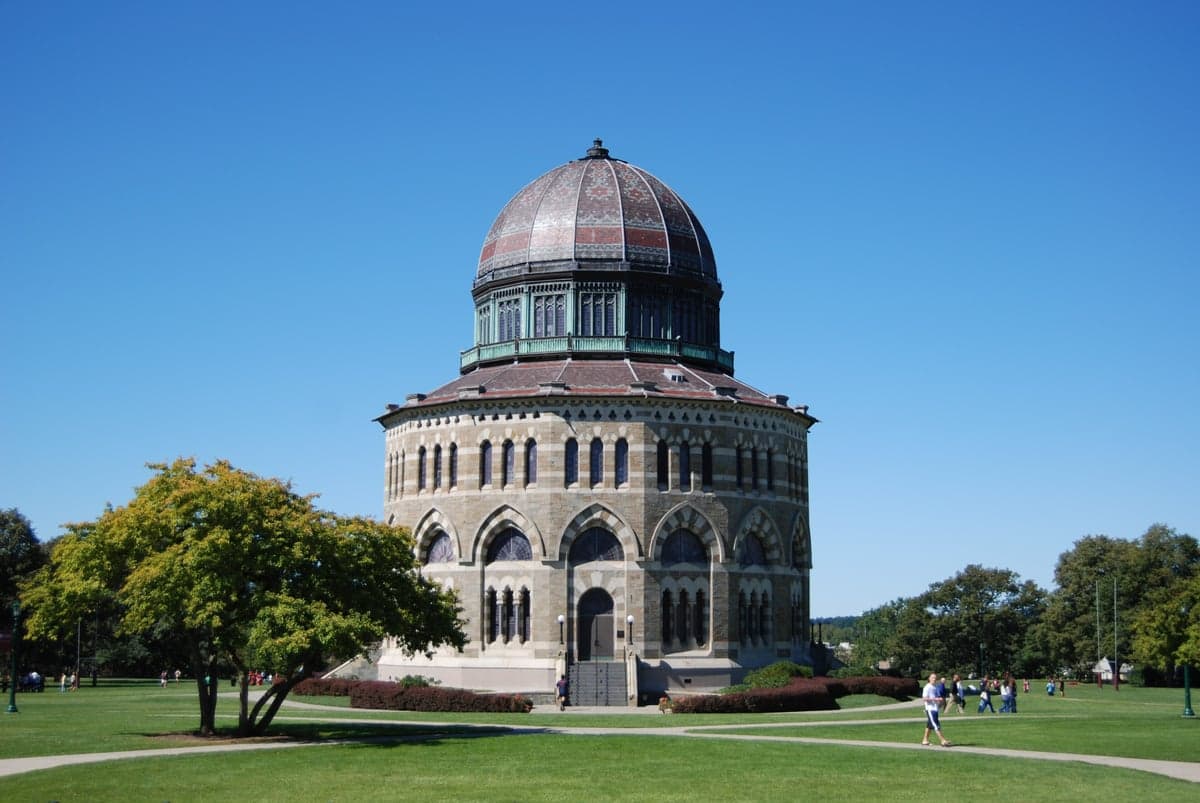
Photo: Wikipedia
Personal Sovereignty in Schenectady, NY
Moderate friction. Expect trade-offs in some aspect of personal liberty and independence.
What does Personal Sovereignty tell us?
Personal Sovereignty measures your capacity for self-reliance and independence with minimal government friction. Higher scores mean fewer barriers between you and the way you want to live... but it assumes you have the space you need and good neighbors.
What does this tell us?
Personal Sovereignty measures your capacity for self-reliance and independence with minimal government friction. Higher scores mean fewer barriers between you and the way you want to live... but it assumes you have the space you need and good neighbors.
State Policy
Energy independence: Importer (12% of energy produced in-state)
Personal Liberty
Homesteading

Personal Liberty Analysis
Schenectady, New York, presents a challenging environment for personal sovereignty, where the state's expansive regulatory framework and tax structure significantly constrain individual autonomy. For those with a survivalist or prepper mindset, the city sits within a state that has aggressively expanded government oversight into nearly every aspect of daily life, from healthcare decisions to property use. While the city itself offers some practical advantages—like lower home prices compared to downstate regions—the overarching legal and fiscal climate in New York demands careful strategic consideration before relocating here. The balance of power tilts heavily toward state authority, making Schenectady a location where personal sovereignty must be actively defended rather than assumed.
Tax burden and regulatory posture in New York's Capital Region
New York State imposes one of the heaviest tax burdens in the nation, and Schenectady residents feel this acutely. The combined state and local income tax rate can exceed 10% for higher earners, while property taxes in Schenectady County average around 2.5% of assessed home value—among the highest in the country. A home valued at $200,000 can carry annual property taxes exceeding $5,000, a significant recurring cost that reduces disposable income for prepping supplies or land investments. Sales tax in Schenectady County is 8%, applied to most goods including emergency gear and building materials. The regulatory posture is equally restrictive: New York's building codes are among the most stringent nationally, and the state's Climate Leadership and Community Protection Act imposes aggressive energy mandates that affect home renovations, heating system choices, and even vehicle ownership. Permitting for any structural modification—whether adding a root cellar or installing solar panels—requires multiple layers of municipal and state approval, with fees and delays that discourage self-reliance projects. For the autonomy-minded individual, this creates a persistent friction: every attempt to build independence is met with bureaucratic oversight and cost.
Self-defense rights and gun law specifics in Schenectady
New York's gun laws are among the most restrictive in the United States, and Schenectady residents must navigate a dense legal landscape to exercise self-defense rights. The state's Concealed Carry Improvement Act (CCIA), passed in 2022, requires a pistol permit for any concealed carry, with applicants undergoing a 16-hour training course, background check, and character reference review. The permit process in Schenectady County can take 6 to 12 months, and the issuing authority—the county sheriff—retains significant discretion to deny applications. "Sensitive locations" where firearms are banned include virtually all public spaces: parks, libraries, public transportation, and even private businesses unless the owner explicitly posts a sign allowing carry. Magazine capacity is capped at 10 rounds for handguns and 7 rounds for long guns. The state's red flag law allows family members or law enforcement to petition for temporary firearm seizure without a criminal charge, a provision that preppers view as a vulnerability. For long guns, the SAFE Act requires registration of "assault weapons" (defined broadly to include many common semi-automatic rifles) and limits magazine capacity. In practice, this means that a Schenectady resident's ability to defend their home or person is heavily mediated by state permission, and any prepper stockpile must comply with strict storage and transportation rules. The legal risk of a technical violation is high, making this a low-sovereignty environment for the armed citizen.
Self-reliance and homesteading viability in Schenectady
Homesteading and off-grid living face substantial obstacles in Schenectady due to zoning, lot size, and utility regulations. The city's typical residential lots range from 5,000 to 10,000 square feet, with many homes on small parcels that limit gardening, livestock, or water harvesting. Zoning codes in most residential districts prohibit keeping chickens, goats, or bees without special permits, and the city's property maintenance code mandates manicured lawns and prohibits "unruly vegetation," which can include tall grass for hay or visible compost piles. Off-grid energy systems are effectively illegal: New York requires grid connection for any habitable structure, and solar panels must be installed by licensed contractors with permits that include utility interconnection agreements. Rainwater collection is allowed but limited to 55 gallons per property without a permit, and any well drilling requires extensive environmental review. The state's building code mandates minimum square footage and insulation standards that make tiny homes or converted sheds uninhabitable as primary residences. For the prepper seeking land for a retreat, Schenectady County's rural outskirts offer larger parcels—some 2-5 acre lots exist in the town of Rotterdam or Glenville—but these still fall under county zoning that restricts agricultural use and requires septic system approvals. The net effect is that self-reliance in Schenectady is a heavily regulated activity, not a natural right, and any attempt to live outside the grid invites legal and financial penalties.
Personal liberties in practice: parental rights, medical autonomy, and property
Parental rights in New York have been increasingly centralized, with the state mandating vaccine schedules for school attendance and, during the COVID-19 pandemic, imposing mask and vaccine mandates that overrode parental choice. The state's Child Protective Services (CPS) system has broad authority to investigate parental decisions around medical care, education, and discipline, with a low threshold for intervention. Homeschooling is legal but requires annual submission of an Individualized Home Instruction Plan (IHIP) with detailed curriculum outlines, quarterly reports, and standardized testing—a level of oversight that many conservative families find intrusive. Medical autonomy is similarly constrained: New York does not recognize medical freedom exemptions for vaccine mandates, and the state's Public Health Law grants the health commissioner emergency powers to compel treatment or isolation. Property rights are limited by the state's rent stabilization laws (which apply to some Schenectady apartments) and by environmental regulations that restrict land use, including wetland protections and the Freshwater Wetlands Act, which can prohibit clearing or building on large portions of a property. Free speech is constitutionally protected, but New York's hate speech laws and social media regulations create a chilling effect for those expressing dissenting views on public health or political topics. In sum, personal liberties in Schenectady are conditional on state approval, not inherent rights, and the prepper must operate within a framework that prioritizes collective compliance over individual judgment.
Overall, Schenectady ranks low on the personal sovereignty scale compared to states like Texas, Idaho, or New Hampshire, where tax burdens are lighter, gun laws are permissive, and zoning allows greater self-reliance. For the survivalist or conservative individual, the city offers affordability relative to New York City but at the cost of living under one of the most interventionist state governments in the nation. The strategic calculation is clear: Schenectady can work as a base for those who are willing to navigate bureaucracy, pay high taxes, and accept restricted freedoms, but it is not a location where autonomy is respected or encouraged. For those prioritizing maximum personal sovereignty, the Hudson Valley or upstate regions may offer slightly more breathing room, but the state's legal framework remains the dominant constraint. Relocation here requires a defensive posture—knowing the laws, staying compliant, and building resilience within the system's limits.

* Values derived from national, state, county, city and local statistics and may differ in a specific area. Last updated: 2026-05-01T19:42:52.000Z
Narrative content on this page is AI-generated and may contain mistakes. Verify any details that matter before acting on them.
ReloMaps may earn a commission from affiliate links at no extra cost to you.

