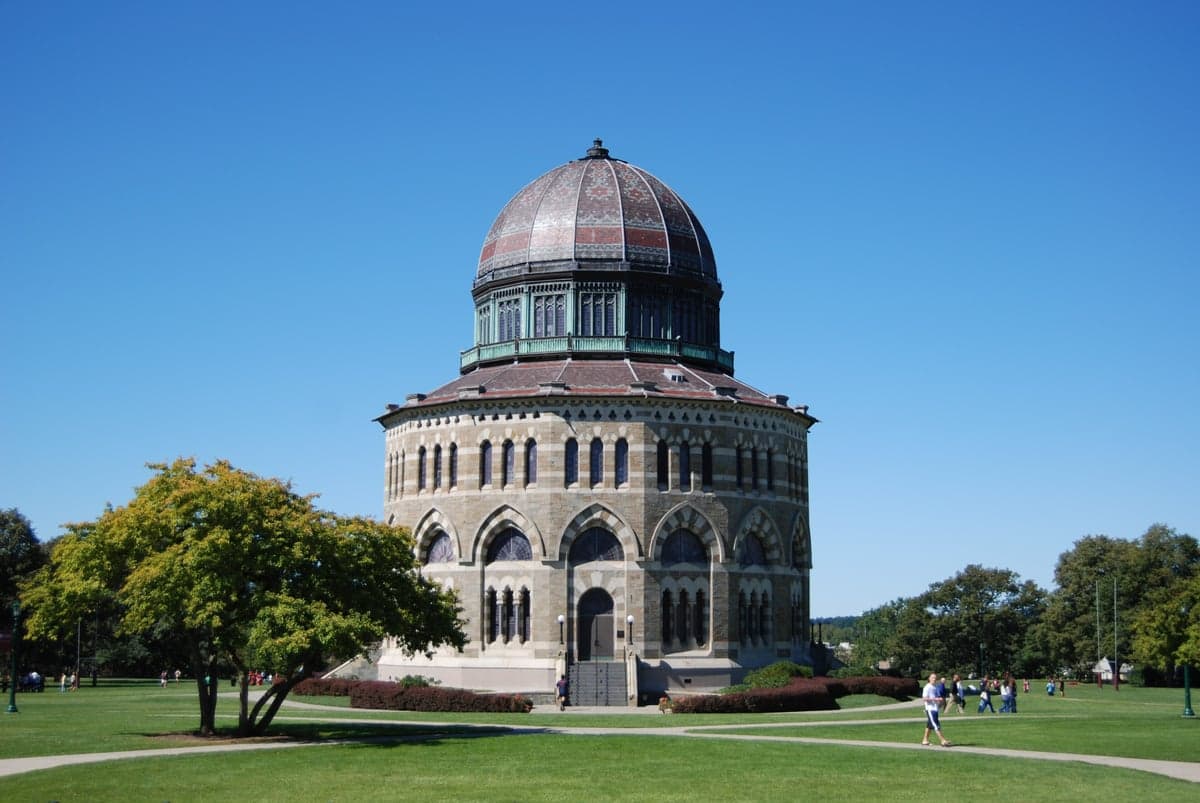
Photo: Wikipedia
Political ClimatePolitical Climate in Schenectady, NY
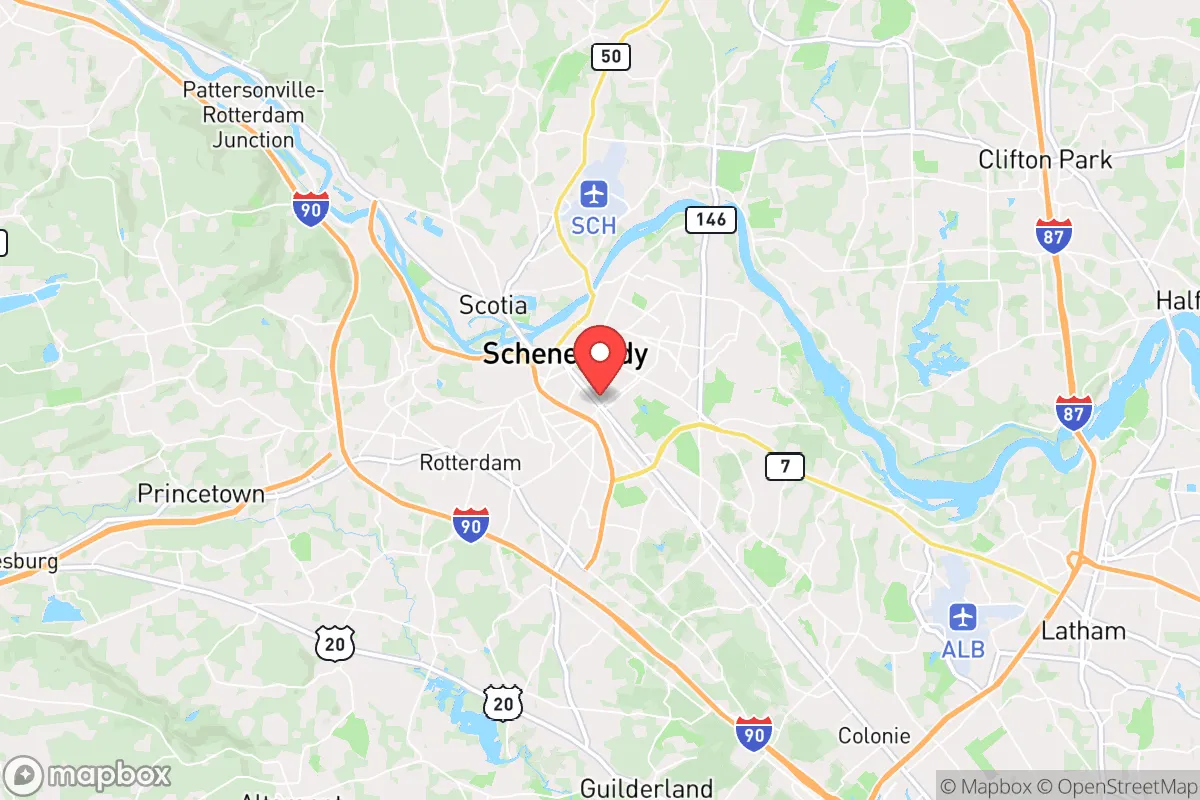
District shown is the primary district for this city’s centroid. Cities may span multiple districts.
Local Political AnalysisPolitical Analysis of Schenectady, NY
Schenectady, New York, has a Cook PVI of D+8, meaning it leans heavily Democratic, and that tilt has only gotten more pronounced over the last decade. If you’ve been around here long enough, you remember when the city was a mix of working-class families, union guys, and small business owners who didn’t all vote the same way. Now, it’s a solidly blue stronghold where progressive policies tend to get a rubber stamp, and the local government often pushes ideas that feel disconnected from the folks who actually keep the lights on. The trajectory is clear: more regulation, more taxes, and a growing sense that individual freedoms take a backseat to the latest social agenda.
How it compares
Compared to its neighbors, Schenectady stands out as the most left-leaning city in the Capital Region. Drive ten miles north to Saratoga Springs, and you’ll find a more balanced political scene—still blue-leaning, but with a vocal conservative minority that actually gets heard. Head west to the rural towns of Duanesburg or Esperance, and you’re in solidly red territory, where people still wave the Gadsden flag and talk about property rights without irony. Even Albany, the state capital, has a more mixed reputation than Schenectady these days, thanks to its larger business community and state worker base that doesn’t always fall in line with the loudest activists. Schenectady, though, has become a place where the city council and county board rarely face serious pushback on progressive initiatives, from zoning overhauls to police oversight boards that add layers of bureaucracy without clear results.
What this means for residents
For the average person living here, the political climate translates into a few concrete headaches. Property taxes are already among the highest in the state, and every new social program or diversity initiative comes with a price tag that lands on your assessment. The city’s push for “equity” in housing and development has led to more red tape for landlords and small builders, making it harder to fix up an old duplex or start a side business without hiring a lawyer. Meanwhile, the school board has leaned into curriculum changes that prioritize identity politics over reading and math, which has driven some families to private schools or the suburbs. If you value personal freedom—like deciding how to use your own land, what your kids learn, or whether to carry a firearm for protection—Schenectady’s direction is a slow but steady erosion of those choices.
Culturally, the city has a proud industrial history, but the political class seems embarrassed by it. The old General Electric plant is a museum piece now, and the talk is all about “green jobs” and transit-oriented development that sounds good in a press release but rarely creates the kind of stable, middle-class work people actually need. The biggest policy distinction here is the city’s willingness to experiment with progressive pet projects—like guaranteed income pilots and sanctuary city policies—while basic services like snow removal and pothole repair get the short end of the budget. If you’re thinking of moving here, just know that the political machine is humming along, and it’s not particularly friendly to anyone who questions the direction. It’s a friendly town in many ways, but the politics are increasingly one-sided, and that’s not likely to change anytime soon.

State Political ClimatePolitical Climate in New York
State Political AnalysisPolitical Environment in the State
New York State has been a solidly blue stronghold for decades, with Democrats controlling every statewide office and both legislative chambers, but the real story is the growing chasm between the deep-blue New York City metro and the increasingly red upstate regions. Over the last 20 years, the state has lurched further left on taxes, crime, and education policy, while rural and suburban counties have pushed back hard, flipping many local offices red. The 2022 gubernatorial race saw Republican Lee Zeldin come within 6 points of winning—a shock to the system that revealed just how many New Yorkers are fed up with one-party rule.
Urban vs. rural divide
The political map of New York is a tale of two states. New York City and its inner suburbs—Westchester, Nassau, and Suffolk counties—drive the state’s blue lean, with Manhattan and Brooklyn routinely delivering 80%+ Democratic margins. But drive an hour north or west, and the landscape shifts dramatically. Erie County (Buffalo) and Monroe County (Rochester) are purple-to-blue in their urban cores but surrounded by deep-red towns. The real conservative strongholds are the Southern Tier (counties like Steuben, Chemung, and Allegany), the North Country (St. Lawrence, Jefferson, and Clinton counties), and the Finger Lakes region outside the cities. In 2020, Donald Trump won 56 of New York’s 62 counties, but lost the state by 23 points because of NYC’s sheer population weight. That disconnect fuels constant tension over state funding, gun laws, and energy policy—upstate feels ruled by downstate votes.
Policy environment
New York’s policy climate is among the most progressive in the nation, and it shows in the wallet. The state has the highest combined state and local tax burden in the country, with a top income tax rate of 10.9% and property taxes that routinely exceed 2% of home value. The 2019 Climate Leadership and Community Protection Act mandates a 70% renewable energy grid by 2030 and net-zero emissions by 2050—a costly mandate that has driven up electricity rates 30% faster than the national average. On education, the state’s Board of Regents has pushed progressive curriculum changes, including the controversial “Dignity for All Students Act” and social-emotional learning standards that many parents view as ideological. Healthcare is heavily regulated, with a state-run health exchange and strict certificate-of-need laws that limit new hospital construction. Election laws are among the most liberal: no-excuse absentee voting, early voting, and automatic voter registration are all in place, though voter ID remains absent—a point of concern for those worried about election integrity.
Trajectory & freedom
Over the past five years, New York has moved decisively toward less personal freedom in several key areas. The 2019 SAFE Act was already one of the nation’s strictest gun laws, but the 2022 Concealed Carry Improvement Act went further, banning firearms from “sensitive locations” like Times Square and requiring applicants to prove “good moral character”—a standard critics say is subjective and ripe for abuse. On parental rights, the state passed the “Gender Expression Non-Discrimination Act” (GENDA) and has fought to keep transgender medical procedures accessible to minors, overriding local school boards that tried to notify parents. The 2020 bail reform law eliminated cash bail for most non-violent felonies, leading to a surge in repeat offending that has rattled suburban communities. Property rights took a hit with the 2019 Housing Stability and Tenant Protection Act, which effectively ended vacancy decontrol in NYC and made it harder for landlords to evict problem tenants. Meanwhile, the state’s “Green Light Law” (2019) allows undocumented immigrants to obtain driver’s licenses, and the state has repeatedly blocked ICE from accessing DMV records—a clear sanctuary posture that frustrates those who prioritize immigration enforcement.
Civil unrest & political movements
New York has been a flashpoint for both left-wing activism and conservative backlash. The 2020 George Floyd protests saw massive, sometimes violent demonstrations in NYC, Buffalo, and Rochester, with property damage and looting that led to a spike in anti-police sentiment and subsequent defunding efforts. The “Defund the Police” movement had real teeth in NYC, where the city council cut $1 billion from the NYPD budget in 2020 (though much was later restored). On the right, the “New York State Rifle & Pistol Association” has been the lead plaintiff in multiple Supreme Court challenges, including the landmark NYSRPA v. Bruen (2022) that struck down the state’s old “may-issue” concealed carry law. The “Parental Rights” movement has grown rapidly in suburbs like Long Island’s Nassau County and Westchester, where school board meetings have become battlegrounds over critical race theory and LGBTQ curriculum. The “New York State Independence Party” and various secessionist movements in upstate counties (like the proposed “State of New Amsterdam” or “State of Niagara”) have gained online traction but little legislative success. Election integrity remains a hot-button issue: the 2020 election saw widespread use of mail-in ballots under emergency COVID rules, and the state’s refusal to audit signatures or require ID has left many conservatives skeptical of results.
Projection
Over the next 5-10 years, New York’s political trajectory points toward continued blue dominance at the state level, but with growing internal friction. Demographic trends are working against the left: New York lost a congressional seat after the 2020 census due to population decline, and the exodus is disproportionately from high-tax, high-regulation blue counties. The 2024 presidential election will likely see Trump improve his upstate margins while losing the state by a smaller margin than 2020. The state’s “Mansion Tax” on high-value real estate and the new “Progressive Income Tax” brackets (up to 14.8% for top earners) are accelerating the departure of wealthy families to Florida, Texas, and Tennessee. However, the state’s deep-blue legislative supermajorities mean that major policy reversals are unlikely—expect more gun control, more renewable energy mandates, and more sanctuary policies. The wild card is the 2026 gubernatorial race: if a moderate Democrat wins the primary, they might tack to the center on crime and taxes, but a progressive nominee would likely double down. For a conservative moving in now, the realistic expectation is that New York will remain a high-tax, high-regulation state with a strong progressive tilt, but with pockets of red resistance in the suburbs and rural areas that can make local life more bearable.
For a new resident—especially a conservative parent or single professional—the bottom line is that New York offers world-class economic opportunity in NYC and beautiful natural landscapes upstate, but at the cost of constant political friction. You’ll pay more in taxes, deal with more regulations, and watch your children’s schools adopt curricula you may not agree with. The trade-off is access to some of the best healthcare, universities, and cultural institutions on the planet. If you can afford the financial and ideological price tag, and you’re willing to fight for your values at the local level (school boards, town councils, county legislatures), New York can still work. But if you’re looking for a state that respects your wallet, your gun rights, and your parental authority, you’ll find that freedom is increasingly a luxury good here—and one that’s getting more expensive every year.
* Values derived from national, state, county, city and local statistics and may differ in a specific area. Last updated: 2026-05-01T19:42:52.000Z
Narrative content on this page is AI-generated and may contain mistakes. Verify any details that matter before acting on them.
ReloMaps may earn a commission from affiliate links at no extra cost to you.

