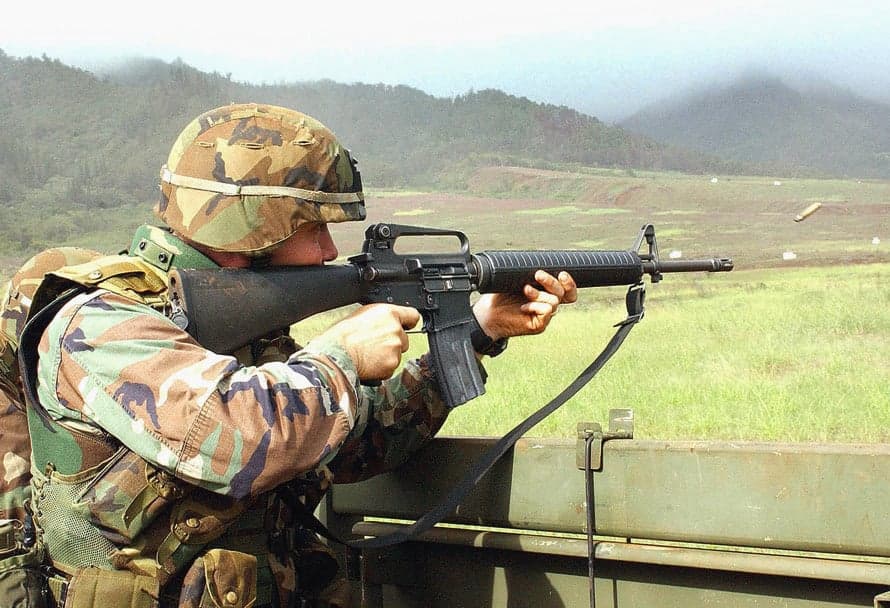
Photo: Wikipedia
Personal Sovereignty in Schofield Barracks, HI
Moderate friction. Expect trade-offs in some aspect of personal liberty and independence.
What does Personal Sovereignty tell us?
Personal Sovereignty measures your capacity for self-reliance and independence with minimal government friction. Higher scores mean fewer barriers between you and the way you want to live... but it assumes you have the space you need and good neighbors.
What does this tell us?
Personal Sovereignty measures your capacity for self-reliance and independence with minimal government friction. Higher scores mean fewer barriers between you and the way you want to live... but it assumes you have the space you need and good neighbors.
State Policy
Energy independence: Importer (2% of energy produced in-state)
Personal Liberty
Homesteading

Personal Liberty Analysis
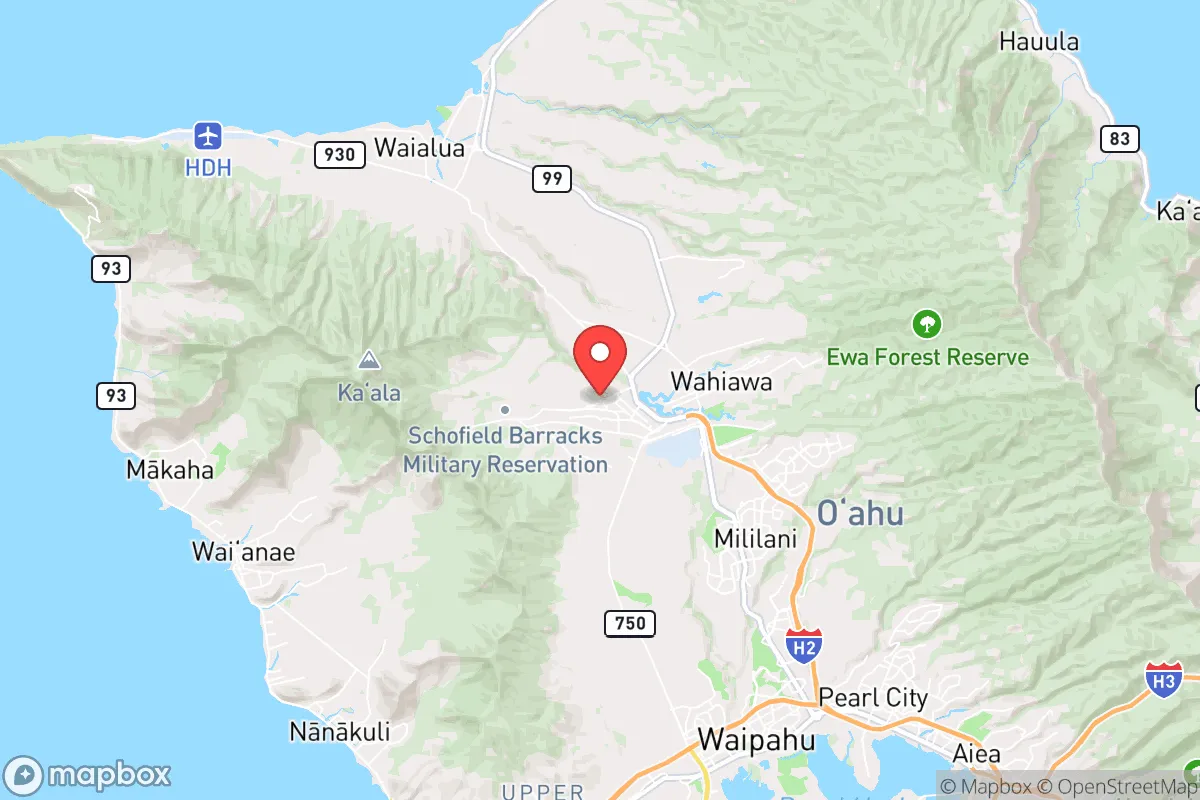
Schofield Barracks, located on the island of Oahu, presents a uniquely constrained environment for personal sovereignty, where military base jurisdiction, Hawaii state law, and island geography combine to create a tightly regulated atmosphere. For the conservative-leaning individual or family accustomed to mainland freedoms, the autonomy here is significantly curtailed by state-level mandates, a heavy tax burden, and limited options for self-reliance. While the military community offers some insulation from the more progressive elements of Honolulu politics, the reality is that living on a base in Hawaii means navigating layers of federal and state authority that leave little room for the kind of independent, prepper-oriented lifestyle many seek. This analysis examines the specific sovereignty trade-offs for those stationed at or considering relocation to Schofield Barracks.
Tax burden and regulatory posture: How state and base rules limit financial freedom
Hawaii imposes one of the heaviest tax burdens in the nation, which directly impacts financial autonomy for those living at Schofield Barracks. The state has a progressive income tax with rates up to 11%, and while military base pay is exempt from state income tax under the Servicemembers Civil Relief Act, spouses working off-base and any non-military income are fully subject to these rates. The general excise tax (GET) of 4% applies to nearly all goods and services, including groceries and medical supplies, effectively acting as a hidden sales tax that raises the cost of living by an estimated 15-20% compared to the mainland. Property taxes, while relatively low for Hawaii residents due to a homeowner exemption, are still higher than many conservative-friendly states like Texas or Florida. The regulatory posture on Oahu is aggressive: strict land-use laws, building codes, and environmental regulations make any form of independent construction or business startup a bureaucratic ordeal. For a survivalist mindset, this means every dollar earned is taxed multiple times, and the ability to legally modify property or start a side business is heavily restricted by both state and base command policies.
Self-defense and gun law specifics: What you can and cannot do on base and in Hawaii
Self-defense rights at Schofield Barracks are severely limited by both federal military regulations and Hawaii state law, creating a near-total prohibition on personal firearms for most residents. On base, all firearms must be registered with the Provost Marshal’s Office, stored in the base armory or a command-approved safe, and are generally not permitted in personal vehicles or barracks rooms. Off base, Hawaii has some of the strictest gun laws in the country: a permit-to-purchase requirement, a 14-day waiting period, a ban on "assault weapons" (defined broadly to include many common semi-automatic rifles), magazine capacity limits of 10 rounds, and no concealed carry permits issued to civilians except under rare, court-ordered circumstances. The state does not recognize any other state's concealed carry permits. For the prepper, this means the ability to defend your home or family with a firearm is practically nonexistent. Pepper spray and knives are legal but subject to restrictions. The only realistic self-defense option is physical security measures (locks, lights, dogs) and situational awareness, but the legal environment actively discourages any armed response. This is a major sovereignty compromise for anyone who views personal defense as a fundamental right.
Self-reliance and homesteading viability: Lot sizes, zoning, and off-grid feasibility
Homesteading and off-grid living are nearly impossible at Schofield Barracks and the surrounding areas of central Oahu. On-base housing consists of standard military family quarters with small lots (typically 0.1 to 0.25 acres) governed by strict landscaping and maintenance rules—no backyard chickens, no large gardens, no structures without approval. Off base, the nearby towns of Wahiawa, Mililani, and Kunia are zoned for suburban residential use with minimum lot sizes of 5,000 to 7,500 square feet, but most homes sit on less than a quarter acre. Agricultural zoning exists in the North Shore and Waianae areas, but these are 30-45 minutes away and subject to Hawaii's aggressive land-use laws, which require state permits for any non-agricultural structures or activities. Off-grid systems like solar panels, rainwater catchment, and composting toilets are legal but heavily regulated: solar requires a permit and grid-tie agreement with Hawaiian Electric, rainwater catchment must meet health department standards, and composting toilets are only allowed in areas without sewer access. The island's isolation means reliance on imported food, fuel, and supplies is absolute. For a survivalist, this is a worst-case scenario: no land for self-sufficiency, no legal way to store bulk supplies, and total dependence on a fragile supply chain. The only viable option is a small container garden or hydroponic setup indoors, but even that is limited by space and base rules.
Personal liberties: Parental rights, medical autonomy, speech, and property
Personal liberties at Schofield Barracks are constrained by a combination of military command authority and Hawaii state law, with notable impacts on parental rights, medical autonomy, and property freedom. Parental rights are generally respected within the military community, but Hawaii state law mandates certain vaccine requirements for school attendance (including COVID-19 for public schools) and has a strong child welfare system that can override parental decisions in medical or educational matters. Medical autonomy is limited: Hawaii has strict prescription drug monitoring, mandatory reporting laws for alternative treatments, and a heavily regulated medical cannabis program that is not available on federal property. On base, the military healthcare system (Tricare) dictates treatment options, and alternative or holistic medicine is rarely covered. Free speech is protected under the First Amendment, but on a military installation, command can restrict political activities, protests, and distribution of materials deemed disruptive. Property rights are weak: the military can inspect housing at any time, and off-base property is subject to Hawaii's high property taxes and strict landlord-tenant laws. For a conservative concerned with government overreach, the cumulative effect is a loss of control over family health decisions, personal medical choices, and the sanctity of one's home. The only saving grace is the strong sense of community among military families, which can provide a buffer against some of the more intrusive state policies.
Overall, personal sovereignty at Schofield Barracks ranks among the lowest for any military installation in the United States, comparable to other high-regulation states like California or New York. The combination of Hawaii's progressive tax structure, near-total gun control, restrictive land-use laws, and limited off-grid viability creates an environment where self-reliance is actively discouraged. For the survivalist or prepper, this is a temporary assignment to be endured, not a place to put down roots. The best strategy is to minimize financial exposure, maintain legal compliance, and focus on building skills and networks that can be applied elsewhere. If you value the ability to defend your family, control your medical choices, or live independently, Schofield Barracks is a place to pass through, not a place to build a sovereign life. The trade-off is the security of a military career and the camaraderie of the base community, but the price is a significant surrender of personal autonomy to both state and federal authority.

* Values derived from national, state, county, city and local statistics and may differ in a specific area. Last updated: 2026-04-24T07:19:23.000Z
Narrative content on this page is AI-generated and may contain mistakes. Verify any details that matter before acting on them.
ReloMaps may earn a commission from affiliate links at no extra cost to you.

