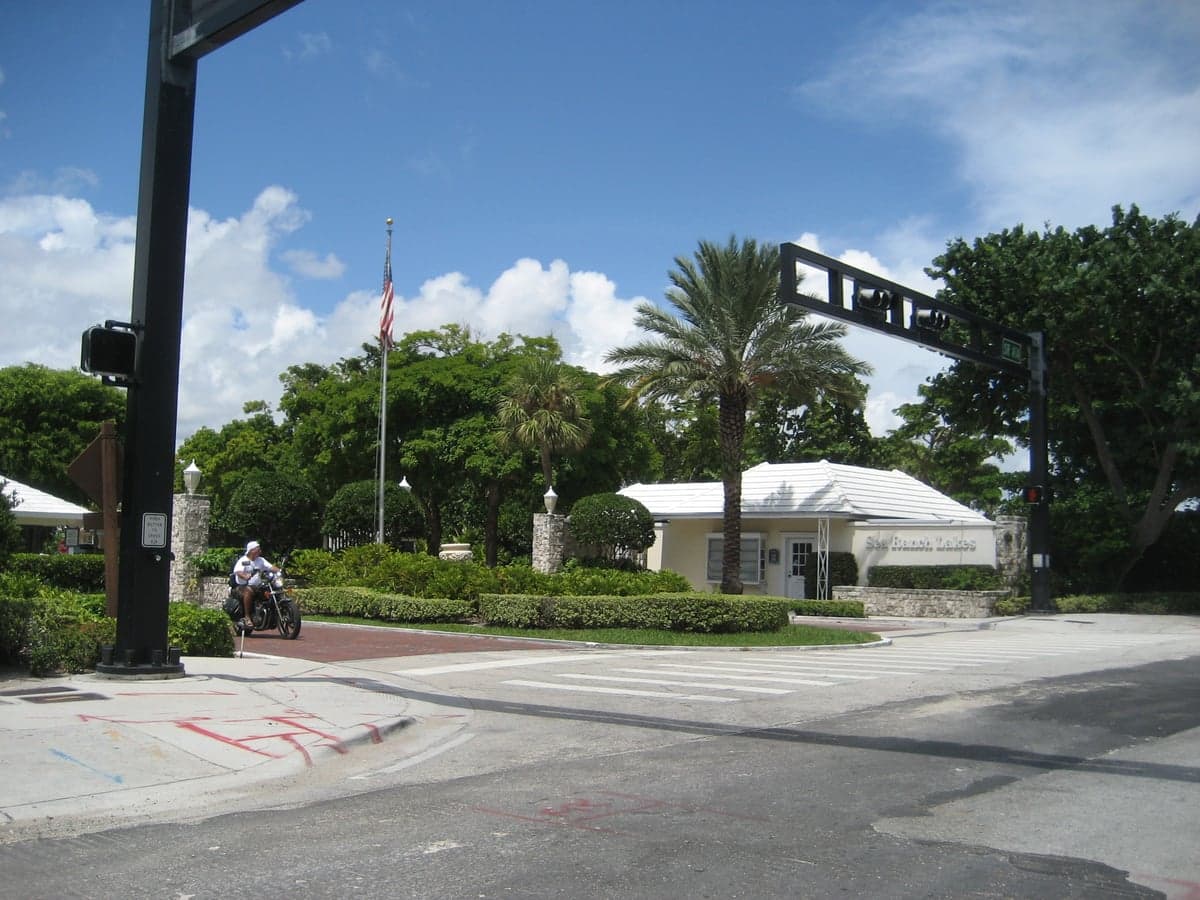
Photo: Wikipedia
Demographics of Sea Ranch Lakes, FL
Affluence Level in Sea Ranch Lakes, FL
An elite concentration of wealth — high incomes, strong home values, advanced degrees, and minimal poverty signal a top-tier socioeconomic profile.
Census doesn't track above $250K
People of Sea Ranch Lakes, FL
Sea Ranch Lakes, Florida, is a small, affluent, and tightly knit village of 440 residents, characterized by its exceptionally high college attainment rate of 78.4% and a population that is predominantly White (75.7%) with a notable Hispanic minority (10.9%). The village’s identity is rooted in its planned, exclusive nature as a waterfront enclave, where residents value privacy, security, and direct access to the Intracoastal Waterway. Its demographic profile reflects a community of professionals and retirees who have chosen a controlled, low-density lifestyle just north of Fort Lauderdale.
How the city was settled and grew
Unlike many older Florida towns, Sea Ranch Lakes was not settled by early pioneers or agricultural workers. It is a planned community developed in the late 1950s and early 1960s on what was previously undeveloped coastal land. The original population consisted of affluent white professionals and business owners from the Northeast and Midwest who were drawn by the promise of a secure, waterfront lifestyle. The village was incorporated in 1965, and its earliest residents built homes in the Sea Ranch Lakes Estates section, the original gated core of the community. These founding families established the village’s character as a private, self-governing enclave with its own police force and strict zoning codes. There was no significant immigrant wave during this period; the population was almost entirely native-born white, reflecting the broader pattern of exclusive suburban development in mid-century Broward County.
Modern era (post-1965)
After incorporation, Sea Ranch Lakes remained a stable, homogenous community for decades, with little demographic change through the 1990s. The post-1965 immigration reforms that reshaped much of South Florida had a muted effect here due to the village’s high property values and limited housing stock. The most notable shift began in the 2000s and accelerated after 2010, as affluent Hispanic and Indian-subcontinent families began purchasing homes in the Harbor Village and Lakeside Drive corridors. Today, the Hispanic population stands at 10.9%, and the Indian-subcontinent population at 3.9%, while the East/Southeast Asian population is a modest 1.4%. These groups are not concentrated in distinct ethnic enclaves but are integrated into the village’s existing housing stock, reflecting their high socioeconomic status. The Black population remains negligible at 0.9%, a figure that has not changed meaningfully in decades. The foreign-born share of 5.5% is low by South Florida standards, indicating that most residents are native-born Americans who moved to the village from elsewhere in the United States.
The future
The population of Sea Ranch Lakes is likely to remain small and stable, with gradual diversification driven by the same forces that have brought Hispanic and Indian-subcontinent families in recent years. The village’s high property values and lack of new construction will prevent rapid demographic change. The White share, while still dominant, will continue to edge downward as older residents sell to younger, more diverse buyers. The Indian-subcontinent and Hispanic shares are expected to grow slowly, but the village will not tribalize into distinct enclaves given its small size and unified housing stock. The East/Southeast Asian population is likely to remain a small fraction. The foreign-born share may rise slightly but will stay well below the Broward County average. The village’s character as a wealthy, secure, and family-oriented enclave will persist, with new residents assimilating into the existing social fabric rather than forming separate communities.
For a conservative-leaning individual or parent considering a move, Sea Ranch Lakes offers a stable, low-crime, and highly educated environment where demographic change is gradual and integration is the norm. The village is becoming slightly more diverse but remains overwhelmingly White and native-born, with a strong sense of community governance and property stewardship. It is not a place of rapid flux or ethnic clustering, but a quiet, affluent pocket where newcomers are expected to uphold the established standards of the neighborhood.

* Values derived from national, state, county, city and local statistics and may differ in a specific area. Last updated: 2026-05-14T02:16:47.000Z
Narrative content on this page is AI-generated and may contain mistakes. Verify any details that matter before acting on them.
ReloMaps may earn a commission from affiliate links at no extra cost to you.

