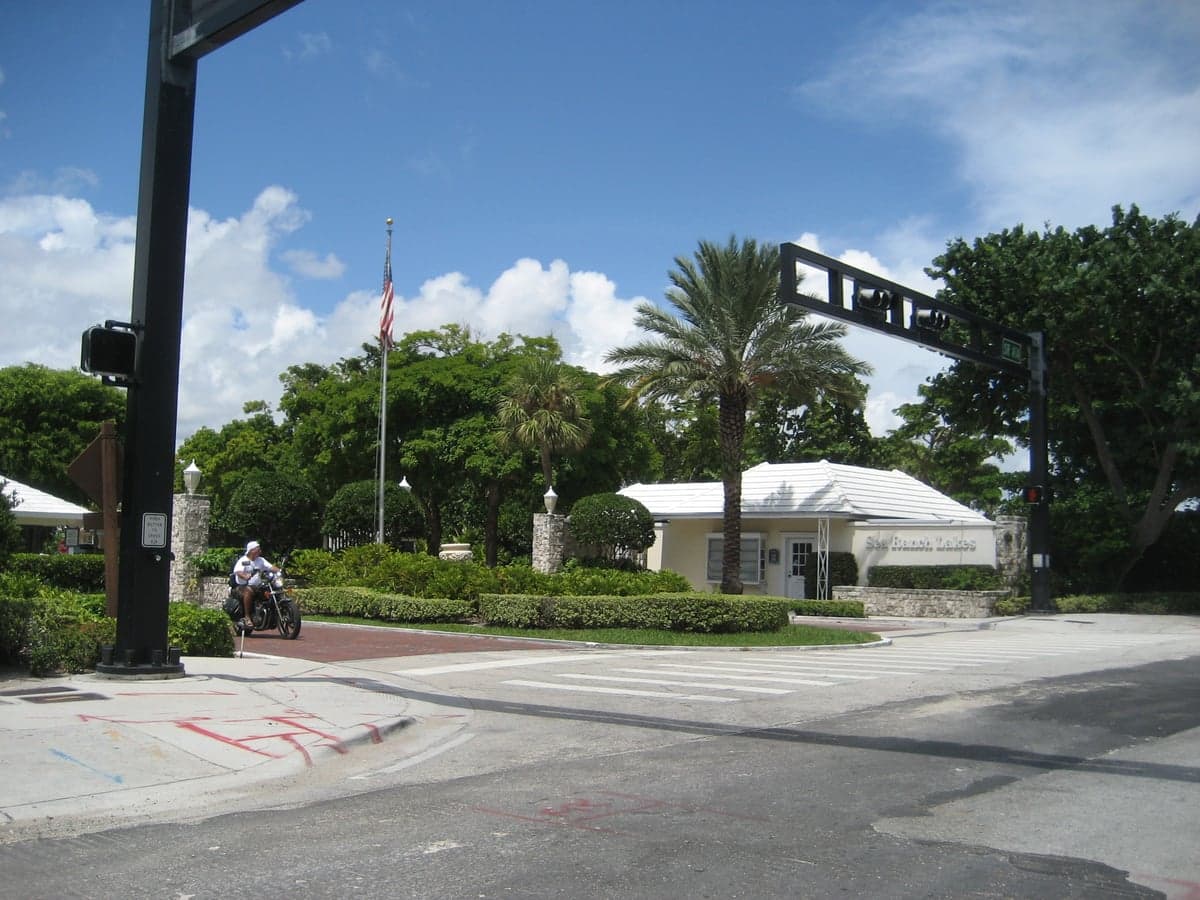
Photo: Wikipedia
Political ClimatePolitical Climate in Sea Ranch Lakes, FL
District shown is the primary district for this city’s centroid. Cities may span multiple districts.
Local Political AnalysisPolitical Analysis of Sea Ranch Lakes, FL
Sea Ranch Lakes has always been a bit of a blue dot in a red county, but don’t let the D+2 Cook PVI fool you—this isn’t some progressive stronghold. It’s a small, tight-knit village where folks still wave to each other, and the local politics lean more toward keeping things quiet and orderly than pushing any agenda. Over the last decade, the shift has been subtle but real: you’ll see more yard signs for national Democrats than you used to, but the local council meetings are still dominated by talk of seawalls and landscaping codes, not social crusades. The trajectory here isn’t a hard left turn—it’s more like a gentle drift, and that drift has some of us longtime residents watching a little closer every election cycle.
How it compares
Compare Sea Ranch Lakes to the rest of Florida, which carries a solid R+5 Cook PVI, and you’re looking at two different worlds under the same sun. Drive ten minutes west to Tamarac or north to Pompano Beach, and you’ll find communities that vote more in line with the state’s conservative lean—lower taxes, fewer regulations, and a general distrust of Tallahassee telling you how to live. Sea Ranch Lakes, by contrast, has a higher concentration of retirees from the Northeast and snowbirds who bring their blue-state habits with them. That D+2 rating means the village is slightly more likely to support candidates who favor bigger government programs and stricter environmental rules, which can feel like a thumb on the scale of personal freedom. In a state where the average voter wants less interference, this little enclave stands out as a place where the local government has a bit more say in your day-to-day—from landscaping ordinances to noise restrictions—than you’d find in, say, unincorporated Broward County.
What this means for residents
For someone who values personal liberty and minimal government overreach, living in Sea Ranch Lakes means accepting a trade-off. The village’s small size means you can’t escape the long arm of local codes—there’s a homeowners’ association with real teeth, and the town council isn’t shy about enforcing rules on everything from fence heights to holiday decorations. That’s fine if you like a tidy neighborhood, but it can feel suffocating if you’re used to the “live and let live” attitude that defines much of Florida. The progressive tilt also shows up in subtle ways: you’ll see more support for state-level tax hikes and environmental mandates here than in the surrounding areas. If you’re the type who thinks the government should stay out of your wallet and your backyard, this isn’t the worst place to be—but you’ll want to keep an eye on local elections, because a few more votes could tip the balance toward even more regulation.
Culturally, Sea Ranch Lakes is a bit of an island. The village has a reputation for being insular and protective of its quiet character, which can be a double-edged sword. On one hand, you get a safe, well-maintained community where people look out for each other. On the other, there’s a tendency to embrace policies that prioritize collective conformity over individual choice—like strict building codes that can make renovations a headache. Compared to the broader Florida ethos of rugged independence, Sea Ranch Lakes feels more like a planned community where the rules are part of the charm. For a conservative-minded resident, the key is staying engaged: the local political climate can shift with a single election cycle, and the best way to keep government overreach at bay is to show up at those council meetings and remind everyone that freedom isn’t a dirty word.

State Political ClimatePolitical Climate in Florida
State Political AnalysisPolitical Environment in the State
Florida is a solidly Republican state with a Cook PVI of R+5, but calling it a simple red state misses the real story. Over the past 20 years, the state has shifted from a classic purple battleground—decided by 537 votes in 2000—to a reliably conservative stronghold, driven by a massive influx of domestic migrants from blue states and a growing Hispanic electorate that leans right on economics and social issues. The dominant coalition is a mix of traditional Southern conservatives, Cuban-American Republicans in Miami-Dade, and suburban families fleeing high taxes and lockdowns elsewhere, all united by a deep skepticism of federal overreach and a preference for low taxes and local control.
Urban vs. rural divide
The political map of Florida is starkly divided. The major metros—Miami-Dade County, Orlando (Orange County), and Tampa (Hillsborough County)—are Democratic strongholds, but their margins have shrunk dramatically. Miami-Dade, once a Democratic lock, flipped to Trump in 2020 and 2024, driven by Cuban and Venezuelan voters who despise socialism. Jacksonville (Duval County) is a perennial swing county that has trended right. Meanwhile, the rural Panhandle—places like Panama City, Pensacola, and Tallahassee's surrounding counties—votes 70-80% Republican. The real story is the I-4 corridor (Tampa to Daytona), where suburban counties like Volusia and Polk have shifted hard right, while Pinellas County (St. Petersburg) remains a purple outlier. The divide isn't just urban vs. rural—it's coastal vs. inland, with the Atlantic coast from Fort Lauderdale to West Palm Beach still blue but shrinking, while the Gulf Coast and interior are deep red.
Policy environment
Florida's policy environment is a conservative's dream, built on three pillars: no state income tax, weak unions, and preemption of local control. The state has a constitutional cap on property tax increases (Save Our Homes), and the legislature regularly cuts corporate and sales taxes. Education policy is dominated by school choice—Florida has the nation's largest voucher program (the Family Empowerment Scholarship), and charter schools are everywhere. The state banned Critical Race Theory in schools and passed the Parental Rights in Education Act (HB 1557), which prohibits classroom instruction on sexual orientation and gender identity in K-3. Healthcare is deregulated: no Medicaid expansion, no certificate-of-need laws for hospitals, and a thriving telemedicine market. Election laws are strict—SB 90 (2021) limited drop boxes, required ID for mail ballots, and banned ballot harvesting. The state also preempts local gun laws, meaning a Palm Beach or Miami Beach can't pass its own restrictions.
Trajectory & freedom
Florida is becoming more free in nearly every dimension, especially compared to the Northeast and West Coast. The Second Amendment Preservation Act (2024) prohibits state enforcement of any future federal gun bans. The Live Free or Die ethos was codified during COVID: Governor DeSantis banned vaccine passports, kept businesses open, and sued the CDC over cruise ship restrictions. Parental rights expanded with HB 1 (2023), which banned gender transition procedures for minors. Property rights were strengthened by SB 250 (2023), which limits homeowners' association fines and forbids HOAs from banning solar panels or clotheslines. The Florida Freedom Fund (2024) provides legal defense for residents sued by out-of-state entities over speech or religious practice. The only concerning trend is the state's aggressive use of preemption—while it blocks local progressive overreach, it also centralizes power in Tallahassee, which can feel like a double-edged sword for local control advocates.
Civil unrest & political movements
Florida has seen remarkably little civil unrest compared to peer states. The 2020 BLM protests in Miami and Orlando were smaller and shorter than in Portland or Seattle, partly because the state's stand-your-ground laws and quick law enforcement response deterred prolonged occupation. The major political movement is the Moms for Liberty network, which started in Brevard County (Cocoa Beach area) and now has chapters statewide, fighting school board elections and library content. On the left, the Dream Defenders (based in Miami) organize around prison reform and racial justice, but they have little legislative success. Immigration politics are hot: the state passed SB 1718 (2023), which requires hospitals to ask about immigration status, bans local sanctuary policies, and mandates E-Verify for employers. There have been no secession or nullification movements of note, but there is a growing "Free Florida" sentiment among conservatives who see the state as a refuge from federal overreach. Election integrity remains a flashpoint: the 2020 and 2022 elections were clean by all measures, but the state created a Office of Election Crimes and Security in 2022 to prosecute voter fraud, which has charged a handful of non-citizens who voted.
Projection
Over the next 5-10 years, Florida will likely become more conservative, not less. The in-migration is overwhelmingly from blue states—New York, California, Illinois—and these newcomers are self-selecting for low taxes, school choice, and gun rights. The Hispanic vote, especially in Miami-Dade and Osceola County (Orlando area), is trending right as younger generations prioritize economic freedom over identity politics. The state's population is projected to grow by 3 million by 2035, mostly in red-leaning suburbs like The Villages, Naples, and Palm Coast. The only wildcard is climate change: rising sea levels could hit coastal blue strongholds like Miami Beach and Fort Lauderdale hardest, potentially displacing Democratic voters inland. Expect continued expansion of school choice, further tax cuts, and more preemption of local progressive ordinances. The state will remain a national leader in conservative governance, but the tension between local control and state preemption will persist.
For a new resident, the bottom line is clear: Florida offers a political environment that respects personal freedom, keeps taxes low, and prioritizes parental rights and school choice. You'll find a state that actively resists federal overreach and progressive social experiments. The trade-off is that local governments have less power to set their own rules, and the political culture can feel like a permanent campaign. If you value low taxes, gun rights, and a government that stays out of your life, Florida is one of the best bets in the country. Just be prepared for the heat—both the weather and the political intensity.
* Values derived from national, state, county, city and local statistics and may differ in a specific area. Last updated: 2026-05-14T02:16:47.000Z
Narrative content on this page is AI-generated and may contain mistakes. Verify any details that matter before acting on them.
ReloMaps may earn a commission from affiliate links at no extra cost to you.

