Photo: Wikipedia
Demographics of Sewickley Heights, PA
Affluence Level in Sewickley Heights, PA
A wealthy area with high-earning, well-educated households. Incomes, home values, and educational attainment meaningfully outpace national averages.
People of Sewickley Heights, PA
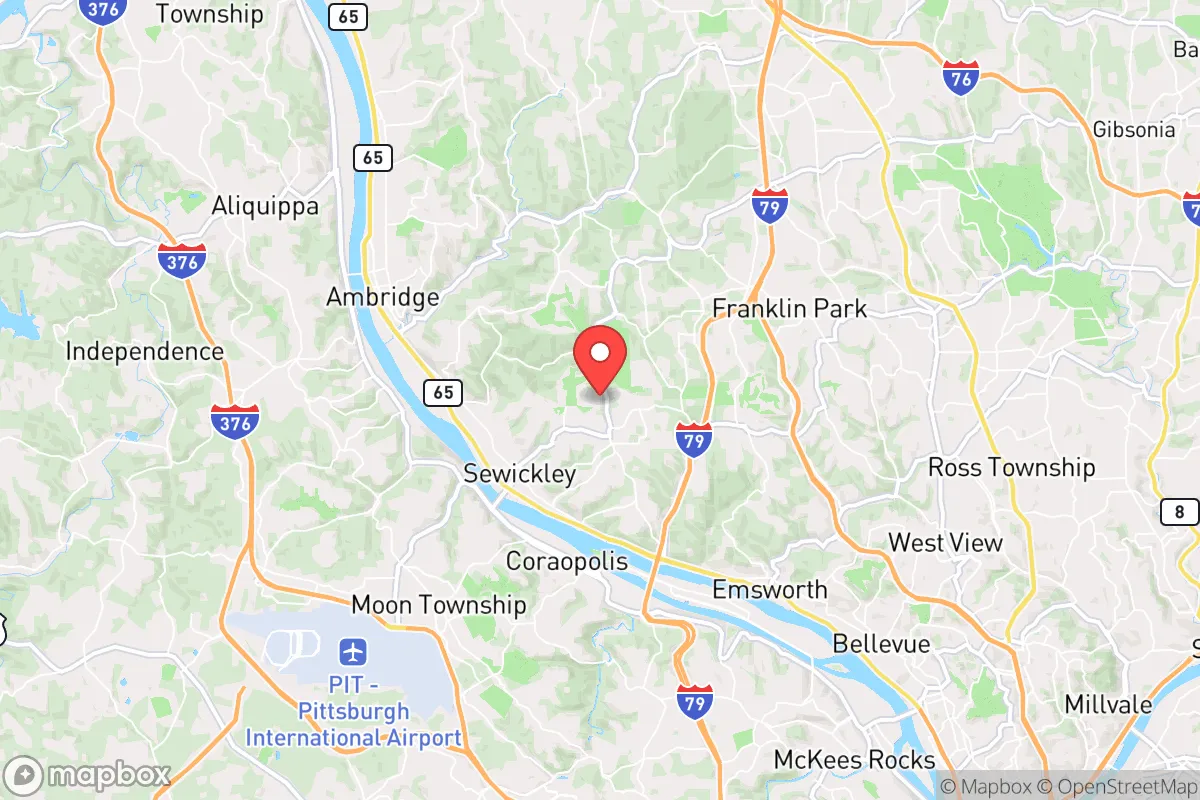
Sewickley Heights, Pennsylvania, is an affluent, low-density borough of 746 residents that remains one of the most racially and ethnically homogenous communities in Allegheny County. With a population that is 95.6% White, a foreign-born share of just 0.8%, and a college education rate of 73.0%, the borough is defined by its legacy of inherited wealth, large estate properties, and a deliberate preservation of its rural, exclusive character. Today, it functions as a quiet, wooded enclave for established families and professionals who prioritize privacy, land ownership, and proximity to Pittsburgh's downtown core, roughly 12 miles to the east.
How the city was settled and grew
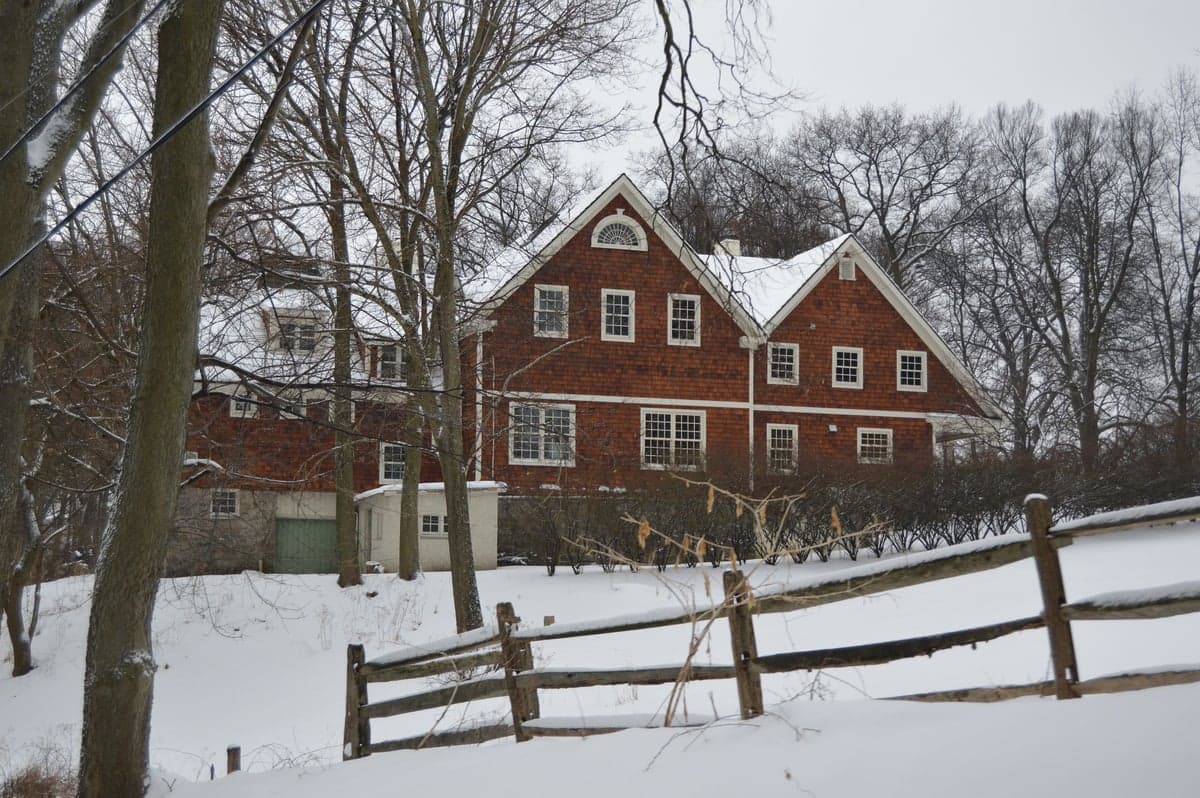
Sewickley Heights was not a product of industrial immigration or frontier settlement. Instead, it was carved from farmland and country estates in the early 20th century as a planned, exclusive residential retreat for Pittsburgh's industrial elite. The borough was formally incorporated in 1935, but its character was set decades earlier when wealthy families from the city's steel, banking, and coal industries—names like Mellon, Heinz, and Scaife—began purchasing large tracts of land along the Ohio River valley. These families built sprawling mansions and country homes in what became known as the Estates District, a collection of properties along Beaver Road and Little Sewickley Creek Road that remain the borough's defining residential neighborhoods. Unlike the dense, ethnic neighborhoods of Pittsburgh proper, Sewickley Heights attracted no waves of European immigrants or working-class laborers. The original population was exclusively White, Protestant, and upper-class, drawn by the promise of rural seclusion within commuting distance of the city. The borough's zoning laws, which require minimum lot sizes of two to five acres, were explicitly designed to maintain this character and prevent subdivision into smaller, more affordable lots.
Modern era (post-1965)
The post-1965 era brought little demographic change to Sewickley Heights, in stark contrast to the broader Pittsburgh region. The borough's population peaked at around 900 in the 1970s and has since declined slightly to 746, reflecting a national trend of shrinking household sizes among affluent, aging populations. The 1965 Hart-Cellar Act, which opened immigration from Asia, Latin America, and Africa, had virtually no impact here: the foreign-born population remains at 0.8%, and the Asian (East/Southeast Asian) and Indian subcontinent populations are both recorded at 0.0%. The Hispanic share is 0.3%, and the Black population is 3.4%, a figure that likely reflects a small number of live-in staff or adult children of families who moved into the borough's Little Sewickley Creek corridor and Beaver Road estates. The borough's housing stock—large, historic homes on multi-acre parcels—has effectively priced out nearly all new residents except those with significant inherited or earned wealth. The few new households that have arrived since the 1990s are overwhelmingly White, college-educated professionals working in Pittsburgh's finance, legal, and medical sectors, drawn by the same seclusion and prestige that attracted the original estate builders. There are no distinct ethnic enclaves within the borough; the population is uniformly distributed across its three main residential zones: the Estates District along the ridge, the Valley near the Sewickley Creek, and the Woodland Road corridor.
The future
The demographic trajectory of Sewickley Heights points toward continued homogeneity, gradual population decline, and aging in place. The borough's median age is likely in the mid-50s, and with few young families able to afford the entry price of a $1 million-plus estate, the school-age population has been shrinking for decades. The 0.0% Asian and Indian subcontinent shares are unlikely to rise significantly, as the borough's housing stock and zoning offer no entry points for immigrant communities who typically cluster in more affordable, denser suburbs like nearby Moon Township or Robinson. The Hispanic population, at 0.3%, is negligible and shows no growth trend. The Black population of 3.4% may increase slightly if a small number of affluent Black professionals purchase estates, but the borough will almost certainly remain over 90% White for the foreseeable future. The most likely demographic shift is not ethnic or racial, but economic: as older residents pass away, their estates may be purchased by a slightly broader range of high-income households, including tech entrepreneurs and remote workers from outside the region. However, the borough's zoning and tax structure—which relies on high property values rather than commercial development—will continue to filter for the very wealthy.
For a conservative-leaning individual or family considering relocation, Sewickley Heights offers a stable, low-crime, and culturally traditional environment where property rights, privacy, and local control are deeply embedded in the borough's DNA. The trade-off is clear: you will live among a highly educated, overwhelmingly White, and aging population in a place where demographic change is measured in decades, not years. If your priority is a quiet, estate-based lifestyle with minimal exposure to urban diversity or rapid social change, Sewickley Heights delivers exactly that. If you seek a more dynamic, multi-generational, or ethnically varied community, the borough will feel static and insular. The bottom line: this is a place that has successfully preserved its character for nearly a century, and it shows no signs of changing course.

* Values derived from national, state, county, city and local statistics and may differ in a specific area. Last updated: 2026-04-27T14:33:08.000Z
Narrative content on this page is AI-generated and may contain mistakes. Verify any details that matter before acting on them.
ReloMaps may earn a commission from affiliate links at no extra cost to you.

