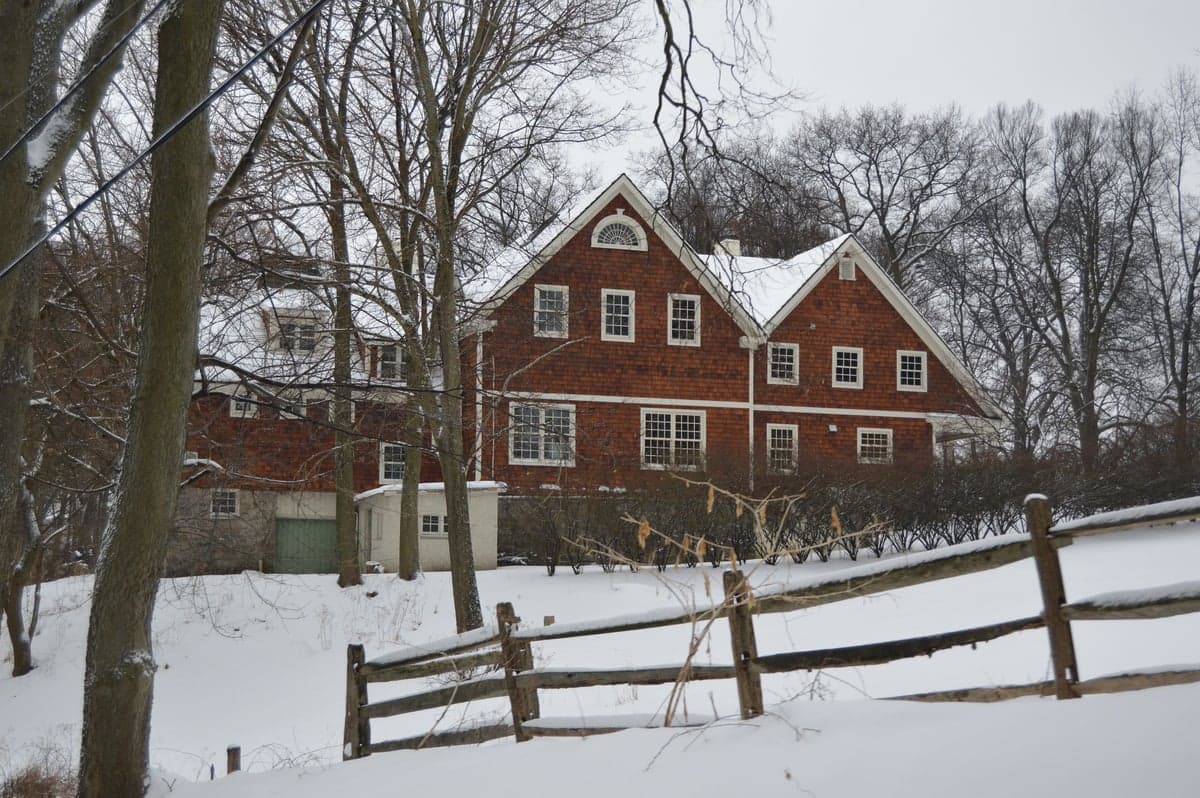
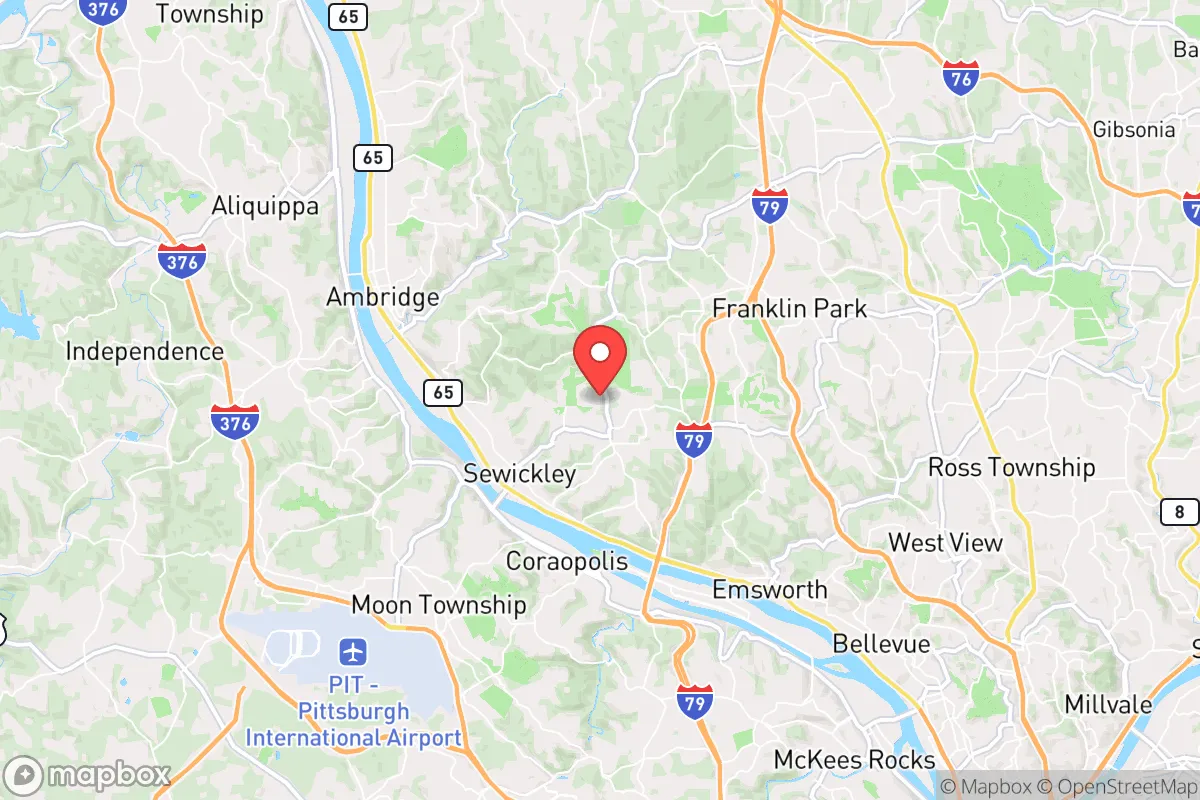
Photo: Wikipedia
Political ClimatePolitical Climate in Sewickley Heights, PA
District shown is the primary district for this city’s centroid. Cities may span multiple districts.
Local Political AnalysisPolitical Analysis of Sewickley Heights, PA
Sewickley Heights has long been a quiet, affluent enclave where folks value their privacy, their property rights, and a government that stays out of the way. While the area’s Cook PVI of D+3 might suggest a slight Democratic lean, that number doesn’t tell the whole story for this specific borough. In reality, Sewickley Heights has historically voted more conservatively than the surrounding county, with many residents favoring candidates who prioritize fiscal restraint and local control over the kind of top-down mandates we’ve seen creep in from Harrisburg and Washington. The political trajectory here is a bit of a tug-of-war: the old guard, many of whom have been here for generations, still leans right, but you can feel the pressure from the progressive wave washing over Allegheny County, especially from the city of Pittsburgh just 12 miles down the Ohio River.
How it compares
If you drive just a few miles east into Sewickley proper or down into Edgeworth, you’ll notice a more progressive vibe—those boroughs have embraced the kind of social policies that make a conservative’s skin crawl, like heavy-handed zoning restrictions and symbolic resolutions that do nothing but signal virtue. Meanwhile, Sewickley Heights remains a bit of a holdout. Compare it to places like Franklin Park or Marshall Township to the north, which are reliably red, and you’ll see the Heights sits in a strange middle ground. The D+3 PVI is largely a reflection of the county’s overall shift, not the borough’s internal sentiment. In the 2024 primaries, for instance, Sewickley Heights precincts showed stronger support for more traditional, limited-government candidates than the county average. The contrast is stark: while Pittsburgh proper has gone all-in on progressive taxation and social experiments, the Heights still values the kind of personal freedom that lets you live your life without a bureaucrat peeking over your fence.
What this means for residents
For those of us who’ve been here a while, the creeping government overreach is the biggest red flag. We’ve seen the county push for stricter land-use regulations that threaten the very character of our large, private lots—the whole reason many of us moved here. There’s a real concern that the progressive agenda from Pittsburgh will bleed into our quiet streets, bringing higher property taxes to fund programs we never voted for and mandates that tell us how to heat our homes or what kind of car we can drive. The good news is that Sewickley Heights’ small population and strong homeowners’ association give us a fighting chance to push back. Local elections matter more here than anywhere else, and we’ve managed to keep the school board and borough council from going full progressive—so far. But you can’t get complacent. Every election cycle, there’s a new push from the county to align us with their vision, and it takes constant vigilance to keep our local government focused on roads, safety, and property rights instead of social engineering.
Culturally, Sewickley Heights is a place where people still wave to their neighbors and mind their own business. You won’t find the kind of activist energy you see in Shadyside or Squirrel Hill. The policy distinctions are subtle but real: we’ve resisted the county’s push for “equity” zoning that would force higher-density housing into our neighborhoods, and we’ve kept our police force focused on actual crime rather than becoming a social services arm. Looking ahead, the long-term trend is concerning if the county keeps tilting left. But for now, Sewickley Heights remains a pocket of sanity where a conservative can still breathe easy—as long as you’re willing to show up at the polls and remind the politicians that we’re not Pittsburgh.

State Political ClimatePolitical Climate in Pennsylvania
State Political AnalysisPolitical Environment in the State
Pennsylvania has long been the ultimate swing state, but over the last 10-20 years, it’s shifted from a classic purple battleground into a place where the urban-rural divide has become a chasm. The state’s 19 electoral votes are still fiercely contested, but the coalition that wins statewide now depends almost entirely on whether Philadelphia and its suburbs can outvote the rest of the state. In 2020, Joe Biden won Pennsylvania by just over 80,000 votes, while in 2024, Donald Trump flipped it back by a razor-thin margin, proving that no single party has a lock on the commonwealth. For a conservative looking to relocate, the key takeaway is that your experience will vary wildly depending on whether you land in a deep-blue city, a red rural county, or one of the increasingly competitive suburban rings.
Urban vs. rural divide
The political map of Pennsylvania is a tale of two extremes. Philadelphia and Pittsburgh are the Democratic strongholds, with Philly alone delivering roughly 600,000 votes for Biden in 2020 — a margin that Republicans have to overcome by running up the score everywhere else. The Philadelphia collar counties — Bucks, Montgomery, Delaware, and Chester — have been trending blue for years, driven by an influx of professionals and commuters. In 2020, all four went for Biden, with Montgomery County giving him a 25-point win. Meanwhile, the vast rural expanse of central and northern Pennsylvania is deeply red. Counties like Tioga, Bradford, and Potter routinely vote 70-80% Republican. The real battlegrounds are the "collar counties" around Pittsburgh, like Westmoreland and Washington, which have shifted right as the city itself has become more liberal. Lancaster County is a fascinating microcosm: historically conservative, but with a growing Hispanic population and a liberal arts college town that has made it more competitive. If you want a reliably conservative environment, you’re looking at the rural north and central regions, or the exurbs of York and Franklin counties.
Policy environment
Pennsylvania’s state-level policy is a mixed bag that reflects its divided government. The state has a flat income tax of 3.07%, which is relatively low and hasn’t changed in years, but property taxes are among the highest in the nation — averaging over 1.5% of home value. There is no state sales tax on clothing or groceries, but the overall sales tax is 6%. On the regulatory front, Pennsylvania is not a freewheeling state. It has a complex permitting process for businesses, and the state’s environmental regulations, especially around the Marcellus Shale natural gas drilling, are stricter than in neighboring Ohio or West Virginia. Education policy is a hot-button issue: the state has a massive funding disparity between wealthy suburban districts and poorer rural ones, and Governor Josh Shapiro has pushed for increased funding for public schools, which conservatives view as a step toward more centralized control. Election laws are relatively stable, with no-excuse mail-in voting still in place after being expanded during the pandemic, though Republicans have repeatedly tried to tighten voter ID requirements. For a conservative, the policy environment is tolerable but not ideal — the tax burden is moderate, but the regulatory climate and education trends lean left.
Trajectory & freedom
Over the last five years, Pennsylvania has seen a tug-of-war between expanding and contracting personal freedoms. On the positive side for conservatives, the state is a shall-issue concealed carry state with no permit required for open carry (except in Philadelphia). In 2022, the legislature passed a law preempting local governments from enacting their own gun control measures, which was a major win for Second Amendment advocates. However, the state has moved in the wrong direction on other fronts. In 2023, Governor Shapiro signed an executive order banning discrimination based on sexual orientation and gender identity in state employment, and the state’s Department of Education has pushed for LGBTQ-inclusive curriculum standards. Parental rights have become a flashpoint, with several school boards in blue counties adopting policies that allow students to change their names and pronouns without parental consent. On medical freedom, Pennsylvania did not enact any broad vaccine mandates beyond those for healthcare workers, but the state’s health department retains broad emergency powers that conservatives view as a threat. The trajectory is concerning: the urban centers are driving a progressive agenda that is slowly seeping into state policy, while the rural areas are fighting a rear-guard action to preserve local control.
Civil unrest & political movements
Pennsylvania has seen its share of political turbulence. The 2020 election aftermath was particularly intense in Philadelphia, where Republican poll watchers alleged irregularities, and in Luzerne County, where a whistleblower claimed ballot tampering. These controversies have fueled a strong election integrity movement among conservatives, with groups like the Pennsylvania Election Integrity Network pushing for stricter laws. On the left, the Black Lives Matter protests in Philadelphia in 2020 were large and occasionally violent, leading to property damage and a lasting distrust of city leadership. Immigration politics are less visible here than in border states, but Philadelphia is a self-declared sanctuary city, which has caused friction with the state government. There have been secessionist murmurs in the rural north — in 2020, several counties passed resolutions calling for the state to be split into two, with the conservative north and west forming a separate commonwealth. While this is unlikely, it reflects a deep cultural divide. The most visible flashpoint for a new resident would be the constant political advertising — Pennsylvania is a perennial swing state, so you’ll see non-stop campaign ads for president, Senate, and governor races every two years.
Projection
Looking ahead 5-10 years, the demographic trends are not favorable for conservatives. The population is aging, and the young, educated professionals moving into Philadelphia and Pittsburgh are overwhelmingly liberal. The Hispanic population is growing, particularly in Reading, Allentown, and Bethlehem, and while these communities are not monolithic, they have tended to vote Democratic in recent cycles. The rural areas are losing population, which means their electoral clout is shrinking. However, the state’s gerrymandered legislative districts — drawn by a bipartisan commission — have given Republicans a structural advantage in the state House and Senate, which will slow the progressive agenda. The wild card is in-migration: Pennsylvania is seeing a net inflow from New York and New Jersey, and many of these transplants are fleeing high taxes and crime, which could bring a more conservative-leaning cohort to the suburbs. If you move to a place like Pike County in the northeast, you’ll find a growing community of former New Yorkers who are pushing the area to the right. The bottom line: Pennsylvania will remain a battleground, but the default trajectory is a slow leftward drift unless the in-migration patterns accelerate.
For a conservative considering a move to Pennsylvania, the practical takeaway is this: choose your county carefully. If you land in Philadelphia or its inner suburbs, you’ll be living in a deep-blue environment with high taxes and progressive policies. If you settle in the rural north or central regions, you’ll find a community that shares your values, but you’ll be fighting an uphill battle at the state level. The state’s gun laws are solid, and the flat income tax is a plus, but the property tax burden and the creeping influence of Philadelphia’s politics are real concerns. Pennsylvania is not Texas or Florida — it’s a place where you have to be engaged and vigilant to protect your freedoms, but it’s still possible to live a good, conservative life here if you pick the right spot.
* Values derived from national, state, county, city and local statistics and may differ in a specific area. Last updated: 2026-04-27T14:33:08.000Z
Narrative content on this page is AI-generated and may contain mistakes. Verify any details that matter before acting on them.
ReloMaps may earn a commission from affiliate links at no extra cost to you.

