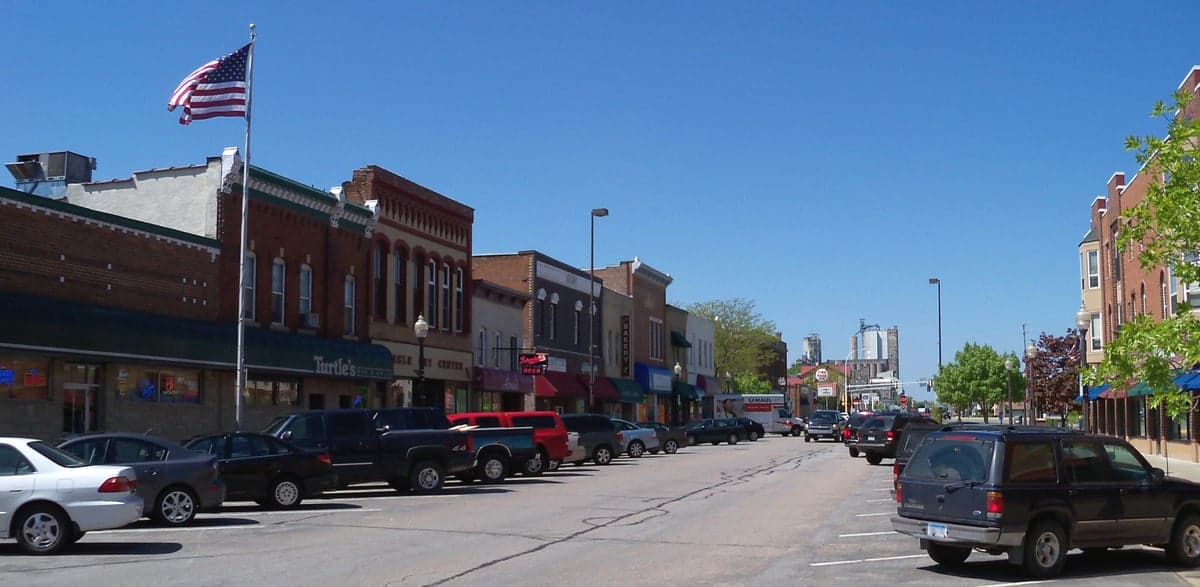
Photo: Wikipedia
Strategic Assessment of Shakopee, MN
Meaningful friction. Expect exposure to either population pressure, blast zones, or natural disaster risk. Consider buying a retreat property.
What does the Strategic Assessment tell us?
Our Strategic Assessment grades tactical survivability of an area. Major population centers, military targets, fallout zones, natural disasters, and border exposure all drive risk — lower exposure means a more defensible position in a crisis.
This is heavily inspired by Joel Skousen's Strategic Relocation book. Highly recommended you checkout the book ($)What does this tell us?
Our Strategic Assessment grades tactical survivability of an area. Major population centers, military targets, fallout zones, natural disasters, and border exposure all drive risk — lower exposure means a more defensible position in a crisis.
This is heavily inspired by Joel Skousen's Strategic Relocation book. Highly recommended you checkout the book ($)Strategic Pillars

Key Distances
Regional Safe Places
Below is our recommended "safe zones" in Minnesota and the surrounding area based on our strategic heuristics. For most people, it's unrealistic to live in a “safe zone” full-time due to work, family or other personal reasons. They tend to be more rural. However, many of these areas are perfect for second homes and retreat properties that double as a vacation home or even a short-term rental.
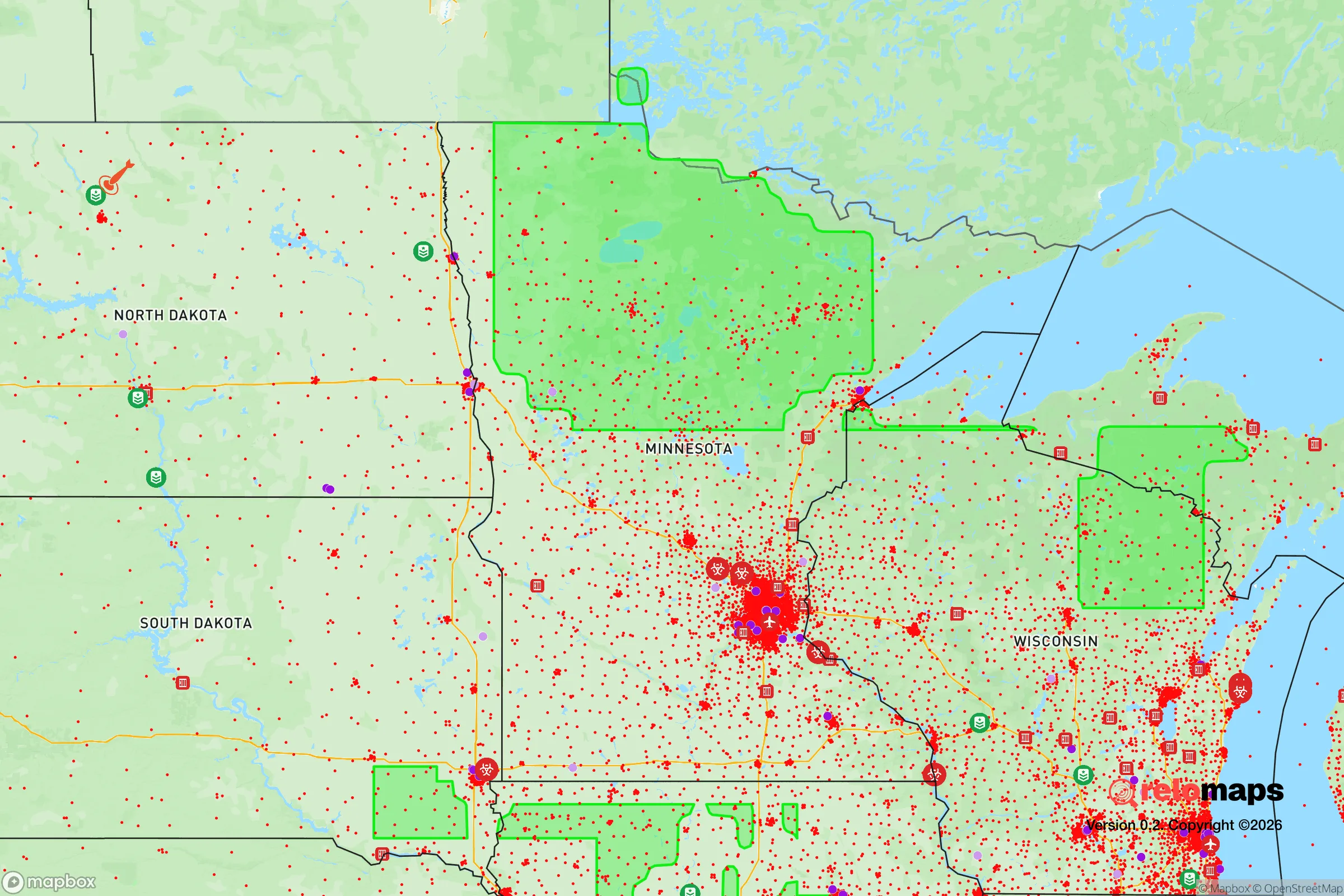
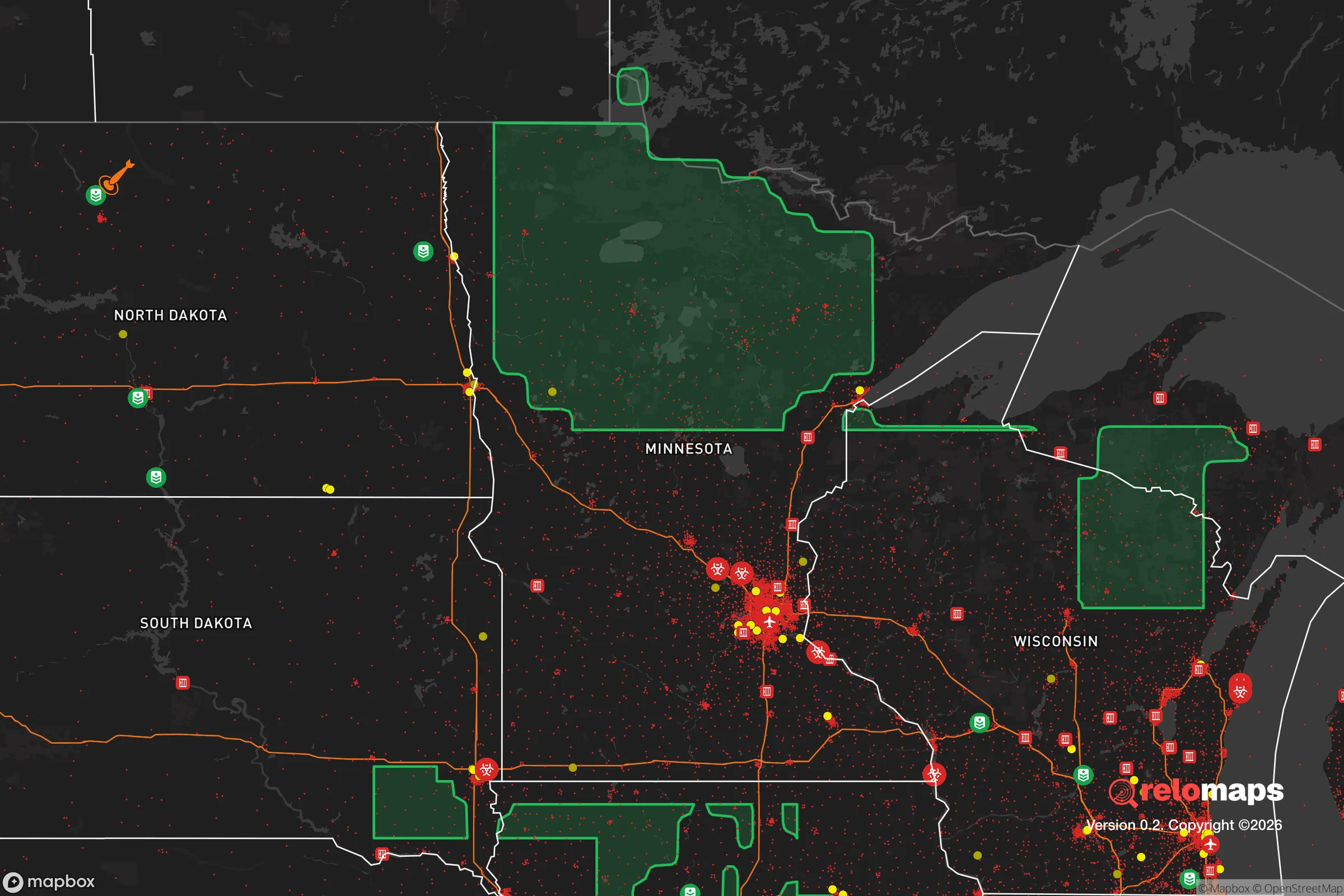


Important Note: For informational purposes only. This does not mean nothing bad ever happens in the green zones. Please use common sense. This is based on public data and modeled with AI. We tried to take a conservative approach but mistakes happen. We update this regularly as new information becomes available.
Solar Generator Recommendations
Backup power matters more here than in safer locations. We've picked three solar generators across budgets and capacity tiers — start with the budget unit if you only need a few essentials, or step up if you want to run a fridge and HVAC for days at a time.

Jackery Portable Power Station Explorer 300
Budget OptionPower on the Go: Weighing only 11 lbs, it's convenient to set up and store with book-sized foldable solar panels

BLUETTI Portable Power Station AC180
Designed for both indoor and outdoor scenarios, AC180 is highly capable as it has a robost capacity and continuous output power.

EF ECOFLOW DELTA Pro Ultra Power Station
Upgraded PickEcoFlow DELTA Pro Ultra is a whole-home energy system designed to grow with your family. Integrated with the Smart Home Panel 2, it scales to meet your evolving energy needs — keeping your home powered, intelligent, and secure through every stage of life.
We earn a commission, at no additional cost to you.
Strategic Assessment Analysis
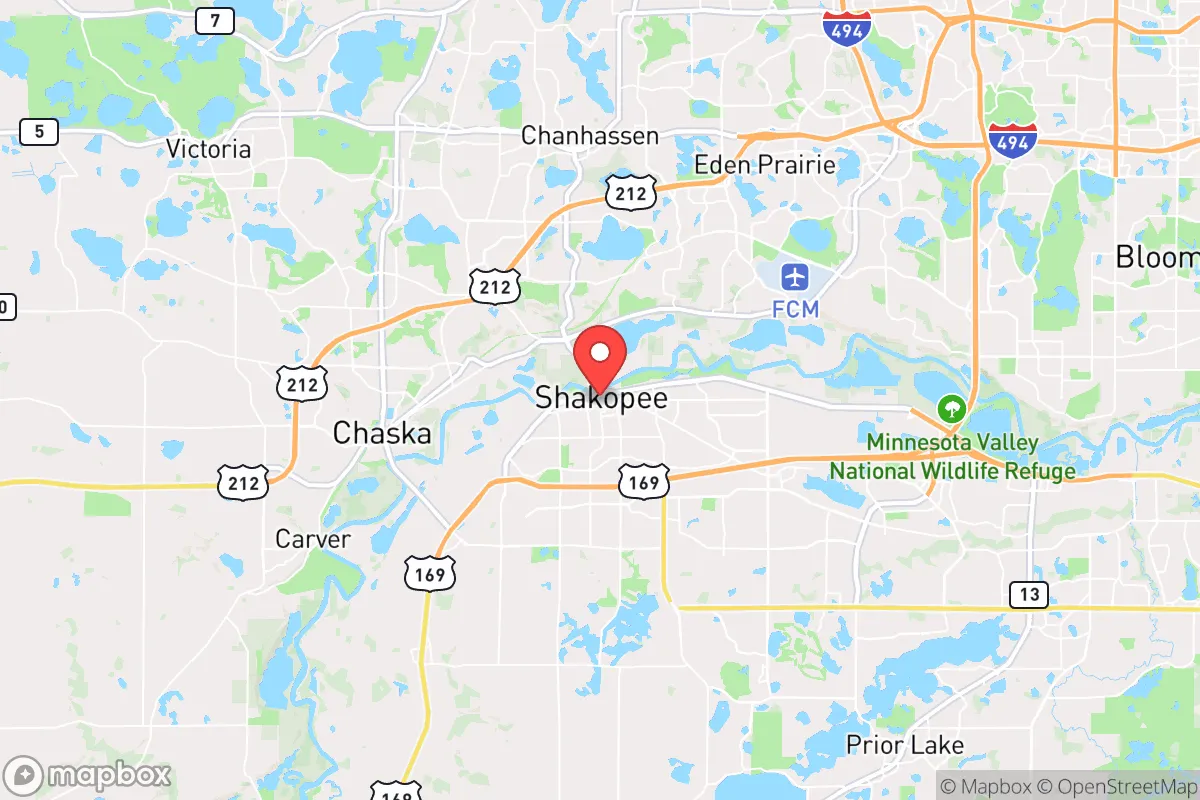
Shakopee, Minnesota, sits in a precarious strategic position that demands serious consideration for anyone prioritizing long-term resilience. Located roughly 25 miles southwest of Minneapolis, it offers proximity to the Twin Cities' resources while maintaining enough distance to avoid the immediate blast radius of a major metropolitan target. However, this same geography places it within the fallout shadow of one of the Upper Midwest's most critical infrastructure hubs, making it a location that requires careful trade-off analysis rather than blind optimism.
Geographic position and natural advantages for long-term survival
Shakopee's location along the Minnesota River Valley provides several tangible benefits for a prepper mindset. The river itself is a reliable water source, and the surrounding bluffs and wooded areas offer natural cover and defensible terrain. The city sits at the intersection of major highways—US 169 and MN 101—which could serve as evacuation routes or supply corridors, though they also represent choke points during a crisis. The area's agricultural base is a genuine asset: Scott County is home to working farms, grain elevators, and livestock operations that could sustain a local food network when supply chains falter. The Minnesota River Valley also has a history of flooding, which is a double-edged sword—it creates fertile soil but demands elevated building sites and flood-proofing for any serious homestead. For a relocator, the key advantage here is the ability to tap into a semi-rural environment while still being within a 30-minute drive of major medical facilities, hardware stores, and fuel depots. That buffer zone is critical: close enough to resupply, far enough to avoid the worst of urban chaos.
Risks, exposures, and proximity to fallout-relevant landmarks
The most glaring vulnerability for Shakopee is its proximity to the Twin Cities metropolitan area, a population center of over 3.6 million people. In a mass casualty event or civil unrest scenario, that density translates into a massive refugee flow heading outward along every major highway—including those leading straight through Shakopee. The city itself is home to the Shakopee Mdewakanton Sioux Community's Mystic Lake Casino, a major economic hub that could become a target for looting or a gathering point for displaced populations. More concerning is the presence of the Xcel Energy Black Dog Generating Plant just north in Burnsville, a natural gas and coal facility that, while not nuclear, still represents a potential industrial hazard. The real fallout concern, however, is the Monticello Nuclear Generating Plant, located about 40 miles northwest of Shakopee. In a worst-case scenario, prevailing winds from the northwest would carry radioactive material directly over the Shakopee area. The city also sits within the Minnesota River floodplain, which has experienced major floods in 1965, 1993, and 2019—events that could compound a disaster scenario by cutting off evacuation routes and contaminating water supplies. For a survivalist, these are not hypotheticals; they are calculable risks that demand a layered defense plan.
Practical resilience for a relocator: food, water, energy, and defensibility
For someone serious about self-sufficiency, Shakopee offers a mixed bag. The Minnesota River is a reliable surface water source, but it requires filtration and treatment due to agricultural runoff and industrial discharge upstream. Groundwater is accessible via wells in the surrounding rural areas, but the city's municipal supply is drawn from the Prairie du Chien-Jordan aquifer, which is vulnerable to contamination from the nearby Shakopee Landfill and the 3M Chemolite plant in Cottage Grove—a known source of PFAS contamination. Food resilience is stronger: Scott County has a robust agricultural sector, including Dean Foods' dairy processing plant and numerous small farms selling directly to consumers. The Shakopee Farmers Market operates seasonally, but year-round food storage and gardening are feasible with a greenhouse or root cellar. Energy-wise, the area is served by Xcel Energy, which has a mixed grid of natural gas, coal, and renewables. Solar potential is moderate—Minnesota averages about 4.2 peak sun hours per day—but battery storage and backup generators are essential for any off-grid setup. Defensibility is the weakest link: Shakopee is relatively flat and open, with few natural chokepoints. The bluffs along the river offer some high ground, but the city's suburban sprawl means most properties are visible from multiple angles. A rural property on the outskirts, preferably with tree cover and a long driveway, would be far more defensible than anything inside city limits.
The overall strategic picture for Shakopee is one of calculated risk. It is not a bug-out location for the truly paranoid, nor is it a naive suburb that ignores reality. For a conservative-leaning relocator who wants to stay within striking distance of the Twin Cities' medical and logistical infrastructure while maintaining a semi-rural lifestyle, Shakopee can work—but only with serious preparation. The flood risk, the nuclear plant exposure, and the inevitable refugee flow from Minneapolis are real threats that demand a layered plan: elevated building sites, water filtration, food storage, and a defensible perimeter. If you are willing to invest in those systems, Shakopee offers a viable middle ground between urban access and rural resilience. If you are not, the risks will outweigh the rewards the moment the grid goes down or the sirens sound.

* Values derived from national, state, county, city and local statistics and may differ in a specific area. Last updated: 2026-04-20T16:24:45.000Z
Narrative content on this page is AI-generated and may contain mistakes. Verify any details that matter before acting on them.
ReloMaps may earn a commission from affiliate links at no extra cost to you.

