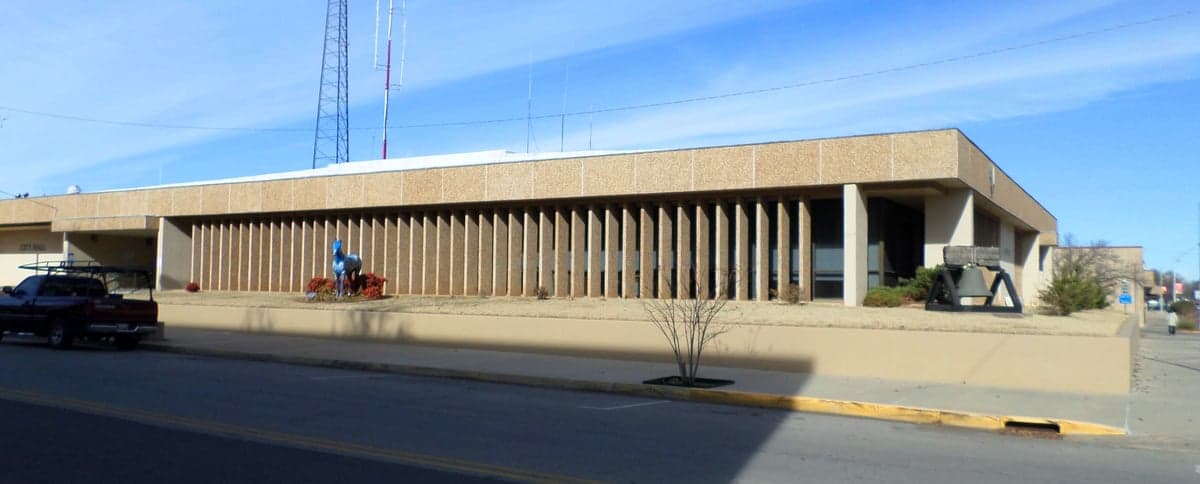
Photo: Wikipedia
Personal Sovereignty in Shawnee, OK
Strong independent fundamentals that actively favor personal liberty and low regulation.
What does Personal Sovereignty tell us?
Personal Sovereignty measures your capacity for self-reliance and independence with minimal government friction. Higher scores mean fewer barriers between you and the way you want to live... but it assumes you have the space you need and good neighbors.
What does this tell us?
Personal Sovereignty measures your capacity for self-reliance and independence with minimal government friction. Higher scores mean fewer barriers between you and the way you want to live... but it assumes you have the space you need and good neighbors.
State Policy
Energy independence: Net exporter (180% of energy produced in-state)
Personal Liberty
Homesteading

Personal Liberty Analysis
For the individual or family prioritizing personal sovereignty—the ability to live, defend, and provide for oneself without excessive government interference—Shawnee, Oklahoma, offers a notably permissive environment compared to many parts of the country. The city sits within a state that has deliberately constructed a legal and regulatory framework designed to minimize state overreach into daily life, from taxation and property rights to self-defense and medical choice. While no location is a libertarian utopia, Shawnee’s combination of low tax burden, strong Second Amendment protections, and a culture of self-reliance makes it a serious contender for those who view government expansion as a threat to personal freedom. The following analysis breaks down the specific pillars of sovereignty that matter most to a survivalist or prepper mindset, grounded in the concrete realities of living in this central Oklahoma community.
Tax burden and regulatory posture: how much the state takes and controls
Oklahoma’s overall tax burden is among the lowest in the nation, and Shawnee residents benefit directly from this posture. The state levies a flat income tax of 4.75%, with ongoing legislative efforts to reduce it further, and no local income tax is added on top. Property taxes in Pottawatomie County are exceptionally low—typically around 0.8% to 1.0% of assessed value—meaning a $200,000 home might carry an annual tax bill of roughly $1,600 to $2,000. This is a fraction of what one would pay in states like Texas or Illinois, freeing up capital for land, supplies, or investments in self-sufficiency. Sales tax in Shawnee is 9.25% (state plus local), which is moderate but offset by the absence of other consumption taxes. On the regulatory side, Oklahoma has actively rolled back occupational licensing requirements and business regulations in recent years, making it easier to start a side hustle, operate a home-based firearms business, or run a small farm without drowning in paperwork. The state’s regulatory climate is consistently ranked in the top 10 for business freedom by organizations like the Mercatus Center, which translates to fewer bureaucratic hurdles for anyone looking to build a self-reliant life. For the prepper, this means less of your income is siphoned off by the state, and fewer rules govern how you can use your property or time.
Self-defense and gun law specifics: what the law allows
Oklahoma is a constitutional carry state, meaning that as of November 1, 2019, any law-abiding adult 21 or older can carry a firearm openly or concealed without a permit. Shawnee residents do not need to ask the government for permission to exercise their Second Amendment rights. There is no state-level red flag law, no magazine capacity restrictions, and no firearm registration requirement. The state preempts local governments from enacting their own gun control ordinances, so Shawnee city council cannot impose restrictions stricter than state law—a critical protection against local government overreach. Stand-your-ground laws are fully in effect, with no duty to retreat in any place where a person has a legal right to be. Castle doctrine protections extend to occupied vehicles and workplaces, not just homes. For the survivalist, this legal landscape means you can keep a defensive rifle, a sidearm, and sufficient ammunition without worrying about compliance with a patchwork of local bans. It also means that if you must use deadly force to protect yourself or your family, the legal presumption is that you acted reasonably, provided you were in a place you had a right to be. The only notable restriction is that carrying firearms into federal buildings, schools (with exceptions for locked vehicles), and certain private businesses that post signage is prohibited, but these are standard limitations. Overall, Shawnee’s gun laws are among the most permissive in the country, aligning with a high-trust, low-interference approach to personal defense.
Self-reliance and homesteading viability: lot sizes, zoning, and off-grid feasibility
For those looking to reduce dependence on centralized systems, Shawnee and its surrounding unincorporated areas offer genuine opportunities for homesteading and off-grid living. Within the city limits, standard residential lots range from one-quarter acre to half an acre, but zoning codes generally allow for backyard chickens, small-scale vegetable gardens, and even the keeping of bees with minimal permitting. The city’s animal ordinances are lenient compared to suburban metros; you can typically keep up to four chickens without a special permit, and larger livestock (goats, sheep) are allowed on parcels of one acre or more in certain zoning districts. However, the real sovereignty play is just outside Shawnee, in unincorporated Pottawatomie County. There, lot sizes of one to five acres are common and affordable—often $5,000 to $15,000 per acre—with no building codes enforced by the county for owner-occupied dwellings. This means you can build a cabin, install a composting toilet, drill a well, and set up solar panels without navigating a thicket of permits. Oklahoma has no state-level ban on rainwater collection, and the state’s solar access laws protect your right to install panels without homeowner association interference. Off-grid living is not only legal but practical, given the region’s 230+ sunny days per year and relatively shallow groundwater tables. The main limitation is that the city of Shawnee does require connection to municipal water and sewer for properties within its jurisdiction, so true off-grid independence requires purchasing land in the county. For the prepper, the ability to buy a few acres, build a simple dwelling, and produce your own food and water without government approval is a major strategic advantage.
Personal liberties: parental rights, medical autonomy, speech, and property
Oklahoma has taken a strong stance on parental rights in education, with state law requiring schools to notify parents of any medical or mental health services provided to students and to obtain parental consent before administering surveys on sensitive topics. The Parents’ Bill of Rights, enacted in 2022, explicitly affirms that parents have the fundamental right to direct the upbringing, education, and care of their children. In Shawnee Public Schools, this translates to a curriculum that emphasizes local control and transparency, with school board meetings often reflecting community values rather than state or federal mandates. On medical autonomy, Oklahoma has passed laws protecting the right to refuse any medical treatment, including vaccines, for both adults and children, and the state does not mandate COVID-19 vaccines for school attendance. The Oklahoma Medical Marijuana Authority issues patient licenses for a wide range of qualifying conditions, and while recreational use remains illegal, enforcement is generally low-priority for small-scale personal cultivation. Free speech protections are robust, with no state-level hate speech laws that could chill political or religious expression, and the state has preempted local governments from restricting speech on public property. Property rights are further strengthened by Oklahoma’s strong eminent domain protections, which require that takings be for a truly public use (not private economic development) and that compensation include relocation costs. For the individualist, these legal guardrails mean that the government is less likely to intrude into your family decisions, your healthcare choices, or your ability to speak your mind without fear of retaliation.
In the broader landscape of American personal sovereignty, Shawnee ranks favorably against most of the coastal and Midwestern states that have moved toward higher taxes, stricter gun control, and greater government involvement in family and medical decisions. It does not offer the absolute freedom of a rural Alaska homestead or a Nevada county with no building codes, but for someone seeking a balance of affordability, legal permissiveness, and community stability, it is a strong option. The key trade-off is that Shawnee is not an isolated compound—it is a functioning small city with local ordinances and a police department—but the surrounding county provides the space to build a genuinely independent life. For the strategic relocator who views government overreach as a growing threat, Shawnee offers a legal and economic foundation upon which a self-reliant existence can be constructed, with fewer obstacles than most places in the United States.

* Values derived from national, state, county, city and local statistics and may differ in a specific area. Last updated: 2026-04-21T11:43:26.000Z
Narrative content on this page is AI-generated and may contain mistakes. Verify any details that matter before acting on them.
ReloMaps may earn a commission from affiliate links at no extra cost to you.

