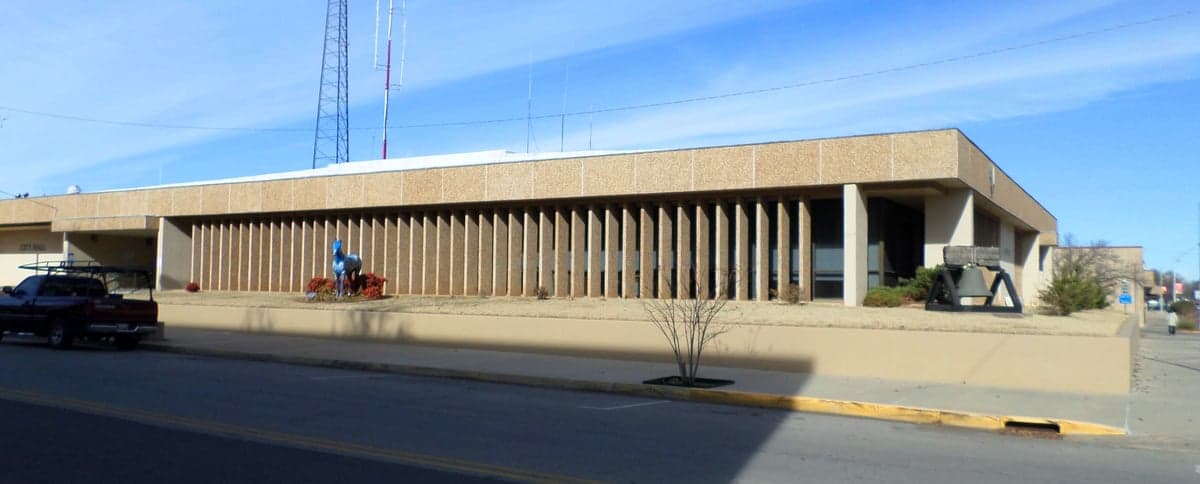
Photo: Wikipedia
Political ClimatePolitical Climate in Shawnee, OK
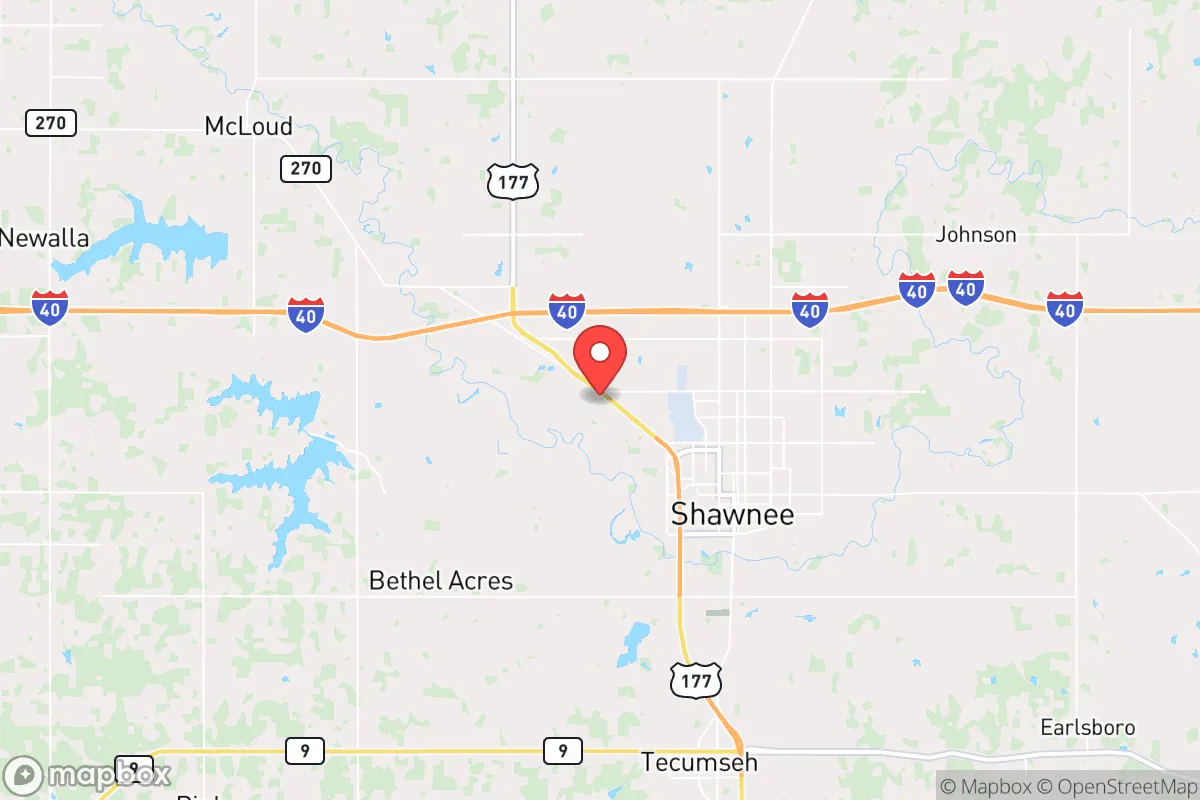
District shown is the primary district for this city’s centroid. Cities may span multiple districts.
Local Political AnalysisPolitical Analysis of Shawnee, OK
Shawnee, Oklahoma, sits squarely in conservative territory, with a Cook PVI of R+9 that reflects a deep-rooted preference for limited government and traditional values. For decades, this community has leaned reliably Republican, and while the national political winds have shifted, Shawnee has largely held its ground. You still see more "Don't Tread on Me" flags than rainbow banners, and the local chatter at coffee shops is more about property taxes and school choice than social justice crusades. That said, there's a quiet unease among longtime residents—a sense that outside pressures are creeping in, and the old way of doing things is being tested.
How it compares
Drive 35 miles east to Oklahoma City, and you'll hit a different world—a blue island in a red sea where progressive policies on zoning, policing, and public spending are more common. Shawnee, by contrast, feels like a bulwark against that tide. Neighboring towns like Tecumseh and Meeker lean even more conservative, with fewer chain stores and a stronger "we take care of our own" attitude. But the contrast isn't just urban vs. rural; it's about trust in local governance. In Shawnee, folks still expect their city council to stay out of their business—no mask mandates that lasted longer than necessary, no heavy-handed noise ordinances, and a general reluctance to raise taxes for pet projects. The R+9 rating isn't just a number; it's a reflection of a community that votes with its gut for personal freedom and fiscal restraint.
What this means for residents
For those who value autonomy, Shawnee offers a relatively low-friction lifestyle. You won't find the kind of government overreach that makes you feel like you need permission to breathe. Property rights are respected, gun ownership is a given, and the local school board hasn't been captured by progressive curriculum activists—yet. But that "yet" is the worry. There's a growing concern that as Shawnee grows—new housing developments, a younger workforce drawn to the nearby aerospace and manufacturing jobs—the political center of gravity could shift. Some residents see the influx of newcomers from bluer states as a slow-moving threat to the community's character. The real test will be whether Shawnee can absorb that growth without adopting the regulatory creep and cultural baggage that comes with it. For now, the local elections still hinge on bread-and-butter issues: road maintenance, water rates, and keeping the city's nose out of your backyard.
Culturally, Shawnee holds onto distinctions that set it apart from the coast-imported homogeneity you see in bigger cities. The annual Heart of Oklahoma Rodeo isn't just a tourist draw; it's a statement of identity. You'll find more churches per capita than coffee shops, and the local paper still runs letters to the editor about the Second Amendment. Policy-wise, the city has resisted adopting "sanctuary city" status for illegal immigration, and the county sheriff's office maintains a cooperative relationship with federal immigration authorities. The biggest red flag on the horizon is the state-level push for Medicaid expansion and potential new energy regulations that could hit local oil and gas workers hard. If Shawnee stays true to its roots, it'll keep pushing back against that kind of overreach. But it'll take vigilance—because the fight for local control never really ends.

State Political ClimatePolitical Climate in Oklahoma
State Political AnalysisPolitical Environment in the State
Oklahoma has long been one of the most reliably Republican states in the nation, with a deep-red partisan lean that has only intensified over the past two decades. The state hasn’t voted for a Democratic presidential candidate since 1964, and in 2024, Donald Trump carried it by over 34 points. The dominant coalition is a blend of rural conservatives, evangelical Christians, and a growing population of fiscally conservative suburbanites, particularly in the Oklahoma City and Tulsa metro areas. Over the last 10-20 years, the state has shifted further right, driven by an exodus of moderate Democrats from rural areas and an influx of conservative transplants from bluer states like California and Colorado, who are drawn by low taxes and a business-friendly environment.
Urban vs. rural divide
The political map of Oklahoma is starkly divided between its two major urban centers and the vast, deeply conservative rural expanse. Oklahoma City and its sprawling suburbs, such as Edmond and Norman, are the state’s political engine. Oklahoma County itself has trended purple in recent cycles, with Democrats making gains in the core city, but the surrounding suburbs—places like Yukon, Mustang, and Piedmont—are reliably red. Tulsa, the state’s second-largest city, is similar: the urban core leans left, but the surrounding suburbs like Broken Arrow and Bixby are solidly conservative. The real story is in the rural counties. Places like Beaver County in the Panhandle and Latimer County in the southeast routinely vote 80-90% Republican. The divide isn’t just about party; it’s about culture. Rural Oklahomans see the state as a last bastion of traditional values, while urbanites increasingly push for progressive policies on issues like criminal justice reform and LGBTQ rights. This tension plays out in the state legislature, where rural representatives hold disproportionate power due to gerrymandered districts.
Policy environment
Oklahoma’s policy environment is aggressively conservative, with a focus on low taxes, limited regulation, and cultural traditionalism. The state has a flat income tax of 4.75%, which is being phased down to 3.99% by 2027, and no estate tax. Property taxes are among the lowest in the nation, averaging about 0.9% of home value. The regulatory posture is decidedly pro-business, with right-to-work laws and minimal zoning restrictions outside major cities. On education, the state has embraced school choice, with a robust voucher program that allows parents to use public funds for private or homeschool expenses—a major win for parental rights. Healthcare policy is more mixed: Oklahoma expanded Medicaid under a 2020 ballot initiative, which was a rare progressive victory, but the state has since imposed work requirements and strict oversight. Election laws have tightened significantly, with voter ID requirements, limited early voting, and a ban on ballot drop boxes. The state also passed a near-total abortion ban in 2022, with no exceptions for rape or incest, reflecting the dominance of social conservatives in the legislature.
Trajectory & freedom
Oklahoma is on a trajectory of expanding personal freedom in many areas, but with notable caveats. On the positive side, the state has been a national leader in Second Amendment rights. In 2019, Oklahoma passed constitutional carry, allowing residents to carry firearms without a permit. The state also has strong castle doctrine and stand-your-ground laws. Parental rights have been bolstered by the 2022 “Parents’ Bill of Rights,” which gives parents explicit authority over their children’s education and medical decisions. On medical autonomy, the state has resisted federal mandates, including COVID-19 vaccine requirements, and passed a law prohibiting employers from mandating vaccines. However, freedom is not absolute. The state’s strict abortion ban and its aggressive enforcement of drug laws—Oklahoma has one of the highest incarceration rates in the country—represent significant government overreach into personal lives. The state also has a history of restricting medical marijuana, despite voters legalizing it in 2018, with recent laws capping THC levels and limiting dispensary licenses. Overall, Oklahoma is becoming freer in the areas that matter most to conservatives—guns, taxes, and parental rights—but remains heavy-handed on social issues and criminal justice.
Civil unrest & political movements
Oklahoma has seen relatively little civil unrest compared to coastal states, but there have been notable flashpoints. The 2020 Black Lives Matter protests in Oklahoma City and Tulsa were largely peaceful, though they did spark a backlash that energized conservative turnout in the 2020 and 2022 elections. The state has a strong, organized conservative movement, led by groups like the Oklahoma Council of Public Affairs and the Oklahoma Second Amendment Association, which have successfully pushed for school choice and gun rights. On the left, the main activist energy is around criminal justice reform and tribal sovereignty, particularly after the landmark McGirt v. Oklahoma Supreme Court decision in 2020, which recognized that much of eastern Oklahoma remains Native American reservation land. This has created ongoing tension between state and tribal authorities, especially over law enforcement jurisdiction. Immigration politics are less heated than in border states, but Oklahoma has passed laws requiring local law enforcement to cooperate with ICE and banning sanctuary cities. Election integrity has been a major issue, with the state legislature passing multiple bills to tighten voting procedures, including a 2023 law that criminalizes the collection of absentee ballots by third parties. A new resident would notice that political activism is more subdued than in states like Texas or Colorado, but the underlying divisions are real, especially around tribal rights and urban-rural cultural clashes.
Projection
Over the next 5-10 years, Oklahoma is likely to become even more conservative, driven by two key trends: in-migration and demographic shifts. The state is attracting a steady stream of conservative-leaning transplants from California, Colorado, and Illinois, who are drawn by low housing costs and a business-friendly climate. These newcomers tend to settle in the suburbs of Oklahoma City and Tulsa, reinforcing the red lean of those areas. Meanwhile, the state’s rural population is aging and shrinking, but the political power of rural areas is protected by the state’s legislative map. The biggest wildcard is the growing influence of Native American tribes, which are increasingly asserting their sovereignty and could become a more potent political force, particularly on issues like gaming and taxation. The state’s demographic future is also shaped by a growing Hispanic population, which currently leans conservative but could shift as national politics evolve. For a new resident, the Oklahoma of 2035 will likely look much like today: deeply red, with low taxes, strong gun rights, and a culture that values self-reliance. The main risk is that the state’s heavy-handed approach to social issues could eventually alienate the suburban moderates who are key to its political stability.
For a conservative individual or family considering a move to Oklahoma, the bottom line is this: you will find a state that largely aligns with your values on taxes, guns, education, and parental rights. The cost of living is low, the regulatory environment is light, and the culture is welcoming to traditional families. However, you should be aware that the state’s political climate is not monolithic—the urban areas are becoming more progressive, and the tribal sovereignty issue is a simmering source of conflict. If you value personal freedom and limited government, Oklahoma is a strong choice, but you’ll want to settle in the suburbs or rural areas to fully enjoy the conservative ethos that defines the state. Just don’t expect the same level of political activism or cultural amenities you’d find in Texas or Florida—Oklahoma is quieter, more insular, and proud of it.
* Values derived from national, state, county, city and local statistics and may differ in a specific area. Last updated: 2026-04-21T11:43:26.000Z
Narrative content on this page is AI-generated and may contain mistakes. Verify any details that matter before acting on them.
ReloMaps may earn a commission from affiliate links at no extra cost to you.

