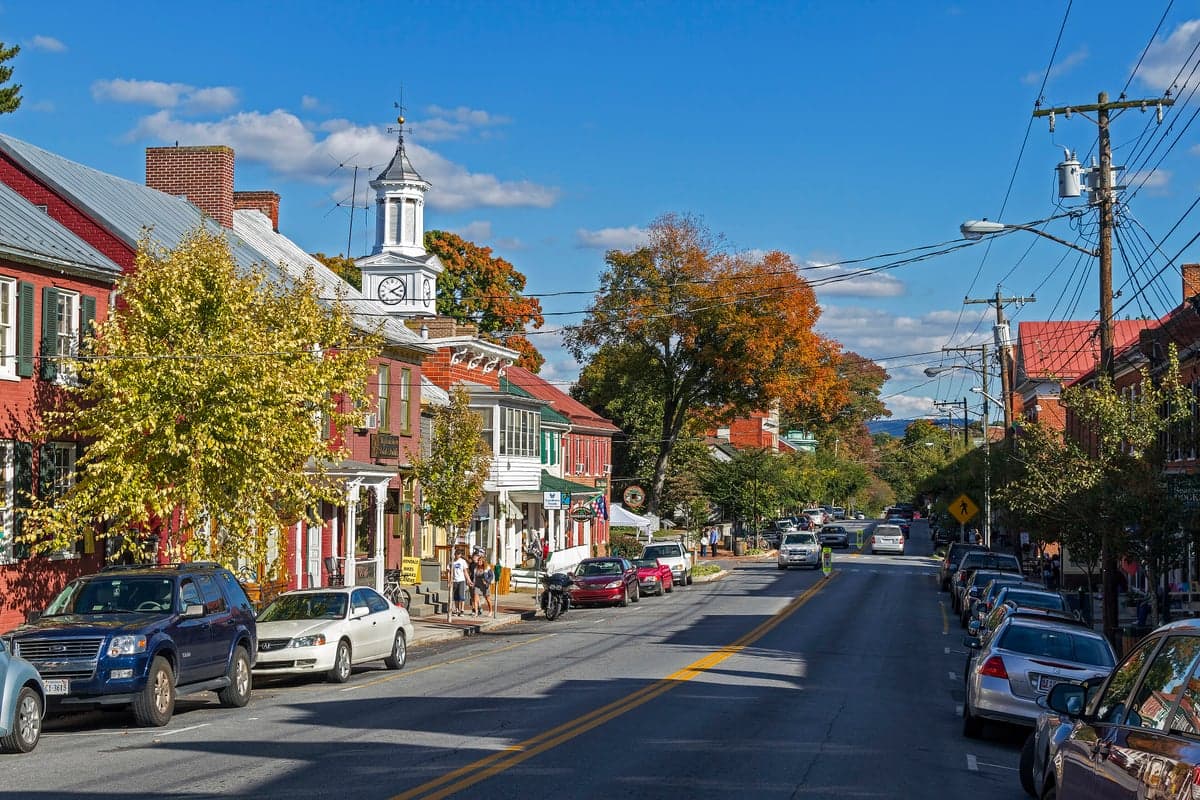
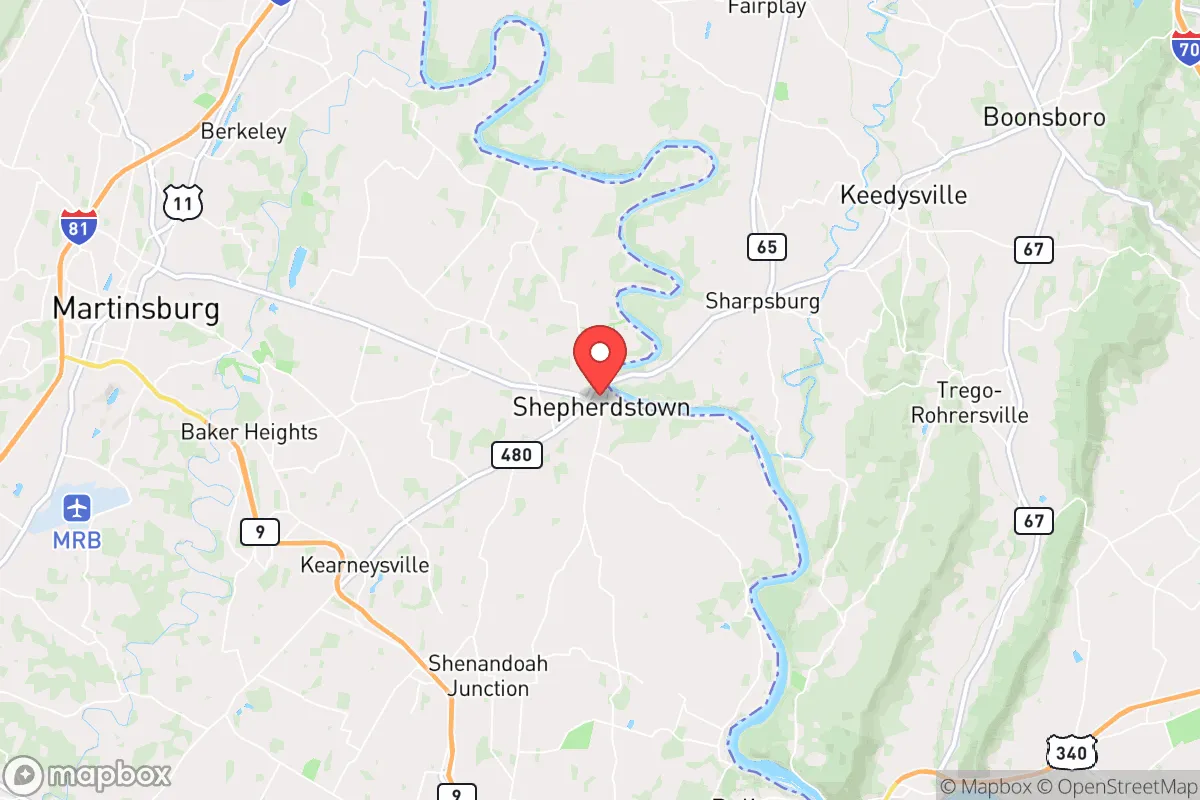
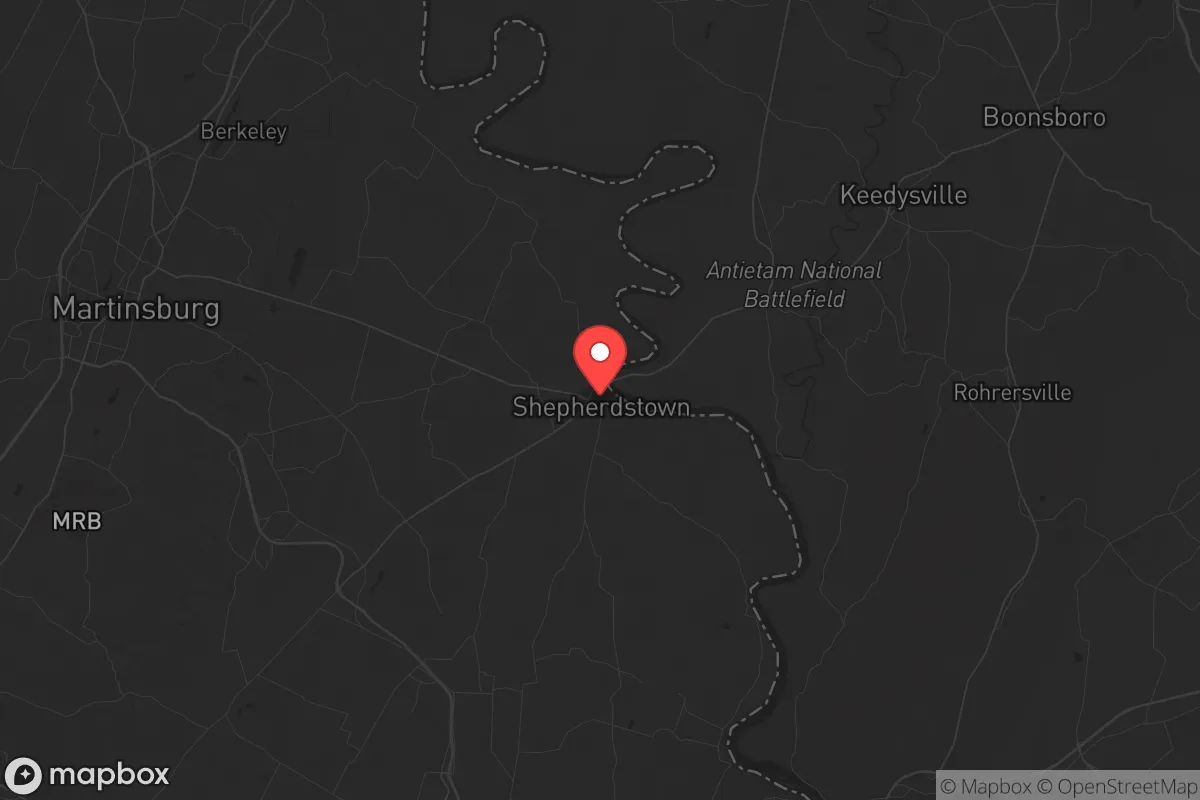
Photo: Wikipedia
Personal Sovereignty in Shepherdstown, WV
Strong independent fundamentals that actively favor personal liberty and low regulation.
What does Personal Sovereignty tell us?
Personal Sovereignty measures your capacity for self-reliance and independence with minimal government friction. Higher scores mean fewer barriers between you and the way you want to live... but it assumes you have the space you need and good neighbors.
What does this tell us?
Personal Sovereignty measures your capacity for self-reliance and independence with minimal government friction. Higher scores mean fewer barriers between you and the way you want to live... but it assumes you have the space you need and good neighbors.
State Policy
Energy independence: Net exporter (200% of energy produced in-state)
Personal Liberty
Homesteading

Personal Liberty Analysis
Shepherdstown, West Virginia, offers a notably high degree of personal sovereignty compared to much of the eastern seaboard, largely because the state’s legal and regulatory framework is designed to minimize government intrusion into daily life. For the individual or family operating from a survivalist or prepper mindset, the town sits in a sweet spot: it is a small, historic college town with a progressive local culture, yet it is governed by West Virginia’s deeply conservative state laws that protect gun rights, parental authority, and property freedom. The key tension here is between the local municipal vibe—which can lean toward progressive ordinances—and the overarching state preemption that often overrides local control. For a strategic relocation, the real sovereignty lies in the county and state levels, not the town council.
Tax burden and regulatory posture: how West Virginia’s low-tax framework protects your autonomy
West Virginia’s tax burden is among the lowest in the nation, and that directly translates into less government extraction from your income and property. The state has a flat personal income tax rate of 4.12% (as of 2026), and property taxes are notoriously low—Jefferson County, where Shepherdstown sits, typically assesses at a fraction of market value, with effective rates often below 0.6% of actual home value. There is no state-level sales tax on groceries or prescription drugs, and the general sales tax is 6%. For a prepper, this means more retained capital for supplies, land, and self-sufficiency investments. On the regulatory side, West Virginia is a “right-to-work” state and has aggressively rolled back business licensing and environmental red tape in recent years. The state legislature has also passed preemption laws that prevent local governments from enacting stricter building codes, energy mandates, or zoning rules than the state baseline. This means that even if Shepherdstown’s town council wanted to impose restrictive land-use ordinances, state law limits their reach. The net effect: you face fewer bureaucratic hurdles when building a workshop, installing solar panels, or keeping livestock on your property.
Self-defense and gun law specifics: what the Second Sanctuary status means for your rights
West Virginia is a constitutional carry state, meaning no permit is required to carry a concealed firearm for anyone legally allowed to possess one. Shepherdstown is located in Jefferson County, which has been designated a Second Amendment Sanctuary—a formal resolution by county commissioners vowing not to enforce any future federal gun restrictions deemed unconstitutional. This is not symbolic; it carries legal weight in terms of local law enforcement cooperation. The state also has strong “stand your ground” and “castle doctrine” laws, with no duty to retreat in any place you are lawfully present. For the survivalist, this means your home, vehicle, and even your campsite are legally defensible spaces without fear of prosecution for using deadly force against an intruder. There is no state-level waiting period for firearm purchases, no universal background check system beyond the federal NICS check, and no magazine capacity restrictions. Local gun stores in Shepherdstown and nearby Martinsburg stock everything from AR-15s to suppressors (which are legal with a federal tax stamp). The only notable restriction is that carrying on public school grounds is prohibited without a specific school board authorization, but that is standard nationwide. For a parent, this legal environment means you can train your children in firearms safety without state interference, and you can keep a defensive weapon in your vehicle while parked at work or school drop-off.
Self-reliance and homesteading viability: lot sizes, zoning, and off-grid feasibility
Shepherdstown itself is a compact historic town with small lots—typically a quarter-acre or less within the town limits—and the town’s zoning code restricts keeping livestock to chickens only (hens, no roosters) and limits the number to six. However, the real opportunity lies in the unincorporated areas of Jefferson County, just a 5- to 10-minute drive from downtown. There, minimum lot sizes for agricultural zoning are often 1 to 3 acres, and many parcels of 5 to 20 acres are available for under $15,000 per acre as of 2026. The county has no countywide building code for single-family homes (only state-level electrical and plumbing codes), which means you can build a pole barn, a tiny house, or a shipping container home with minimal permitting. Off-grid feasibility is high: West Virginia law explicitly protects the right to collect rainwater, and there are no state restrictions on solar panel installation or battery storage. The local utility, Potomac Edison, offers net metering, but you are not required to connect to the grid at all. Septic systems require a county health department permit, but composting toilets are legal as an alternative. For a prepper, the nearby rural areas offer the ability to drill a well, install a wood stove, and maintain a substantial garden without neighbors close enough to complain. The only real constraint is that Jefferson County is growing, so you want to buy land sooner rather than later to lock in the current low-density zoning.
Personal liberties: parental rights, medical autonomy, speech, and property protections
West Virginia has some of the strongest parental rights laws in the country. The state passed the Parental Bill of Rights in 2023, which requires schools to obtain written parental consent before administering any medical or mental health survey, and it prohibits schools from hiding a child’s medical or mental health status from parents. This means that in Jefferson County Schools, which serve Shepherdstown, you retain the legal authority to opt your child out of any curriculum or activity you find objectionable, including sex education or controversial social-emotional learning programs. On medical autonomy, West Virginia is a mixed bag: it has no state-level vaccine mandate for adults, but it does require certain childhood vaccines for school attendance (with medical and religious exemptions available). The state has also banned nearly all abortions after 15 weeks, which aligns with a conservative pro-life stance. For the survivalist, the more relevant liberty is the broad property rights protection under the state constitution, which prohibits eminent domain for private economic development—a safeguard against government seizure for corporate projects. Free speech is robust, with no state-level hate speech laws or social media content restrictions. The local Shepherdstown community is politically mixed, but the county as a whole leans conservative, so you will not face social ostracism for displaying a Gadsden flag or a “Don’t Tread on Me” bumper sticker. The town’s university (Shepherd University) does create a liberal enclave, but that rarely translates into legal restrictions on your personal conduct.
Overall, Shepherdstown offers a sovereignty profile that is rare for a town within commuting distance of Washington, D.C. (about 90 minutes). The state’s low taxes, constitutional carry, strong parental rights, and minimal building regulations create a legal environment where a self-reliant individual or family can operate with very little government interference. The trade-off is that you must live in a town with a local government that may occasionally pass symbolic progressive resolutions—but those have no teeth because state law preempts them. For the strategic relocator who values personal autonomy above all else, West Virginia’s Jefferson County is one of the best options east of the Mississippi, and Shepherdstown provides the cultural amenities (farmers market, historic architecture, walkable downtown) without sacrificing the legal freedom to live as you see fit.

* Values derived from national, state, county, city and local statistics and may differ in a specific area. Last updated: 2026-10-10T16:28:57.000Z
Narrative content on this page is AI-generated and may contain mistakes. Verify any details that matter before acting on them.
ReloMaps may earn a commission from affiliate links at no extra cost to you.

