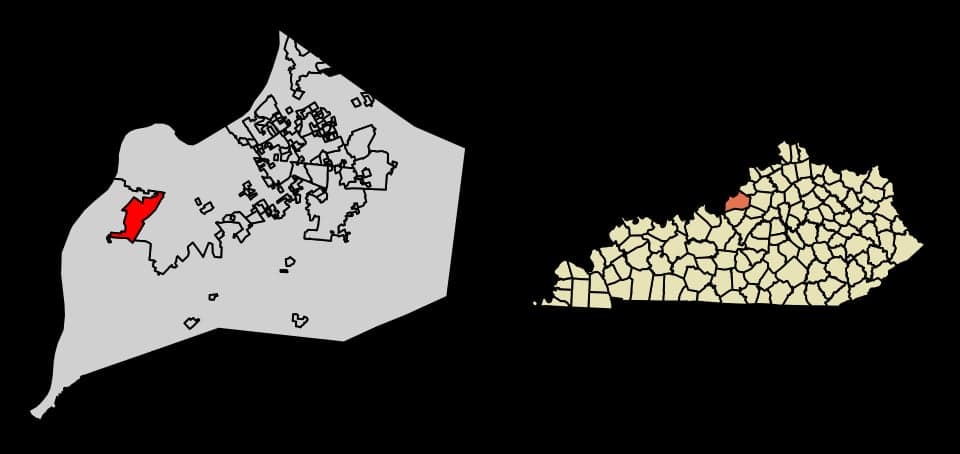
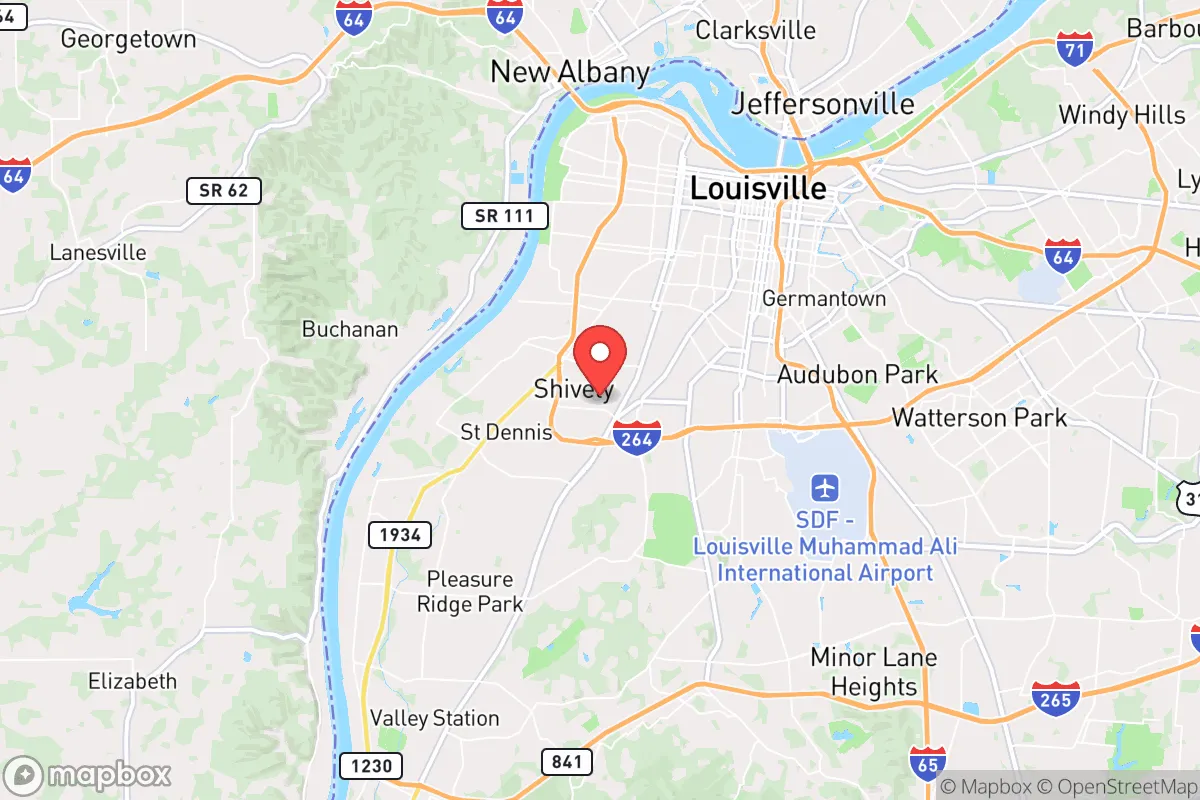
Photo: Wikipedia
Personal Sovereignty in Shively, KY
Viable for self-reliance. Generally workable, though some barriers may limit total independence.
What does Personal Sovereignty tell us?
Personal Sovereignty measures your capacity for self-reliance and independence with minimal government friction. Higher scores mean fewer barriers between you and the way you want to live... but it assumes you have the space you need and good neighbors.
What does this tell us?
Personal Sovereignty measures your capacity for self-reliance and independence with minimal government friction. Higher scores mean fewer barriers between you and the way you want to live... but it assumes you have the space you need and good neighbors.
State Policy
Energy independence: Importer (60% of energy produced in-state)
Personal Liberty
Homesteading

Personal Liberty Analysis
For the liberty-minded individual or family evaluating Shively, Kentucky, the personal sovereignty environment is a mixed bag defined by the tension between a relatively hands-off state government and the regulatory realities of being a suburban enclave within Jefferson County. While Kentucky as a whole offers a stronger legal framework for self-defense and lower taxes than many blue states, Shively’s proximity to Louisville means you’re never far from the reach of a larger municipal bureaucracy. The key question for a prepper or survivalist is whether the local zoning, tax structure, and cultural norms allow you to live on your own terms without constant friction from the authorities. The short answer is that Shively provides a decent baseline for autonomy, but it demands strategic awareness of where the local leash is tighter than the state’s.
Tax burden and regulatory posture: how much of your income and property stays yours
Kentucky’s tax structure is a net positive for personal sovereignty compared to high-tax states, but Shively’s specific local levies require careful calculation. The state imposes a flat income tax of 4.5% (as of 2025, with a scheduled phase-down to 4.0% by 2026), which is moderate but not negligible. Property taxes in Jefferson County are assessed at a rate of roughly 1.0% to 1.2% of market value, which is higher than rural Kentucky counties but still well below the 2%+ rates common in the Northeast or Illinois. The real bite comes from the local occupational license fee—Shively charges a 1.0% tax on gross wages earned within the city limits, and Jefferson County adds another 0.75% for non-residents working in the county. For a self-employed individual or remote worker living in Shively, this means you’re paying roughly 6.25% combined income tax (state + local) before federal taxes. Regulatory posture is generally business-friendly at the state level, but Shively’s municipal code includes standard suburban ordinances on noise, property maintenance, and vehicle storage that can chafe a prepper who wants to keep a project truck or store bulk supplies visibly. Building permits are required for any structural changes, and the county health department enforces septic and well regulations strictly. For a family wanting to minimize government entanglement, the tax burden is manageable but not negligible—you’ll keep more of your money than in a blue state, but you’re still funding a local bureaucracy that has a say in how you use your land.
Self-defense and gun law specifics: what you can carry, where, and how fast
Kentucky is a constitutional carry state, meaning no permit is required to carry a concealed firearm for anyone legally allowed to possess one. This is a bedrock sovereignty protection—you can arm yourself without asking the government for permission. Shively, as a city within Jefferson County, does not impose any additional local gun restrictions beyond state law, so magazine capacity bans, assault weapon registries, and waiting periods do not apply. Stand-your-ground laws are fully in effect, with no duty to retreat in any place you have a legal right to be. Castle doctrine protections extend to your home, vehicle, and place of business. However, there are practical limitations: carrying in Louisville Metro government buildings, including the Jefferson County courthouse, is prohibited, and private businesses can post signage to ban firearms. For a prepper, the legal environment is solid—you can train, carry, and defend yourself without bureaucratic hurdles. The state also preempts local governments from enacting stricter gun laws, so even if Louisville’s city council leans left, Shively’s gun rights are locked in at the state level. The only caveat is that Kentucky’s concealed carry reciprocity is strong, but if you travel to states like New York or California, you’ll lose those protections. For daily life in Shively, the gun laws are a clear win for personal sovereignty.
Self-reliance and homesteading viability: lot sizes, zoning, and off-grid feasibility
This is where Shively’s suburban character creates the most friction for a survivalist mindset. The typical residential lot in Shively is a quarter-acre or smaller, with many homes on 5,000 to 8,000 square foot parcels. Zoning is predominantly R-3 (medium-density residential), which prohibits livestock, restricts accessory structures to a single detached garage or shed under 200 square feet without a variance, and requires all dwellings to be connected to municipal water and sewer. Off-grid living—solar panels with battery storage, rainwater collection, composting toilets—is technically allowed under state building codes, but Jefferson County’s health department will not approve a septic system if municipal sewer is available, and the city can require grid connection for new construction. Raising chickens for eggs is permitted in Shively with a limit of four hens and no roosters, but larger livestock like goats or rabbits for meat is prohibited. Gardening is unrestricted, so you can grow a substantial portion of your own vegetables on a small lot. For a family wanting true self-reliance—acreage for hunting, a woodlot for fuel, a well for water—Shively is not the place. You’d need to look at rural Bullitt or Spencer counties, 20-30 minutes south, where 5-acre parcels with no zoning are common. Shively works for a prepper who wants a suburban base with good access to supplies and a low-crime neighborhood, but it does not support a homesteading lifestyle.
Personal liberties: parental rights, medical autonomy, speech, and property
Kentucky has a strong track record on parental rights, with state law affirming that parents have the fundamental right to direct the upbringing, education, and healthcare of their children. School choice is robust—charter schools are legal, though few exist in Jefferson County, and homeschooling is straightforward with minimal reporting requirements. Medical autonomy is more mixed: Kentucky has not enacted vaccine mandates for adults, but the state does require certain immunizations for school attendance (with religious and medical exemptions available). The COVID-era emergency orders were contentious, with the state legislature passing laws to limit the governor’s emergency powers going forward, which is a positive for those wary of executive overreach. Free speech is protected under the First Amendment, and Kentucky has no state-level hate speech laws that chill expression. Property rights are generally strong, with no statewide rent control and relatively low eminent domain activity. However, Shively’s local government can enforce nuisance ordinances that restrict how you use your property—leaving a vehicle on blocks in the driveway, storing scrap materials, or running a home business with customer traffic can all draw citations. For a liberty-minded individual, the state provides a solid legal foundation, but the local layer in Shively adds a degree of oversight that requires you to keep a low profile if you want to operate outside the suburban norm.
Overall, Shively offers a moderate level of personal sovereignty that is significantly better than deep-blue metro areas but falls short of the full autonomy available in rural Kentucky. The gun laws and state-level protections for parental rights and property are genuine assets, and the tax burden, while not trivial, is lower than in high-tax states. The trade-off is that you’re living in a suburban regulatory environment that limits homesteading, off-grid systems, and the kind of visible self-reliance that a survivalist might prefer. For a single individual or family who wants a safe, affordable base with good access to Louisville’s resources and a legal framework that respects self-defense, Shively is a viable option. But if your goal is maximum independence from government oversight—where you can build a bunker, keep livestock, and live entirely off-grid—you’ll need to look further out into the Kentucky countryside, where the county sheriff is the only authority you’ll regularly encounter.

* Values derived from national, state, county, city and local statistics and may differ in a specific area. Last updated: 2026-04-21T09:49:42.000Z
Narrative content on this page is AI-generated and may contain mistakes. Verify any details that matter before acting on them.
ReloMaps may earn a commission from affiliate links at no extra cost to you.

