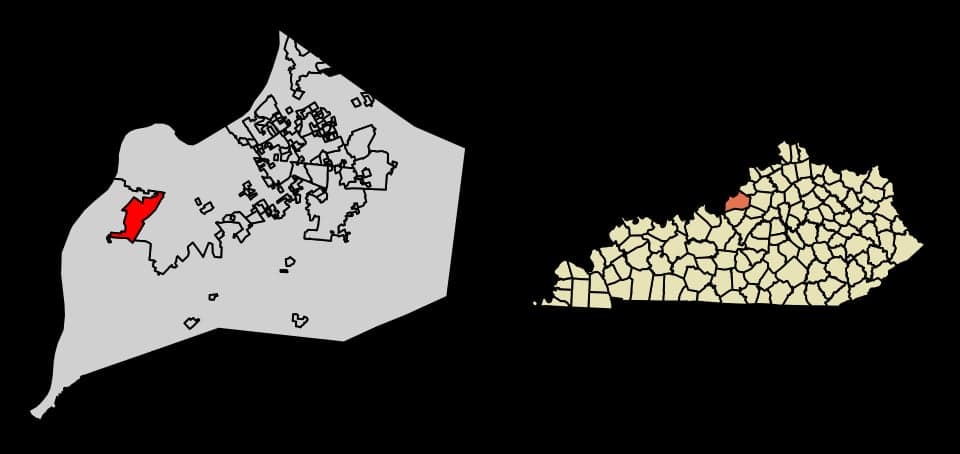
Photo: Wikipedia
Political ClimatePolitical Climate in Shively, KY
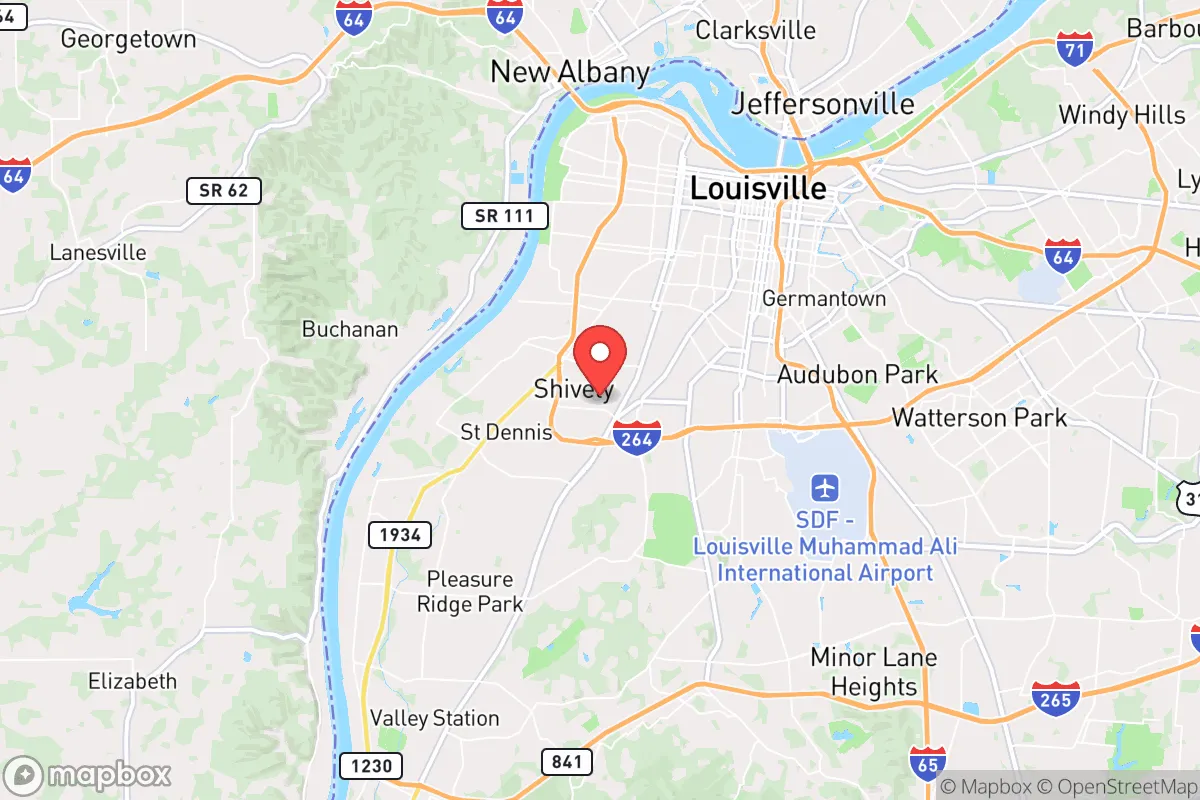
District shown is the primary district for this city’s centroid. Cities may span multiple districts.
Local Political AnalysisPolitical Analysis of Shively, KY
Shively, Kentucky, sits in a political bubble that’s been getting more and more insulated from the rest of the state over the past decade. The Cook PVI clocks it at D+10, meaning it leans about ten points more Democratic than the national average, which puts it way out of step with the surrounding Jefferson County suburbs and the deep-red rural counties to the south and west. If you’ve lived here a while, you’ve watched the local politics shift from a more moderate, blue-collar Democratic tradition—the kind that used to vote for conservative Dems on school boards and city council—into something that feels a lot more progressive, with a heavier hand from the county and state party machinery. The trajectory is clear: Shively is moving left, and it’s not slowing down.
How it compares
Drive ten minutes east to St. Matthews or fifteen minutes south to Mount Washington, and you’re in a completely different political world. St. Matthews is a toss-up, trending slightly blue but still full of small-business owners and fiscal conservatives who keep the city council from going full progressive. Mount Washington, in Bullitt County, votes Republican by double digits and has a “keep the government out of my backyard” attitude that’s practically the opposite of Shively’s approach. Even Louisville proper, just a few miles east, is a D+15 stronghold, but Shively’s D+10 is notable because it’s a smaller, older suburb that used to be a haven for working-class families who didn’t want the city’s taxes or its social experiments. Now, you see the same kind of zoning overhauls, density pushes, and tax hikes that Louisville tried—just on a smaller scale. The contrast with places like Hillview or Shepherdsville is stark: those towns still elect officials who talk about property rights and low taxes, while Shively’s council seems more focused on equity metrics and regional planning goals.
What this means for residents
For a longtime resident, the biggest red flag is how much government overreach has crept into daily life. The city has gotten aggressive with rental inspections, short-term rental bans, and noise ordinances that feel less about public safety and more about controlling how people use their own property. There’s a push to raise the local occupational tax again—something that would hit small business owners and tradespeople hardest—while the city spends on consultants for “inclusive community planning” studies that don’t fix potholes or keep the parks clean. The school board, which overlaps with the Jefferson County Public Schools system, has embraced progressive curriculum changes and discipline policies that leave parents feeling like they have no say. If you value personal freedom—the right to run a business out of your garage, keep a boat in your driveway, or send your kid to a school that doesn’t prioritize social justice over reading scores—Shively is becoming a harder place to live without butting heads with city hall.
Culturally, Shively still has its old bones: the VFW hall, the church potlucks, the families who’ve been here three generations. But the policy direction is unmistakable. The long-term concern is that as the city gets younger and more transient—driven by Louisville’s spillover—the voting base will keep tilting left, and the old guard’s voice will get drowned out. If you’re looking for a place where local government stays out of your way and lets you live your life, you might want to look toward the Bullitt County line or the more rural stretches of Oldham County. Shively’s still a decent place to live, but you’ll need to keep an eye on the ballot box every election cycle, because the trend lines aren’t pointing toward more freedom.

State Political ClimatePolitical Climate in Kentucky
State Political AnalysisPolitical Environment in the State
Kentucky has been a reliably Republican state for the past two decades, with a solid +26-point lean in the 2024 presidential election, but it wasn’t always this way. The state was a Democratic stronghold for most of the 20th century, only flipping decisively red in the 2000s as cultural and economic shifts pushed rural and suburban voters away from the national Democratic Party. Today, the dominant coalition is a mix of rural conservatives, evangelical Christians, and working-class voters who prioritize gun rights, low taxes, and traditional values, though the urban centers of Louisville and Lexington remain stubbornly blue.
Urban vs. rural divide
The political map of Kentucky is a textbook case of the urban-rural split. The two major metros—Louisville (Jefferson County) and Lexington (Fayette County)—vote reliably Democratic, with Jefferson County going +18 for Biden in 2020 and Fayette County +15. These cities are home to the University of Kentucky, the University of Louisville, and a growing professional class that leans progressive on social issues. But drive 20 minutes outside either city, and you’re in deep red territory. The rest of the state is overwhelmingly Republican, with counties like Pike, Harlan, and Letcher in the east voting +60 to +70 points for Trump. The northern suburbs of Cincinnati, like Boone County, are also solidly red, while the western part of the state—Paducah, Owensboro, and Bowling Green—is reliably conservative. The only real exception is the Lexington-Frankfort corridor, where state government workers and academics create a small blue island in an otherwise red sea.
Policy environment
Kentucky’s policy environment is aggressively conservative on most fronts, but with some notable exceptions that frustrate freedom-minded residents. The state has a flat income tax rate of 4.5% as of 2025, down from 5% in 2023, with a plan to phase it out entirely by 2030—a major win for taxpayers. Property taxes are low, and there’s no inheritance tax. On education, Kentucky passed a school choice bill in 2022 that created education opportunity accounts, though the state Supreme Court struck it down in 2023, leaving parents with limited options outside of traditional public schools. Healthcare is a mixed bag: the state expanded Medicaid under the Affordable Care Act in 2014, which many conservatives see as government overreach, but the program is now deeply entrenched. Election laws are solid—Kentucky requires voter ID, has no same-day registration, and purges inactive voters regularly, which keeps the system clean. The state also has a right-to-work law (though it was repealed by a Democratic governor in 2019, then reinstated by the GOP legislature in 2020), and it’s a “shall-issue” state for concealed carry, with permitless carry passed in 2019.
Trajectory & freedom
Kentucky is trending more free on some fronts but backsliding on others. The biggest win for personal liberty was the 2019 passage of constitutional carry (permitless concealed carry), which put the state in line with the Second Amendment. In 2023, the legislature passed a parental rights bill (HB 177) that requires schools to notify parents of any medical or mental health services offered to minors, a direct response to concerns about transgender ideology in schools. On the downside, the state’s medical marijuana program was finally legalized in 2023 but won’t be operational until 2025, and it’s heavily regulated—no home grow, no smokable flower, and a limited list of qualifying conditions. The state also has a near-total abortion ban (trigger law from 2019) with no exceptions for rape or incest, which is a win for pro-life residents but a concern for those who want more nuance. Property rights took a hit in 2022 when the state Supreme Court upheld eminent domain for a private pipeline (the Bluegrass Pipeline), which angered landowners in Nelson and Bullitt counties. Overall, the trajectory is positive for conservatives, but the state’s deep-seated corruption and cronyism—especially in the coal industry and horse racing—mean that “freedom” often favors the connected over the individual.
Civil unrest & political movements
Kentucky has seen its share of political flashpoints, most notably the Breonna Taylor protests in Louisville in 2020, which turned into weeks of riots, arson, and looting. The city’s Democratic mayor, Greg Fischer, was widely criticized for his handling of the unrest, and the state legislature responded in 2021 with a “back the blue” bill (HB 326) that increased penalties for rioting and blocking roads. The Kentucky State Police were deployed to Louisville multiple times, and the tension between the city’s progressive activists and the state’s conservative government remains high. On the right, the Kentucky Freedom Coalition and local Tea Party groups are active in pushing for school choice, gun rights, and election integrity. There’s also a growing nullification movement in eastern Kentucky, where residents have passed resolutions opposing federal gun control and environmental regulations. Immigration is a minor issue here—Kentucky has a small foreign-born population (about 4%), but the state passed a sanctuary city ban in 2020, and Louisville’s attempt to declare itself a sanctuary city was quickly shut down by the legislature. Election integrity controversies are minimal, though the 2020 election saw some isolated calls for audits in counties like Pike and Letcher.
Projection
Over the next 5-10 years, Kentucky will likely become more conservative, not less. The in-migration pattern is dominated by retirees and remote workers from blue states like California, Illinois, and New York, who are drawn to the low cost of living and low taxes. These newcomers tend to be more libertarian than the native population—they want low taxes and gun rights but may be less enthusiastic about the state’s social conservatism. The urban centers of Louisville and Lexington will continue to drift left, but the state legislature is gerrymandered to lock in Republican supermajorities, so policy will stay red. The biggest wild card is the phase-out of the income tax—if it happens by 2030, Kentucky could become a tax haven for businesses and individuals, accelerating growth in suburbs like Richmond, Nicholasville, and Elizabethtown. However, the state’s pension crisis (underfunded by $40+ billion) could force tax hikes or service cuts, which would be a betrayal of the current trajectory. Expect more fights over school choice, medical freedom (vaccine mandates), and property rights as the state grows.
For a new resident, the bottom line is this: Kentucky is a safe bet if you want low taxes, strong gun rights, and a government that mostly stays out of your personal life—as long as you’re not in Louisville or Lexington. The state is politically stable, with no real risk of flipping blue, and the culture is welcoming to conservatives. Just be aware that the local politics can be cliquish, and the state’s infrastructure (roads, internet, healthcare) lags behind the Sun Belt. If you’re moving from a high-tax state, you’ll feel freer here, but don’t expect the same level of services or amenities you’re used to. Pick a suburb like Bowling Green or Owensboro for a balanced life, or head to Pikeville if you want deep-red, small-town living. Avoid the urban cores unless you’re prepared for the culture war.
* Values derived from national, state, county, city and local statistics and may differ in a specific area. Last updated: 2026-04-21T09:49:42.000Z
Narrative content on this page is AI-generated and may contain mistakes. Verify any details that matter before acting on them.
ReloMaps may earn a commission from affiliate links at no extra cost to you.

