 Popular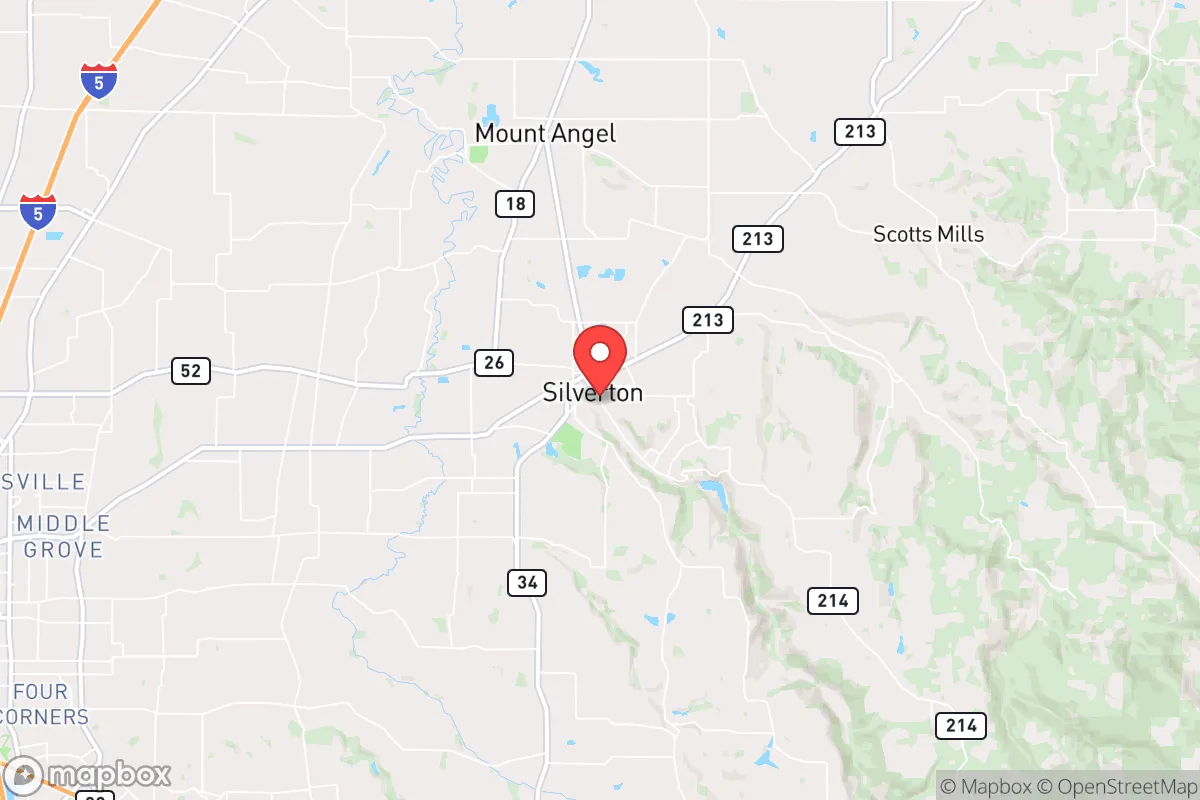
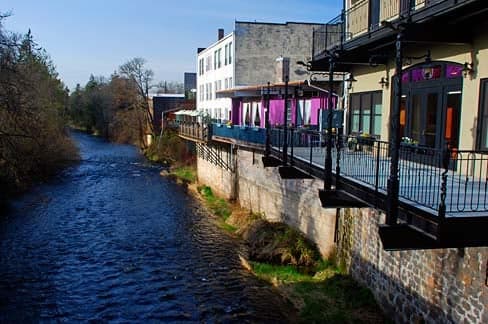
Photo: Wikipedia
Strategic Assessment of Silverton, OR
Meaningful friction. Expect exposure to either population pressure, blast zones, or natural disaster risk. Consider buying a retreat property.
What does the Strategic Assessment tell us?
Our Strategic Assessment grades tactical survivability of an area. Major population centers, military targets, fallout zones, natural disasters, and border exposure all drive risk — lower exposure means a more defensible position in a crisis.
This is heavily inspired by Joel Skousen's Strategic Relocation book. Highly recommended you checkout the book ($)What does this tell us?
Our Strategic Assessment grades tactical survivability of an area. Major population centers, military targets, fallout zones, natural disasters, and border exposure all drive risk — lower exposure means a more defensible position in a crisis.
This is heavily inspired by Joel Skousen's Strategic Relocation book. Highly recommended you checkout the book ($)Strategic Pillars

Key Distances
Regional Safe Places
Below is our recommended "safe zones" in Oregon and the surrounding area based on our strategic heuristics. For most people, it's unrealistic to live in a “safe zone” full-time due to work, family or other personal reasons. They tend to be more rural. However, many of these areas are perfect for second homes and retreat properties that double as a vacation home or even a short-term rental.


Important Note: For informational purposes only. This does not mean nothing bad ever happens in the green zones. Please use common sense. This is based on public data and modeled with AI. We tried to take a conservative approach but mistakes happen. We update this regularly as new information becomes available.
Solar Generator Recommendations
Backup power matters more here than in safer locations. We've picked three solar generators across budgets and capacity tiers — start with the budget unit if you only need a few essentials, or step up if you want to run a fridge and HVAC for days at a time.

Jackery Portable Power Station Explorer 300
Budget OptionPower on the Go: Weighing only 11 lbs, it's convenient to set up and store with book-sized foldable solar panels

BLUETTI Portable Power Station AC180
Designed for both indoor and outdoor scenarios, AC180 is highly capable as it has a robost capacity and continuous output power.

EF ECOFLOW DELTA Pro Ultra Power Station
Upgraded PickEcoFlow DELTA Pro Ultra is a whole-home energy system designed to grow with your family. Integrated with the Smart Home Panel 2, it scales to meet your evolving energy needs — keeping your home powered, intelligent, and secure through every stage of life.
We earn a commission, at no additional cost to you.
Strategic Assessment Analysis
Silverton, Oregon, offers a compelling balance of rural self-sufficiency and strategic access for the disaster-conscious relocator, but its resilience profile is a mixed bag. Nestled in the Willamette Valley about 15 miles northeast of Salem and 45 miles south of Portland, the town sits in a fertile agricultural corridor that provides strong local food security. However, its proximity to major population centers and critical infrastructure introduces real man-made risks that must be weighed against its natural advantages. For a family or individual prioritizing preparedness, Silverton is a viable option—provided you understand and mitigate its specific vulnerabilities.
Geographic position and natural advantages for self-sufficiency
Silverton’s location in the Silver Creek watershed, at the foothills of the Cascade Range, gives it several built-in resilience perks. The area receives abundant rainfall—roughly 40-50 inches annually—which supports robust local agriculture and makes rainwater catchment a practical, year-round strategy. The surrounding farmland is some of the most productive in the state, with nearby farms producing berries, hazelnuts, grains, and livestock. In a prolonged disruption, the ability to source food locally is a major advantage over more urbanized parts of the valley.
The town itself sits at an elevation of around 250 feet, well above the flood-prone lowlands of the Willamette River. While Silver Creek can swell during heavy rains, the historic downtown and most residential neighborhoods are not in a designated 100-year flood zone. The terrain is gently rolling, with forested hills to the east that offer defensible retreat options without requiring extreme mountain access. The nearby Silver Falls State Park and the Opal Creek Wilderness provide a buffer of undeveloped public land, which can serve as both a resource and a natural barrier to uncontrolled movement.
For the self-sufficient relocator, the climate is moderate—summers are dry and warm, winters are cool and wet—which reduces the risk of extreme weather events like tornadoes, hurricanes, or blizzards that plague other regions. The Cascades to the east also act as a shield against the worst of Pacific storms, though the area is not immune to wind events. Overall, the natural environment supports a low-key, year-round growing season and reliable water supply, which are foundational to any long-term resilience plan.
Risks, exposures, and proximity to fallout-relevant landmarks
The most significant risk for Silverton is its proximity to Salem and Portland, which are both major population centers and potential targets in a conflict or major infrastructure failure scenario. Salem is home to Oregon’s state government, the Oregon State Capitol, and several key state agencies. Portland, with its dense urban core, major port facilities, and critical transportation hubs (including PDX airport and Interstate 5 bridges), is a high-probability target for any adversary seeking to disrupt the Pacific Northwest. Silverton lies roughly 45 miles from Portland’s urban center and 15 miles from Salem—close enough to be affected by fallout patterns, secondary effects like refugee movement, or supply chain collapse originating from those cities.
Additionally, the area is within the broader shadow of the Portland metro’s industrial and military infrastructure. The Port of Portland handles significant cargo, and the nearby U.S. Army Corps of Engineers operates dams and locks on the Willamette and Columbia Rivers. While Silverton itself has no major military installations, the region’s strategic importance means it could be a secondary target or experience cascading failures from a primary strike. The prevailing wind patterns in the Willamette Valley generally blow from the west and southwest, meaning fallout from a Portland or Salem event could drift toward Silverton, depending on the season and specific weather conditions.
Natural disaster risks are more manageable but not negligible. The area sits in a seismically active region, with the Cascadia Subduction Zone capable of producing a magnitude 9.0 earthquake. A major quake would likely cause widespread damage to roads, bridges, and utilities throughout the valley, including Silverton. The town’s older building stock—some homes date to the late 1800s—may not meet modern seismic standards. Landslide risk is moderate in the steeper hills east of town, and wildfire risk is low but not zero, especially during dry summer months when grass fires can spread quickly in the surrounding farmland.
Practical resilience for a relocator: food, water, energy, and defensibility
For the relocator serious about self-sufficiency, Silverton’s practical resilience is a mixed picture that requires proactive investment. On the food front, the town is surrounded by working farms, and the Silverton Farmers Market operates seasonally, offering direct access to local produce, meats, and eggs. The Marion County Soil and Water Conservation District provides resources for home gardeners and small-scale farmers. However, the town itself is not a major food production hub—most grocery stores rely on the same supply chains as the rest of the valley. For long-term food security, a relocator would need to establish their own garden, preserve harvests, and build relationships with local producers before a crisis hits.
Water is a strong point. Silverton’s municipal water comes from the Silver Creek watershed, which is fed by snowmelt and rainfall from the Cascades. The system has backup generators at key pump stations, but a prolonged power outage or earthquake could disrupt service. Homes with wells are common in the rural areas just outside town limits, and the water table is generally reliable. For those within city limits, installing a rainwater catchment system or a backup well is a smart investment. The local climate makes water scarcity a low-probability event, but contamination from upstream sources or seismic damage is a real concern.
Energy resilience is a weak spot. Silverton is served by Portland General Electric, and the grid is vulnerable to the same earthquake and storm risks as the rest of the valley. Natural gas is available in parts of town, but a major seismic event could rupture lines and cause fires. Solar potential is moderate—the region gets about 150 sunny days per year, with heavy cloud cover in winter—so a solar-plus-battery system would need to be oversized to cover winter loads. Wood heating is a practical backup, given the surrounding forests, but air quality regulations in the Willamette Valley restrict wood-burning during inversions. For a serious prepper, a combination of solar, a small generator, and a wood stove would provide a reasonable baseline.
Defensibility is a nuanced factor. Silverton is a small town of about 10,000 people, with a tight-knit community and a relatively low crime rate. The layout is compact, with a historic downtown and residential neighborhoods that are walkable but not easily fortified. The surrounding farmland and forest offer some buffer, but the town is accessible via multiple roads, including Highway 213 and Highway 214, which connect to Salem and Interstate 5. In a crisis, these routes could become chokepoints for both refugees and looters. The local police department is small, and the Marion County Sheriff’s Office would be stretched thin in a regional emergency. For a relocator, the best defensibility strategy is to live on the outskirts—on a few acres with good sightlines and a single access road—rather than in the town center.
Community preparedness is a mixed bag. Silverton has an active CERT (Community Emergency Response Team) program and a local chapter of the Oregon Preparedness Network. The Marion County Emergency Management office runs regular drills and provides resources for families. However, the overall culture is more “small-town friendly” than “hardcore prepper.” Most residents are not stockpiling supplies or building bunkers. For a relocator looking to plug into a like-minded network, it’s possible to find kindred spirits, but it will require effort to build those connections.
In the final analysis, Silverton offers a solid foundation for a resilience-minded relocator, but it is not a remote bug-out location. Its strengths are local food production, reliable water, and a moderate climate that reduces extreme weather risks. Its weaknesses are proximity to Salem and Portland, grid dependence, and moderate seismic risk. The strategic picture is one of trade-offs: you get the benefits of a functioning small town with schools, healthcare, and community, but you trade the isolation that would fully insulate you from regional collapse. For a family that wants to be prepared without going off-grid entirely, Silverton is a realistic choice—provided you invest in your own water, energy, and food systems before you need them.

* Values derived from national, state, county, city and local statistics and may differ in a specific area. Last updated: 2026-07-30T14:11:48.000Z
Narrative content on this page is AI-generated and may contain mistakes. Verify any details that matter before acting on them.
ReloMaps may earn a commission from affiliate links at no extra cost to you.

