 Popular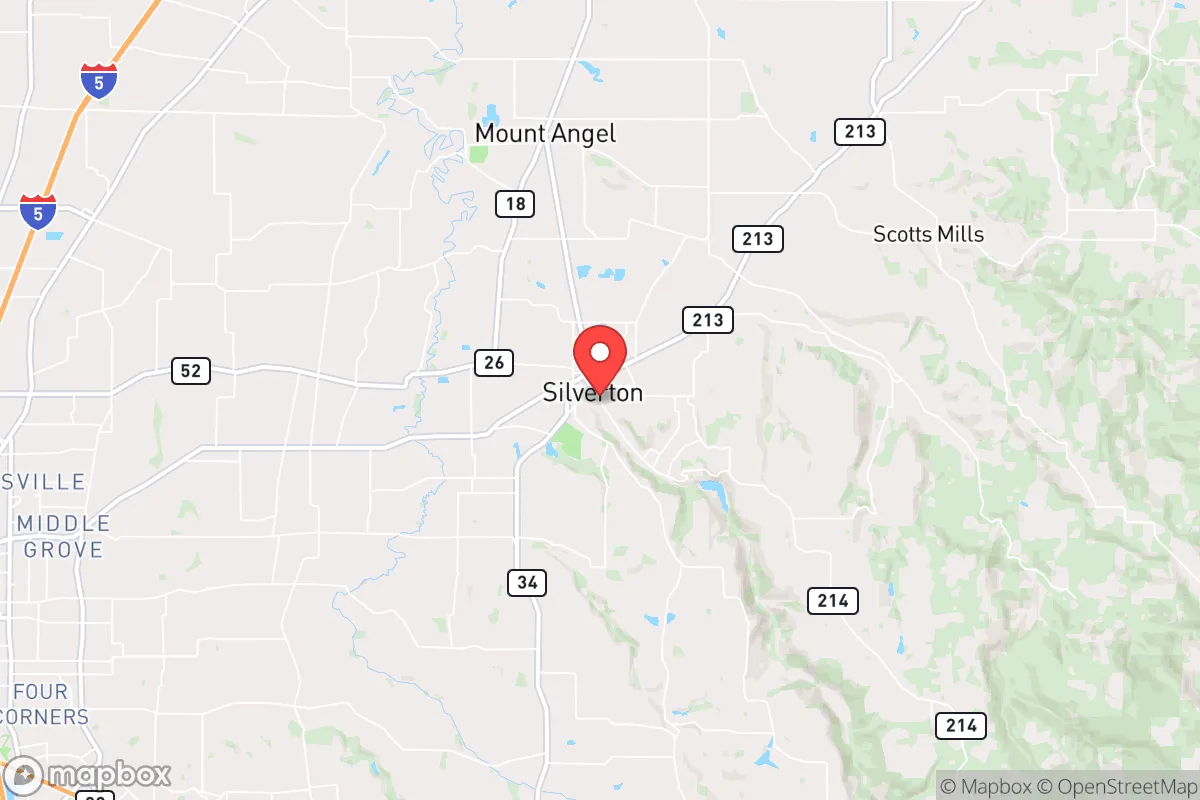
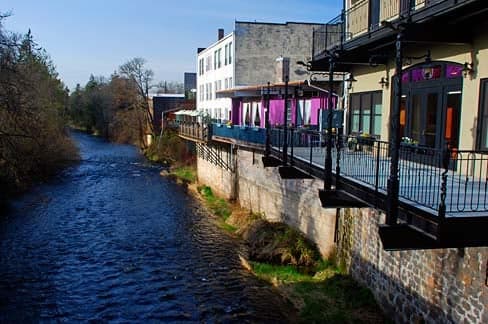
Photo: Wikipedia
Political ClimatePolitical Climate in Silverton, OR
District shown is the primary district for this city’s centroid. Cities may span multiple districts.
Local Political AnalysisPolitical Analysis of Silverton, OR
Silverton’s political climate is a classic example of a small town that’s been tugged leftward by the broader Portland metro spillover, but it still holds onto a noticeably more moderate, even conservative, streak than the state as a whole. The area’s Cook Partisan Voting Index (PVI) of D+4 means it leans Democratic, but it’s a full four points more Republican-leaning than Oregon’s statewide PVI of D+8. That gap isn’t just a number on a map—it reflects a real, lived tension between the town’s agricultural and blue-collar roots and the influx of new residents from the Willamette Valley’s urban core. If you’ve been around here long enough, you’ve seen the shift: Silverton used to reliably vote red in local races, but now it’s a genuine battleground, with Democrats often winning by slim margins, especially in presidential years.
How it compares
When you stack Silverton up against the rest of Oregon, the difference is most visible in the surrounding countryside. Drive ten minutes east toward Mount Angel or Scotts Mills, and you’re in deep-red territory—those precincts often go +20 or more for Republicans. Head west toward Woodburn or south toward Salem, and the blue gets deeper. Silverton sits right in the middle, a kind of political fulcrum. The D+4 PVI means that while Democrats have a slight edge, it’s not a safe seat for anyone. In the 2024 presidential race, for instance, Silverton’s precincts were close to a 50-50 split, while Oregon as a whole went for the Democratic candidate by about 10 points. That’s a big gap for a town just 15 miles from the state capital. The trajectory here is slow but steady: each election cycle, the Democratic margin inches up a point or two, driven by younger families and remote workers moving in from Portland, but the town’s older, more established population—many in farming, manufacturing, or local trades—keeps things from swinging hard left.
What this means for residents
For conservative residents, Silverton is still a comfortable place to live, even if you’re not winning every election. You’ll find plenty of neighbors who share your views on property rights, gun ownership, and local control. The city council and school board often have a mix of both parties, and conservative voices are heard in public meetings. You won’t feel like an outcast. For liberal residents, the advantage is that your vote actually counts more here than it would in a deep-blue Portland suburb—you’re part of a coalition that can tip local races. The practical upshot is that Silverton avoids the most extreme policy swings you see in either direction. Taxes are moderate, zoning is relatively flexible, and the town’s growth is managed with a pragmatic eye. Neither side gets everything it wants, but both sides get enough to keep the peace.
Culturally, the biggest distinction is Silverton’s relationship with the state government in Salem. Oregon’s statewide policies—like the 2023 gun control measure (Measure 114) and the tight land-use laws—are often met with grumbling here, but they’re generally accepted as the cost of doing business. You won’t see the kind of open defiance you’d find in more rural counties like Douglas or Josephine. Instead, Silverton tends to quietly adapt, finding local workarounds where possible. The town’s identity is still rooted in its historic downtown, the Oregon Garden, and the annual Silverton Fine Arts Festival—events that draw a politically mixed crowd. Looking ahead, the trend is toward a slow, steady blue shift, but don’t expect Silverton to become a Portland clone anytime soon. The town’s independent streak runs deep, and that’s something both sides can appreciate.

State Political ClimatePolitical Climate in Oregon
State Political AnalysisPolitical Environment in the State
Oregon has a Cook PVI of D+8, meaning it leans about eight points more Democratic than the national average, but that single number hides a deeply fractured political landscape. The state’s dominant coalition is a blend of Portland metro progressives, Willamette Valley liberals, and a growing suburban moderate bloc, but the rural eastern and southern counties are as red as any in the country. Over the past 20 years, Oregon has shifted leftward on social and environmental policy, yet it has also seen a significant rightward push in rural areas, creating a state that is simultaneously more progressive and more polarized than it was in the early 2000s.
Urban vs. rural divide
The political map of Oregon is a study in contrast. Multnomah County (Portland) alone accounts for roughly 20% of the state’s vote and delivers margins of 75-80% for Democrats. Washington County (suburban Portland, home to Intel and Nike) and Lane County (Eugene) are also reliably blue, though with slightly narrower margins. The I-5 corridor from Portland through Salem to Eugene is the Democratic heartland. In contrast, the rest of the state is overwhelmingly Republican. Deschutes County (Bend) has been a notable swing area — it voted for Trump in 2016 and 2020, but by narrower margins than other rural counties, and local races there are competitive. Jackson County (Medford) and Josephine County (Grants Pass) are deep red, with Trump winning by 15-20 points. Union County (La Grande) and Baker County (Baker City) in the northeast are even more conservative, often voting 70%+ Republican. The divide isn’t just urban vs. rural; it’s also coastal vs. inland. Lincoln County (Newport) and Coos County (Coos Bay) lean Democratic but are more moderate than the Willamette Valley, reflecting a mix of tourism, fishing, and timber interests.
Policy environment
Oregon’s policy environment is a patchwork of progressive state-level laws and conservative local resistance. There is no state sales tax, which is a major draw for many relocators, but property taxes are moderate and income taxes are high — the top marginal rate is 9.9%, and the corporate activity tax (CAT) passed in 2019 adds a layer of business cost. Education policy is dominated by the state’s “Student Success Act” (2019), which funnels $1 billion annually into K-12, but outcomes remain middling; graduation rates hover around 80%. Healthcare is heavily regulated, with the Oregon Health Plan (Medicaid expansion) covering about 25% of residents. Election laws are among the most accessible in the nation: Oregon was the first state to vote entirely by mail (1998), and automatic voter registration at the DMV is standard. Gun laws are restrictive — Measure 114, passed in 2022, requires a permit to purchase and bans magazines over 10 rounds (though it’s tied up in court as of 2026). Property rights are constrained by land-use laws dating to the 1970s, which limit urban growth boundaries and restrict development in rural areas. This keeps sprawl in check but drives up housing costs in desirable metros.
Recent policy direction
The last five years have seen Oregon lurch left on several fronts, with notable pushback. Measure 110 (2020) decriminalized possession of small amounts of all drugs and redirected savings to treatment, but it was widely blamed for a surge in public drug use and overdoses; in 2024, the legislature partially rolled it back, re-criminalizing possession in public spaces. On parental rights, Oregon passed a law in 2023 allowing minors 15 and older to access gender-affirming care without parental consent, which has become a flashpoint for conservative families. Gun rights advocates are fighting Measure 114 in court, and the state’s “red flag” law (2017) allows courts to temporarily seize firearms from individuals deemed a risk. On speech, Oregon has no state-level hate speech law, but local ordinances in Portland and Eugene restrict certain public demonstrations. Privacy and surveillance are mixed: the state has strong data breach notification laws, but Portland’s ban on facial recognition by police (2020) is a local outlier. Medical and bodily autonomy is broadly protected — abortion is legal without gestational limits, and assisted suicide (Death with Dignity Act, 1997) is available. Property taxes are capped by Measure 50 (1997), limiting annual increases to 3% for existing homeowners, which benefits long-term residents but creates a tax disparity for newcomers. Voting access remains wide open, with same-day registration and no voter ID requirement, which conservatives argue undermines election integrity.
Civil unrest & political movements
Oregon has a long history of political activism, from the 1934 West Coast Longshoremen’s Strike to the 2020 Portland protests. The 2020 George Floyd protests in Portland were among the most sustained in the nation, lasting over 100 nights and drawing federal intervention. The city’s “autonomous zone” in the Pearl District was short-lived but highly publicized. Right-wing counter-movements are equally active: the Patriot Prayer group, based in Vancouver, Washington, frequently clashed with leftist antifa in Portland. Rural Oregon has a strong secessionist undercurrent — the “Greater Idaho” movement, which proposes moving 13 eastern Oregon counties into Idaho, has gained traction, with several counties voting in favor of exploring the idea. Immigration politics are tense: Oregon is a “sanctuary state” (1987), meaning local law enforcement cannot inquire about immigration status, but rural sheriffs in places like Linn County (Albany) and Douglas County (Roseburg) have publicly refused to comply. Election integrity controversies flared after 2020, with some rural counties calling for hand-count audits, though no widespread fraud was found. Visible flashpoints for a new resident include: frequent protests in downtown Portland, “Trump 2024” flags on pickup trucks in rural towns, and the occasional standoff between state police and local sheriffs over gun laws.
Projection
Over the next 5-10 years, Oregon’s political trajectory points toward continued polarization, but with a possible moderation in the suburbs. Demographic shifts are key: the Portland metro is growing slowly, while Bend, Salem, and Medford are attracting California transplants and remote workers, many of whom lean left but are less radical than Portland activists. Rural counties are losing population, which will reduce their political clout but harden their resistance. The “Greater Idaho” movement is unlikely to succeed — it would require approval from both state legislatures and Congress — but it will keep rural-urban tensions high. Housing costs will be a major political driver: the state’s land-use laws and zoning restrictions are under increasing pressure from both developers and affordability advocates, and a bipartisan push for more housing construction is likely. Gun laws will remain a battleground, with Measure 114 likely to be upheld or replaced by a similar law, further alienating rural conservatives. Education policy may shift toward school choice — a 2024 bill allowing charter schools to expand passed with some Democratic support, signaling a possible compromise. Someone moving in now should expect: a state where Portland and the I-5 corridor continue to drive state policy, but where rural counties become more vocal and organized in opposition, creating a constant low-grade political conflict.
For a conservative relocator, the bottom line is this: Oregon offers beautiful landscapes, no sales tax, and a relatively low-crime rural lifestyle, but you will be living in a state where your vote is often outnumbered on social and economic issues. You’ll find like-minded communities in places like Bend, Medford, or La Grande, but state-level policies on guns, education, and parental rights will likely continue to trend left. For a liberal relocator, Oregon is a comfortable fit on most issues, but you’ll need to accept that rural areas are deeply resistant to progressive change, and that the state’s housing and tax policies create real trade-offs. Either way, Oregon is a state where your local community matters more than the state capitol — and that’s been true for decades.
* Values derived from national, state, county, city and local statistics and may differ in a specific area. Last updated: 2026-07-30T14:11:48.000Z
Narrative content on this page is AI-generated and may contain mistakes. Verify any details that matter before acting on them.
ReloMaps may earn a commission from affiliate links at no extra cost to you.

