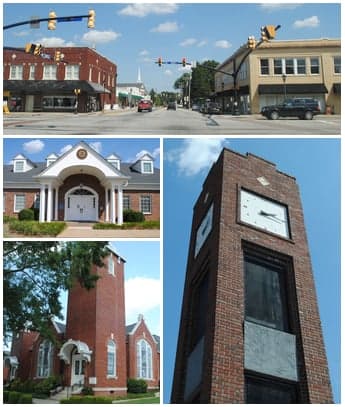
Photo: Wikipedia
Strategic Assessment of Simpsonville, SC
Meaningful friction. Expect exposure to either population pressure, blast zones, or natural disaster risk. Consider buying a retreat property.
What does the Strategic Assessment tell us?
Our Strategic Assessment grades tactical survivability of an area. Major population centers, military targets, fallout zones, natural disasters, and border exposure all drive risk — lower exposure means a more defensible position in a crisis.
This is heavily inspired by Joel Skousen's Strategic Relocation book. Highly recommended you checkout the book ($)What does this tell us?
Our Strategic Assessment grades tactical survivability of an area. Major population centers, military targets, fallout zones, natural disasters, and border exposure all drive risk — lower exposure means a more defensible position in a crisis.
This is heavily inspired by Joel Skousen's Strategic Relocation book. Highly recommended you checkout the book ($)Strategic Pillars

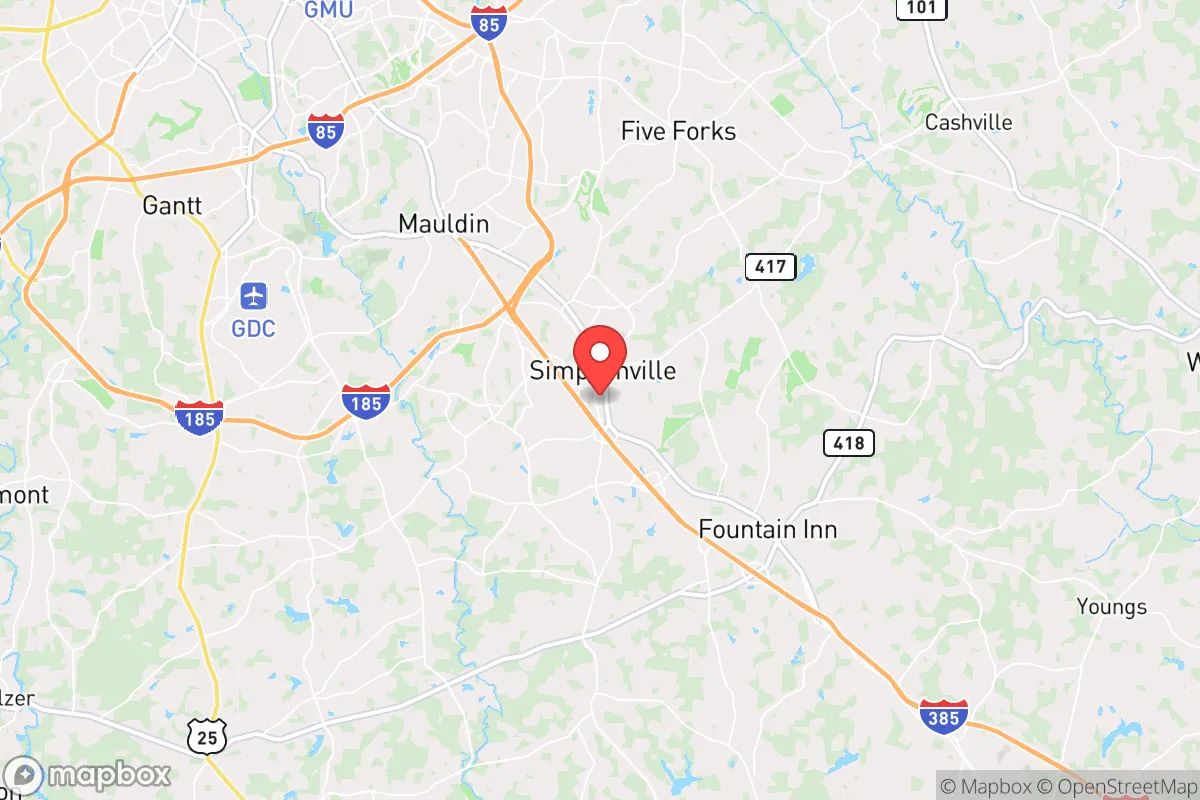
Key Distances
Regional Safe Places
Below is our recommended "safe zones" in South Carolina and the surrounding area based on our strategic heuristics. For most people, it's unrealistic to live in a “safe zone” full-time due to work, family or other personal reasons. They tend to be more rural. However, many of these areas are perfect for second homes and retreat properties that double as a vacation home or even a short-term rental.
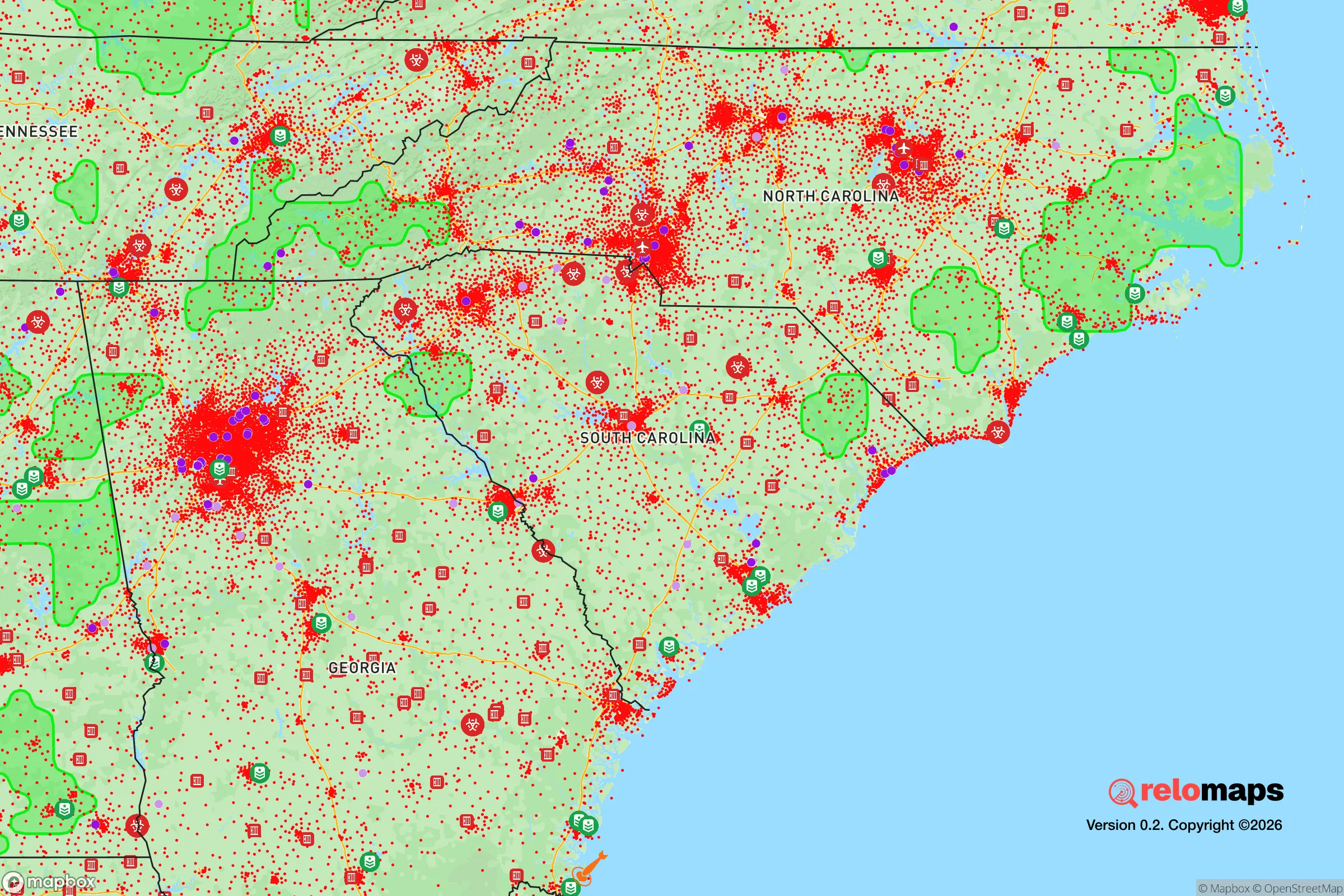
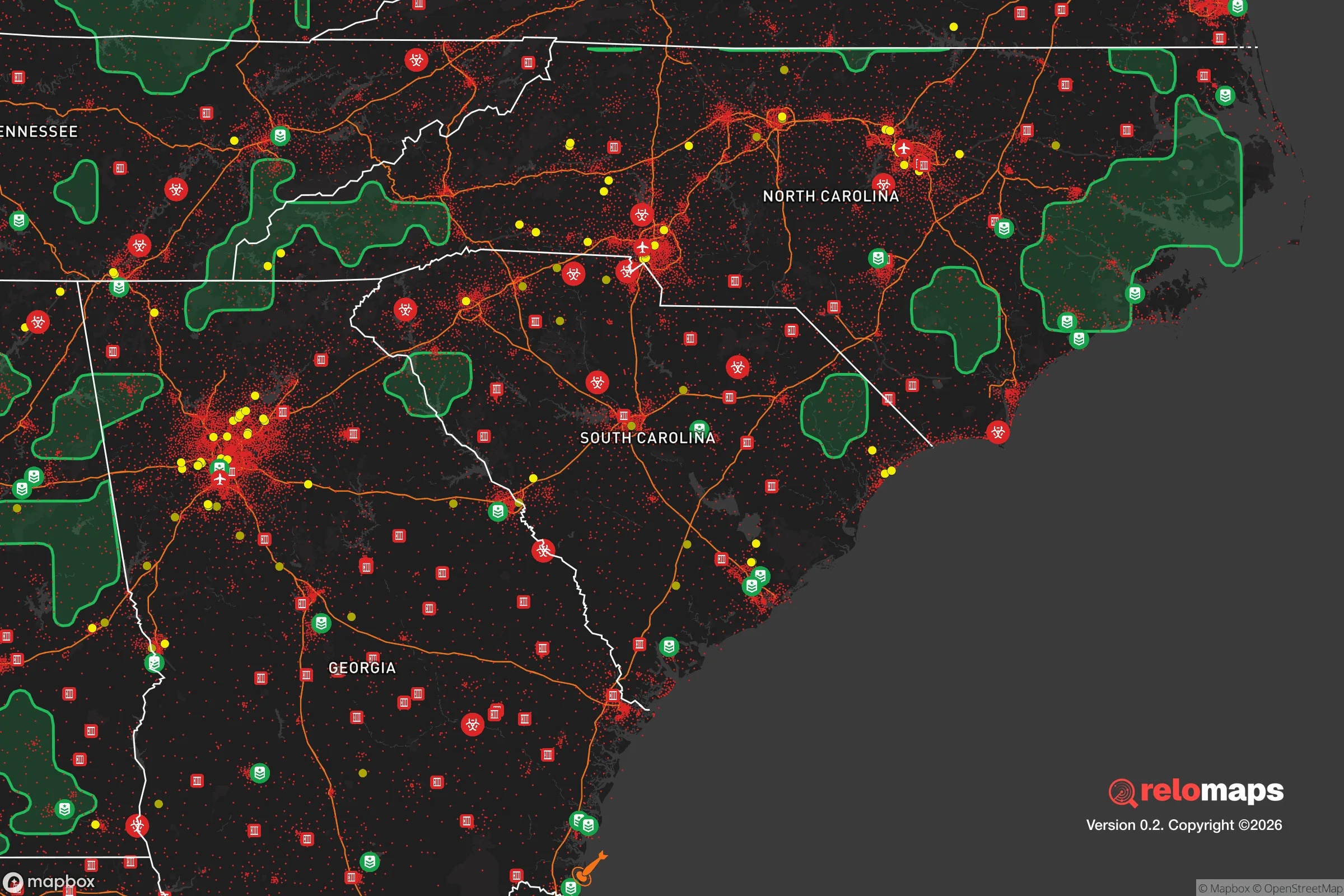


Important Note: For informational purposes only. This does not mean nothing bad ever happens in the green zones. Please use common sense. This is based on public data and modeled with AI. We tried to take a conservative approach but mistakes happen. We update this regularly as new information becomes available.
Solar Generator Recommendations
Backup power matters more here than in safer locations. We've picked three solar generators across budgets and capacity tiers — start with the budget unit if you only need a few essentials, or step up if you want to run a fridge and HVAC for days at a time.

Jackery Portable Power Station Explorer 300
Budget OptionPower on the Go: Weighing only 11 lbs, it's convenient to set up and store with book-sized foldable solar panels

BLUETTI Portable Power Station AC180
Designed for both indoor and outdoor scenarios, AC180 is highly capable as it has a robost capacity and continuous output power.

EF ECOFLOW DELTA Pro Ultra Power Station
Upgraded PickEcoFlow DELTA Pro Ultra is a whole-home energy system designed to grow with your family. Integrated with the Smart Home Panel 2, it scales to meet your evolving energy needs — keeping your home powered, intelligent, and secure through every stage of life.
We earn a commission, at no additional cost to you.
Strategic Assessment Analysis
Simpsonville, South Carolina, occupies a strategic position in the Upstate region that offers a meaningful balance of accessibility and buffer, making it a location worth serious consideration for those prioritizing resilience and self-sufficiency. Situated roughly 15 miles southeast of Greenville and 30 miles from the North Carolina border, the town benefits from the economic and logistical advantages of a growing metropolitan area while maintaining a distinct small-town character and a degree of geographic separation from the most concentrated population centers. For a relocator thinking about disaster readiness, Simpsonville presents a mixed picture: it avoids the highest-risk coastal zones and major industrial targets, but its proximity to Greenville-Spartanburg and the I-85 corridor introduces exposure to man-made risks that require careful evaluation.
Geographic position and natural advantages for long-term stability
Simpsonville sits in the Piedmont region, a transitional zone between the Appalachian foothills and the coastal plain, which provides a natural advantage in terms of terrain and climate stability. The area is inland enough to be largely insulated from the direct impacts of hurricane storm surge and the most severe coastal flooding, a significant consideration given the increasing frequency of named storms along the Eastern Seaboard. The elevation around Simpsonville averages roughly 860 feet above sea level, which contributes to moderate summer temperatures and reduces the risk of flash flooding compared to lower-lying areas. The region's underlying geology, primarily crystalline bedrock with clay-rich soils, offers a stable foundation for infrastructure and limits the kind of liquefaction or subsidence risks found in coastal or alluvial plains. Water availability is a genuine asset here: the area sits within the Saluda River watershed, and nearby Lake Greenwood and Lake Hartwell provide substantial reservoir capacity. Annual rainfall averages around 50 inches, distributed relatively evenly throughout the year, which supports rain-fed agriculture and private well viability for those who prioritize water independence. The growing season extends roughly 220 days, making small-scale food production a realistic endeavor for families looking to supplement their supply chains.
Risk exposure, proximity to infrastructure targets, and fallout considerations
The most significant vulnerability for Simpsonville in a strategic resilience assessment is its location within the broader Greenville-Spartanburg metropolitan corridor, a region that hosts substantial industrial, transportation, and military infrastructure. The proximity to the Greenville-Spartanburg International Airport (GSP) and the I-85 freight corridor, which connects Charlotte to Atlanta, means the area sits along a high-value logistics spine that could be a target for disruption during a major conflict or economic collapse. More specifically, the Savannah River Site, a nuclear materials processing facility located roughly 100 miles to the south, represents a potential fallout hazard depending on wind patterns and the nature of any incident. While 100 miles provides a meaningful buffer, prevailing winds in the region tend to move from west to east, meaning Simpsonville is not in the most direct downwind path from the site, but it is close enough that a major release would require careful monitoring and potentially temporary relocation. The area also lies within roughly 150 miles of the Port of Charleston, a major naval and commercial shipping hub that could be a target in a conflict scenario. On the natural hazard side, the region experiences occasional tornadoes, though the Upstate is less prone to the violent outbreaks common in the Deep South or the Plains. Earthquake risk is low but not zero, with the nearby Eastern Tennessee Seismic Zone capable of producing moderate tremors. For a relocator, the key takeaway is that Simpsonville avoids the highest-risk coastal and industrial target zones but is not remote enough to be considered a true bug-out location; it is a suburban buffer zone with moderate exposure.
Practical resilience: food, water, energy, and community defensibility
For a family or individual serious about self-sufficiency, Simpsonville offers a workable but not ideal environment. The soil in the Piedmont is generally acidic and clay-heavy, which requires amendment for productive gardening, but with raised beds and composting, a household can produce a meaningful portion of its own vegetables and herbs. Local farmers' markets and the proximity to agricultural areas in Laurens and Anderson counties provide backup food sourcing options. Water resilience is stronger than in many suburban areas: the municipal water supply draws from the Saluda River and Lake Keowee, both of which have substantial capacity, and the water table in the region is generally accessible for private wells at depths of 100 to 300 feet, depending on the specific lot. For those considering solar energy, the region receives an average of 4.5 to 5 peak sun hours per day, which is adequate for a grid-tied system with battery backup, though the area's tree cover can be a limiting factor for rooftop installations. The local power grid is served by Duke Energy, which has a mixed reliability record during severe storms, but the growing number of residential solar installations in the Upstate suggests a gradual shift toward distributed generation. In terms of community defensibility, Simpsonville's layout as a typical suburban town with multiple access points and a dispersed population makes it difficult to secure in a collapse scenario, but the strong local culture of church communities, civic organizations, and neighborhood watch programs provides a social resilience that is harder to quantify but equally important. The town's police department is well-regarded and responsive, and the broader Greenville County Sheriff's Office maintains a visible presence in the area.
The overall strategic picture for Simpsonville is that of a moderately resilient suburban location that works best for someone who wants to be within striking distance of urban resources while maintaining a baseline level of preparedness. It is not a remote homestead or a fortified retreat, but it offers a realistic middle ground for a family that wants good schools, a stable economy, and the ability to build a self-sufficient lifestyle without going off-grid entirely. The key strategic trade-off is clear: you gain access to the medical infrastructure, supply chains, and employment opportunities of the Greenville metro area, but you also accept the risks that come with being near a major transportation corridor and within a few hours' drive of high-value targets. For a relocator who is willing to invest in well water, solar backup, and a serious food storage plan, Simpsonville provides a defensible base of operations in a region that is politically stable, culturally aligned with conservative values, and geographically positioned to weather many of the most common natural and man-made disruptions.

* Values derived from national, state, county, city and local statistics and may differ in a specific area. Last updated: 2026-10-20T13:03:54.000Z
Narrative content on this page is AI-generated and may contain mistakes. Verify any details that matter before acting on them.
ReloMaps may earn a commission from affiliate links at no extra cost to you.

