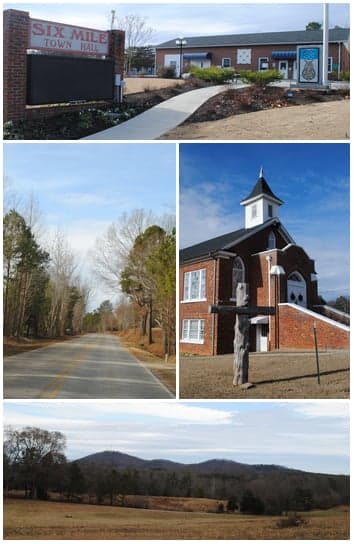
Photo: Wikipedia
Demographics of Six Mile, SC
Affluence Level in Six Mile, SC
An upper-middle-class area. Household wealth, education levels, and homeownership run ahead of national benchmarks.
People of Six Mile, SC
Six Mile, South Carolina, is a small, tightly-knit community of 984 residents that remains overwhelmingly homogeneous, with a population that is 97.0% White and 0.0% foreign-born. The city’s character is defined by its rural setting in Pickens County, a high rate of college-educated adults (55.7%), and a quiet, family-oriented atmosphere that appeals to those seeking a slower pace of life near the Clemson area. Despite its name, Six Mile is not a bustling suburb but a census-designated place with a distinct identity rooted in its agricultural and railroad past, where neighbors often know each other by name and new development is measured and deliberate.
How the city was settled and grew
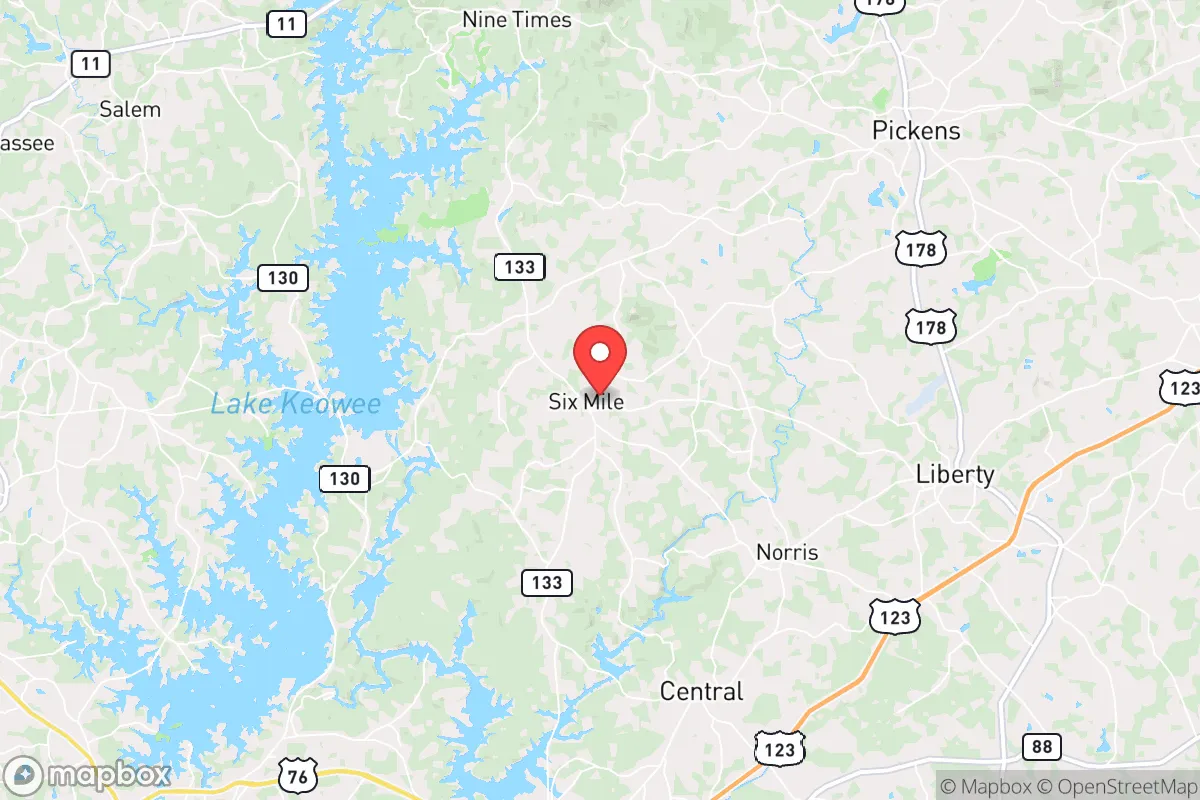
Six Mile’s human history begins with the Cherokee people, who inhabited the region until forced removal in the 1830s. European-American settlers, primarily of Scots-Irish and English descent, arrived shortly after, drawn by land grants offered in the upstate’s fertile foothills. The town’s name derives from its location six miles from the earlier settlement of Pickens Court House, and its early economy revolved around subsistence farming, timber, and small grist mills. The arrival of the Blue Ridge Railroad in the 1850s transformed Six Mile into a modest shipping point for cotton and lumber, attracting a wave of farmers and tradesmen who built homes along what is now Main Street and the surrounding rural lanes. The historic Old Six Mile District, centered around the railroad depot and the original storefronts, became the heart of the community, where families like the Mauldin and Ellison names established roots that persist today. Through the early 20th century, the population remained small and almost entirely White, with a handful of Black families working as sharecroppers on nearby farms, though no distinct Black neighborhood ever formed within the town limits.
Modern era (post-1965)
The post-1965 era brought little demographic change to Six Mile, as the city did not experience the suburban boom that reshaped much of the Upstate. Instead, the population grew slowly through domestic in-migration of White families from other parts of South Carolina and the Southeast, drawn by affordable land and proximity to Clemson University and the growing manufacturing base in Pickens County. The Keowee Shores neighborhood, a lakefront community on Lake Keowee developed in the 1970s, attracted retirees and second-home owners, while the Six Mile Estates subdivision, built in the 1980s and 1990s, became home to young families and Clemson employees seeking a rural commute. The foreign-born population remains at 0.0%, and the Black population has declined to just 0.7%, reflecting the area’s lack of economic pull for diverse populations and the broader pattern of White rural retention in upstate South Carolina. The Hispanic share, at 1.2%, is negligible and largely tied to seasonal agricultural work on nearby farms, with no concentrated Hispanic neighborhood emerging. The city’s high college education rate (55.7%) is a notable shift from its agricultural past, driven by professionals who work in Clemson, Greenville, or remotely, and who value Six Mile’s low taxes and quiet streets over urban amenities.
The future
Six Mile’s population is projected to remain small and predominantly White over the next 10–20 years, with modest growth driven by continued spillover from the Clemson area and the appeal of lakefront properties. The Lake Keowee corridor, including newer subdivisions like The Cliffs at Keowee Vineyards (a gated luxury community), is attracting affluent retirees and remote workers, but these newcomers are overwhelmingly White and college-educated, reinforcing the existing demographic profile. The city’s 0.0% foreign-born share is unlikely to rise significantly, as Six Mile lacks the rental housing stock, public transit, and entry-level jobs that typically attract immigrant populations. The Hispanic and Black shares may inch upward slightly as service workers find housing in nearby Liberty or Easley, but Six Mile itself offers little affordable rental inventory. The cultural identity is evolving from a farming community to a bedroom suburb for the Clemson-Greenville corridor, but the social fabric remains rooted in church life, school sports at Six Mile Elementary, and lake recreation. For a family moving in now, the area offers safety, strong schools in Pickens County, and a predictable, low-diversity environment where change comes slowly.
Six Mile is becoming a quiet, affluent enclave for those who prioritize space, nature, and proximity to Clemson over diversity and urban energy. The population is stable, homogeneous, and increasingly college-educated, with a future that looks much like its present: small, White, and family-centered. For a relocating family or individual seeking a conservative, low-crime community with a strong sense of place, Six Mile offers a genuine, if insular, slice of upstate South Carolina life.

* Values derived from national, state, county, city and local statistics and may differ in a specific area. Last updated: 2026-10-20T05:46:57.000Z
Narrative content on this page is AI-generated and may contain mistakes. Verify any details that matter before acting on them.
ReloMaps may earn a commission from affiliate links at no extra cost to you.

