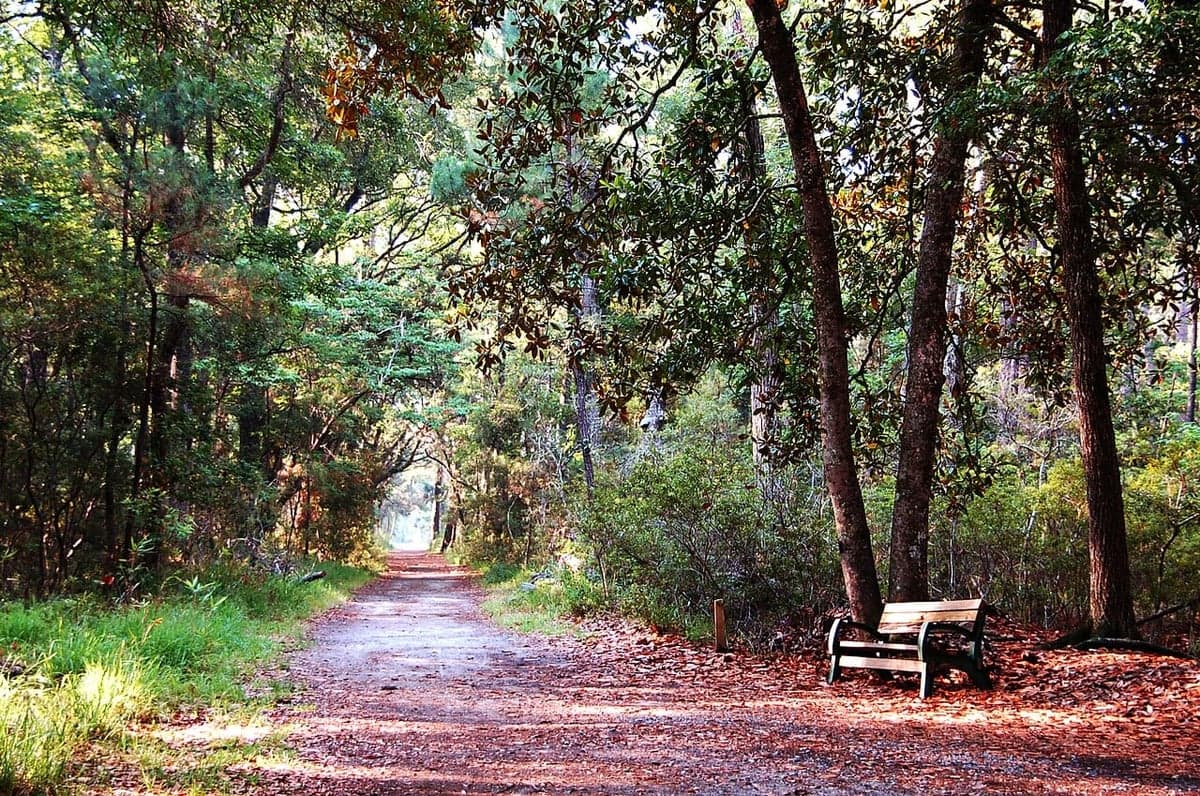
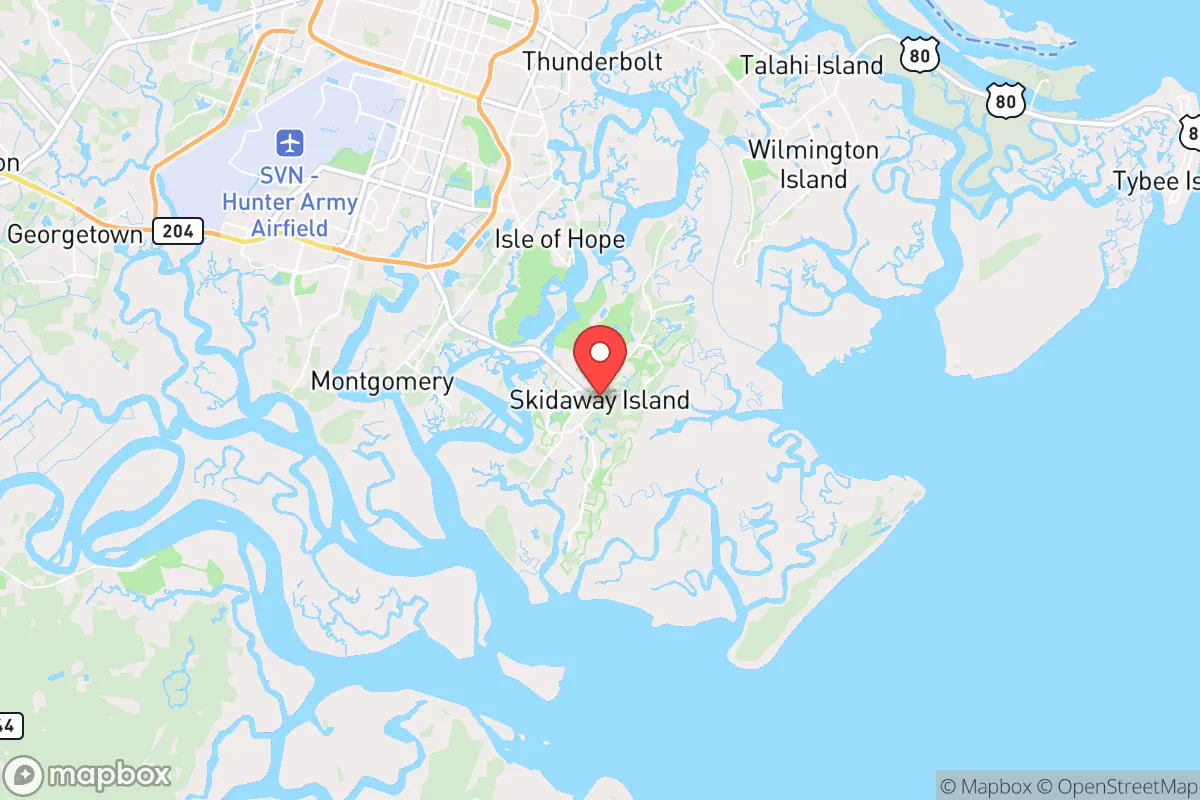
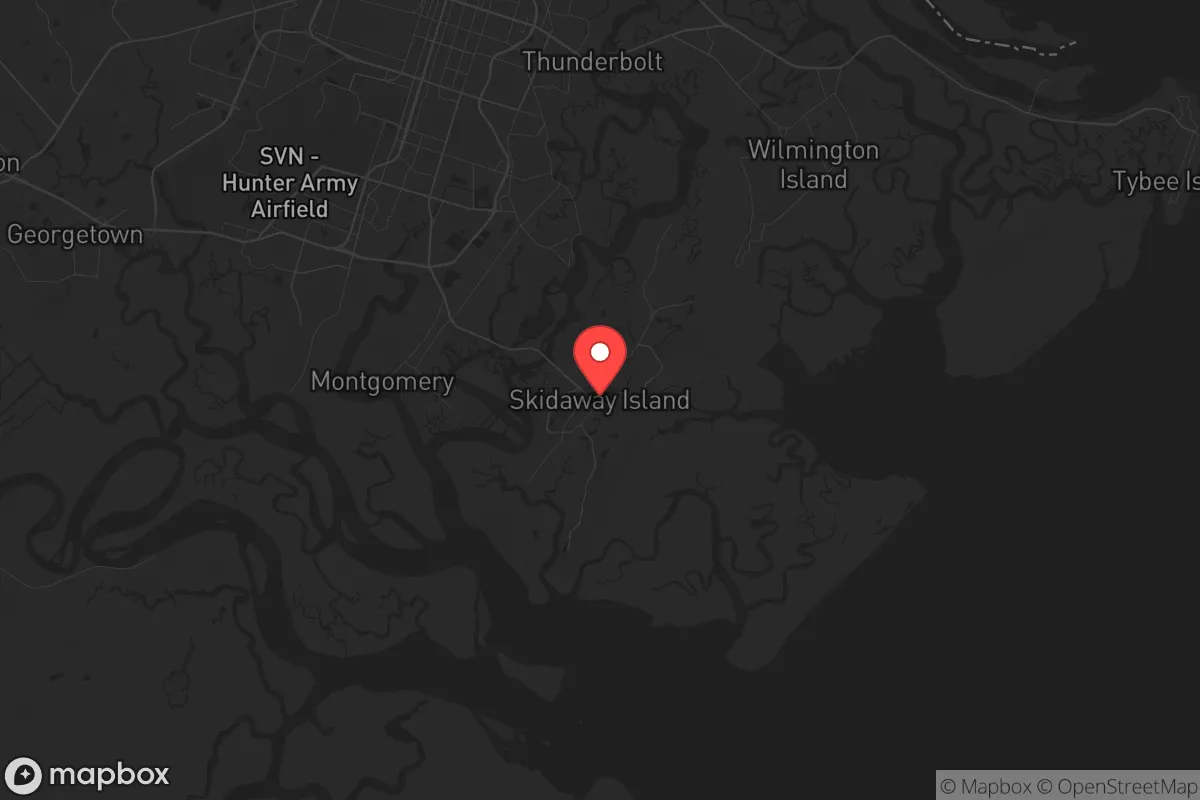
Strategic Assessment of Skidaway Island, GA
Workable tactical position. Some exposure to population density or targets, but generally defensible in a crisis.
What does the Strategic Assessment tell us?
Our Strategic Assessment grades tactical survivability of an area. Major population centers, military targets, fallout zones, natural disasters, and border exposure all drive risk — lower exposure means a more defensible position in a crisis.
This is heavily inspired by Joel Skousen's Strategic Relocation book. Highly recommended you checkout the book ($)What does this tell us?
Our Strategic Assessment grades tactical survivability of an area. Major population centers, military targets, fallout zones, natural disasters, and border exposure all drive risk — lower exposure means a more defensible position in a crisis.
This is heavily inspired by Joel Skousen's Strategic Relocation book. Highly recommended you checkout the book ($)Strategic Pillars

Key Distances
Regional Safe Places
Below is our recommended "safe zones" in Georgia and the surrounding area based on our strategic heuristics. For most people, it's unrealistic to live in a “safe zone” full-time due to work, family or other personal reasons. They tend to be more rural. However, many of these areas are perfect for second homes and retreat properties that double as a vacation home or even a short-term rental.
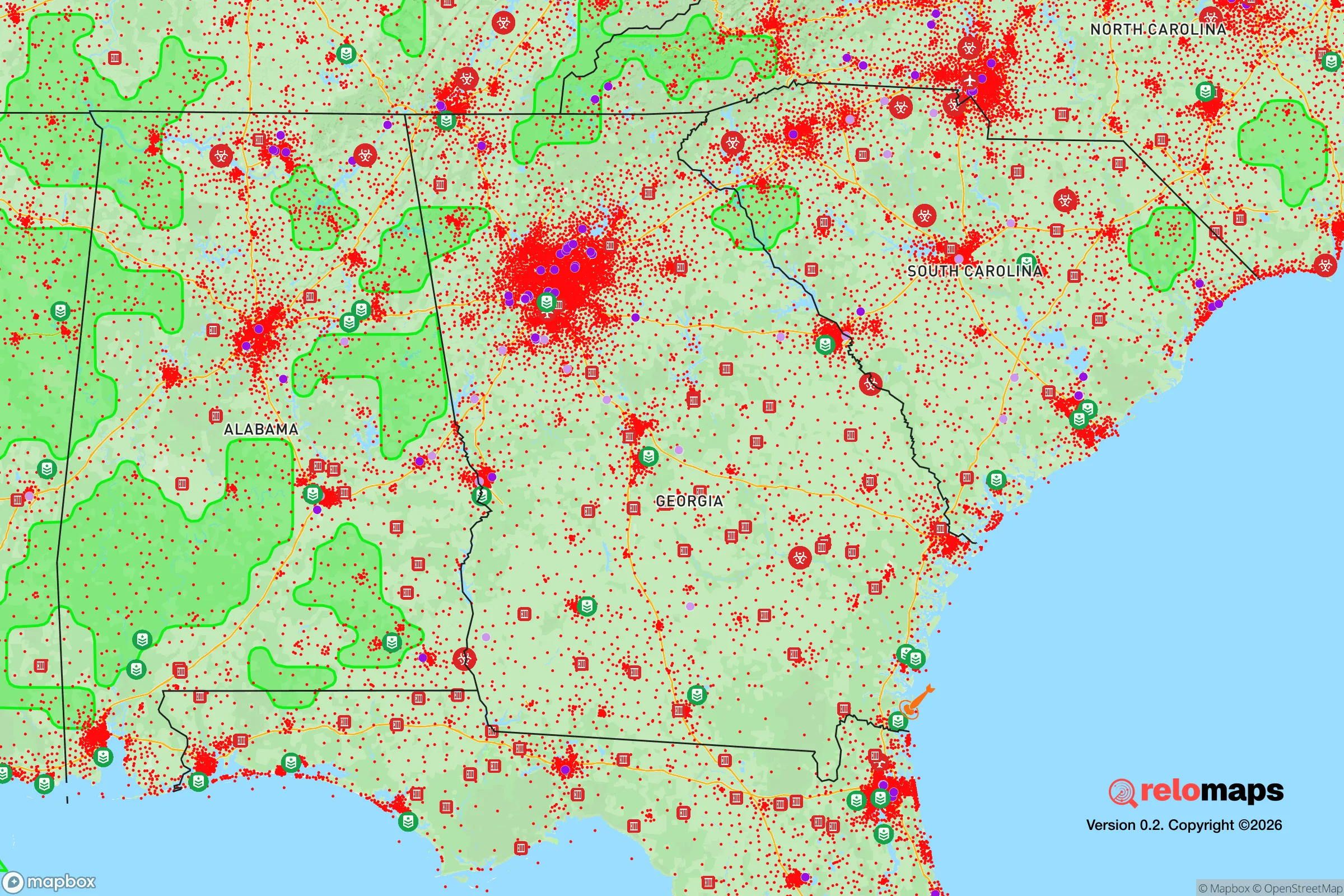
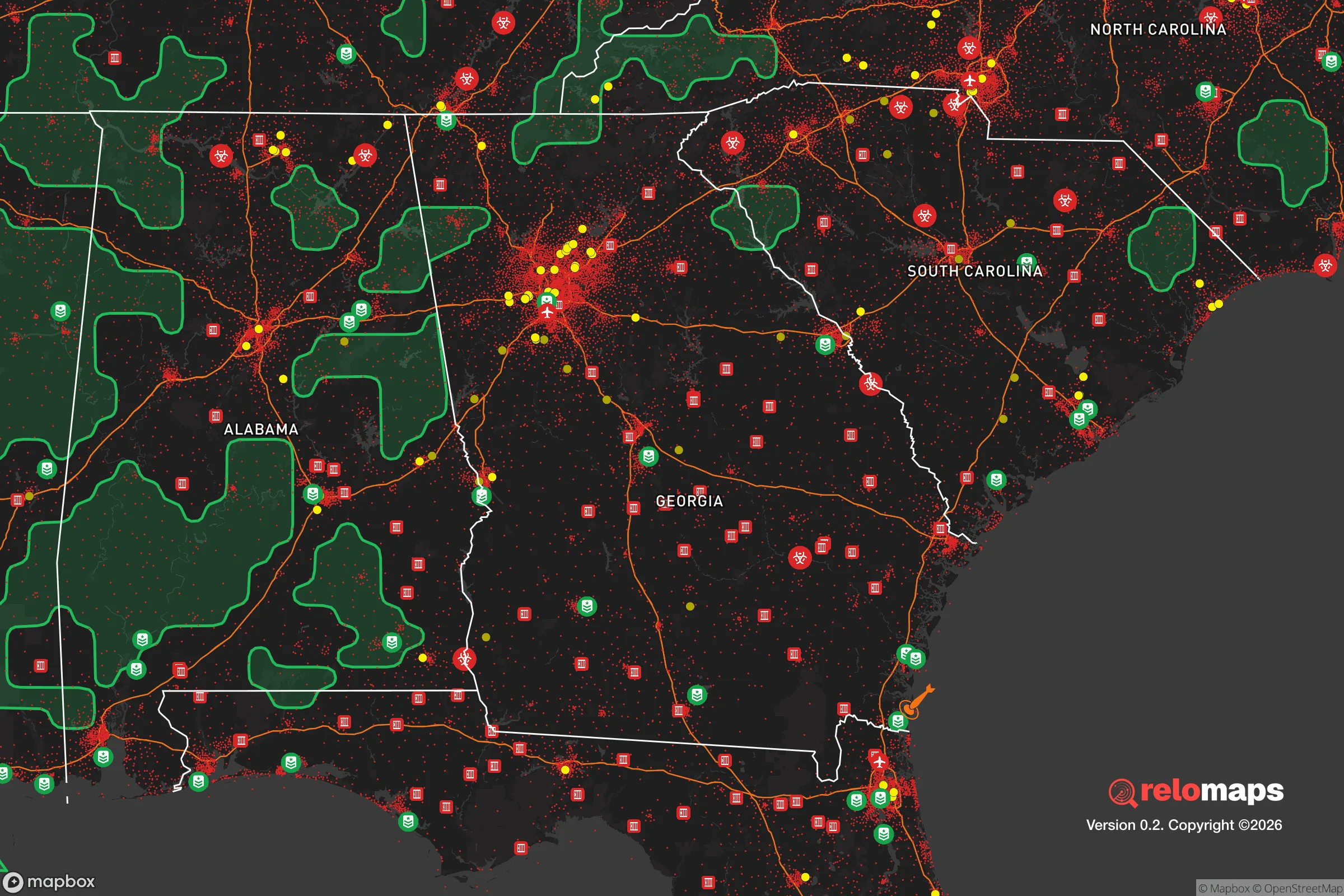


Important Note: For informational purposes only. This does not mean nothing bad ever happens in the green zones. Please use common sense. This is based on public data and modeled with AI. We tried to take a conservative approach but mistakes happen. We update this regularly as new information becomes available.
Solar Generator Recommendations
Backup power matters more here than in safer locations. We've picked three solar generators across budgets and capacity tiers — start with the budget unit if you only need a few essentials, or step up if you want to run a fridge and HVAC for days at a time.

Jackery Portable Power Station Explorer 300
Budget OptionPower on the Go: Weighing only 11 lbs, it's convenient to set up and store with book-sized foldable solar panels

BLUETTI Portable Power Station AC180
Designed for both indoor and outdoor scenarios, AC180 is highly capable as it has a robost capacity and continuous output power.

EF ECOFLOW DELTA Pro Ultra Power Station
Upgraded PickEcoFlow DELTA Pro Ultra is a whole-home energy system designed to grow with your family. Integrated with the Smart Home Panel 2, it scales to meet your evolving energy needs — keeping your home powered, intelligent, and secure through every stage of life.
We earn a commission, at no additional cost to you.
Strategic Assessment Analysis
Skidaway Island, Georgia, presents a nuanced strategic picture for those prioritizing resilience and self-sufficiency. Its primary advantage is geographic insulation—a barrier island with limited access points—but its proximity to Savannah and the sprawling military-industrial complex of the Georgia coast introduces serious vulnerabilities. For a relocator with a survivalist mindset, the island offers a defensible redoubt with decent natural resources, yet it sits within the blast radius of high-value targets that could make it untenable during a major crisis. The trade-off between seclusion and exposure is the central calculation here.
Geographic position and natural advantages for a retreat
Skidaway Island sits roughly 15 miles southeast of downtown Savannah, connected to the mainland by a single two-lane causeway—the Skidaway Narrows Bridge. This chokepoint is both a blessing and a curse. In a grid-down scenario or during civil unrest, controlling that bridge would be the single most important defensive task. The island itself is roughly 6,000 acres, with about half protected as part of the Skidaway Island State Park and the University of Georgia's Skidaway Institute of Oceanography. The terrain is a mix of maritime forest, salt marsh, and tidal creeks, offering ample cover and natural barriers to movement. The island's elevation averages 10-20 feet above sea level, which is relatively high for the Georgia coast, reducing flood risk from storm surge compared to Tybee or Hilton Head. The surrounding marshlands are impassable to vehicles and difficult to traverse on foot, creating a natural moat effect. Freshwater is available from shallow aquifers, though most homes rely on municipal water from Savannah; a well-equipped prepper would need a private well or a robust rainwater catchment system. The island's maritime climate means mild winters and long growing seasons—ideal for subsistence gardening—but also brings hurricane risk from June through November.
Risks, exposures, and proximity to fallout-relevant landmarks
The single greatest strategic liability of Skidaway Island is its proximity to Savannah, a major port city and home to the Georgia Ports Authority's Garden City Terminal—the largest single-container terminal in North America. In a conflict scenario, that port is a high-priority target for disruption, whether by state actors or non-state groups. Additionally, Hunter Army Airfield, located just 10 miles west of the island, is a key logistics hub for the U.S. Army's 3rd Infantry Division. Fort Stewart, a massive Army base, lies about 40 miles southwest. These installations make the entire Savannah metropolitan area a likely target for kinetic or cyber attacks during a major conflict. The Port of Savannah also handles a significant volume of hazardous materials, including chemicals and fuels, which could create secondary hazards if struck. The island itself is not a target, but its single egress point means that any evacuation or supply movement would be funneled through a narrow corridor that could be easily blocked. During a mass casualty event or civil unrest in Savannah, the causeway could become a bottleneck for refugees or looters. The island's wealthy demographic—median home values exceed $600,000—also makes it a potential target for organized crime or desperate populations seeking resources. The nearby Savannah River Site, a nuclear weapons facility about 100 miles upriver, is a distant but non-trivial concern for fallout in a worst-case scenario.
Practical resilience for a relocator: food, water, energy, and defensibility
For a relocator serious about self-sufficiency, Skidaway Island offers a mixed bag. Food security is achievable: the island's soils are sandy but fertile with amendment, and the long growing season supports year-round vegetable production. The surrounding waters provide abundant seafood—shrimp, crab, oysters, and finfish—but access to the marsh and creeks is limited by private property and state park boundaries. Hunting is restricted on the island, but deer and feral hogs are present in the state park; a hunter would need to coordinate with Georgia DNR for permits. Water security is the bigger challenge. Most homes are on municipal water from Savannah, which is vulnerable to contamination or disruption. A private well is possible but requires drilling through the Floridan aquifer, which is deep (200-400 feet) and expensive. Rainwater catchment is viable, with average annual rainfall of 50 inches, but storage space is a consideration. Energy resilience is decent: the island has good solar exposure, and many homes already have backup generators due to hurricane risk. Off-grid solar with battery storage is feasible, though HOA restrictions on some subdivisions may limit panel placement. Defensibility is the island's strongest suit. The single bridge creates a natural checkpoint, and the marshlands make approach from the east or south nearly impossible. The island's population is around 8,000, with a low density that reduces competition for resources. However, the presence of the Skidaway Institute and the state park means there are government-owned facilities that could become contested assets. The island's medical infrastructure is limited to a small clinic; serious trauma care requires a 30-minute drive to Savannah's Memorial Health, which would be overwhelmed in a crisis.
The overall strategic picture for Skidaway Island is one of calculated risk. It offers a defensible, resource-rich environment with natural barriers and a climate conducive to long-term subsistence. But the proximity to Savannah's port, military bases, and industrial infrastructure makes it a high-exposure location during any major conflict or national emergency. For a relocator willing to invest in private water and energy systems, and to maintain a low profile, the island could serve as a viable retreat for a small group. However, those seeking true isolation from fallout zones and population centers would be better served by inland locations in the Appalachian foothills or the Ozarks. Skidaway is a compromise—better than a city, worse than the mountains—and that compromise must be weighed against the specific threats a relocator anticipates. If the concern is localized civil unrest or a short-term disruption, the island's advantages likely outweigh its risks. If the scenario involves a prolonged national collapse or large-scale conflict, the Savannah corridor becomes a liability that no amount of marshland can mitigate.

* Values derived from national, state, county, city and local statistics and may differ in a specific area. Last updated: 2026-04-23T05:15:54.000Z
Narrative content on this page is AI-generated and may contain mistakes. Verify any details that matter before acting on them.
ReloMaps may earn a commission from affiliate links at no extra cost to you.

