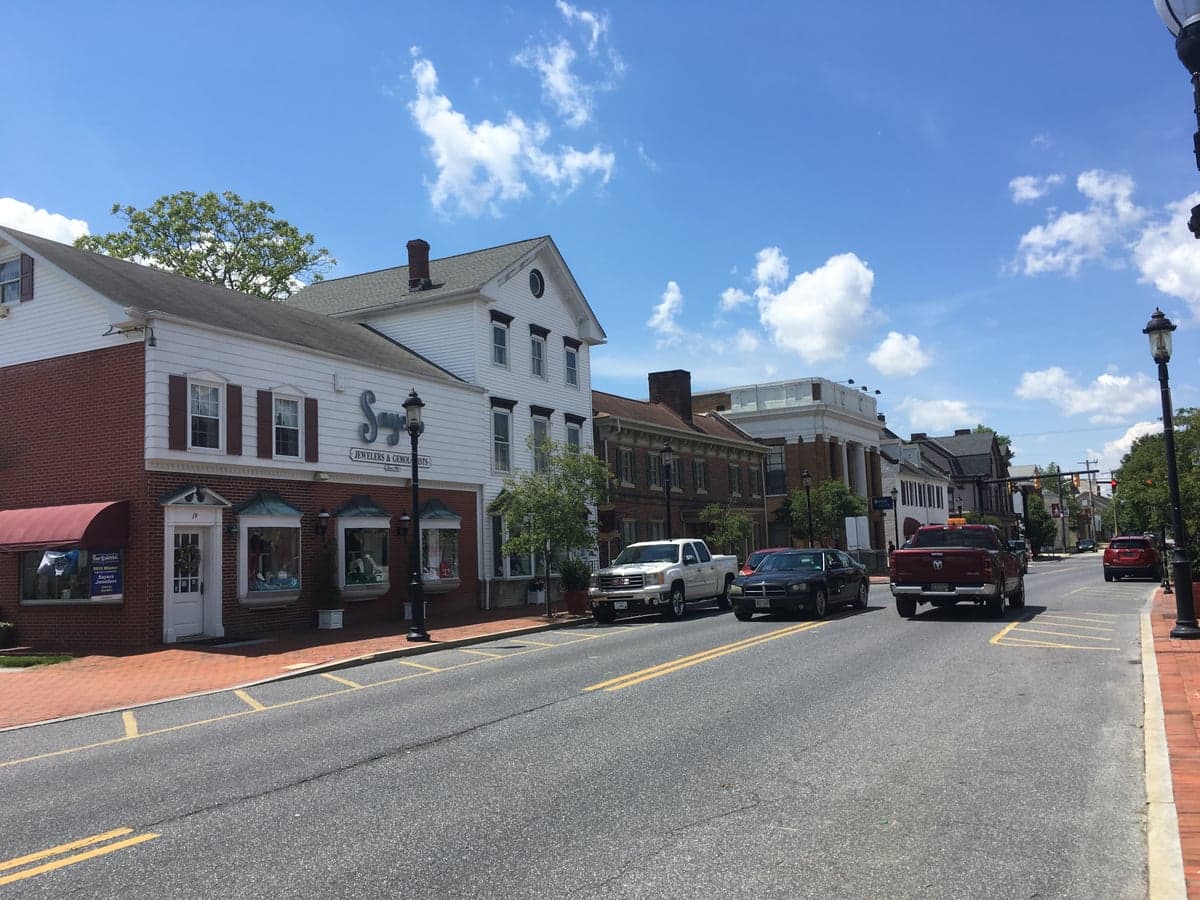
Photo: Wikipedia
Personal Sovereignty in Smyrna, DE
Viable for self-reliance. Generally workable, though some barriers may limit total independence.
What does Personal Sovereignty tell us?
Personal Sovereignty measures your capacity for self-reliance and independence with minimal government friction. Higher scores mean fewer barriers between you and the way you want to live... but it assumes you have the space you need and good neighbors.
What does this tell us?
Personal Sovereignty measures your capacity for self-reliance and independence with minimal government friction. Higher scores mean fewer barriers between you and the way you want to live... but it assumes you have the space you need and good neighbors.
State Policy
Energy independence: Importer (2% of energy produced in-state)
Personal Liberty
Homesteading

Personal Liberty Analysis
Smyrna, Delaware, offers a notably high degree of personal sovereignty relative to much of the Mid-Atlantic and Northeast, making it a serious consideration for those prioritizing autonomy from government overreach. While Delaware is a small state with a blue-leaning government in Dover, Smyrna’s location in Kent County and its rural-suburban character provide a buffer against the most aggressive progressive policies seen in New Castle County or neighboring states like Maryland and New Jersey. For a survivalist or prepper mindset, the key question is whether Smyrna’s local environment allows you to live by your own rules—on taxes, self-defense, property use, and family decisions—without constant state interference. The answer is a qualified yes, with specific trade-offs worth understanding.
Tax burden and regulatory posture in Smyrna
Delaware’s tax structure is a mixed bag for those seeking fiscal sovereignty. On the plus side, there is no state or local sales tax, which means every dollar you earn or spend stays in your pocket—a significant advantage over neighboring states where sales taxes can exceed 6%. Property taxes in Smyrna are also low by regional standards, typically ranging from 0.5% to 0.8% of assessed value, which is roughly half the rate in parts of Maryland or Pennsylvania. However, Delaware does have a progressive state income tax, with rates from 2.2% to 6.6% on higher earners. For a single individual or family earning a middle-class income, the effective rate is manageable but not negligible. The regulatory posture in Smyrna itself is relatively light. The town government is small and focused on basic services like water, sewer, and zoning enforcement. There are no onerous local business license fees or excessive permitting requirements for common home-based activities. Compared to the regulatory thicket in places like New York or California, Smyrna feels like a breath of fresh air. That said, Delaware’s state-level environmental and building codes can add costs to new construction or major renovations, so factor that into any homesteading plans.
Self-defense and gun law specifics in Delaware
This is the most critical area for the sovereignty-minded, and the news is mixed but workable. Delaware is a shall-issue state for concealed carry, meaning if you meet the basic requirements—background check, fingerprinting, and a state-approved training course—the state must issue your permit. There is no discretionary “may-issue” system that gives local sheriffs veto power. However, Delaware does not have constitutional carry; you must have a permit to carry concealed in public. Open carry is legal without a permit for those 18 and older, though in practice it may draw unwanted attention in Smyrna’s suburban areas. The state also has a red flag law (Extreme Risk Protection Order) that allows family members or law enforcement to petition a court to temporarily seize firearms if someone is deemed a threat. This is a point of concern for preppers, as it creates a legal avenue for gun confiscation without a criminal conviction. Additionally, Delaware bans “assault weapons” and large-capacity magazines (over 15 rounds) for new purchases, though existing ones are grandfathered. For a survivalist, this means you need to plan your firearms acquisitions carefully—buy what you need before moving, or accept the limitations. On the positive side, Smyrna is in Kent County, where sheriff’s office attitudes toward gun owners are generally more supportive than in New Castle County. There are multiple gun ranges and training facilities within a 30-minute drive, and the local culture is hunting-friendly. Self-defense in the home is fully protected under Delaware’s Castle Doctrine, with no duty to retreat. Stand Your Ground laws apply outside the home as well, though the legal landscape is less settled than in states like Texas or Florida.
Self-reliance and homesteading viability in Smyrna
For those wanting to grow food, raise animals, or reduce dependence on supply chains, Smyrna offers genuine opportunities. The town itself has a mix of lot sizes, but the surrounding areas in Kent County feature rural zoning that allows for substantial self-reliance. Many properties outside the town limits are zoned AR (Agricultural Residential), which permits livestock, poultry, and large gardens without special permits. Minimum lot sizes in these zones are typically 1 to 2 acres, though you can find parcels as small as half an acre that still allow chickens and small-scale farming. Within Smyrna’s town limits, zoning is more restrictive—backyard chickens are allowed with a permit, but larger livestock like goats or pigs are generally prohibited. For serious homesteading, look at properties on the outskirts, particularly along routes 13, 300, or toward Clayton. Off-grid feasibility is limited but not impossible. Delaware has no state law explicitly banning solar panels or rainwater collection, but local HOAs or subdivision covenants may restrict them. Rainwater collection for non-potable use is generally allowed, and many rural properties have wells and septic systems, giving you independence from municipal water and sewer. The climate is favorable for year-round gardening, with a growing season from April to October. However, Delaware’s flat, coastal terrain means flooding can be an issue in low-lying areas, so check FEMA flood maps before buying. For a prepper, the biggest limitation is that Delaware is small and densely populated compared to states like Montana or Idaho—you won’t have true wilderness isolation. But for a strategic relocation within the Mid-Atlantic, Smyrna’s balance of affordable land and permissive rural zoning is hard to beat.
Personal liberties in Smyrna: parental rights, medical autonomy, speech, and property
This is where Smyrna and Delaware generally align with conservative values, though with some caveats. Parental rights are strong in Delaware—the state has no universal mask or vaccine mandates for schoolchildren, and parents retain significant control over their children’s education, including the ability to homeschool with minimal state oversight. The state requires only a simple notification of intent to homeschool, and there are no standardized testing requirements for homeschoolers. School choice is also robust, with charter schools and a voucher-like program for low-income families. On medical autonomy, Delaware has not enacted the extreme mandates seen in some blue states. There is no state-level vaccine passport system, and medical freedom groups are active in the state legislature. However, the state does have a strict certificate-of-need law for healthcare facilities, which can limit competition and drive up costs. For those seeking alternative or holistic medicine, options are more limited than in states with less regulatory capture. Free speech is protected under the First Amendment, and Smyrna’s local government has not shown hostility to conservative viewpoints. Public meetings are generally open, and there is no local ordinance restricting political speech or assembly. Property rights are solid—Delaware has strong eminent domain protections, and there is no statewide rent control or land-use planning that would prevent you from using your property as you see fit, within zoning limits. The main threat to property sovereignty comes from environmental regulations, particularly around wetlands and coastal zones, but these are less relevant in inland Smyrna.
Overall, Smyrna offers a level of personal sovereignty that is high for the Northeast corridor but moderate by national standards. For a survivalist or prepper, the key advantages are low property taxes, no sales tax, shall-issue concealed carry, rural zoning that supports homesteading, and strong parental rights. The downsides are the state’s red flag law, assault weapon ban, and the inevitable proximity to a blue-leaning state government that could shift further left. Compared to moving to a deep-red state like Texas or Tennessee, Smyrna requires more vigilance and engagement in local politics to protect your freedoms. But for someone who needs to stay in the Mid-Atlantic for work or family, it is one of the better options for maintaining a self-reliant, sovereign lifestyle. The town’s small size and conservative local culture provide a buffer against the worst of state-level overreach, and the land is affordable enough to build the independent life you want. Just keep an eye on Dover—the fight for freedom is never over, and Smyrna is a good place to fight from.

* Values derived from national, state, county, city and local statistics and may differ in a specific area. Last updated: 2026-10-10T16:29:01.000Z
Narrative content on this page is AI-generated and may contain mistakes. Verify any details that matter before acting on them.
ReloMaps may earn a commission from affiliate links at no extra cost to you.

