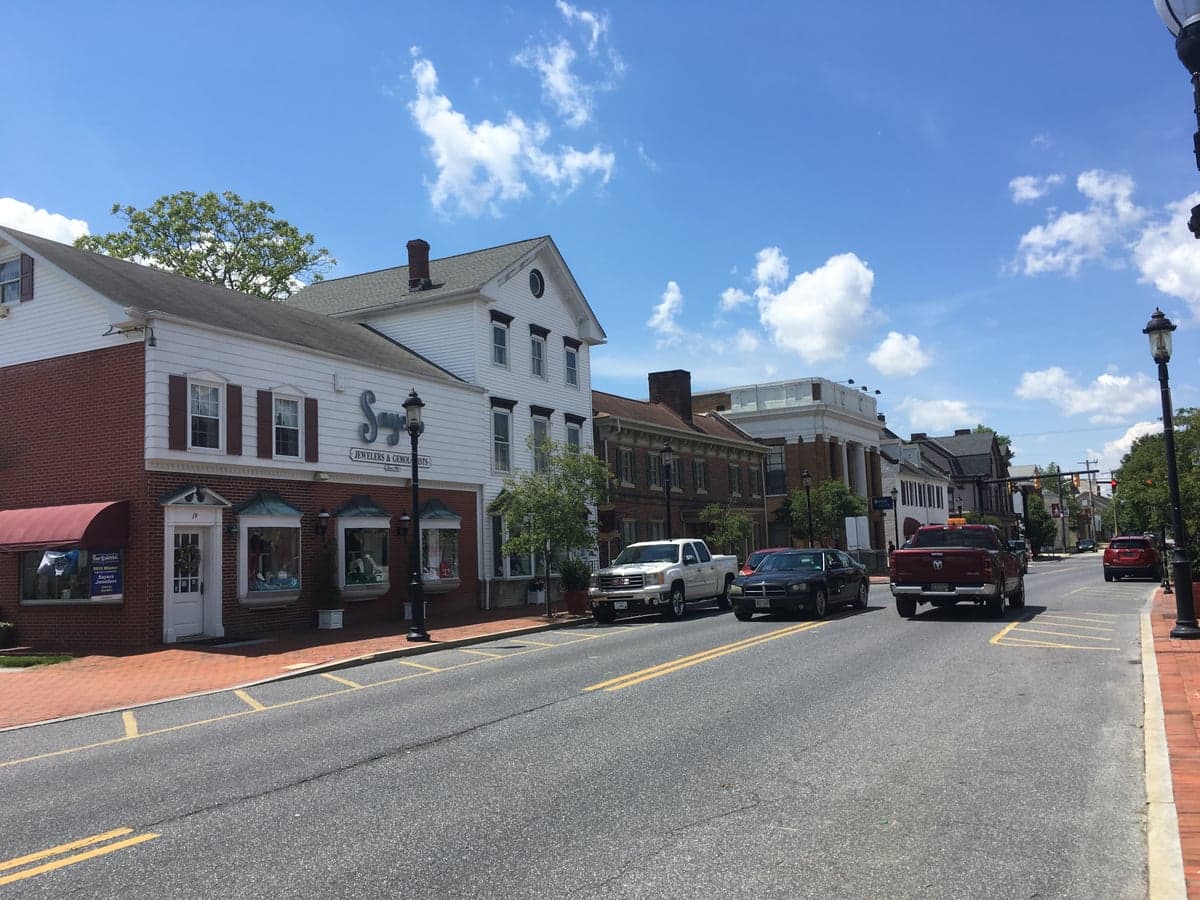
Photo: Wikipedia
Strategic Assessment of Smyrna, DE
Multiple tactical vulnerabilities. Population density, target proximity, or disaster risk are likely compounding. A retreat property and exit planning is required.
What does the Strategic Assessment tell us?
Our Strategic Assessment grades tactical survivability of an area. Major population centers, military targets, fallout zones, natural disasters, and border exposure all drive risk — lower exposure means a more defensible position in a crisis.
This is heavily inspired by Joel Skousen's Strategic Relocation book. Highly recommended you checkout the book ($)What does this tell us?
Our Strategic Assessment grades tactical survivability of an area. Major population centers, military targets, fallout zones, natural disasters, and border exposure all drive risk — lower exposure means a more defensible position in a crisis.
This is heavily inspired by Joel Skousen's Strategic Relocation book. Highly recommended you checkout the book ($)Strategic Pillars

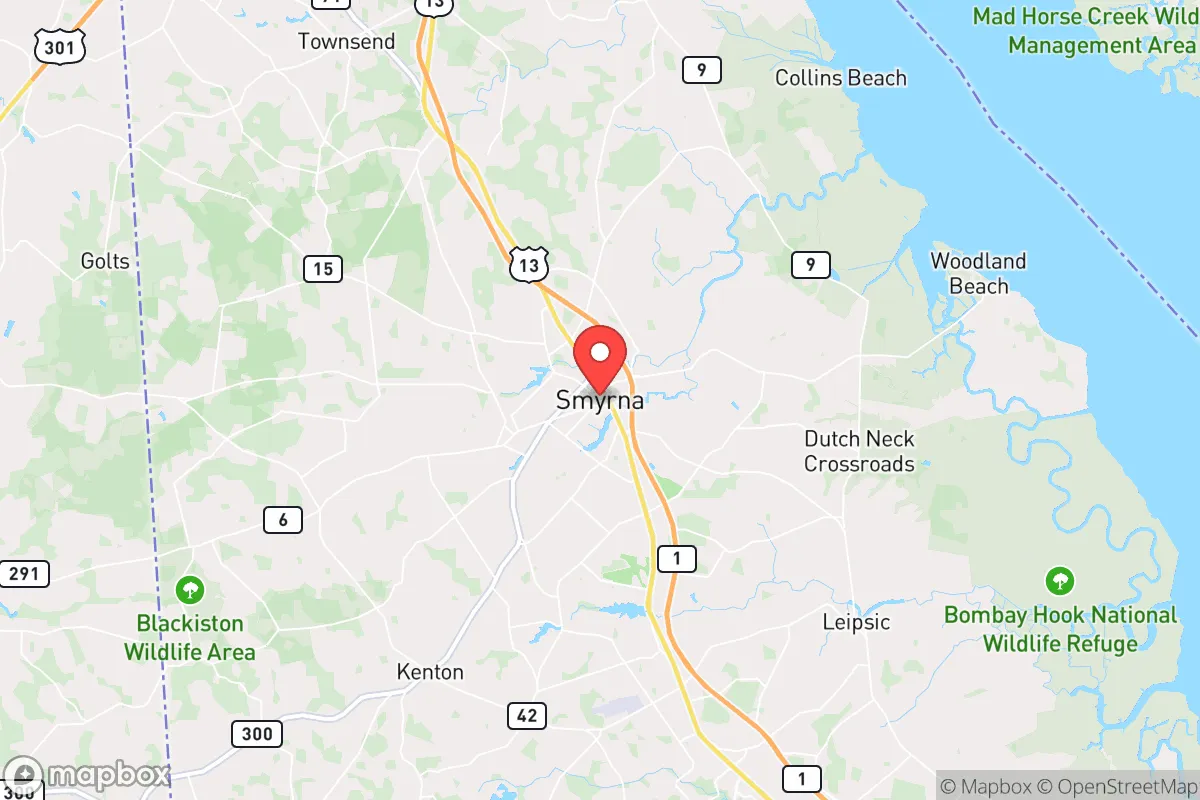
Key Distances
Regional Safe Places
Below is our recommended "safe zones" in Delaware and the surrounding area based on our strategic heuristics. For most people, it's unrealistic to live in a “safe zone” full-time due to work, family or other personal reasons. They tend to be more rural. However, many of these areas are perfect for second homes and retreat properties that double as a vacation home or even a short-term rental.
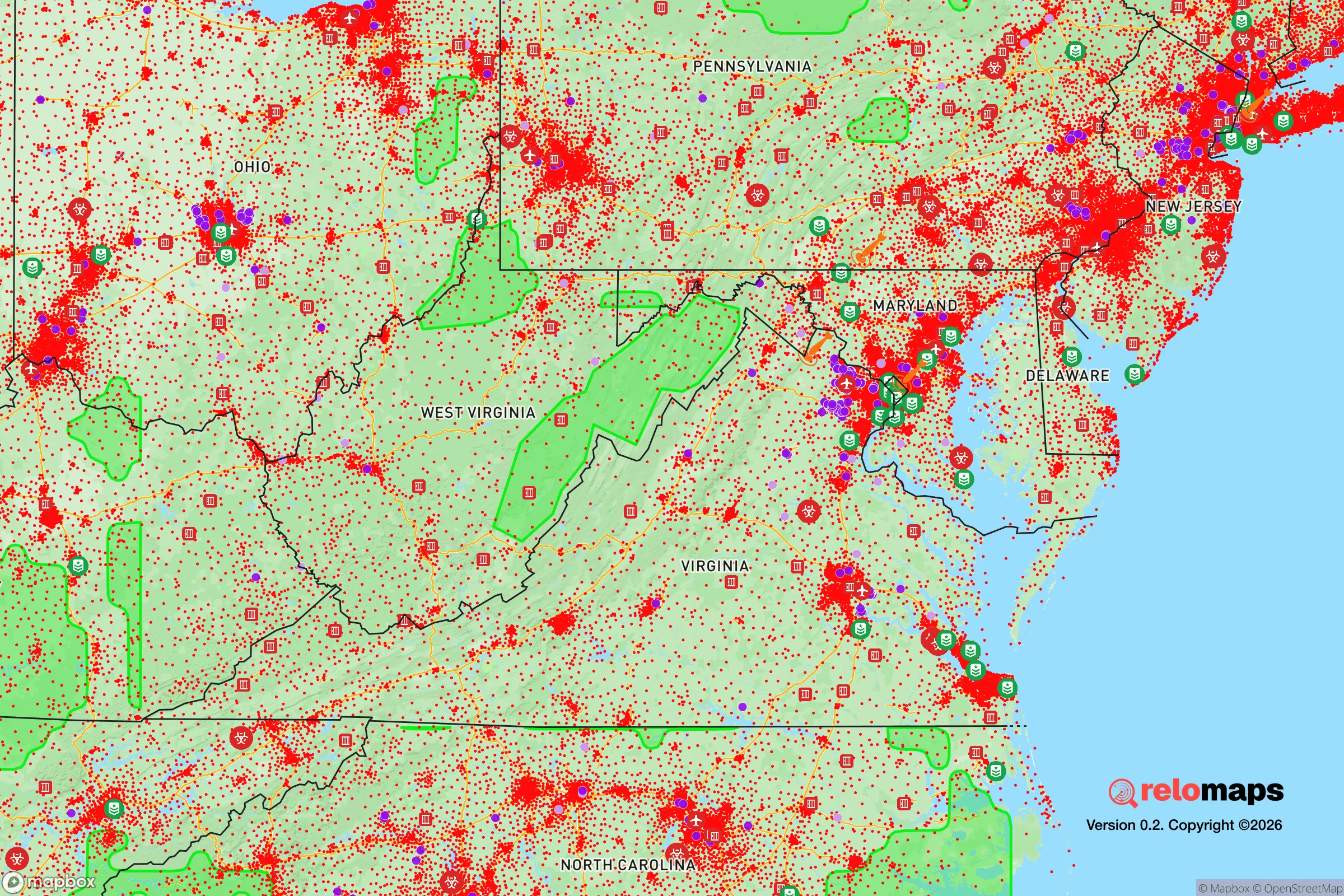
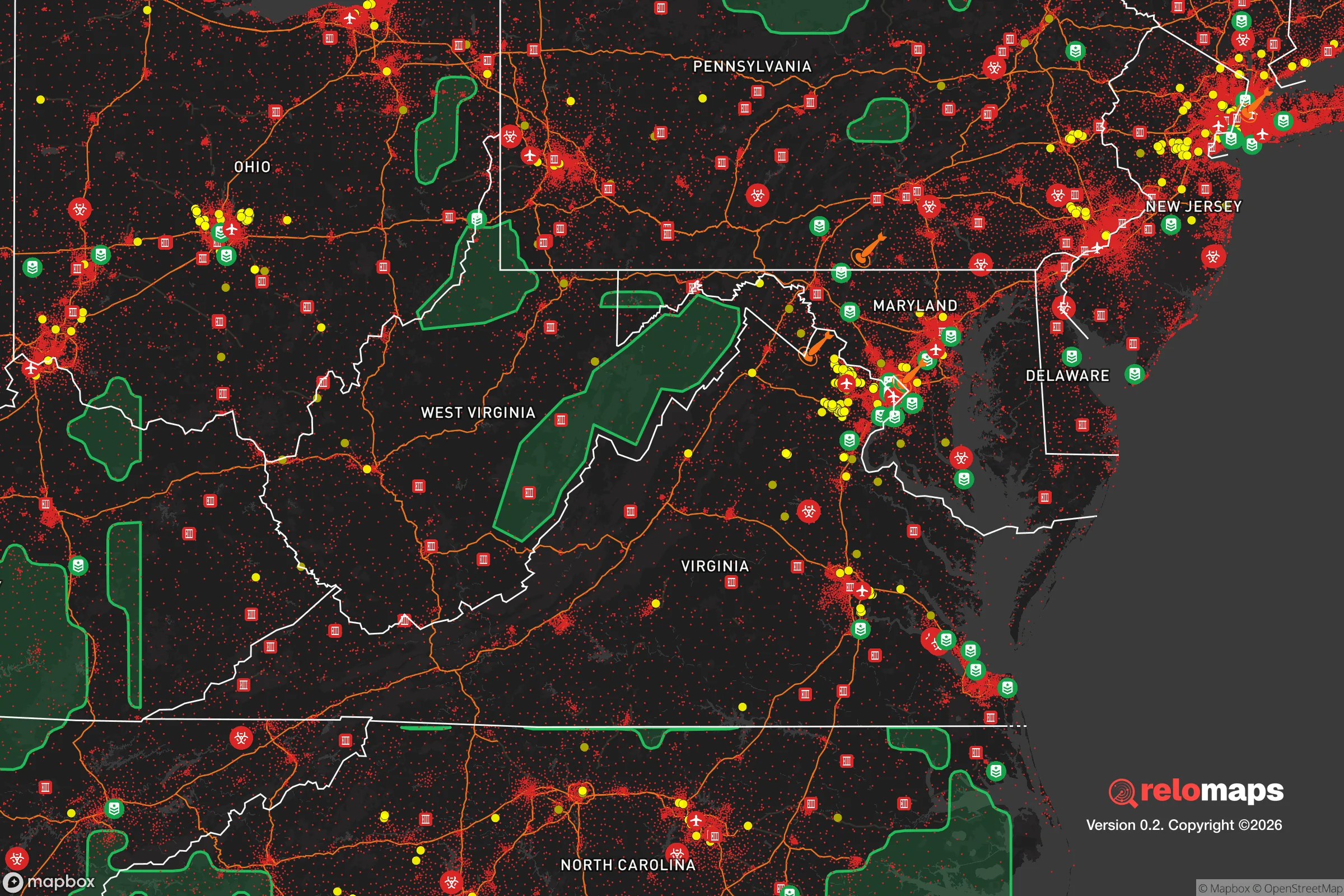


Important Note: For informational purposes only. This does not mean nothing bad ever happens in the green zones. Please use common sense. This is based on public data and modeled with AI. We tried to take a conservative approach but mistakes happen. We update this regularly as new information becomes available.
Solar Generator Recommendations
Backup power matters more here than in safer locations. We've picked three solar generators across budgets and capacity tiers — start with the budget unit if you only need a few essentials, or step up if you want to run a fridge and HVAC for days at a time.

Jackery Portable Power Station Explorer 300
Budget OptionPower on the Go: Weighing only 11 lbs, it's convenient to set up and store with book-sized foldable solar panels

BLUETTI Portable Power Station AC180
Designed for both indoor and outdoor scenarios, AC180 is highly capable as it has a robost capacity and continuous output power.

EF ECOFLOW DELTA Pro Ultra Power Station
Upgraded PickEcoFlow DELTA Pro Ultra is a whole-home energy system designed to grow with your family. Integrated with the Smart Home Panel 2, it scales to meet your evolving energy needs — keeping your home powered, intelligent, and secure through every stage of life.
We earn a commission, at no additional cost to you.
Strategic Assessment Analysis
Smyrna, Delaware, occupies a strategic niche that balances rural resilience with access to critical infrastructure, making it a noteworthy consideration for those prioritizing preparedness and self-sufficiency. Its position along the U.S. Route 13 corridor, roughly midway between Wilmington and Dover, places it outside the immediate blast radius of major metropolitan targets while still offering logistical connectivity. The town’s population of around 13,000 provides a small-town buffer against the social friction of larger cities, yet its proximity to the Chesapeake & Delaware Canal and major highways means supply chains and evacuation routes remain viable in a crisis. For a relocator assessing long-term stability, Smyrna’s blend of agricultural land, modest industrial base, and relative isolation from high-density population centers offers a foundation worth examining.
Geographic position and natural advantages for long-term stability
Smyrna sits in Kent County, Delaware’s agricultural heartland, where the land is flat, fertile, and largely open—factors that favor food production and low population density. The town is roughly 15 miles from the Delaware Bay, providing access to maritime resources without the vulnerability of a coastal flood zone. The area’s elevation averages only 30–40 feet above sea level, but the risk of storm surge is mitigated by the bay’s shallow, protected nature. The C&D Canal, a major shipping artery, runs just north of town, offering a potential waterborne supply route if ground transport is compromised. Surrounding farmland means that in a prolonged disruption, local food sources—poultry, grain, and livestock—are within a 10-mile radius. The climate is temperate, with four distinct seasons, reducing the likelihood of extreme weather events that could cripple infrastructure. For a prepper, the key takeaway is that Smyrna’s geography provides a buffer: it’s not a primary target for nuclear or conventional strikes, yet it’s close enough to the Eastern Seaboard’s logistical spine to receive resupply if the grid holds.
Risks, exposures, and proximity to fallout-relevant landmarks
The most significant risk for Smyrna is its location within the Washington–Philadelphia–Baltimore triangle. While the town itself is not a target, fallout from a strike on any of those cities—each within 60–90 miles—could drift eastward with prevailing winds. The Salem Nuclear Generating Station in New Jersey, just 25 miles northeast across the Delaware River, is a specific concern: a containment failure or sabotage event could render large swaths of Kent County uninhabitable for weeks. The Dover Air Force Base, 12 miles south, is a dual-edged sword—it provides a military response capability but also makes the region a potential secondary target. The C&D Canal’s industrial traffic, including hazardous material shipments, adds a smaller-scale but persistent risk of chemical spills or accidents. On the positive side, Smyrna’s lack of major military installations, refineries, or dense urban cores means it’s unlikely to face a direct kinetic strike. The real exposure is indirect: mass evacuation from the I-95 corridor could choke Route 13 and 1, turning Smyrna into a chokepoint for refugees. A relocator should plan for a 72-hour self-sufficiency window and have a secondary bug-out route west toward Maryland’s Eastern Shore or south toward the Delmarva Peninsula.
Practical resilience for a relocator: food, water, energy, and defensibility
Smyrna’s practical resilience hinges on its agricultural base and modest infrastructure. The town is surrounded by poultry farms—Perdue and Mountaire have processing plants nearby—meaning protein sources are local, though these facilities depend on feed supply chains that could falter. The water table is shallow and generally clean, with many rural properties drawing from private wells; municipal water comes from the St. Jones River and groundwater, but a grid-down scenario would require backup pumping. For energy, the region is served by Delmarva Power, with natural gas and electric lines running along major roads. Solar potential is decent—the area averages 200 sunny days per year—but zoning in Kent County is lenient enough for off-grid setups like propane tanks or small wind turbines. Defensibility is mixed: Smyrna’s layout is a typical small town with a central square and residential sprawl, but the surrounding farmland offers clear sightlines and limited cover for intruders. The town’s police force is small (around 30 officers), and the Kent County Sheriff’s Office covers rural areas, so in a prolonged crisis, community self-policing would be necessary. The local hospital, Bayhealth Smyrna, is a critical access facility with a 25-bed capacity—adequate for routine care but not for mass casualties. For a relocator, the practical steps are clear: secure a property with a well, install solar panels with battery storage, stockpile at least three months of non-perishable food, and establish a neighborhood watch network. The Amish and Mennonite communities in nearby Kent County (around Dover) are a resource for traditional skills like animal husbandry and blacksmithing, though they keep to themselves.
The overall strategic picture for Smyrna is one of cautious viability. It avoids the worst vulnerabilities of the I-95 corridor while retaining enough infrastructure to function in a degraded scenario. The town’s agricultural character and low population density are genuine assets for a prepper, but the proximity to nuclear plants, military bases, and major evacuation routes introduces risks that cannot be ignored. A relocator who prioritizes self-sufficiency—off-grid utilities, food production, and a tight-knit community—can make Smyrna work, but it is not a remote sanctuary. It is a compromise: close enough to the Eastern Seaboard’s resources to be useful, far enough from its targets to survive a first strike. For those willing to invest in hardening a property and building local relationships, Smyrna offers a defensible foothold in a region that will face pressure from urban collapse. The key is to treat it as a base of operations, not a final redoubt, and to have a plan for moving deeper into the Delmarva Peninsula if the situation deteriorates beyond local capacity.

* Values derived from national, state, county, city and local statistics and may differ in a specific area. Last updated: 2026-10-10T16:29:01.000Z
Narrative content on this page is AI-generated and may contain mistakes. Verify any details that matter before acting on them.
ReloMaps may earn a commission from affiliate links at no extra cost to you.

