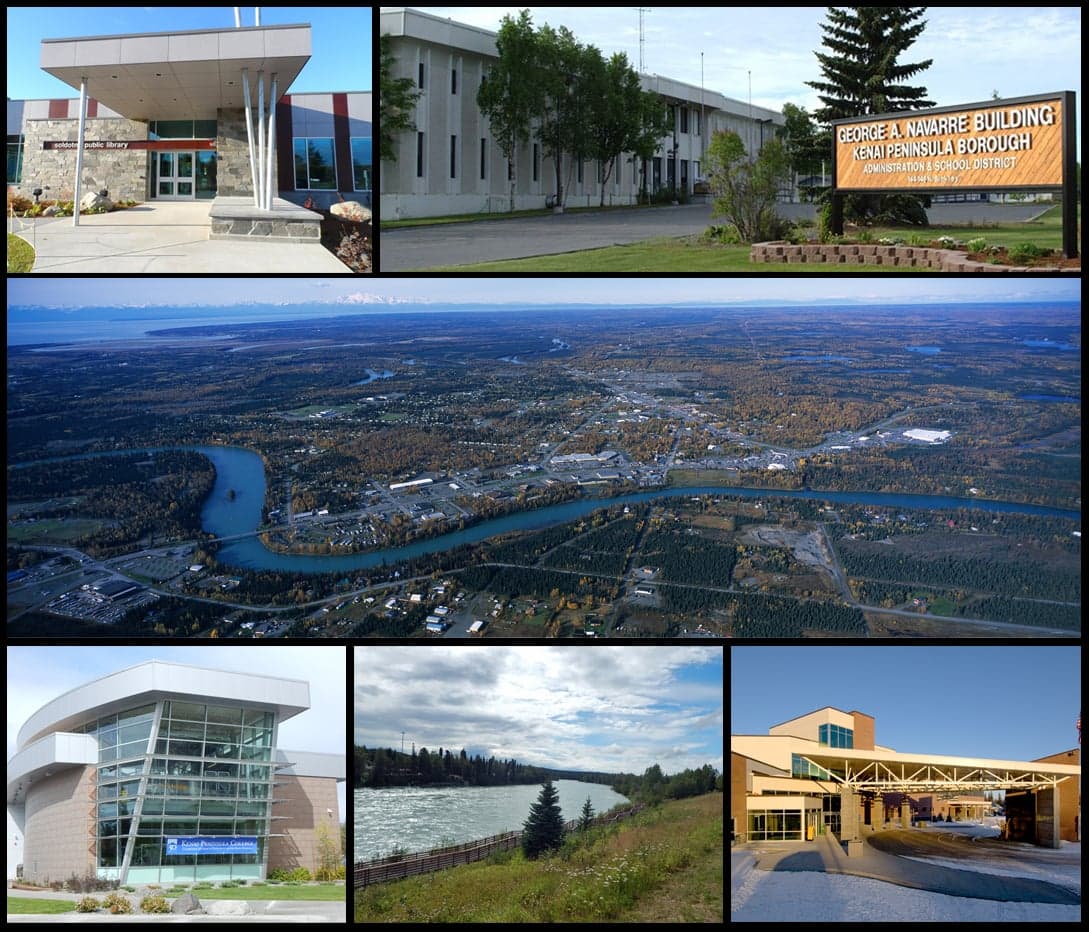
Photo: Wikipedia
Demographics of Soldotna, AK
Affluence Level in Soldotna, AK
A below-average socioeconomic profile. Incomes, home values, and educational attainment trail the U.S., with higher poverty and unemployment.
People of Soldotna, AK
The people of Soldotna, Alaska today number 4,448, forming a predominantly white (76.3%) community with a very low foreign-born share (1.0%). The city’s identity is rooted in its role as the commercial and service hub of the central Kenai Peninsula, with a population that is older and less college-educated (21.4%) than the national average, reflecting a blue-collar and resource-economy base. Soldotna is notably less diverse than Alaska as a whole, with small Hispanic (6.5%), East/Southeast Asian (2.0%), Black (1.2%), and Indian subcontinent (0.2%) populations. The city’s character is distinctly Alaskan—practical, self-reliant, and oriented around fishing, oil, and government services—rather than the tourist-driven identity of nearby Homer or Seward.
How the city was settled and grew
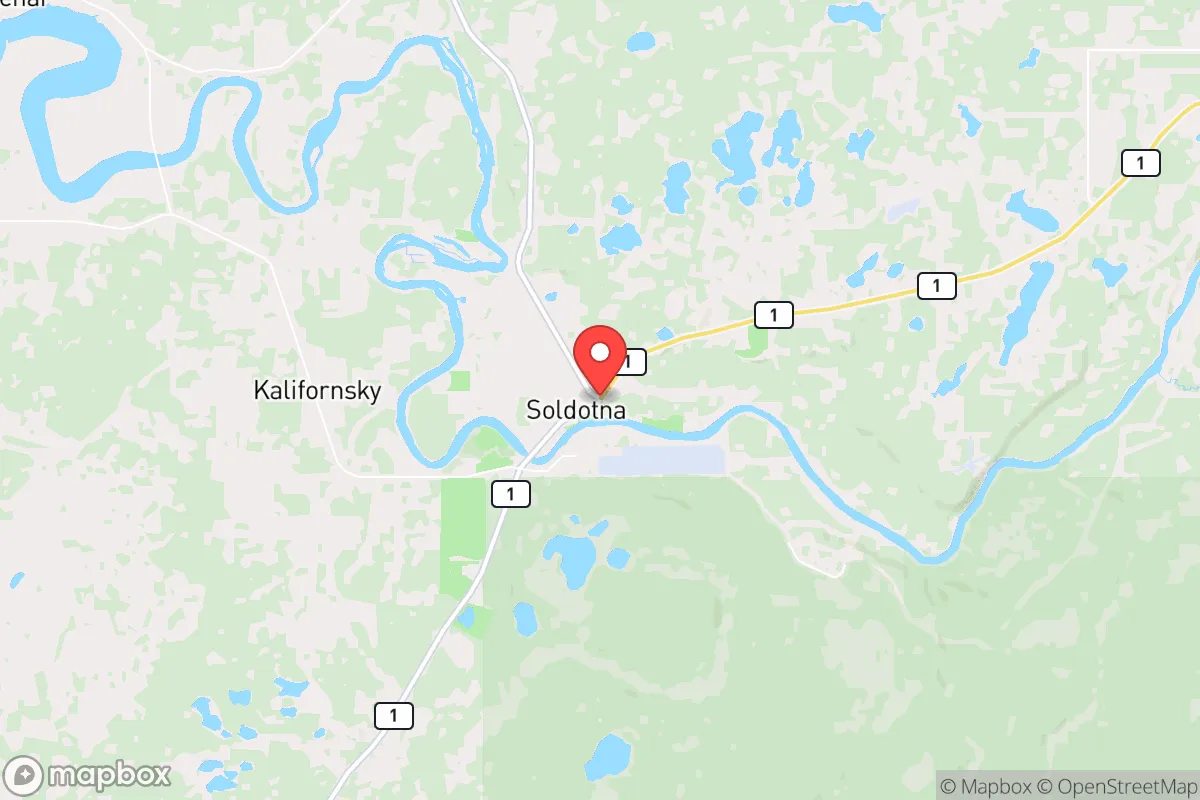
Soldotna was founded in 1947, making it a post-World War II planned community with no pre-colonial or Russian-era settlement. The original population was drawn by the Soldotna Homestead Act, which offered 80-acre parcels to veterans and other settlers willing to clear land and build homes. The first wave consisted largely of white veterans from the Lower 48, many of whom had served in Alaska during the war and saw opportunity in the Kenai River valley. These homesteaders built the Old Town Soldotna district along the Kenai River, where the original log cabins and small farms clustered. The discovery of oil at the Swanson River field in 1957 triggered a second wave: oil workers and their families, who settled in the Birkland and Kalifornsky Beach areas, creating a more transient, industry-dependent population. By the 1960s, Soldotna had grown from a handful of homesteads into a service center for the oil and fishing industries, with the Sterling Highway corridor becoming the commercial spine. The city was formally incorporated in 1960, and its early population was almost entirely white, with a small number of Alaska Native families from the Kenaitze Indian Tribe living in outlying areas like Kenai (the neighboring city) rather than within Soldotna itself.
Modern era (post-1965)
After the 1965 Hart-Cellar Act, Soldotna saw little change in its racial composition, as Alaska’s remote location and cold climate did not attract the large-scale immigration seen in the Lower 48. The city’s post-1965 growth came almost entirely from domestic in-migration—white families from the Pacific Northwest and Midwest drawn by oil-field jobs, state government positions, and the fishing industry. The Redoubt Avenue and Funny River Road neighborhoods expanded in the 1970s and 1980s as subdivisions for oil workers and state employees. The Hispanic population (now 6.5%) began arriving in the 1990s, primarily as seasonal workers in seafood processing and construction, settling in rental-heavy areas near the Sterling Highway and Kalifornsky Beach Road intersection. The East/Southeast Asian population (2.0%) is largely composed of Filipino families connected to the seafood industry, with a small cluster near the Kenai River commercial district. The Black population (1.2%) and Indian subcontinent population (0.2%) are very small and dispersed, with no distinct ethnic neighborhoods. The city’s racial landscape remains overwhelmingly white, with minority groups concentrated in lower-cost rental areas rather than in the established homestead neighborhoods like Old Town or the newer subdivisions along Birkland Road.
The future
Soldotna’s population is projected to remain stable or grow slowly, with continued homogenization rather than diversification. The city’s low foreign-born share (1.0%) and limited economic base—dominated by oil, government, and healthcare—do not attract the immigrant streams seen in Anchorage or the Mat-Su Valley. The Hispanic population may grow modestly through natural increase and continued seasonal labor, but it is unlikely to form a large permanent community. The East/Southeast Asian population is plateauing as the seafood processing industry mechanizes and seasonal work declines. The white population, while aging, is being replenished by domestic in-migration of retirees and remote workers seeking a lower-cost, outdoor-oriented lifestyle. New subdivisions like Poet’s Corner and Riverstone are attracting these newcomers, who are culturally similar to the existing population. Over the next 10-20 years, Soldotna will likely become slightly older, slightly more white, and more economically bifurcated between long-term residents in established neighborhoods and newcomers in newer developments.
For someone moving in now, Soldotna is becoming a stable, culturally homogeneous small city where the population is not diversifying rapidly. The city offers a predictable social environment for those seeking a traditional Alaskan lifestyle, but it provides limited ethnic diversity or immigrant community infrastructure. New arrivals will find a population that is practical, resource-oriented, and welcoming to those who share its values of self-reliance and outdoor recreation.

* Values derived from national, state, county, city and local statistics and may differ in a specific area. Last updated: 2026-04-19T19:37:57.000Z
Narrative content on this page is AI-generated and may contain mistakes. Verify any details that matter before acting on them.
ReloMaps may earn a commission from affiliate links at no extra cost to you.

