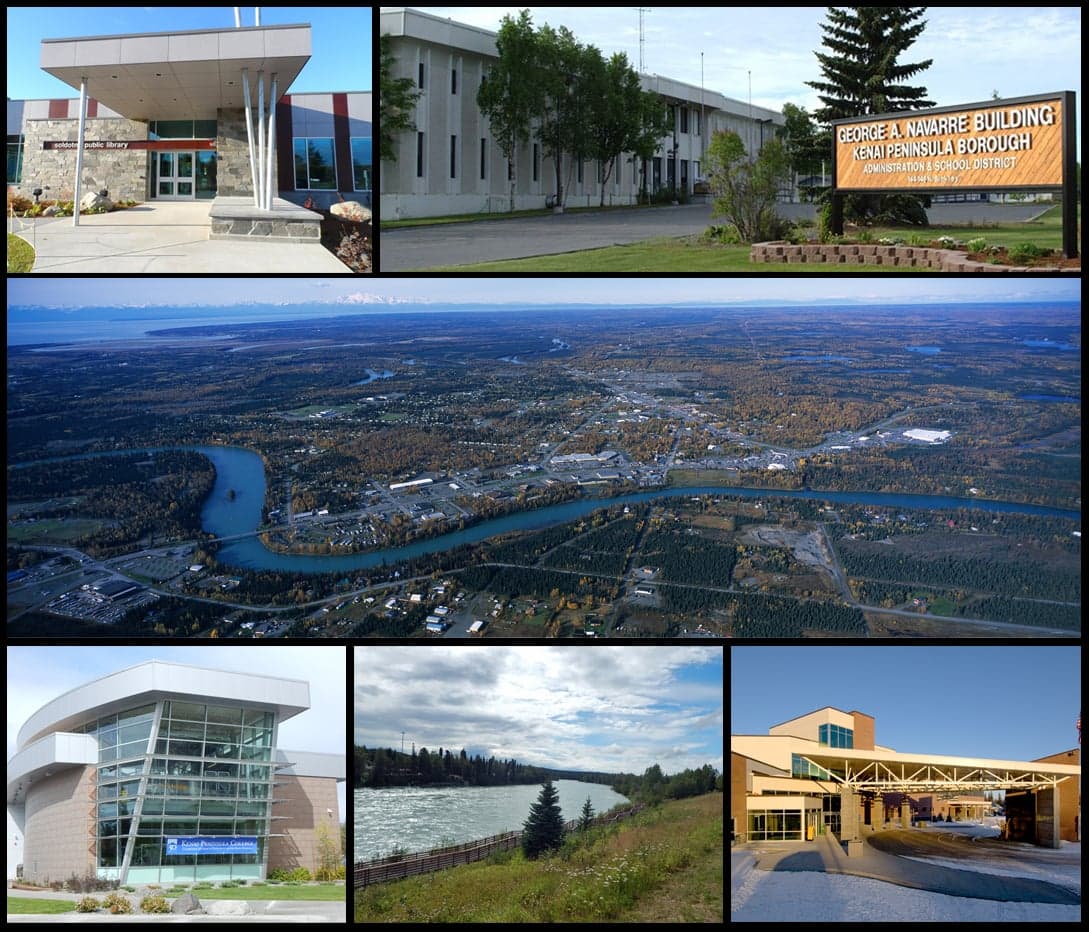
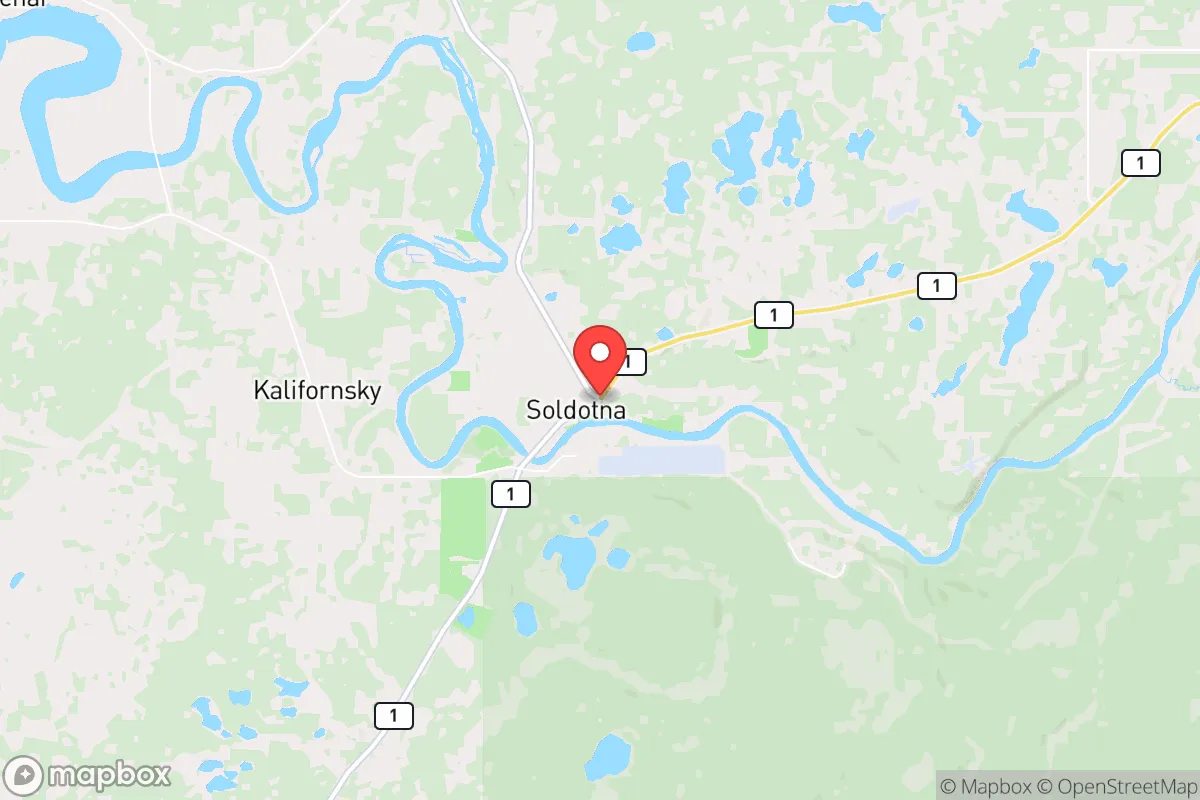
Photo: Wikipedia
Political ClimatePolitical Climate in Soldotna, AK
District shown is the primary district for this city’s centroid. Cities may span multiple districts.
Inherited from parent state — no local data available.
Local Political AnalysisPolitical Analysis of Soldotna, AK
Soldotna, Alaska, has long been a solidly conservative community, and that hasn't changed much despite some national trends. The Cook PVI of R+6 tells you the baseline, but it doesn't capture the local flavor. This is a place where people moved to get away from the kind of government overreach you see in the Lower 48, and that independent, don't-tread-on-me attitude is still the default. You'll find a lot of folks here who are wary of any shift toward progressive ideology, and they keep a close eye on Juneau and Anchorage for signs of it creeping in.
How it compares
Soldotna sits in a bit of a political bubble compared to some of its neighbors. Drive north to Anchorage, and you'll hit a much more mixed bag, with a strong progressive presence in the city core and even in some of the suburbs. Head south to Homer, and you're in a whole different world—that town is practically a liberal stronghold, with a very vocal activist scene. Soldotna, by contrast, feels like the steady, sensible middle ground. The surrounding Kenai Peninsula Borough is reliably red, but Soldotna itself is the commercial and administrative hub, so it attracts a mix of state workers and small business owners who tend to lean conservative. The real contrast is with the coastal towns; here in Soldotna, people are more likely to be worried about property rights, fishing regulations, and the cost of energy than about the latest social movements.
What this means for residents
For someone living here, the political climate means a lot of practical freedom. You don't get a lot of heavy-handed zoning or overbearing local ordinances. The city council and borough assembly are generally pro-business and pro-property rights, which is a big deal if you own a piece of land or run a small outfit. The downside is that you have to be self-reliant—if you're expecting a lot of government services or social programs, you might be disappointed. The local schools are decent, but there's a strong push for parental rights and local control, so you won't see a lot of progressive curriculum changes being forced through. The biggest concern for many residents is the state government in Juneau, which has a history of trying to impose new taxes or regulations on the oil and gas industry that drives the local economy. That's where the real tension lies: keeping the state from overreaching into a community that largely wants to be left alone.
Culturally, Soldotna is still very much a hunting, fishing, and family-oriented town. You'll see more pickup trucks than Teslas, and the local churches are well-attended. There's a strong sense of community, but it's not the kind that demands conformity—it's more about mutual respect for everyone's right to live their own life. The biggest policy distinction you'll notice is the attitude toward resource development. Unlike some parts of Alaska that are pushing for a green transition, Soldotna is generally supportive of responsible oil and gas development, as well as mining and logging, because that's what keeps the lights on and the grocery stores stocked. If you're looking for a place where the government stays out of your business and the neighbors respect your privacy, Soldotna is still that kind of town. Just keep an eye on the ballot measures coming out of Anchorage—that's where the real fights are brewing.

State Political ClimatePolitical Climate in Alaska
State Political AnalysisPolitical Environment in the State
Alaska has long been a unique political outlier, leaning Republican in federal elections but with a fiercely independent, libertarian streak that makes it less predictable than many red states. The state voted for Donald Trump by about 10 points in 2024, a slight tightening from 2020, but the real story is the slow erosion of the GOP’s dominance in Anchorage and the Mat-Su Valley, while rural and Southeast Alaska remain deeply conservative. Over the last 20 years, the state has shifted from reliably red to a more volatile mix, with a growing independent and moderate bloc that often decides close races.
Urban vs. rural divide
The political map of Alaska is starkly divided between the urban core of Anchorage and the rest of the state. Anchorage, home to about 40% of the population, has trended leftward, with its more liberal neighborhoods like Spenard and downtown delivering Democratic margins in state and local races. The Matanuska-Susitna Borough, just north of Anchorage—including Wasilla and Palmer—is the state’s conservative stronghold, reliably voting 65-70% Republican and serving as the base for the state’s most vocal liberty-minded activists. Fairbanks is a mixed bag, with the city itself leaning moderate to left due to the university, while the surrounding Interior and North Slope boroughs are deeply red. Southeast Alaska, including Juneau and Ketchikan, leans more Democratic due to government employment and tourism, but the smaller fishing towns like Homer and Seward on the Kenai Peninsula are more conservative. The rural bush—villages like Barrow (Utqiaġvik) and Nome—votes heavily Democratic in state races due to subsistence and tribal issues, but these areas are low-turnout and often swing based on local personalities.
Policy environment
Alaska’s policy environment is a mixed bag for conservatives. The state has no state income tax and no statewide sales tax, funded instead by oil revenue and the Permanent Fund Dividend (PFD), which puts cash directly in residents’ pockets—a massive freedom win. However, the state’s regulatory posture is heavy on resource extraction, with the Department of Natural Resources controlling land use, and the federal government owning about 60% of the land, creating constant friction over logging, mining, and oil drilling. Education policy is decentralized, with local school boards controlling curriculum, but the state has seen battles over parental rights, with a 2024 law requiring schools to notify parents of any changes to a student’s health or gender identity. Healthcare is dominated by the state’s Medicaid expansion under the Affordable Care Act, which was accepted by then-Governor Bill Walker in 2015, a move that still rankles fiscal conservatives. Election laws are relatively open: Alaska uses a top-four primary system and ranked-choice voting for general elections, passed by ballot initiative in 2020, which has weakened party control and allowed moderate Republicans and independents like Senator Lisa Murkowski to survive primary challenges. This system is deeply unpopular among many conservatives who see it as diluting the party’s voice.
Trajectory & freedom
Alaska’s trajectory on personal freedom is a tug-of-war. On the positive side, the state has some of the strongest Second Amendment protections in the nation, with constitutional carry (no permit needed) since 2003 and a 2023 law prohibiting local governments from enacting gun-free zones. Property rights are strong, with no statewide zoning in many rural areas, but federal land ownership creates constant battles over access and development. The state has also pushed back on federal overreach, with the Alaska Legislature passing resolutions in 2023 and 2024 opposing the Biden administration’s restrictions on oil drilling in the Arctic National Wildlife Refuge. However, there are concerning trends. The ranked-choice voting system has empowered a more progressive wing in Anchorage, leading to higher property taxes and new regulations on short-term rentals. The state’s parental rights law (HB 205, passed in 2024) was a win, but it faced fierce opposition from the teachers’ union and the Anchorage School Board, which tried to ignore it. Medical freedom is a mixed bag: Alaska has no vaccine mandate for adults, but the state’s COVID-19 response included mask mandates in Anchorage and Juneau that were enforced by local health departments. The PFD, once a sacred cow, has been raided multiple times by the legislature to balance budgets, a clear erosion of fiscal freedom that has many residents worried.
Civil unrest & political movements
Alaska’s political movements are more organized and visible than in many states. The Alaska Independence Party, which advocates for a vote on secession from the United States, remains active, though its influence has waned since the 1990s. The state has seen significant protests over resource extraction, with environmental groups like the Sierra Club and local tribes blocking the Pebble Mine project in Bristol Bay for over a decade. On the right, the Alaska Republican Party has been split between establishment moderates and a more populist, liberty-minded faction that backed Sarah Palin’s 2022 congressional run. Election integrity has been a flashpoint: the 2020 and 2022 elections saw allegations of fraud in the ranked-choice tabulations, leading to a 2024 bill requiring hand-count audits in all precincts, which was vetoed by Governor Mike Dunleavy. Immigration politics are less heated than in the Lower 48, but the state has seen a small but vocal movement against refugee resettlement in Anchorage. The most visible flashpoint for a new resident would be the constant tension between the state government and the federal government over land use, with local news covering every new federal regulation on hunting, fishing, or drilling as a direct assault on Alaskan freedom.
Projection
Over the next 5-10 years, Alaska is likely to become more politically volatile, not less. In-migration is slowing, with many newcomers being remote workers from blue states who bring more progressive views on climate and social issues, particularly to Anchorage and Juneau. The state’s aging population—the median age is 35, but the rural areas are much older—means the conservative base in the Mat-Su and Kenai will hold, but the urban centers will continue to drift left. The ranked-choice voting system will likely survive, as it has bipartisan support from moderates, but it will keep the state from swinging too far in either direction. The biggest wildcard is the PFD: if oil revenues continue to decline, the state will face a fiscal crisis that could force a state income tax or sales tax, which would be a massive blow to personal freedom and could trigger a political realignment. A new resident moving in now should expect a state that is still freer than most, but where the fight over that freedom is intensifying every year.
For a conservative individual or family, Alaska offers a unique combination of low taxes, strong gun rights, and a culture of self-reliance that is hard to find elsewhere. But the political climate is not static: the urban drift in Anchorage, the ranked-choice voting system, and the constant federal land battles mean you’ll need to stay engaged. The bottom line is that Alaska is still a place where your vote matters more than in a deep blue state, but it’s no longer a sure thing for conservatives—you’ll have to work to keep it that way.
* Values derived from national, state, county, city and local statistics and may differ in a specific area. Last updated: 2026-04-19T19:37:57.000Z
Narrative content on this page is AI-generated and may contain mistakes. Verify any details that matter before acting on them.
ReloMaps may earn a commission from affiliate links at no extra cost to you.

