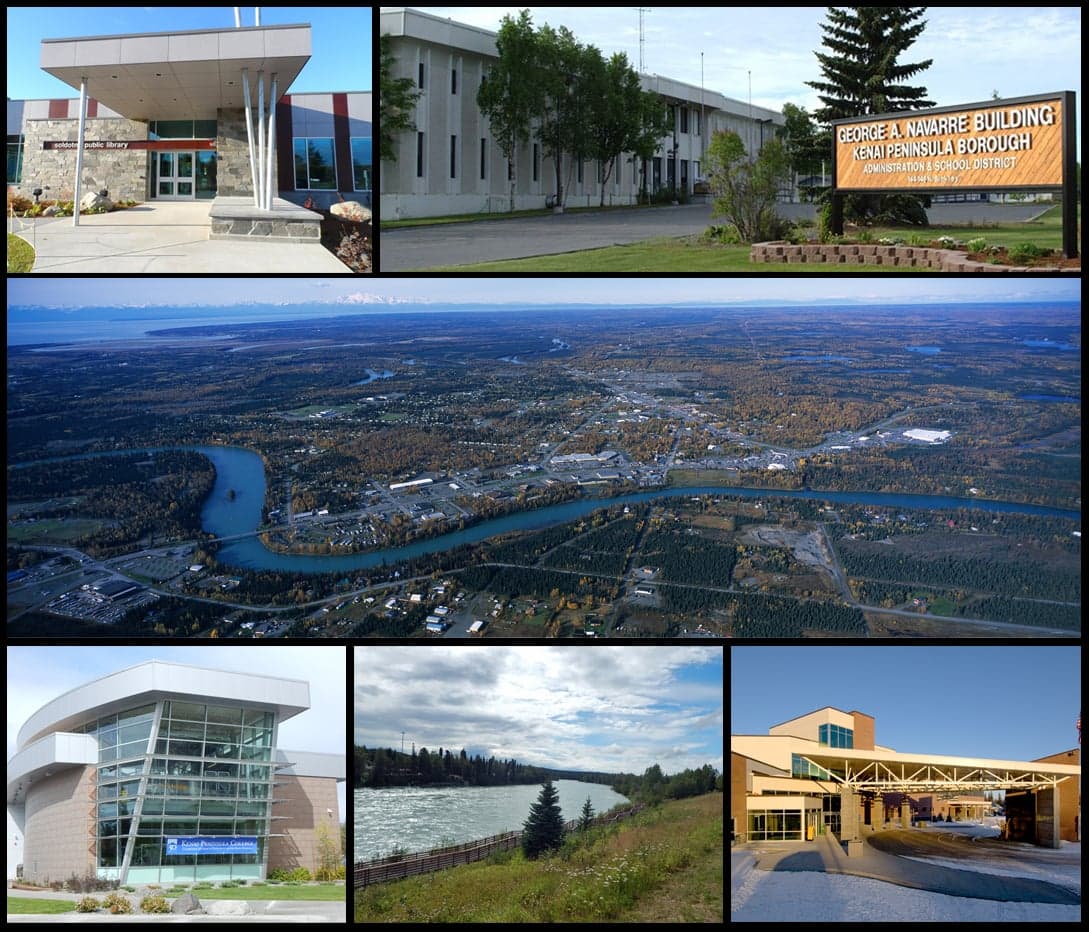
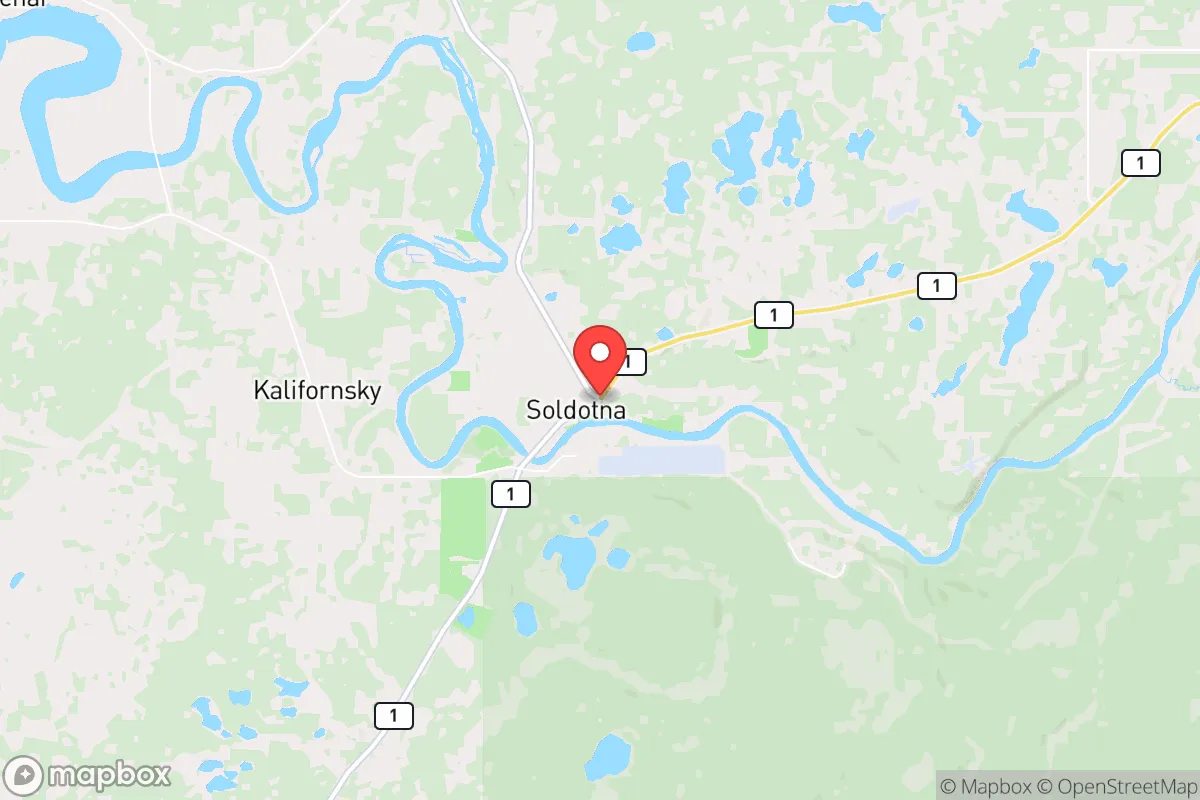
Photo: Wikipedia
Strategic Assessment of Soldotna, AK
Workable tactical position. Some exposure to population density or targets, but generally defensible in a crisis.
What does the Strategic Assessment tell us?
Our Strategic Assessment grades tactical survivability of an area. Major population centers, military targets, fallout zones, natural disasters, and border exposure all drive risk — lower exposure means a more defensible position in a crisis.
This is heavily inspired by Joel Skousen's Strategic Relocation book. Highly recommended you checkout the book ($)What does this tell us?
Our Strategic Assessment grades tactical survivability of an area. Major population centers, military targets, fallout zones, natural disasters, and border exposure all drive risk — lower exposure means a more defensible position in a crisis.
This is heavily inspired by Joel Skousen's Strategic Relocation book. Highly recommended you checkout the book ($)Strategic Pillars

Key Distances
Regional Safe Places
Below is our recommended "safe zones" in Alaska and the surrounding area based on our strategic heuristics. For most people, it's unrealistic to live in a “safe zone” full-time due to work, family or other personal reasons. They tend to be more rural. However, many of these areas are perfect for second homes and retreat properties that double as a vacation home or even a short-term rental.
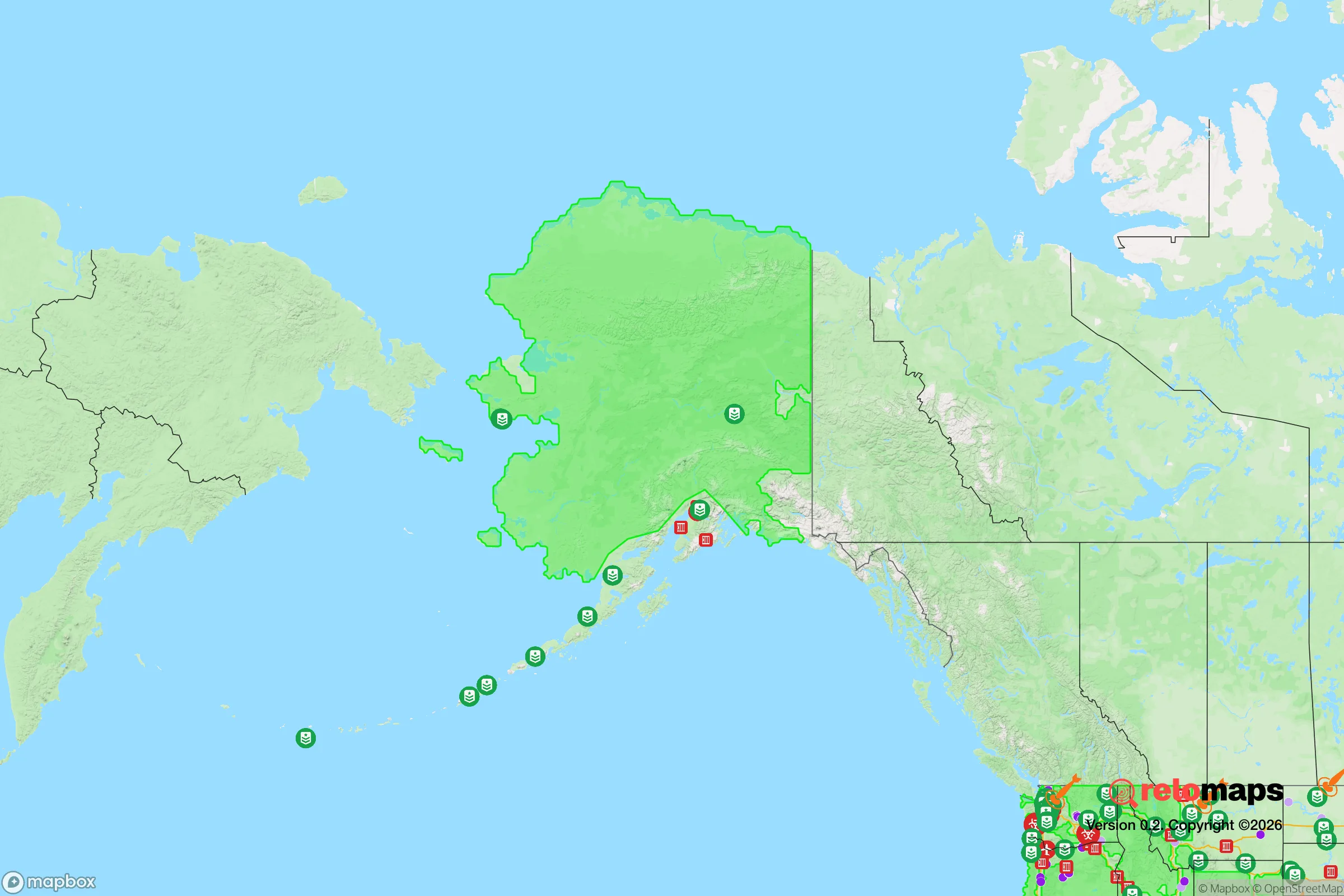
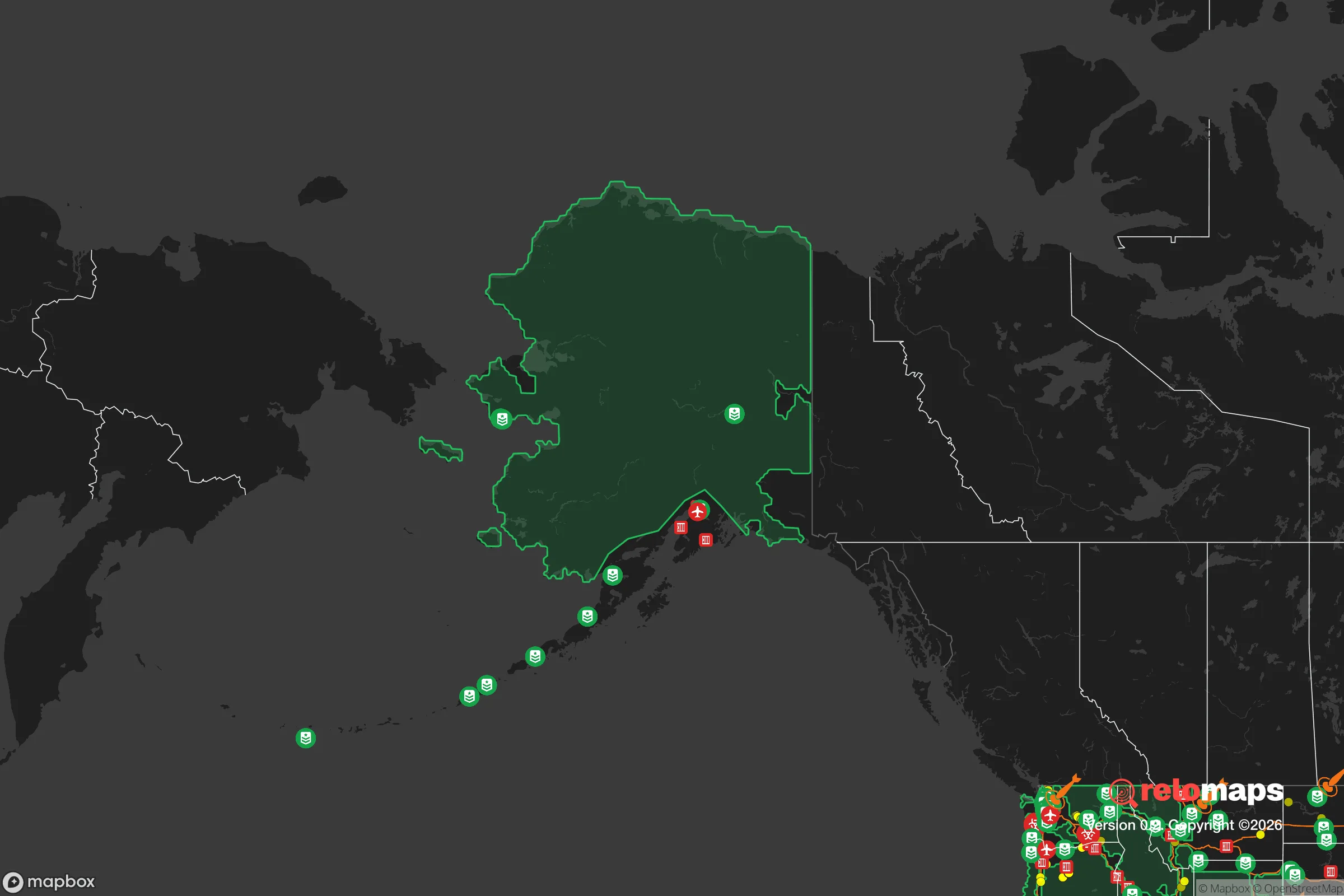


Important Note: For informational purposes only. This does not mean nothing bad ever happens in the green zones. Please use common sense. This is based on public data and modeled with AI. We tried to take a conservative approach but mistakes happen. We update this regularly as new information becomes available.
Solar Generator Recommendations
Backup power matters more here than in safer locations. We've picked three solar generators across budgets and capacity tiers — start with the budget unit if you only need a few essentials, or step up if you want to run a fridge and HVAC for days at a time.

Jackery Portable Power Station Explorer 300
Budget OptionPower on the Go: Weighing only 11 lbs, it's convenient to set up and store with book-sized foldable solar panels

BLUETTI Portable Power Station AC180
Designed for both indoor and outdoor scenarios, AC180 is highly capable as it has a robost capacity and continuous output power.

EF ECOFLOW DELTA Pro Ultra Power Station
Upgraded PickEcoFlow DELTA Pro Ultra is a whole-home energy system designed to grow with your family. Integrated with the Smart Home Panel 2, it scales to meet your evolving energy needs — keeping your home powered, intelligent, and secure through every stage of life.
We earn a commission, at no additional cost to you.
Strategic Assessment Analysis
Soldotna, Alaska, sits in a unique strategic position that combines genuine remoteness with surprising logistical access, making it a serious contender for those prioritizing long-term resilience. Located on the Kenai Peninsula roughly 150 road miles south of Anchorage, it avoids the immediate fallout zones of a major population center while still being close enough to access critical supplies and infrastructure when conditions are stable. The community’s foundation on commercial fishing, oil and gas support, and a robust tourism economy gives it a diversified local base that isn’t entirely dependent on the whims of the Lower 48 supply chain. For a relocator thinking in terms of decades rather than years, Soldotna offers a rare blend of defensible geography, natural resource abundance, and a population that already understands self-reliance as a baseline, not an ideology.
Geographic position and natural advantages for long-term security
Soldotna’s location on the western edge of the Kenai Peninsula places it at the confluence of the Kenai River and the Cook Inlet, providing both freshwater access and a maritime buffer. The surrounding terrain is a mix of boreal forest, wetlands, and low mountains, which naturally limits approach routes and makes large-scale movement through the area difficult without local knowledge. The Kenai National Wildlife Refuge borders the town to the east and south, offering a vast, undeveloped buffer zone that would be extremely hard to traverse in a grid-down scenario. The climate, while cold, is milder than interior Alaska due to maritime influence—winter lows typically hover around 10°F to 20°F rather than the -40°F extremes of Fairbanks—which reduces the energy burden for heating and makes year-round food production more feasible. The area’s position also means it’s a natural chokepoint: the only road access from Anchorage comes via the Seward Highway and the Sterling Highway, both of which cross the Kenai River at Soldotna. In a crisis, that bridge could be monitored or controlled, giving residents a significant defensive advantage without needing to build walls.
Risks, exposures, and proximity to fallout-relevant landmarks
The most significant risk for Soldotna is its proximity to Anchorage, which at 150 miles is close enough to generate refugee flow if the city experiences a major disaster, whether natural, economic, or civil. The Ted Stevens Anchorage International Airport is a primary logistics hub for the entire state, and Joint Base Elmendorf-Richardson houses a significant military presence—both are potential targets in a conflict scenario. While Soldotna itself is not near any nuclear power plants or major industrial chemical facilities, the Kenai Peninsula has several oil and gas processing sites, including the ConocoPhillips liquefied natural gas plant in Nikiski, about 15 miles north. A catastrophic failure there could create localized contamination, though prevailing winds typically push inland. The area is also seismically active; the 1964 Good Friday earthquake, centered near Prince William Sound, caused significant ground deformation and tsunamis on the Kenai Peninsula. Modern building codes are better, but a major quake could still disrupt roads, power lines, and the single bridge over the Kenai River. The biggest long-term exposure is the area’s dependence on the Sterling Highway for resupply—if that road is cut, Soldotna becomes an island, which is both a vulnerability and a defensive asset depending on your perspective.
Practical resilience for a relocator: food, water, energy, and defensibility
Soldotna’s practical resilience is where it really shines for a prepper-minded relocator. The Kenai River is one of the most productive salmon fisheries in the world, with runs of sockeye, king, and silver salmon that can be caught in quantity with a dip net or rod. The river also provides reliable freshwater, though treatment or boiling is advisable due to upstream development. The surrounding forests are rich in moose, bear, and small game, and the short but intense growing season (roughly 90 frost-free days) is enough for cold-hardy crops like potatoes, carrots, kale, and cabbage. Many locals already maintain large gardens and root cellars, and the community has a strong barter economy around fish, game, and homegrown produce. Energy is a mixed picture: most homes use heating oil or propane, but the area has significant potential for wood heat, and the nearby Kenai River offers micro-hydro possibilities for those with the right setup. Solar is marginal due to low winter sun angles, but summer provides nearly 20 hours of daylight, making battery storage viable for seasonal cycling. Defensively, Soldotna’s layout is favorable—the town is compact, with the river forming a natural boundary to the south and east, and the highway corridor providing a single controlled entry point from the north. The population of roughly 4,500 (with another 8,000 in the surrounding borough) is small enough that community cohesion is strong, and many residents are armed and trained in outdoor survival. The local police and fire departments are professional, but in a prolonged crisis, self-reliance would be the norm, not the exception.
Overall, Soldotna presents a compelling strategic picture for someone looking to step away from the volatility of the Lower 48 without going completely off-grid. It’s remote enough to avoid the worst of urban collapse scenarios, yet connected enough to maintain access to medical care, hardware stores, and a regional airport for emergency evacuation. The community’s culture of self-sufficiency, combined with the natural abundance of fish, game, and timber, means that a prepared relocator could achieve a high degree of independence within a few years. The trade-offs are real—the cold, the isolation, the risk of seismic events, and the potential for refugee pressure from Anchorage—but for those who value long-term security over convenience, Soldotna is one of the few places in the United States where the geography and the people are already aligned with that mindset. It’s not a bugout location; it’s a rebuild location, and that’s a distinction worth understanding before you make the move.

* Values derived from national, state, county, city and local statistics and may differ in a specific area. Last updated: 2026-04-19T19:37:57.000Z
Narrative content on this page is AI-generated and may contain mistakes. Verify any details that matter before acting on them.
ReloMaps may earn a commission from affiliate links at no extra cost to you.

