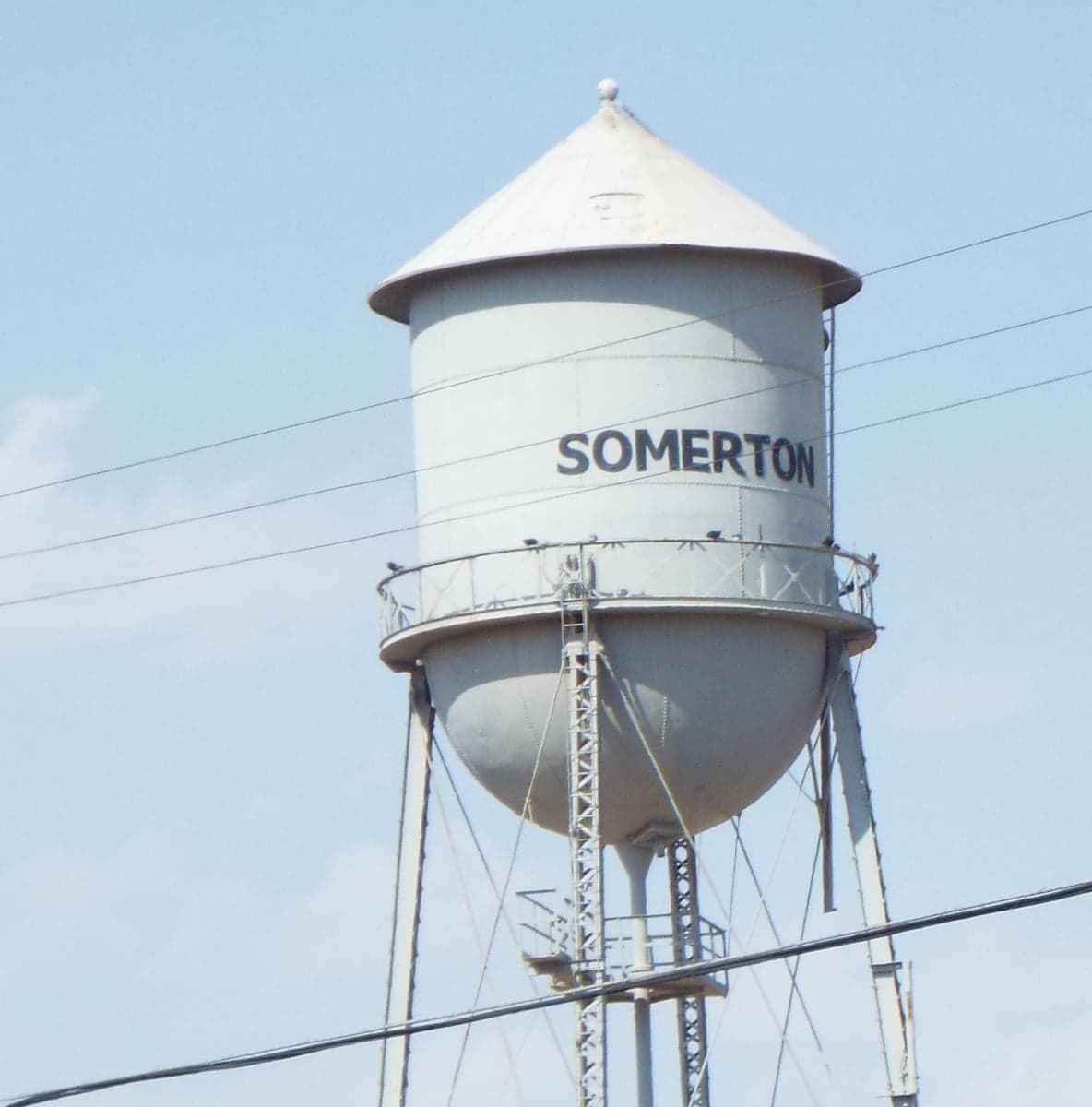
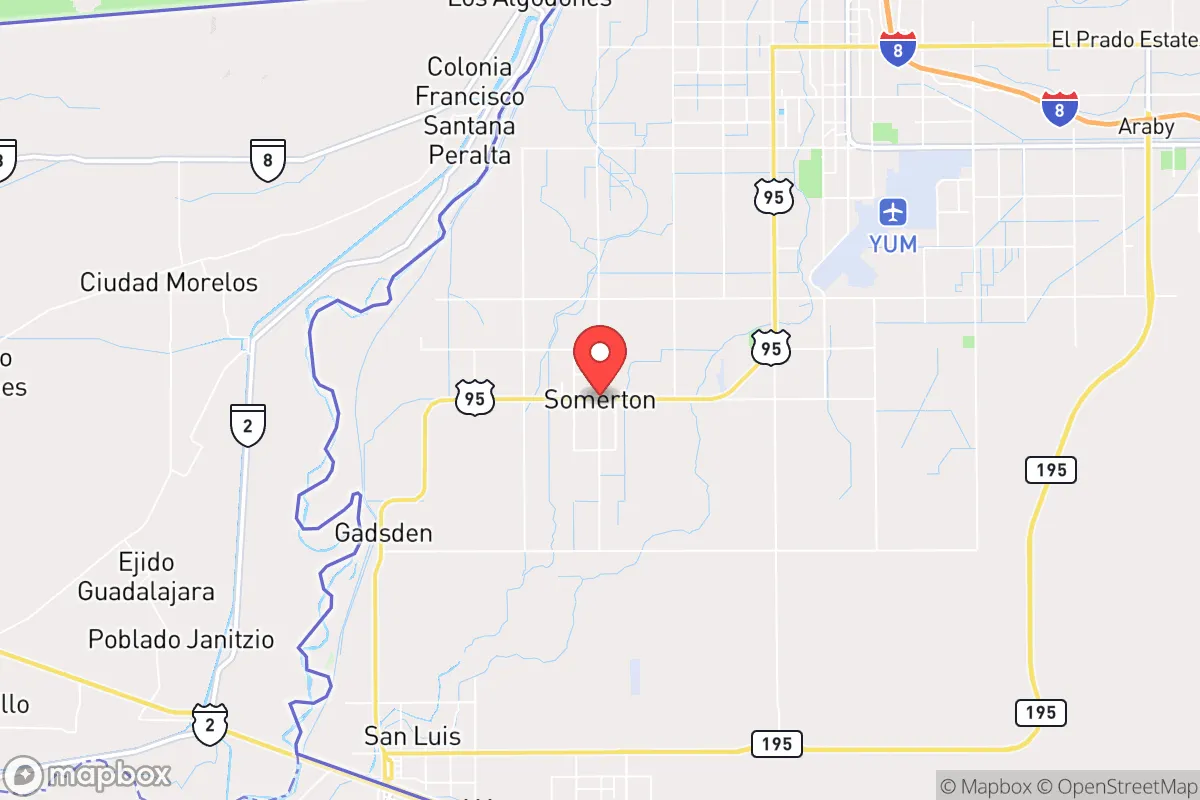
Photo: Wikipedia
Personal Sovereignty in Somerton, AZ
Viable for self-reliance. Generally workable, though some barriers may limit total independence.
What does Personal Sovereignty tell us?
Personal Sovereignty measures your capacity for self-reliance and independence with minimal government friction. Higher scores mean fewer barriers between you and the way you want to live... but it assumes you have the space you need and good neighbors.
What does this tell us?
Personal Sovereignty measures your capacity for self-reliance and independence with minimal government friction. Higher scores mean fewer barriers between you and the way you want to live... but it assumes you have the space you need and good neighbors.
State Policy
Energy independence: Importer (20% of energy produced in-state)
Personal Liberty
Homesteading

Personal Liberty Analysis
Somerton, Arizona, offers a notably high degree of personal sovereignty compared to many other parts of the Southwest, largely due to Arizona’s strong preemption laws and a state-level culture that resists federal overreach. For the survivalist or prepper, this small Yuma County city provides a legal environment where individual autonomy—from self-defense to property use—is broadly protected, though it sits within a border region that introduces unique federal and state dynamics. The key question for anyone considering relocation here is whether the local enforcement climate and practical realities align with the state’s permissive statutes, and the answer is largely yes, with specific caveats around water rights and border security.
Tax burden and regulatory posture: How Arizona’s framework limits government overreach
Arizona’s tax and regulatory environment is designed to minimize state intrusion into personal finances and daily life, and Somerton benefits directly from this. The state has a flat income tax rate of 2.5% as of 2025, with no estate or inheritance taxes, and property taxes in Yuma County are among the lowest in the state—typically around 0.6% to 0.8% of assessed value. This means a $250,000 home carries an annual tax bill of roughly $1,500 to $2,000, leaving more capital for self-reliant investments like land, water storage, or solar infrastructure. Sales tax in Somerton is 8.1% (state plus county and city), but essentials like unprepared food and prescription drugs are exempt, which directly reduces the cost of stockpiling supplies. Regulatory posture is equally favorable: Arizona is a right-to-work state with minimal business licensing hurdles, and there are no state-level red flag laws or universal background checks for private firearm sales. The city itself has a small government footprint—Somerton’s municipal code is thin compared to Phoenix or Tucson—meaning fewer zoning overlays and permitting delays for things like building a workshop, installing a well, or keeping livestock. The primary regulatory risk comes from federal agencies: the Bureau of Land Management and U.S. Customs and Border Protection have significant presence in the area, but their authority is generally limited to public lands and border enforcement, not private property within city limits.
Self-defense and gun law specifics: What the Second Sanctuary status means for daily carry and storage
Arizona is a constitutional carry state, meaning no permit is required to carry a concealed firearm for anyone legally allowed to possess one, and Somerton’s local enforcement respects this fully. No state or local law requires registration of firearms, and there are no magazine capacity restrictions—you can legally own standard-capacity magazines, suppressors, and short-barreled rifles with a federal tax stamp, as Arizona has no additional state-level restrictions. The city is within Yuma County, which has been declared a Second Amendment Sanctuary by the county board of supervisors, meaning local resources will not be used to enforce federal gun laws that the county deems unconstitutional. This is a concrete protection: if federal agents attempt to enforce a future ban on certain firearms or accessories, Yuma County sheriff’s deputies will not assist in confiscation. For the prepper, this means you can store and carry defensive weapons without fear of local prosecution, though you should still be aware of federal prohibitions on felons and domestic violence misdemeanants. Stand-your-ground laws are fully in effect—no duty to retreat before using deadly force if you are lawfully present and reasonably believe force is necessary to prevent death or great bodily harm. The only practical limitation is that discharging a firearm within city limits is prohibited except on a shooting range or in self-defense, so target practice requires a trip to the desert or a private range outside town.
Self-reliance and homesteading viability: Lot sizes, zoning, and off-grid feasibility in Somerton
Somerton’s residential zoning is surprisingly permissive for a city of its size, with many lots in the older sections of town ranging from a quarter-acre to full acre parcels. City code allows for keeping chickens, goats, and up to two horses on lots of 20,000 square feet or more, and there are no prohibitions on beekeeping or small-scale aquaculture. For the serious homesteader, the unincorporated areas just outside city limits—particularly along Avenue 3E and Avenue 4E—offer parcels of 1 to 5 acres with minimal county oversight. Off-grid feasibility is high in terms of solar: Yuma County averages over 300 sunny days per year, and Arizona has net metering policies that allow you to sell excess power back to the grid, though the utility (Arizona Public Service) has been known to impose interconnection fees. Water is the critical constraint—Somerton sits atop the Yuma Basin aquifer, but groundwater rights are regulated by the Arizona Department of Water Resources, and new wells in the area require a permit with a 100-year assured water supply demonstration. This means drilling a well on a small lot is often impractical; most residents rely on municipal water from the Somerton Water Department, which is reliable but not independent. Rainwater harvesting is legal and encouraged, with no state-level restrictions on collection, and the average annual rainfall of 3 inches means you’ll need large storage tanks to make a dent. Composting toilets and greywater systems are permitted under state code, making it possible to reduce municipal dependency, but you’ll still need a connection for sewage unless you go fully off-grid with a septic system—which requires county health department approval.
Personal liberties: Parental rights, medical autonomy, speech, and property protections
Arizona has some of the strongest parental rights laws in the nation, and Somerton’s school district—Somerton Elementary District No. 11—operates under state statutes that require parental notification for any medical or mental health services provided on campus, as well as opt-in consent for sex education. Parents have the legal right to review all instructional materials and to exempt their children from any curriculum they find objectionable, without penalty. Medical autonomy is similarly robust: Arizona does not have a state-level vaccine mandate for adults, and while school immunization requirements exist, they include broad exemptions for medical, religious, and personal belief reasons. The state also prohibits any government entity from requiring proof of vaccination for access to public services or facilities. For the prepper concerned about medical privacy, Arizona law protects your right to purchase and possess dietary supplements, herbal remedies, and over-the-counter medications without a prescription, and there are no state restrictions on owning medical equipment like defibrillators or oxygen concentrators. Speech and assembly rights are fully protected under the Arizona Constitution, which explicitly guarantees the right to keep and bear arms as part of the same article as free speech—a symbolic but meaningful alignment. Property rights are strengthened by Arizona’s strong eminent domain protections: the state constitution prohibits taking private property for economic development or tax revenue generation, and requires just compensation for any regulatory taking that diminishes property value by more than 20%. This means Somerton homeowners are unlikely to face the kind of land-use overreach seen in more progressive states.
Overall, Somerton offers a sovereignty profile that is strong for the Southwest, particularly in gun rights, tax burden, and parental autonomy, but it is not a libertarian utopia. The water regulation and border proximity introduce federal dependencies that a serious prepper must account for—you cannot fully disconnect from the grid or the state water bureaucracy. Compared to cities like Portland or Denver, Somerton is a fortress of personal liberty; compared to rural Montana or Idaho, it is more constrained by arid realities and federal land management. For the conservative individual or family looking to maximize autonomy while staying within a supportive state legal framework, Somerton represents a solid, pragmatic choice—just be prepared to store water and keep an eye on border policy.

* Values derived from national, state, county, city and local statistics and may differ in a specific area. Last updated: 2026-04-19T08:54:48.000Z
Narrative content on this page is AI-generated and may contain mistakes. Verify any details that matter before acting on them.
ReloMaps may earn a commission from affiliate links at no extra cost to you.

