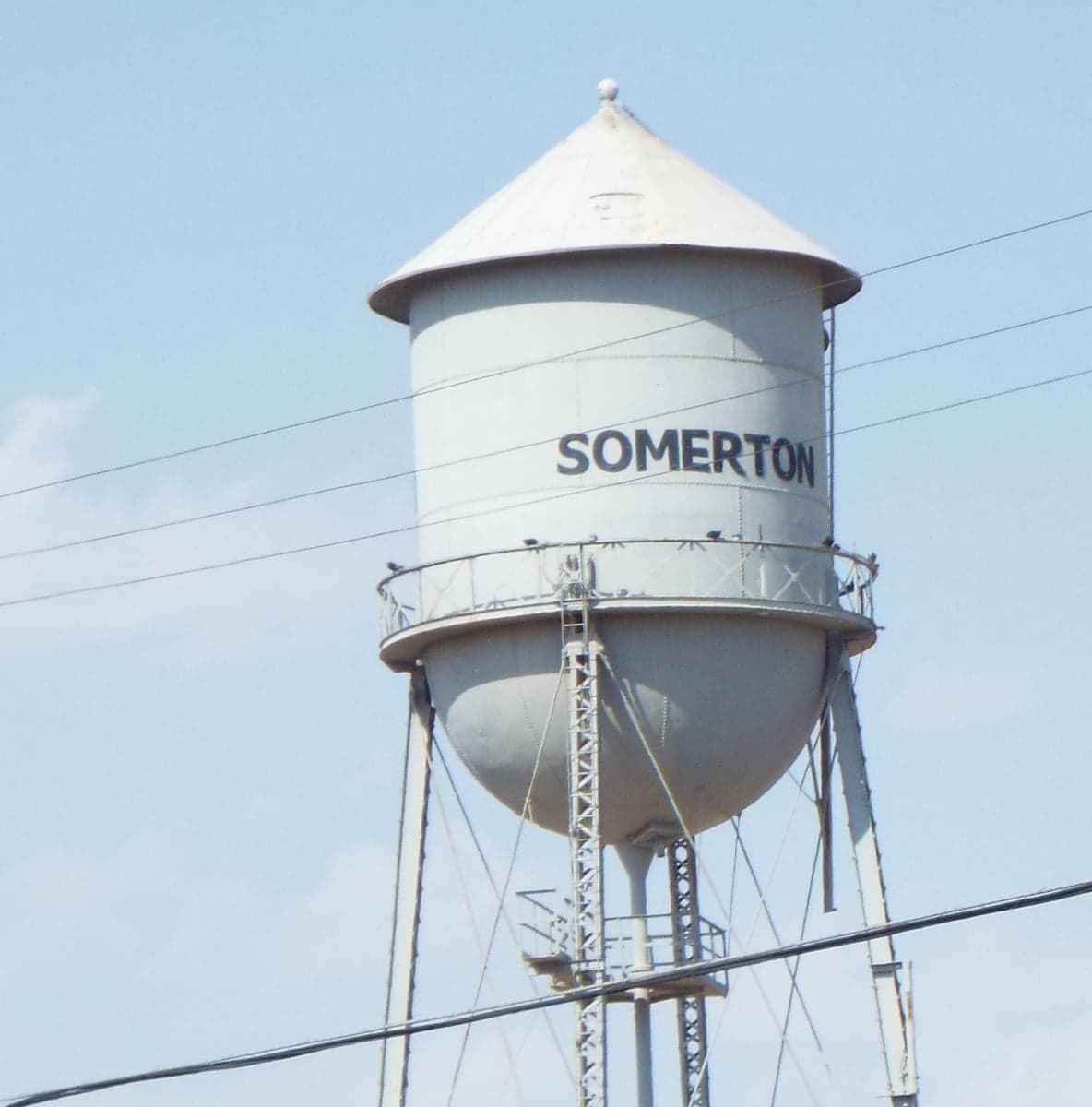
Photo: Wikipedia
Political ClimatePolitical Climate in Somerton, AZ
District shown is the primary district for this city’s centroid. Cities may span multiple districts.
Local Political AnalysisPolitical Analysis of Somerton, AZ
Somerton, Arizona, sits in a political bubble that’s become increasingly disconnected from the rest of Yuma County. While the county as a whole has historically leaned conservative, Somerton’s Cook PVI of D+13 tells you everything you need to know about the local tilt. That’s a solidly Democratic district, and it’s been trending that way for a while now. If you’re looking for a place where traditional values and limited government still hold sway, you’ll find Somerton’s politics a bit of a head-scratcher compared to nearby towns like Yuma or Wellton, which still vote more reliably red.
How it compares
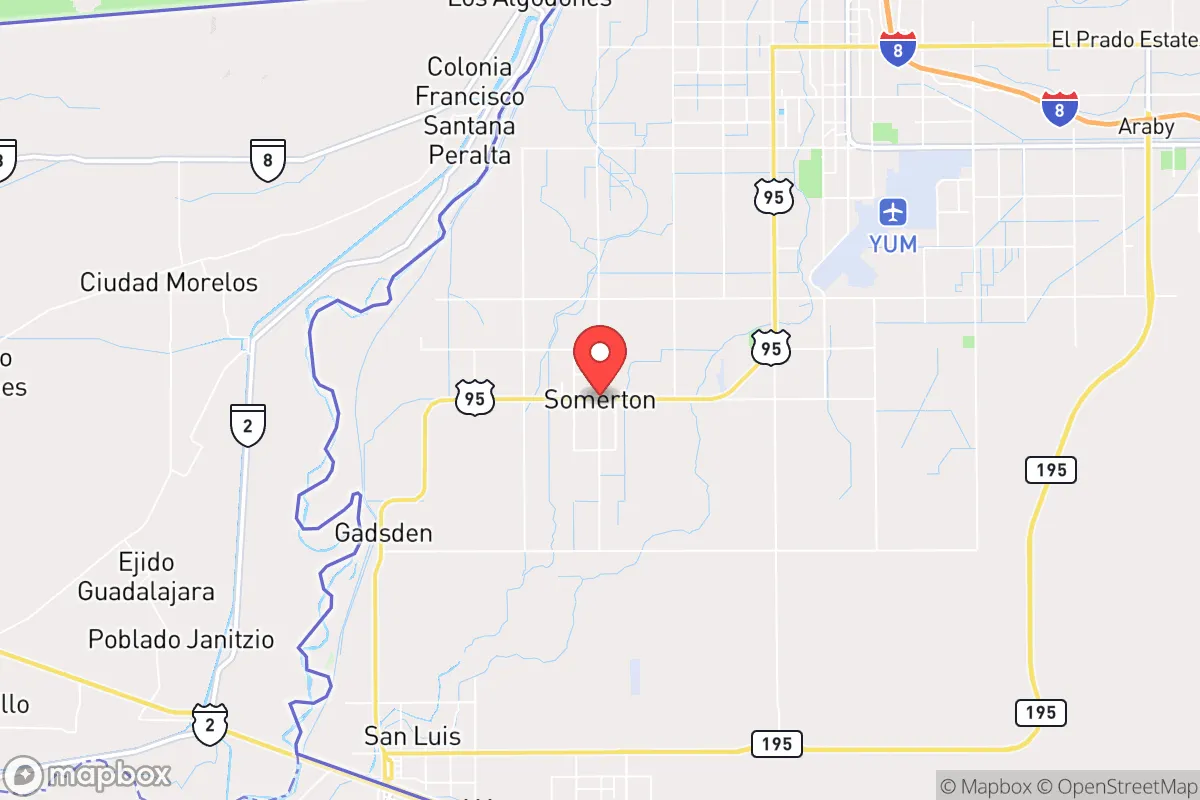
Drive ten minutes north to Yuma proper, and you’ll feel a different political vibe. Yuma County voted for Trump in 2020, but Somerton’s precincts consistently break for Democrats by double digits. That’s a stark contrast with the surrounding agricultural communities—places like San Luis and Gadsden, which also lean left, but not as heavily. The real eye-opener is how Somerton’s politics stack up against the rest of Arizona. The state’s been a battleground, but Somerton’s D+13 rating puts it in the same league as Tucson’s most liberal wards. That’s not a compliment if you value personal freedoms and local control. The shift here isn’t just about party registration—it’s about a growing acceptance of policies that many of us see as government overreach, from zoning mandates to school curriculum changes that sideline parental input.
What this means for residents
For folks living here, the political climate means you’re constantly fighting an uphill battle to keep government out of your life. Property taxes have crept up as the city council, dominated by progressive voices, pushes for more public spending on programs that sound good on paper but often miss the mark. You’ll see more regulations on small businesses—things like extra permitting for home-based operations or stricter noise ordinances that make it harder to run a side gig. The school board has also shifted left, with debates over critical race theory and gender ideology creeping into classrooms. If you’re a parent who wants to raise your kids with traditional values, you’ll need to stay vigilant. The silver lining? The community is tight-knit, and many residents still push back at town hall meetings. But the trajectory is concerning—every election cycle seems to bring another wave of policies that chip away at individual liberty.
Culturally, Somerton has a strong Hispanic heritage that’s always been a source of pride, but lately, that identity has been co-opted by activists pushing a more progressive agenda. You’ll see more “equity” initiatives in local government that sound like they’re about fairness but often end up as bureaucratic red tape. The real distinction here is the lack of a strong conservative counterweight—unlike Yuma, where the Chamber of Commerce and local GOP keep things balanced, Somerton’s civic groups tend to lean left. If you’re considering a move, know that you’ll be in a minority if you value limited government and personal responsibility. It’s not a lost cause, but it’s a place where you’ll need to stay engaged and vote in every local election to keep the pendulum from swinging further. The long-term outlook? Unless there’s a major shift in voter turnout, expect more of the same—a slow drift toward policies that prioritize collective goals over individual rights.

State Political ClimatePolitical Climate in Arizona
State Political AnalysisPolitical Environment in the State
Arizona has transformed from a reliably Republican stronghold into a genuine battleground state over the past two decades, with its partisan lean shifting from a solid +10-point GOP advantage in the 2000s to a razor-thin margin where Democrats now win statewide races by less than 1%. The state’s political identity is defined by a coalition of fast-growing Maricopa County suburbs, a deeply conservative rural interior, and a rapidly expanding Latino and out-of-state transplant population that has pulled the state leftward. For a conservative considering relocation, Arizona still offers a lower-tax, lower-regulation environment than California or Illinois, but the political trajectory demands close attention—especially in the Phoenix metro area, where the real battle for the state’s soul is being fought.
Urban vs. rural divide
The political map of Arizona is starkly divided between the urban core and the vast rural expanse. Maricopa County, home to over 60% of the state’s population, is the decisive battleground. Phoenix itself leans Democratic, but the critical suburbs tell a more nuanced story. Mesa and Chandler in the East Valley have trended purple, with Mesa’s large Mormon population providing a reliable conservative base while Chandler’s tech sector attracts younger, more moderate voters. Scottsdale remains reliably Republican but has seen its margins shrink as wealthy transplants from blue states settle in. Tucson, anchored by the University of Arizona, is the state’s second-largest city and a Democratic stronghold, consistently voting blue by double digits. The rural counties—Yavapai (Prescott), Mohave (Kingman/Lake Havasu), Pinal (Casa Grande), and Cochise (Sierra Vista)—vote Republican by margins of 20 to 40 points. The 2022 gubernatorial race saw Democrat Katie Hobbs win by just 0.7% statewide, while Republican Kari Lake carried rural counties by overwhelming margins but lost Maricopa by 2 points. The urban-rural split is widening, with the rural vote becoming more Republican and the urban vote more Democratic, leaving the suburbs as the decisive swing territory.
Policy environment
Arizona’s policy environment remains broadly conservative compared to coastal states, but with notable exceptions that concern many residents. The state has a flat income tax rate of 2.5%, enacted in 2023 after years of gradual reduction, making it one of the lowest in the nation. Property taxes are moderate, and there is no estate tax. The regulatory climate is business-friendly, with right-to-work laws and limited zoning restrictions outside of Phoenix and Tucson. However, education policy has become a flashpoint. In 2023, Governor Hobbs vetoed a universal school choice expansion that would have made all students eligible for Empowerment Scholarship Accounts (ESAs), though the program still exists for many families. The state’s election laws have been a major source of tension: Arizona was the first state to require proof of citizenship to vote in federal elections (the 2004 Prop 200), but recent court rulings have weakened that requirement. In 2022, the state passed a law requiring hand-count audits of random precincts, but implementation has been chaotic. Healthcare policy is mixed—Arizona expanded Medicaid under the Affordable Care Act in 2014, a decision that still rankles many conservatives, but the state has no abortion ban beyond 15 weeks, a limit that was upheld by the legislature in 2022 after the Dobbs decision. The overall policy environment is a patchwork: low taxes and light regulation for businesses, but growing government involvement in education and healthcare that alarms many freedom-minded residents.
Trajectory & freedom
Arizona’s trajectory on personal freedom is a mixed bag that demands vigilance. On the positive side, the state remains a constitutional carry state for firearms (permitless carry since 2010), and in 2023 the legislature passed a law prohibiting the enforcement of federal gun regulations that violate the Second Amendment. Property rights are generally strong, with no statewide rent control and limited eminent domain abuse. However, the trend on medical freedom is concerning. In 2023, Governor Hobbs signed a law requiring COVID-19 vaccine mandates for state employees, though it was later blocked by the courts. The state’s parental rights landscape shifted in 2022 with the passage of a law requiring schools to notify parents of any changes to a student’s mental or physical health, but enforcement has been spotty. The biggest freedom concern is election integrity: the 2020 and 2022 cycles saw widespread distrust among conservatives, leading to the creation of the Arizona Freedom Caucus in the legislature, which has pushed for hand-counting and paper ballot mandates. The 2024 election cycle will be a critical test—if the state’s election system remains compromised in the eyes of many voters, it could accelerate the exodus of conservatives to rural counties or out of state entirely. The trajectory is toward more government overreach in education and healthcare, but the legislature’s conservative majority (31-29 in the House, 16-14 in the Senate) provides a check on the governor’s agenda.
Civil unrest & political movements
Arizona has been a hotbed of political activism on both sides. The 2020 election audit in Maricopa County, conducted by the Senate Republicans and Cyber Ninjas, became a national flashpoint, drawing protests from both Trump supporters and election integrity activists. The state has seen significant immigration-related activism, particularly in Yuma and Nogales, where border crossings surged in 2023. The “Operation Save Arizona” movement, a coalition of conservative groups, has organized protests at the state capitol demanding stronger border enforcement. On the left, the #RedForEd teacher walkouts in 2018 were the largest in state history, leading to a 20% pay raise but also galvanizing progressive activism in education. The Cochise County supervisors’ refusal to certify the 2022 election results (later reversed under court order) highlighted the deep distrust in election administration. The state’s sanctuary city debate is ongoing: Tucson and Phoenix have declared themselves “welcoming cities” for undocumented immigrants, while the legislature has passed laws prohibiting such policies. The political climate is tense but not violent—most activism happens at the capitol, in school board meetings, and on social media. A new resident will notice the constant political advertising and the intensity of local elections, especially in Maricopa County.
Projection
Over the next 5-10 years, Arizona is likely to become more competitive and more polarized. Demographic trends favor Democrats: the state’s Latino population, which leans Democratic, is growing rapidly, and in-migration from California and Illinois brings voters accustomed to higher taxes and more government services. However, the state’s conservative rural base is also growing, particularly in Pinal County (Casa Grande, Maricopa city) and Yavapai County, where retirees and remote workers are fleeing blue states. The key swing area will be the West Valley suburbs of Phoenix—Surprise, Goodyear, Buckeye—which are growing fast and currently lean Republican but are being targeted by Democrats. If the state’s election integrity issues are resolved to conservatives’ satisfaction, Arizona could remain a purple state with a slight Republican lean. If not, the state could flip to blue within a decade, as many conservatives either disengage or move to redder states like Texas or Idaho. The 2026 gubernatorial election will be a bellwether: if a Republican wins back the governor’s office and the legislature maintains its majority, the state’s conservative trajectory could be restored. If Democrats hold the governorship and flip the legislature, expect a rapid expansion of government programs, higher taxes, and erosion of Second Amendment protections.
For a conservative moving to Arizona, the bottom line is this: you can still find a low-tax, freedom-friendly environment in the rural counties and many suburbs, but you must be politically engaged to protect it. The state is not yet lost, but it is contested. Choose your location carefully—Prescott or Lake Havasu City offer a reliably conservative community, while Mesa and Chandler require more vigilance. Get involved in local politics, especially school boards and county elections, because that is where the real battles are being fought. Arizona is still a place where a conservative can thrive, but only if they are willing to fight for it.
* Values derived from national, state, county, city and local statistics and may differ in a specific area. Last updated: 2026-04-19T08:54:48.000Z
Narrative content on this page is AI-generated and may contain mistakes. Verify any details that matter before acting on them.
ReloMaps may earn a commission from affiliate links at no extra cost to you.

