
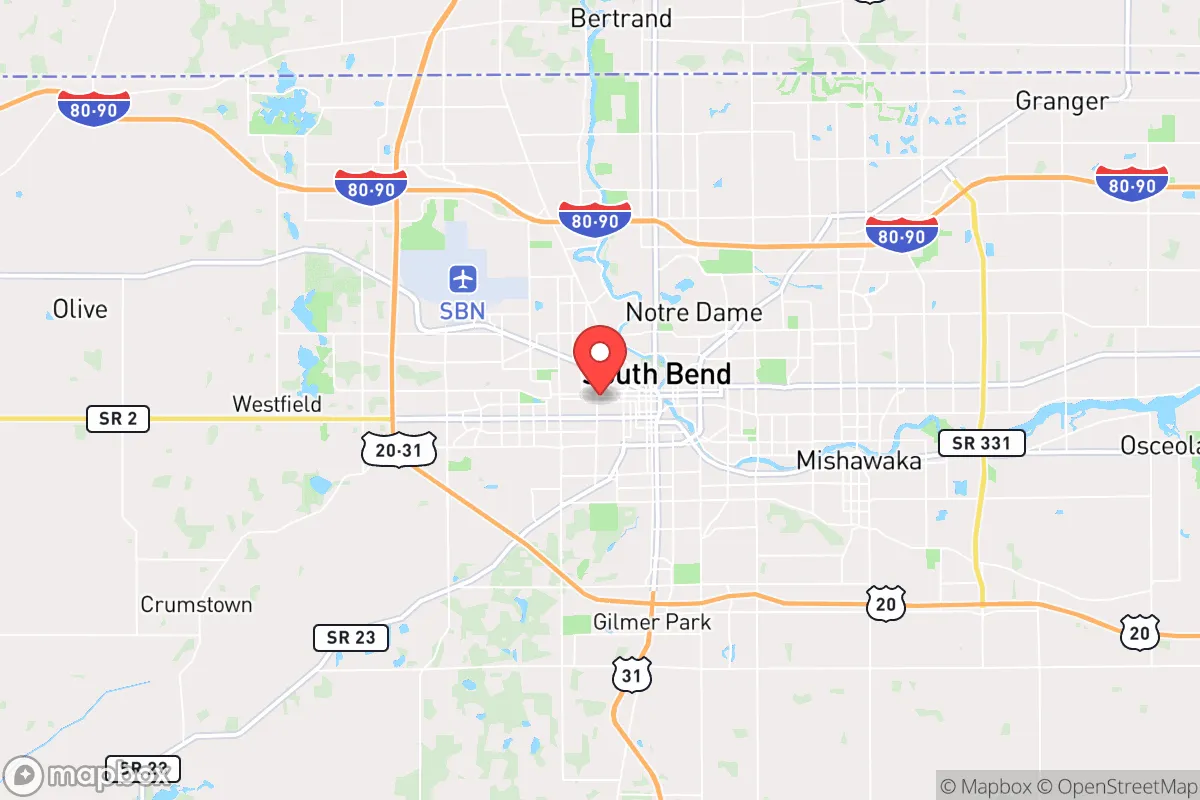
Photo: Wikipedia
Quality of Life in South Bend, IN
A high quality of life with strong walkability, manageable living costs, healthy neighborhood signals, and solid amenity access.
What does Quality of Life tell us?
Quality of Life blends cost of living, nearby amenities, socioeconomic signals, and neighborhood character. City-level scores represent the whole municipality; individual neighborhoods can differ.
What does this tell us?
Quality of Life blends cost of living, nearby amenities, socioeconomic signals, and neighborhood character. City-level scores represent the whole municipality; individual neighborhoods can differ.
Cost of Living
31% below national average
The Real Cost of Living in South Bend, IN for 2026
| Tier | Individual | Family (4) |
|---|---|---|
| Survival | $16k | $30k |
| Comfortable | $27k | $39k |
| Luxury | $95k+ | $147k+ |
| Elite (Top 5%) | $119k+ | $185k+ |
134%
The Area Signal
A metric tracking the socioeconomic signals of the area.
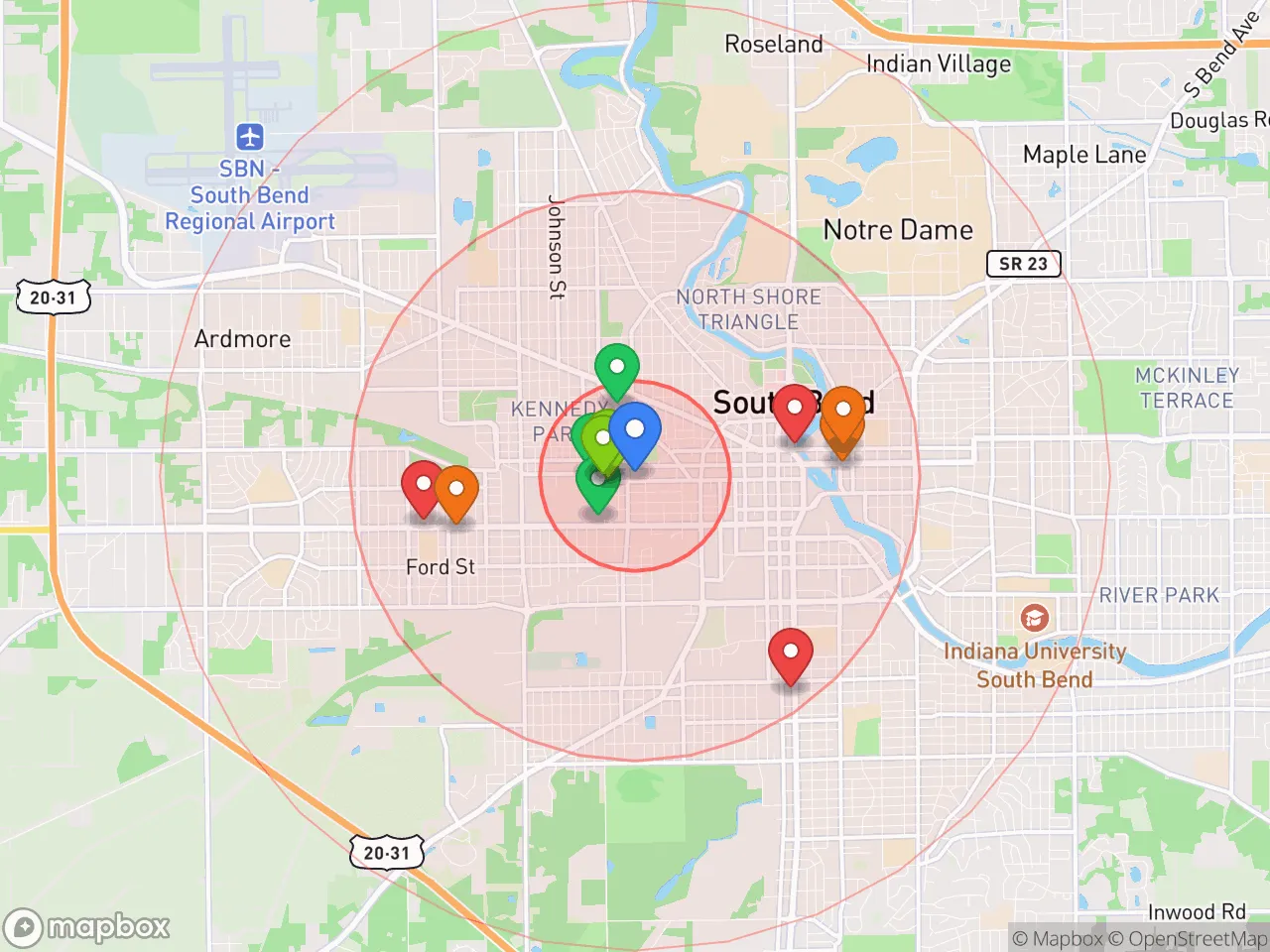
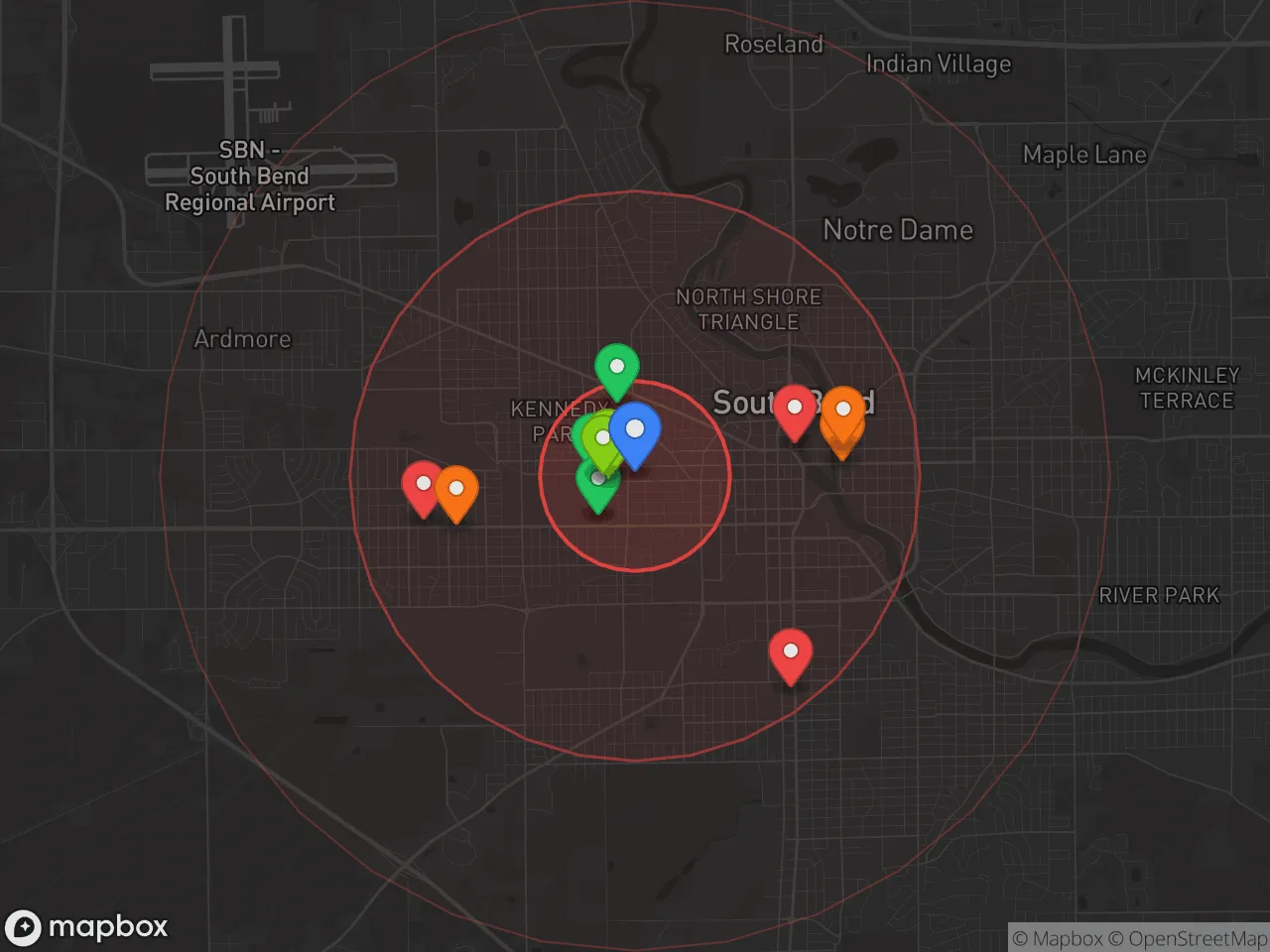
Hobbies
Explore the areaGroceries
7 within 10 miles
Gas
20 within 10 miles
Hospital
12 within 20 miles
Airport
MDW — Midway International
Post Office
USPS — South Bend, IN
Critical Amenities
Quality-of-Life Analysis
South Bend offers a cost of living that is dramatically lower than the national average, with a composite index of 69 (where 100 is the U.S. average), making it one of the most affordable mid-sized cities in the Midwest. The population is a mix of long-standing working-class families, students and faculty from the University of Notre Dame, and a growing cohort of remote workers and entrepreneurs drawn by the low housing costs and historic architecture. While the city’s median household income of roughly $42,000 trails the national median, the low expenses mean residents often have more disposable income relative to peers in pricier metros like Chicago or Indianapolis.
How housing costs and affordability compare to nearby cities
The housing market in South Bend is a standout feature for budget-conscious buyers and renters. The median home value sits at $124,500, a figure that is roughly one-third of the national median and significantly below neighboring cities such as Mishawaka ($165,000) or Granger ($280,000). Median rent is approximately $1,000 per month, which is about $200–$400 cheaper than comparable units in Elkhart or South Bend’s own northern suburbs. Property taxes in St. Joseph County are moderate, averaging around 1.2% of assessed value, and the city’s 7% sales tax is standard for Indiana. For a household earning the area’s median income, the typical mortgage payment on a median-priced home would consume less than 20% of gross monthly income—a ratio that is well below the 30% threshold considered affordable. This affordability gap is especially pronounced when compared to Chicago, where the median home value exceeds $300,000 and the cost of living index is near 110.
What daily life is like for families and professionals
Daily life in South Bend revolves around a compact, walkable downtown core and a network of well-maintained parks along the St. Joseph River. The South Bend Community School Corporation operates 19 elementary schools, 5 middle schools, and 3 high schools, with magnet programs like the South Bend Career Academy drawing families seeking vocational tracks. The average one-way commute is 19.96 minutes, which is roughly 6 minutes shorter than the national average and a major quality-of-life advantage for workers commuting to employers such as Notre Dame, Crowe LLP, or AM General. Amenities include the South Bend Museum of Art, the Morris Performing Arts Center, and the East Race Waterway—one of the few man-made whitewater courses in the U.S. Grocery costs are about 10% below the national average, and utility bills are in line with the Midwest norm. The city’s bus system, Transpo, provides free rides on three downtown circulator routes, reducing car dependency for errands and evening outings.
South Bend is best suited for first-time homebuyers, retirees on fixed incomes, and remote workers who want a low-stress, low-cost base within a two-hour drive of Chicago. The combination of a COL index of 69, a commute under 20 minutes, and a median home price under $125,000 creates a rare financial cushion that allows residents to save, travel, or invest more aggressively than they could in pricier regions. However, those seeking high-end retail, a dense nightlife scene, or top-tier public school rankings may find the trade-offs in amenities and school performance less appealing. For value-focused households who prioritize square footage, historic character, and financial breathing room, South Bend delivers a quality of life that punches well above its price tag.

Crime in South Bend, IN
Generally safer than 65% of comparable U.S. locations.
Violent CrimeViolent Crime Analysis
Property CrimeProperty Crime Analysis
Crime Analysis
South Bend, Indiana, reports a violent crime rate of 452.8 incidents per 100,000 residents and a property crime rate of 1,036.6 per 100,000, placing it above both the Indiana state average and national benchmarks. While the city has seen targeted redevelopment efforts in its downtown core, the overall safety picture is significantly shaped by a local justice system influenced by progressive policies that prioritize offender rehabilitation over public protection. This ideological approach, common in many large metro areas and their surrounding small cities, directly contributes to higher recidivism and a diminished sense of security for law-abiding residents.
Crime in context
South Bend’s violent crime rate of 452.8 per 100,000 is roughly 30% higher than the national average of approximately 380 per 100,000, and its property crime rate of 1,036.6 per 100,000 is similarly elevated. These figures place the city in a more dangerous tier than many comparable Midwestern communities. The presence of progressive district attorneys and judges in St. Joseph County has led to policies such as reduced cash bail, diversion programs for repeat offenders, and lenient sentencing guidelines. While framed as compassionate, these measures have a direct, negative impact: they keep more criminals on the street, undermine deterrence, and erode justice for victims who see offenders cycle back into their neighborhoods.
What residents experience
For those living in South Bend, the statistical reality translates into tangible daily concerns. Property crime, including theft from vehicles and burglary, is the most common encounter, particularly in areas near the University of Notre Dame and along the Michigan Street corridor. Violent incidents—assaults, robberies, and shootings—are concentrated in specific neighborhoods but can spill into commercial districts. Residents frequently report a lack of police responsiveness, a symptom of the broader progressive philosophy that deprioritizes enforcement and prosecution. This creates an environment where victims feel abandoned by the system, and potential offenders face few consequences, further destabilizing community safety.
Neighborhood-level variation
Safety in South Bend is not uniform. The northwest side, including the Near Northwest Neighborhood, and parts of the southeast side experience the highest rates of violent crime, driven by gang activity and open-air drug markets. In contrast, the northeast side, particularly areas around Erskine Village and the River Park neighborhood, see lower crime rates, though property crime remains a persistent issue. The downtown area, while benefiting from investment and increased police presence during events, still faces challenges from vagrancy and opportunistic theft. Prospective residents should prioritize the northeast and far south sides for relative safety, while remaining aware that the city’s progressive judicial environment means even lower-crime areas are not immune to the broader consequences of lenient justice policies.
* Values derived from national, state, county, city and local statistics and may differ in a specific area. Last updated: 2026-04-22T09:06:58.000Z
Narrative content on this page is AI-generated and may contain mistakes. Verify any details that matter before acting on them.
ReloMaps may earn a commission from affiliate links at no extra cost to you.

