Photo: Wikipedia
Political ClimatePolitical Climate in South Bend, IN
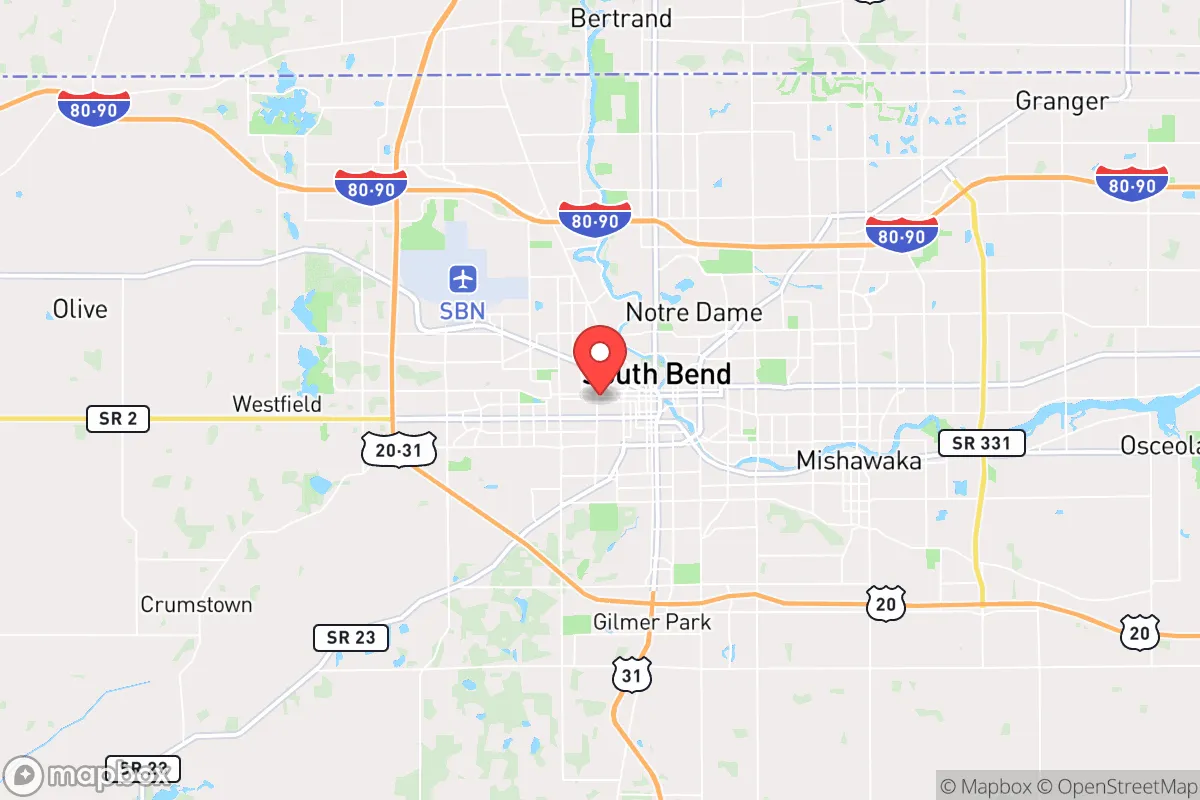
District shown is the primary district for this city’s centroid. Cities may span multiple districts.
Local Political AnalysisPolitical Analysis of South Bend, IN
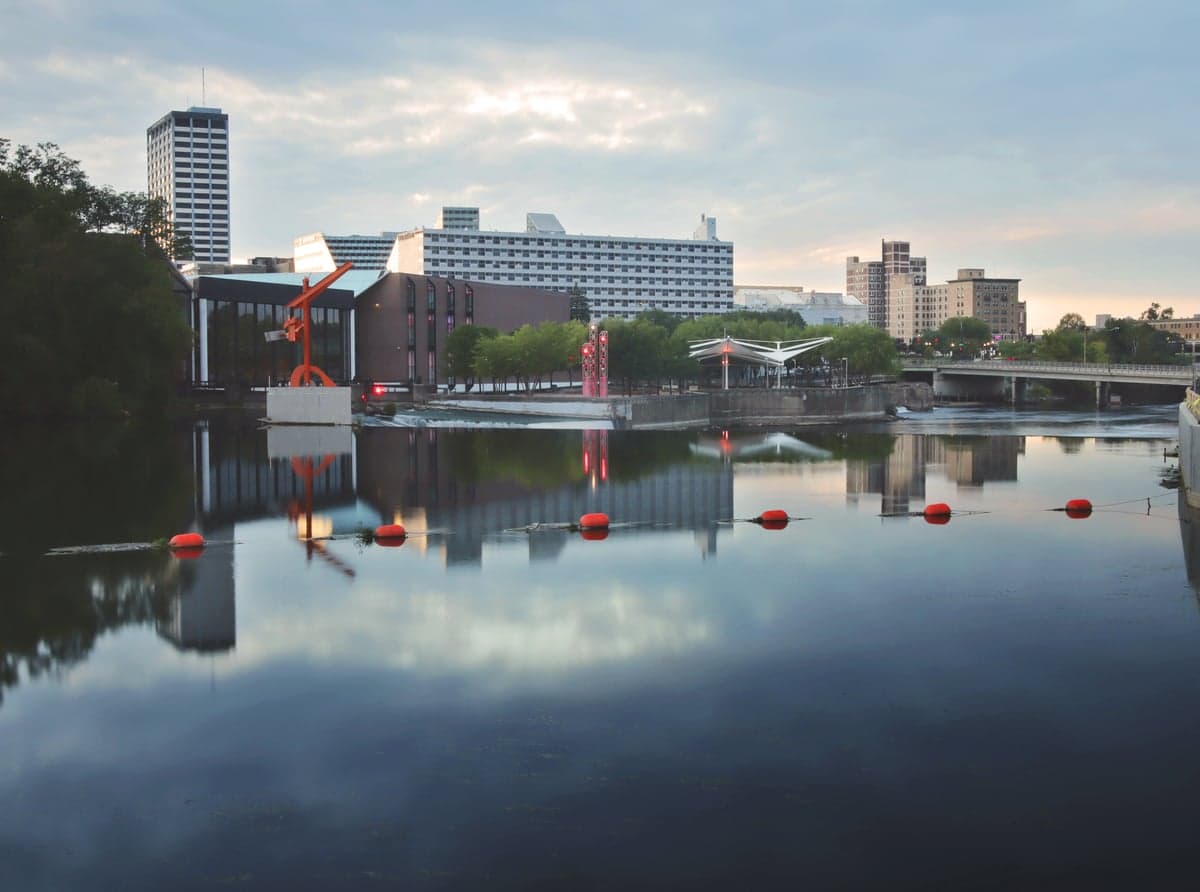
South Bend, Indiana, has a political climate that’s more complicated than its Cook PVI of R+13 might suggest. On paper, the district leans Republican, but the city itself has been drifting leftward for years, especially since Mayor Pete Buttigieg’s tenure put it on the national progressive map. If you’ve lived here as long as I have, you’ve watched the old-school, blue-collar conservatism that built this town slowly get pushed aside by a younger, more activist crowd. The surrounding areas—like Granger, Mishawaka, and Elkhart—still vote reliably red, but inside the city limits, you’ll find a growing tension between the traditional values that kept taxes low and neighborhoods safe, and a new wave of policies that feel more like government overreach than common sense.
How it compares
Drive ten minutes east to Mishawaka or fifteen minutes north to Granger, and you’re in a different world politically. Those communities vote solidly Republican, with lower property taxes, fewer zoning restrictions, and a general hands-off attitude from local government. South Bend, by contrast, has embraced things like sanctuary city policies, higher local income taxes, and a push for “equity” in housing and policing that many longtime residents see as unnecessary meddling. The contrast is stark: in Mishawaka, you can still run a small business without a dozen new permits; in South Bend, the city council has been busy passing ordinances on everything from rental inspections to plastic bag bans. The R+13 rating for the congressional district masks the fact that the city itself is a blue island in a red sea—and that blue island keeps trying to impose its will on the rest of us.
What this means for residents
For families and small business owners, the shift means more bureaucracy and less personal freedom. The city has expanded its rental registration program, requiring landlords to pay fees and pass inspections that critics say drive up housing costs without improving safety. There’s also been a push for “community policing” reforms that sound good in theory but have led to longer response times in some neighborhoods. If you value keeping your property taxes low and your business decisions your own, South Bend’s trajectory is concerning. The long-term worry is that as the city gets more progressive, it’ll follow the same path as places like Bloomington or Indianapolis—higher taxes, more regulations, and a government that thinks it knows better than you do how to run your life. For now, the suburbs offer a buffer, but the city’s policies are creeping outward.
Culturally, South Bend still has a lot going for it—the University of Notre Dame brings in a conservative-leaning student body and faculty, and the local Catholic community remains a strong voice for traditional values. But the city council and mayor’s office have been increasingly vocal about social justice initiatives, including defunding police debates and diversity training mandates for city contractors. These aren’t just symbolic gestures; they come with real costs and real intrusions into how people live and work. If you’re considering a move here, I’d say keep an eye on the next few elections. The old South Bend—the one where your neighbor minded his own business and the city stayed out of yours—is still here, but it’s fighting for air. The long-term outlook depends on whether the conservative majority in the district wakes up and pushes back, or lets the progressive minority run the show.

State Political ClimatePolitical Climate in Indiana
State Political AnalysisPolitical Environment in the State
Indiana has been a reliably Republican state for decades, but don’t let the “red” label fool you — it’s a more nuanced place than the national headlines suggest. The state has voted for the GOP presidential candidate in every election since 2008, and before that only broke for Obama in 2008 by a razor-thin margin. But the real story is the growing divide between a deep-red rural base and increasingly blue-leaning urban centers, with the suburbs becoming the key battleground. Over the last 10-20 years, the state has shifted rightward on cultural issues while maintaining a fiscally conservative posture, but recent legislative battles show a state that is actively pushing back against federal overreach and progressive ideology — a trend that should appeal to anyone looking for a place where personal freedom and local control still matter.
Urban vs. rural divide
The political map of Indiana is a study in contrasts. Indianapolis (Marion County) is the state’s liberal anchor, consistently voting Democratic by double digits — in 2024, it went +18 for Biden. Bloomington (Monroe County), home to Indiana University, is another blue stronghold, with a strong progressive activist presence. On the flip side, the vast rural expanse — from the Fort Wayne metro area (Allen County, which voted +15 R in 2024) to the small towns of Kokomo and Terre Haute — is deeply Republican. The real battleground is the suburban ring around Indianapolis, places like Hamilton County (Carmel, Fishers, Noblesville), which was once a GOP lock but has shifted slightly purple as younger, more educated professionals move in. Hamilton County still voted +12 R in 2024, but that’s down from +20 a decade ago. Lake County in the northwest corner, near Chicago, is reliably blue due to union and minority populations, while Vanderburgh County (Evansville) leans red but is competitive. The takeaway: if you’re moving to Indiana, your experience of the political climate will depend heavily on whether you’re in the urban core, the suburbs, or the countryside.
Policy environment
Indiana’s policy environment is a mixed bag for conservatives, but the trend is clearly toward more freedom. The state has a flat income tax rate of 3.05% (down from 3.23% in 2023) with a scheduled phase-down to 2.9% by 2027, making it one of the most tax-friendly states in the Midwest. Property taxes are capped at 1% of assessed value for owner-occupied homes, a major win for homeowners. On education, Indiana has a robust school choice program — the Choice Scholarship Program (vouchers) is one of the most expansive in the nation, and the state also has a thriving charter school sector. Parents have real options, especially in suburbs like Carmel and Fishers. Healthcare policy is more mixed: the state expanded Medicaid under Obamacare (HIP 2.0), which some conservatives see as a federal overreach, but it also passed Senate Enrolled Act 1 in 2023, which bans gender transition procedures for minors — a clear win for parental rights and medical freedom. Election laws are solid: Indiana has voter ID requirements, no-excuse absentee voting was eliminated in 2023, and the state has a clean voter roll maintenance program. The regulatory environment is business-friendly, with a right-to-work law (though it was repealed in 2025, a concerning shift) and minimal zoning restrictions in most rural areas.
Trajectory & freedom
Indiana is becoming more free in several key areas, but there are warning signs. On the positive side, the state passed Constitutional Carry (House Bill 1296) in 2022, allowing law-abiding citizens to carry a handgun without a permit — a major expansion of Second Amendment rights. Parental rights were strengthened with House Bill 1608 (2023), which requires schools to notify parents of any changes to a child’s health or well-being, and bans instruction on sexual orientation and gender identity in K-3 classrooms. On medical freedom, the state passed Senate Bill 3 (2023), which prohibits COVID-19 vaccine mandates by private employers and government entities — a direct rebuke of federal overreach. However, the repeal of right-to-work in 2025 is a concerning step backward for economic freedom, and the state’s grocery tax (7% on food) was finally eliminated in 2024, but only after years of pressure. Property rights remain strong, with no statewide rent control and minimal eminent domain abuse. The trajectory is generally positive for conservatives, but vigilance is needed to prevent backsliding on labor and tax issues.
Civil unrest & political movements
Indiana has seen its share of political flashpoints, but nothing like the chaos of coastal states. The 2020 George Floyd protests in Indianapolis turned violent, with looting and fires downtown, leading to a strong backlash that helped Republicans hold the state legislature. The Indiana Black Legislative Caucus has pushed for criminal justice reform, but with limited success. On the right, the Indiana Firearms Coalition is a powerful grassroots force that successfully pushed Constitutional Carry. Immigration politics are relatively quiet — Indiana is not a sanctuary state, and Senate Bill 168 (2024) requires local law enforcement to cooperate with ICE, a clear win for rule of law. Election integrity controversies have been minimal, though some activists on the right have raised concerns about mail-in ballot security in Lake County. The most visible flashpoint for a new resident would be the abortion debate: after Dobbs, Indiana passed a near-total abortion ban (Senate Bill 1, 2022) with exceptions only for rape, incest, and life of the mother. This has energized both sides, but the law remains in effect. Overall, political movements are active but civil — you won’t see daily street battles like in Portland or Seattle.
Projection
Over the next 5-10 years, Indiana is likely to remain a solidly Republican state, but with growing suburban tension. The Indianapolis suburbs — Hamilton County, Hendricks County, Johnson County — are seeing an influx of younger families from blue states, many of whom are fiscally conservative but socially moderate. This could push the state toward a more libertarian-leaning GOP, with less emphasis on culture war issues and more on tax cuts and school choice. However, the rural areas are not going anywhere — they’re deeply conservative and will keep the state red for the foreseeable future. The biggest risk is the right-to-work repeal — if unions regain power, it could erode the state’s business-friendly reputation. In-migration from Illinois and California is accelerating, especially to Fishers and Carmel, which are consistently ranked among the best places to live in America. These newcomers tend to be more moderate, so expect the GOP primary to become more competitive. The state’s flat tax phase-down and school choice expansion will likely continue, making Indiana an attractive destination for families who value low taxes and educational freedom.
Bottom line for a new resident: Indiana offers a strong conservative policy environment with low taxes, school choice, and robust Second Amendment protections. The political climate is stable and civil, but you’ll need to pick your community carefully — the urban cores are increasingly progressive, while the suburbs and rural areas are where conservative values thrive. If you’re moving here, expect a state that respects personal freedom but is not immune to the national culture wars. Keep an eye on the right-to-work repeal and the flat tax phase-down — these will be the key indicators of whether Indiana continues its trajectory toward greater freedom or starts to drift leftward. For now, it’s one of the best bets in the Midwest for someone who wants to live free and raise a family without constant government interference.
* Values derived from national, state, county, city and local statistics and may differ in a specific area. Last updated: 2026-04-22T09:06:58.000Z
Narrative content on this page is AI-generated and may contain mistakes. Verify any details that matter before acting on them.
ReloMaps may earn a commission from affiliate links at no extra cost to you.

