
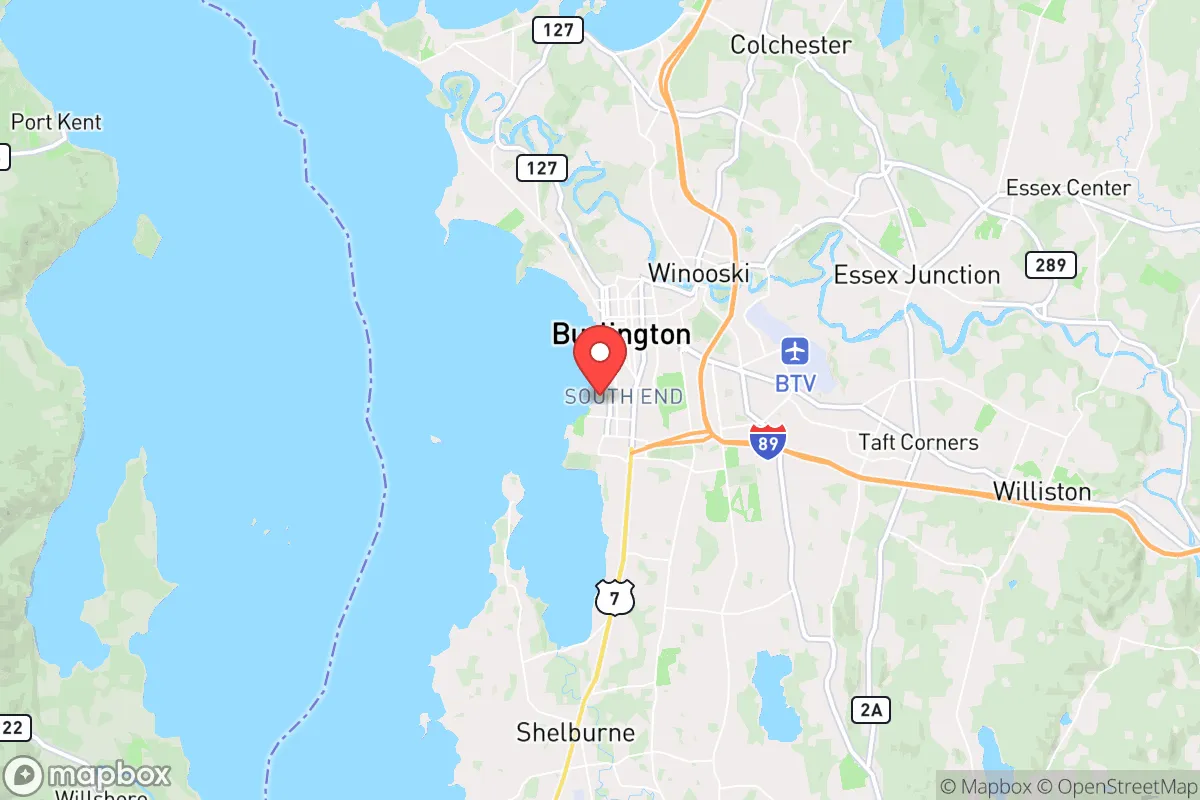
Photo: Wikipedia
Personal Sovereignty in South Burlington, VT
Moderate friction. Expect trade-offs in some aspect of personal liberty and independence.
What does Personal Sovereignty tell us?
Personal Sovereignty measures your capacity for self-reliance and independence with minimal government friction. Higher scores mean fewer barriers between you and the way you want to live... but it assumes you have the space you need and good neighbors.
What does this tell us?
Personal Sovereignty measures your capacity for self-reliance and independence with minimal government friction. Higher scores mean fewer barriers between you and the way you want to live... but it assumes you have the space you need and good neighbors.
State Policy
Energy independence: Importer (15% of energy produced in-state)
Personal Liberty
Homesteading

Personal Liberty Analysis
South Burlington, Vermont, presents a challenging environment for those prioritizing personal sovereignty, particularly when viewed through a survivalist or prepper lens. While the city offers a high quality of life in many conventional respects, its location within Chittenden County and the state of Vermont places it under a regulatory and tax regime that significantly constrains individual autonomy. For a conservative-leaning individual or family concerned with government overreach, the trade-offs between the area’s natural beauty and its policy environment require careful, unvarnished consideration.
Tax burden and regulatory posture: How Vermont’s policies impact your autonomy
Vermont’s tax structure is among the most aggressive in the nation, and South Burlington residents bear the full weight of it. The state imposes a progressive income tax with a top marginal rate of 8.75%, which kicks in at a relatively modest income level. Property taxes are also high, driven by the state’s education funding system, which relies heavily on local property levies. This means that even a modest home in South Burlington carries a significant annual tax bill, reducing the capital available for self-reliant investments like land, supplies, or off-grid infrastructure. The regulatory posture is equally burdensome. Vermont has a statewide land-use law, Act 250, which applies to most development and can add layers of permitting delays and costs for any construction or significant property modification. For a prepper looking to build a root cellar, install a backup generator, or construct a workshop, the permitting process can be a frustrating and expensive hurdle. The state’s environmental regulations, while well-intentioned, often translate into a presumption of government oversight over private property use, which runs counter to a sovereignty-minded approach.
Self-defense and gun law specifics: What you need to know before moving
For those who view the Second Amendment as a cornerstone of personal sovereignty, Vermont’s gun laws present a mixed but increasingly restrictive picture. On the positive side, Vermont is a constitutional carry state, meaning no permit is required to carry a concealed firearm for those legally allowed to possess one. This is a significant advantage over many other New England states. However, the state has moved in a restrictive direction in recent years. In 2023, Vermont enacted a ban on “assault weapons” and large-capacity magazines, and it also raised the minimum age to purchase any firearm to 21. These laws are actively enforced in South Burlington, which has its own police department. Additionally, Vermont has a “red flag” law (Extreme Risk Protection Order) that allows for the temporary seizure of firearms based on a court order, often without the owner being present. For a prepper, this represents a clear vulnerability: a single complaint from a neighbor or a family dispute could theoretically trigger a process that removes your primary means of self-defense. The legal climate is not hostile to gun ownership, but it is increasingly skeptical of the types of firearms and accessories that many in the preparedness community consider essential.
Self-reliance and homesteading viability: Lot sizes, zoning, and off-grid feasibility
South Burlington is a suburban city, not a rural homesteading haven. The typical residential lot size is small, often under a quarter-acre, and zoning regulations are strict. Raising livestock, such as chickens or goats, is permitted but subject to specific ordinances regarding setbacks, noise, and waste management. Keeping bees is allowed but requires registration with the state. The feasibility of true off-grid living is extremely low. The city requires connection to municipal water and sewer systems for most properties, and building codes mandate grid-tied electrical connections. Solar panels are allowed, but net metering rules and permitting requirements mean you cannot simply disconnect from the grid. For a prepper seeking to establish a self-sufficient compound with a well, septic system, and independent power, South Burlington is not the right location. The zoning and building codes are designed to maintain a conventional suburban aesthetic and infrastructure, leaving little room for the kind of radical self-reliance that many in the preparedness community seek. The best you can realistically achieve is a suburban home with a large garden, a backup generator, and a well-stocked pantry.
Personal liberties: Parental rights, medical autonomy, speech, and property
On the spectrum of personal liberties, Vermont leans heavily toward a progressive, government-as-guardian model. Parental rights are not absolute. The state has a robust child protection system, and parents can face scrutiny for decisions regarding education, medical care, and discipline that fall outside mainstream norms. Vermont was one of the first states to pass laws that can override parental consent for certain medical procedures for minors, a point of deep concern for those who prioritize family sovereignty. Medical autonomy is similarly constrained. The state has a vaccine mandate for school attendance, and during the COVID-19 pandemic, it was among the most aggressive in imposing restrictions. For a prepper who values the right to make independent medical decisions, this is a red flag. Free speech is protected by the First Amendment, but the state’s political culture is overwhelmingly homogeneous, and expressing dissenting views—especially on topics like public health mandates, gun control, or immigration—can lead to social ostracism or professional consequences. Property rights are the most compromised area. As noted, Act 250 and local zoning give the government broad authority over what you can do on your own land. The state also has a strong “public trust” doctrine regarding natural resources, which can limit your ability to use water or timber on your property without permits.
In summary, South Burlington offers a pleasant, safe, and well-managed suburban lifestyle, but it does so at the cost of significant personal sovereignty. The tax burden is high, the regulatory environment is intrusive, and the legal framework for self-defense, self-reliance, and family autonomy is increasingly restrictive. For a conservative-leaning individual or family with a survivalist mindset, this area is a poor fit. The trade-offs are stark: you gain access to excellent schools, low crime, and a beautiful natural setting, but you surrender a great deal of control over your own life, property, and decisions. Compared to states in the South or the Mountain West, where tax burdens are lower, gun laws are more permissive, and zoning is less restrictive, Vermont—and South Burlington specifically—ranks poorly for those who prioritize personal sovereignty above all else. If your goal is to build a life with maximum autonomy and minimal government interference, you would be better served looking elsewhere.

* Values derived from national, state, county, city and local statistics and may differ in a specific area. Last updated: 2026-04-30T18:26:34.000Z
Narrative content on this page is AI-generated and may contain mistakes. Verify any details that matter before acting on them.
ReloMaps may earn a commission from affiliate links at no extra cost to you.

