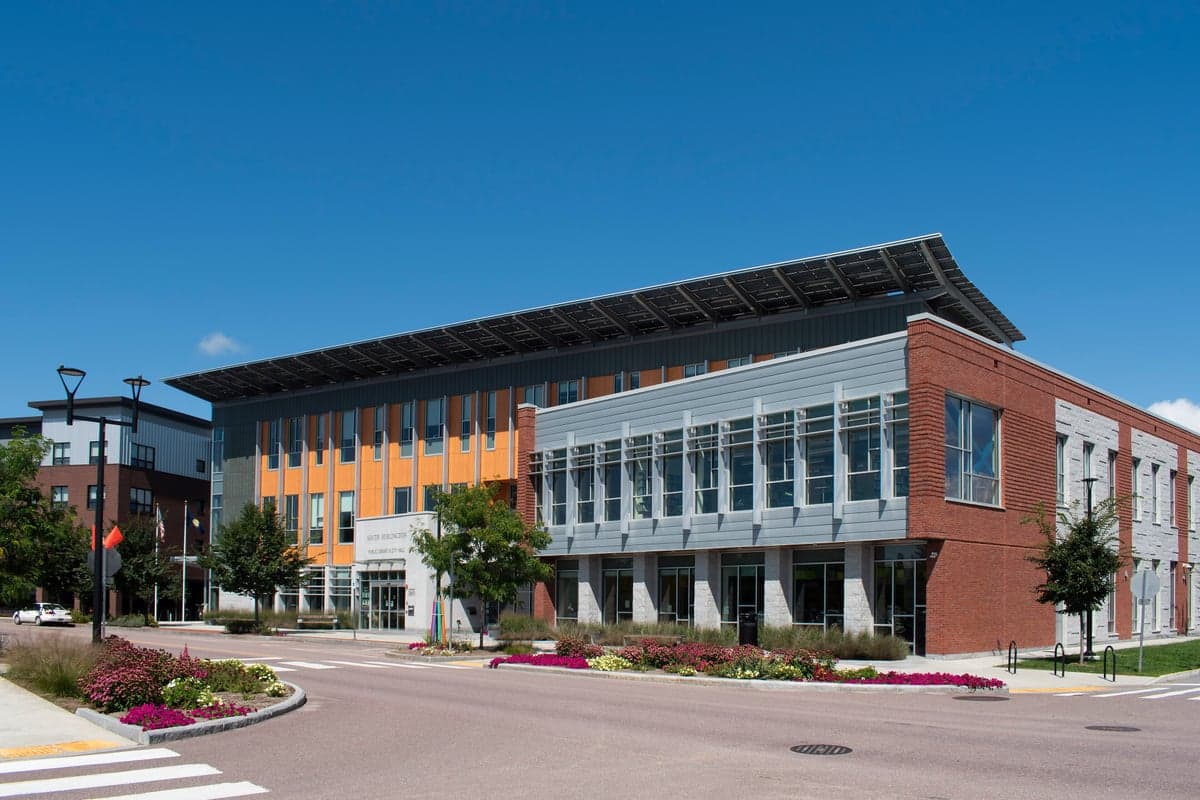
Photo: Wikipedia
Strategic Assessment of South Burlington, VT
Multiple tactical vulnerabilities. Population density, target proximity, or disaster risk are likely compounding. A retreat property and exit planning is required.
What does the Strategic Assessment tell us?
Our Strategic Assessment grades tactical survivability of an area. Major population centers, military targets, fallout zones, natural disasters, and border exposure all drive risk — lower exposure means a more defensible position in a crisis.
This is heavily inspired by Joel Skousen's Strategic Relocation book. Highly recommended you checkout the book ($)What does this tell us?
Our Strategic Assessment grades tactical survivability of an area. Major population centers, military targets, fallout zones, natural disasters, and border exposure all drive risk — lower exposure means a more defensible position in a crisis.
This is heavily inspired by Joel Skousen's Strategic Relocation book. Highly recommended you checkout the book ($)Strategic Pillars

Key Distances
Regional Safe Places
Below is our recommended "safe zones" in Vermont and the surrounding area based on our strategic heuristics. For most people, it's unrealistic to live in a “safe zone” full-time due to work, family or other personal reasons. They tend to be more rural. However, many of these areas are perfect for second homes and retreat properties that double as a vacation home or even a short-term rental.
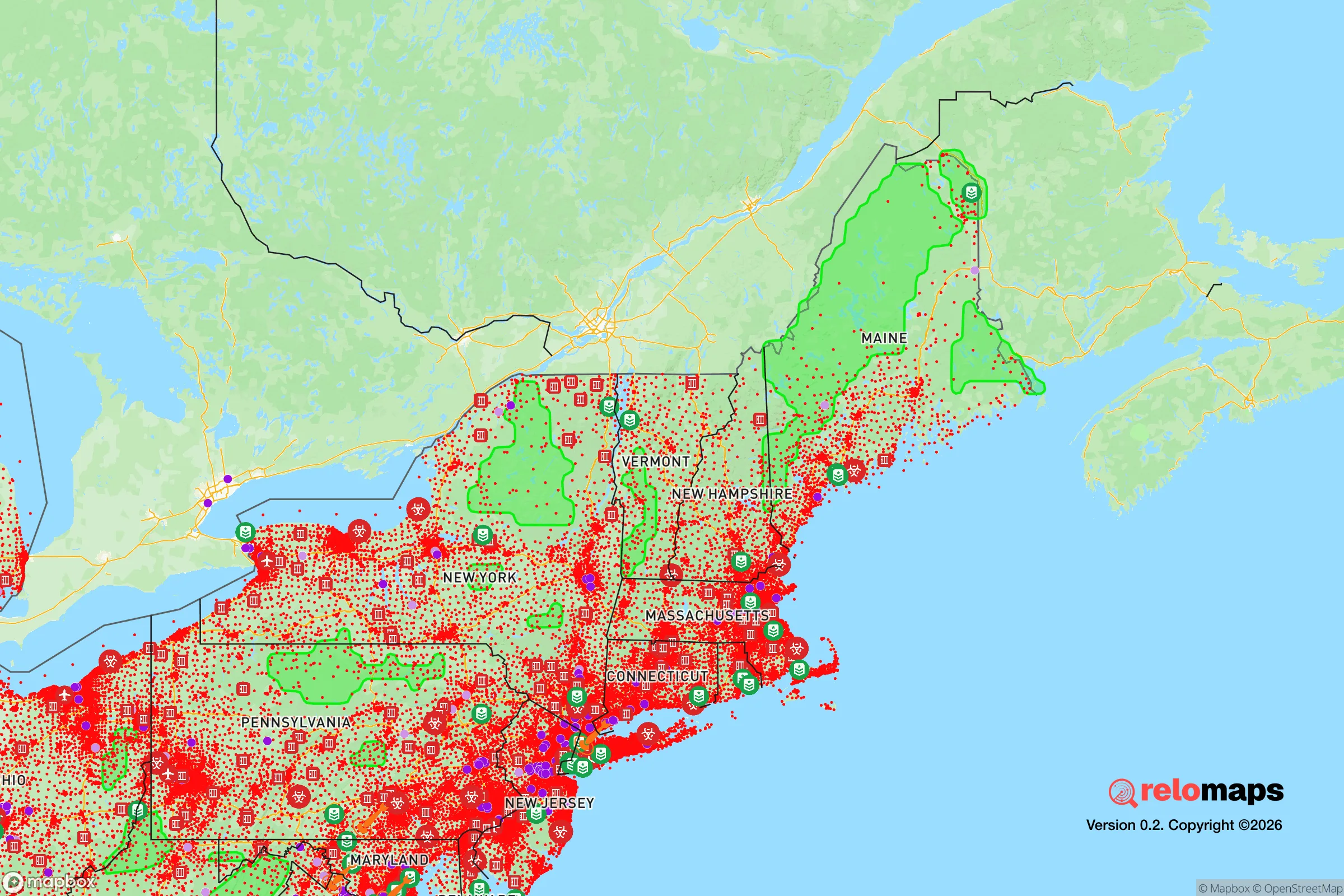
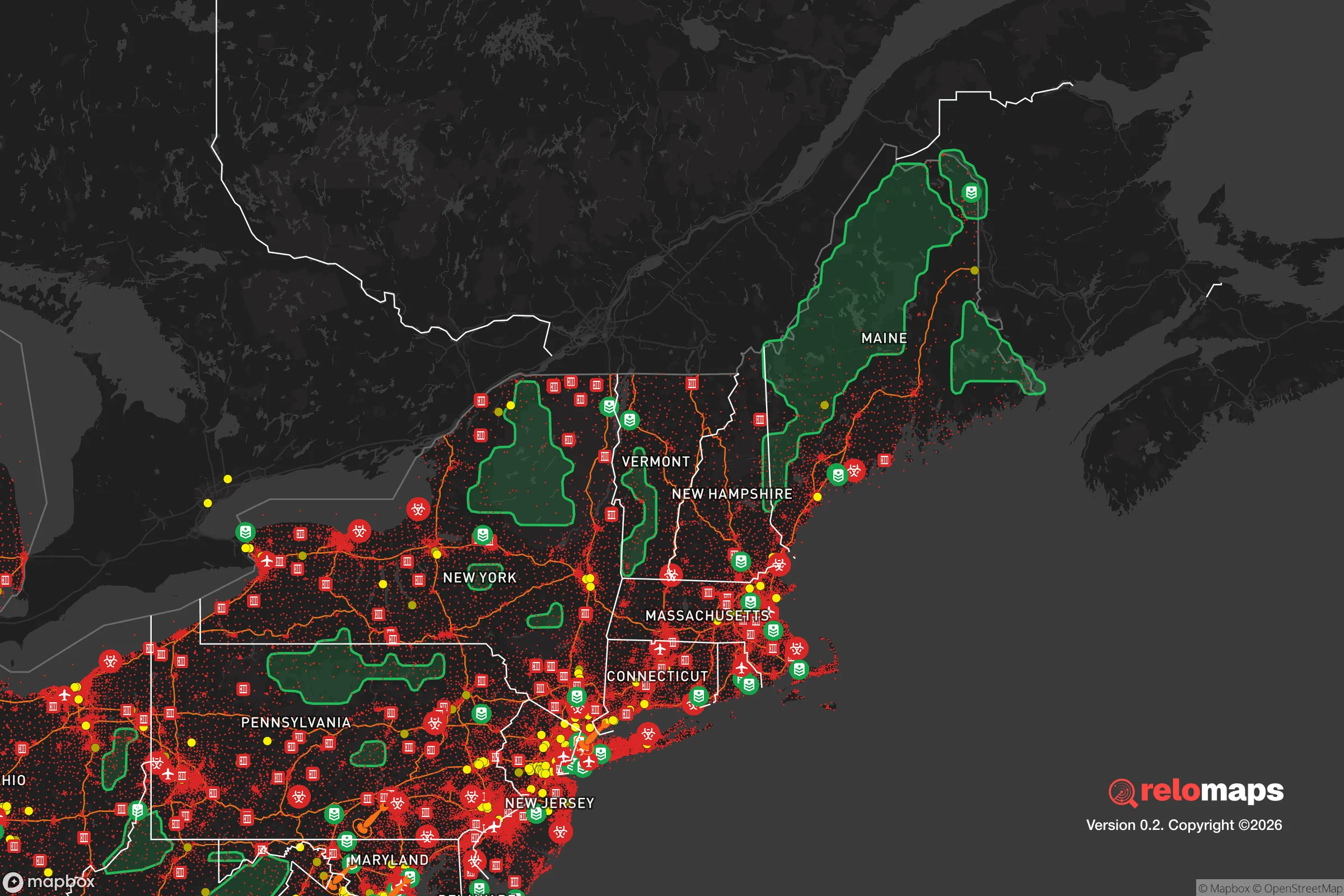


Important Note: For informational purposes only. This does not mean nothing bad ever happens in the green zones. Please use common sense. This is based on public data and modeled with AI. We tried to take a conservative approach but mistakes happen. We update this regularly as new information becomes available.
Solar Generator Recommendations
Backup power matters more here than in safer locations. We've picked three solar generators across budgets and capacity tiers — start with the budget unit if you only need a few essentials, or step up if you want to run a fridge and HVAC for days at a time.

Jackery Portable Power Station Explorer 300
Budget OptionPower on the Go: Weighing only 11 lbs, it's convenient to set up and store with book-sized foldable solar panels

BLUETTI Portable Power Station AC180
Designed for both indoor and outdoor scenarios, AC180 is highly capable as it has a robost capacity and continuous output power.

EF ECOFLOW DELTA Pro Ultra Power Station
Upgraded PickEcoFlow DELTA Pro Ultra is a whole-home energy system designed to grow with your family. Integrated with the Smart Home Panel 2, it scales to meet your evolving energy needs — keeping your home powered, intelligent, and secure through every stage of life.
We earn a commission, at no additional cost to you.
Strategic Assessment Analysis
South Burlington, Vermont, presents a mixed bag for the strategic relocator. Its proximity to Burlington—the state’s largest city and a potential flashpoint for civil unrest—is a clear liability, but its position as a secondary hub with direct access to Lake Champlain, the Winooski River, and major north-south and east-west routes (I-89 and US-2) offers genuine resilience advantages. For a conservative-leaning individual or family prioritizing self-sufficiency and security, this isn’t a bug-out paradise, but it’s a defensible staging ground with real logistical strengths—if you know where to look and what to avoid.
Geographic position and natural advantages for long-term security
South Burlington sits on a relatively flat, elevated terrace above the Lake Champlain shoreline, which gives it a natural vantage point over the surrounding valley. The area is ringed by the Green Mountains to the east and the Adirondacks to the west, creating a natural bowl that limits easy overland approach from most directions. This isn’t a mountain redoubt, but it’s not a valley trap either. The Winooski River forms the northern boundary, and the lake provides a massive freshwater resource—over 435 square miles of water that can be tapped for drinking, irrigation, and transport if the grid goes down. The region’s agricultural history is still visible in the remaining farm parcels and community gardens, which could be repurposed for local food production. The climate is cold—average January lows around 10°F—which naturally discourages large-scale transient populations and reduces the spread of vector-borne diseases. Snowfall averages 80 inches annually, so winter preparedness is non-negotiable, but that same snowpack acts as a natural water reservoir and a barrier to movement.
Risks, exposures, and proximity to fallout-relevant landmarks
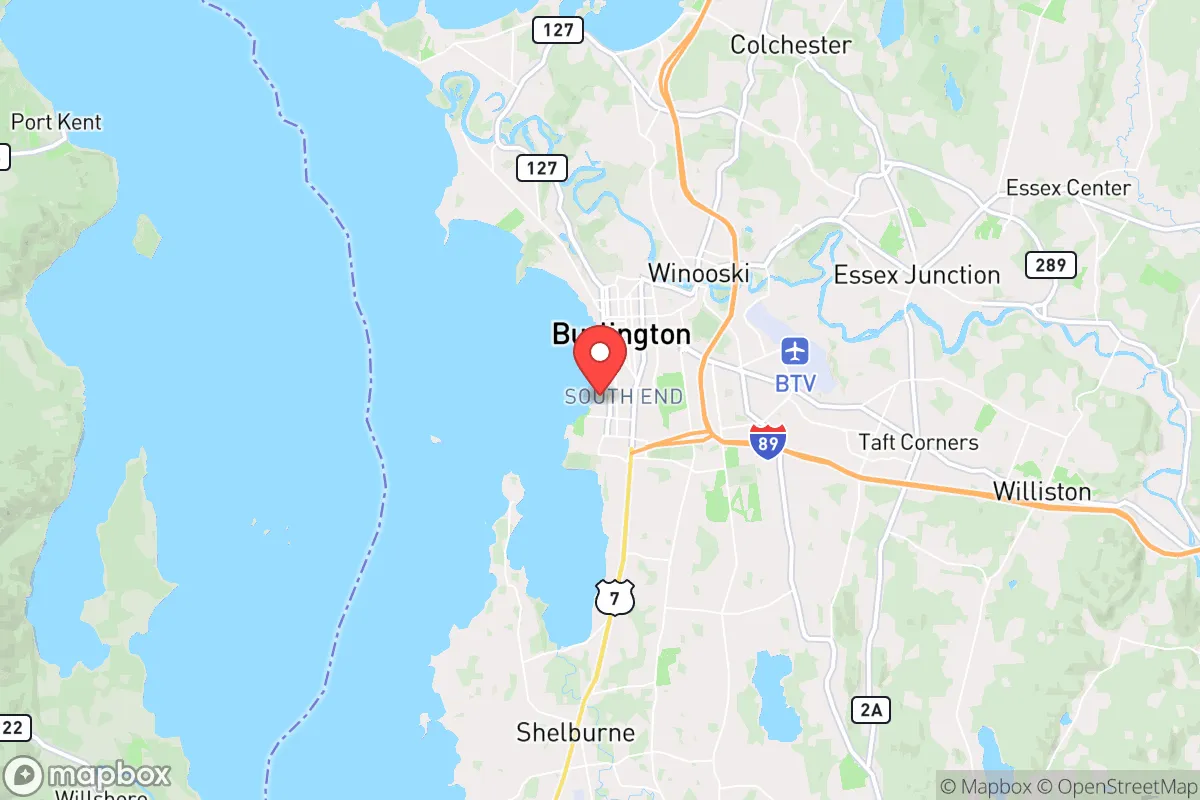
The biggest strategic downside is South Burlington’s adjacency to Burlington proper. Burlington is a dense, politically progressive city of roughly 45,000 that has seen periodic protests, property crime spikes, and a growing homeless population. In a scenario of national unrest, Burlington would likely become a focal point for demonstrations, supply chain disruptions, and potential violence. South Burlington shares a border with the city and is only 3 miles from the University of Vermont Medical Center—a major trauma center that could become a target or a bottleneck during a mass casualty event. The Burlington International Airport (BTV) sits right inside South Burlington’s boundaries, handling commercial flights and military cargo. In a crisis, that airport becomes a high-value asset for evacuation or resupply—but also a prime target for looting or seizure. The nearby Vermont Yankee nuclear plant (about 60 miles south) is decommissioned, but spent fuel remains on-site. The real fallout concern is the proximity to the Canadian border (about 40 miles north) and the potential for cross-border instability or refugee flows. Interstate 89 runs directly through South Burlington, connecting to Montreal in under two hours—a double-edged sword for evacuation versus unwanted traffic.
Practical resilience for a relocator: food, water, energy, and defensibility
Water security is South Burlington’s strongest card. The city draws its municipal water from Lake Champlain, but the lake is also directly accessible for private wells, rainwater catchment, and surface water collection. The Winooski River and several smaller streams (like Potash Brook) provide secondary sources. The soil is generally fertile—silty loam over limestone bedrock—so small-scale gardening and livestock are viable, though the short growing season (roughly 120 frost-free days) limits what you can grow. Cold-hardy crops like potatoes, kale, and root vegetables do well. Energy resilience is middling: the grid is served by Green Mountain Power, which has a decent reliability record but is vulnerable to ice storms and wind events. Solar is viable (about 160 sunny days per year), but winter production drops sharply. Wood heat is the most practical backup—Vermont is heavily forested, and firewood is plentiful if you have land and a chainsaw. Defensibility is a mixed picture. South Burlington is a suburban patchwork of single-family homes, strip malls, and office parks. There are no natural chokepoints like mountain passes, but the area’s road network is limited: only a few major arteries (I-89, US-2, VT-116) connect it to the outside world. A determined group could block these routes with minimal effort. The city’s police force is small (about 40 officers), so in a prolonged crisis, you’re largely on your own. The local gun culture is moderate—Vermont has constitutional carry and a strong hunting tradition—so firearms and ammunition are accessible, but you won’t find the same level of preparedness as in rural areas further south.
The overall strategic picture for South Burlington is one of calculated risk. It’s not a remote survivalist haven—you’re too close to Burlington’s potential chaos, the airport’s vulnerability, and the I-89 corridor’s traffic. But it offers genuine advantages: abundant fresh water, defensible terrain if you pick the right property (look for homes on dead-end roads or near the lake with good sightlines), and a community that, while politically blue, still has a strong DIY ethic and respect for self-reliance. For a conservative relocator, the play here is to treat South Burlington as a forward operating base—close enough to resources and infrastructure to thrive in normal times, but with a pre-planned bug-out route into the Northeast Kingdom or the White Mountains if things go sideways. If you’re looking for a place to hunker down indefinitely, look further east. If you want a strategic foothold with water, access, and a low profile, South Burlington is worth a hard look—just don’t get complacent about the neighbors to the west.

* Values derived from national, state, county, city and local statistics and may differ in a specific area. Last updated: 2026-04-30T18:26:34.000Z
Narrative content on this page is AI-generated and may contain mistakes. Verify any details that matter before acting on them.
ReloMaps may earn a commission from affiliate links at no extra cost to you.

