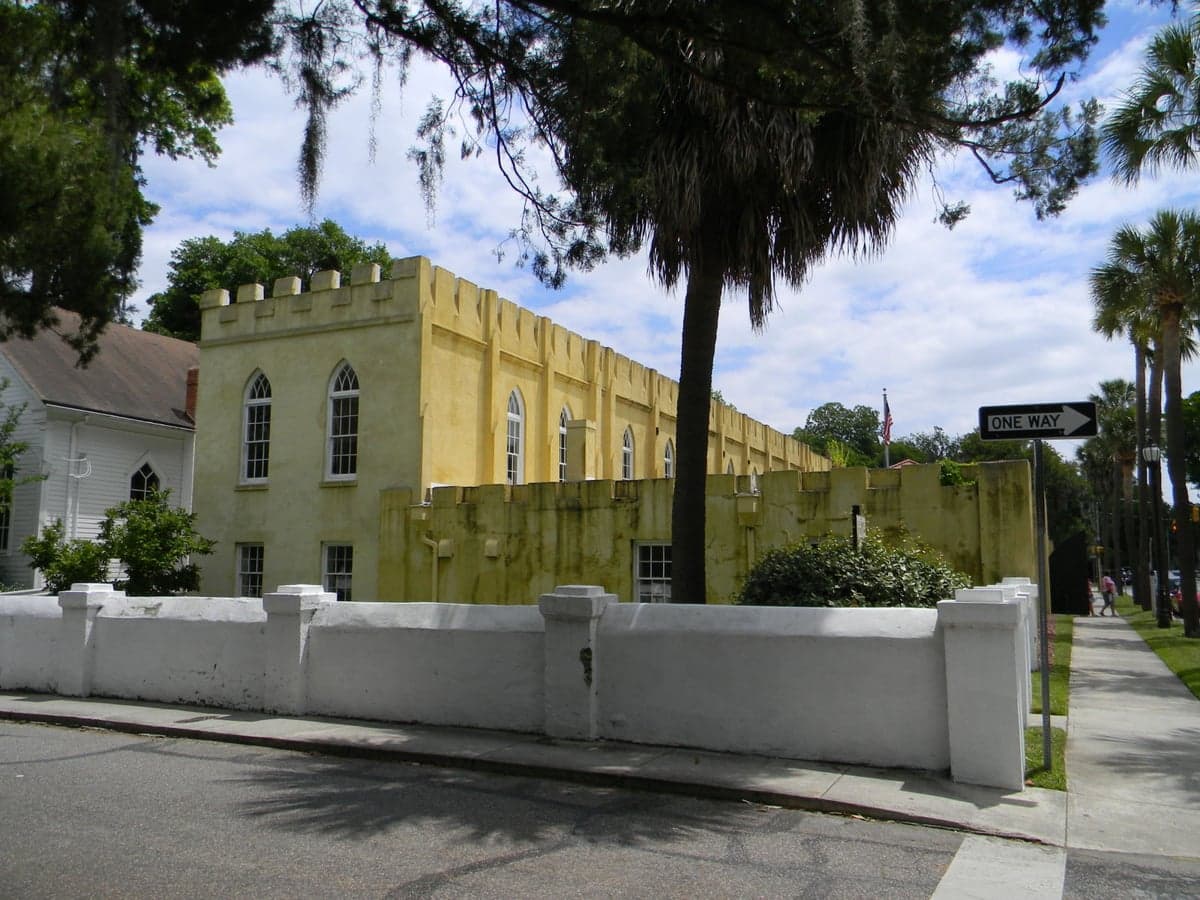
Photo: Wikipedia
Demographics of Beaufort County
Affluence Level in Beaufort County
An upper-middle-class area. Household wealth, education levels, and homeownership run ahead of national benchmarks.
People of Beaufort County
Beaufort County, South Carolina, is home to 192,123 residents, a population that blends deep-rooted Gullah Geechee heritage with a rapidly growing influx of retirees, military families, and professionals drawn to the Lowcountry’s coast. The county’s character is defined by a stark contrast: historic Sea Island communities like St. Helena Island and Hilton Head Island preserve centuries-old traditions, while the suburban corridors of Bluffton and Okatie are among the fastest-growing areas in the state. With a 44.8% college-educated rate and a 4.5% foreign-born share, Beaufort County is an increasingly educated and diverse place, yet its racial composition—67.4% White, 15.7% Black, 12.3% Hispanic, and 1.0% East/Southeast Asian—reflects both its plantation-era roots and its modern Sun Belt transformation.
Settlement & growth (pre-1960)
Long before European contact, the region was home to the Yemassee and Cusabo Native nations, who lived along the rivers and sea islands, relying on fishing, hunting, and limited agriculture. Spanish explorers attempted missions in the 16th century, but permanent European settlement began with the British establishment of Beaufort town in 1711, named after Henry Somerset, Duke of Beaufort. The town became a colonial port and the seat of a sprawling plantation economy built on rice, indigo, and later Sea Island cotton—all cultivated by enslaved Africans.
The enslaved African population, drawn primarily from the rice-growing regions of West Africa (Senegal, Sierra Leone, and the Gold Coast), formed the demographic backbone of Beaufort County by the mid-18th century. Their descendants, known today as the Gullah Geechee people, developed a distinct creole language and culture that survived emancipation and remains centered on the Sea Islands—particularly St. Helena Island, Hilton Head Island, and Daufuskie Island. During the Civil War, the Union captured the Sea Islands in 1861, and the Port Royal Experiment allowed freedmen to purchase land and establish independent communities. Places like Mitchelville on Hilton Head became the first self-governed freedmen’s town in the United States.
After Reconstruction, the region’s economy shifted to phosphate mining, truck farming, and oyster canning, but outmigration was heavy. Many Black residents left for Northern cities during the Great Migration (1910–1970), while the white population remained small and rural. By 1960, Beaufort County’s population was roughly 44,000—overwhelmingly Black, rural, and poor. The county’s modern transformation began with the construction of the Broad River Bridge (1927) and later the Hilton Head Bridge (1956), which opened the islands to automobile traffic and set the stage for resort development.
Modern era (post-1965)
The 1965 Hart-Cellar Act had a modest direct effect on Beaufort County—its foreign-born share remains low at 4.5%—but the county’s explosive growth since the 1970s has been driven almost entirely by domestic migration. The catalyst was the development of Hilton Head Island as a planned resort community, beginning with Charles Fraser’s Sea Pines Plantation in 1957. By the 1970s and 1980s, Hilton Head attracted affluent retirees, second-home buyers, and golf enthusiasts from the Northeast and Midwest, reshaping the county’s racial and economic demographics. The island’s population grew from roughly 2,000 in 1970 to over 37,000 by 2020, and it remains overwhelmingly white and wealthy.
As Hilton Head filled, development spilled onto the mainland. Bluffton, once a sleepy fishing village, became the county’s fastest-growing municipality after the 1990s, with its population surging from 1,200 in 1990 to over 27,000 today. The Okatie and Sun City areas saw master-planned retirement communities (notably Sun City Hilton Head, opened 1995) that attracted active adults from across the country. Meanwhile, Beaufort town itself experienced a revival, drawing military families from the adjacent Marine Corps Recruit Depot Parris Island and Marine Corps Air Station Beaufort, as well as professionals working at the Savannah River Site across the river in Georgia.
The Hispanic population grew from negligible in 1990 to 12.3% today, driven largely by labor demand in construction, landscaping, hospitality, and agriculture. Many Hispanic residents—primarily of Mexican and Central American origin—settled in Beaufort town and Bluffton, where they formed small but visible communities. The East/Southeast Asian population (1.0%) is concentrated in the professional and military sectors, with clusters near Parris Island and the technical workforce. The Indian-subcontinent population remains tiny at 0.1%. The Black population, while still 15.7% countywide, has declined as a share from its pre-1970 majority, as many Gullah Geechee families were displaced by rising property taxes and resort development on the Sea Islands. Today, the Gullah Geechee community is most concentrated on St. Helena Island and in rural areas of northern Beaufort County, where land ownership and cultural preservation efforts remain strong.
The future
Beaufort County’s population is projected to continue growing at a steady pace, driven by domestic in-migration from the Northeast and Midwest, as well as from other parts of South Carolina. The county’s college-educated share (44.8%) is likely to rise further as remote work and retirement migration attract professionals. The Hispanic share is expected to grow gradually, possibly reaching 15-18% by 2040, as second-generation families expand and new labor migration continues. The East/Southeast Asian and Indian populations will likely remain small but may grow modestly with the expansion of technical and medical jobs at the county’s hospitals and the Savannah River Site.
The most significant demographic tension will be between preservation and development. The Gullah Geechee Cultural Heritage Corridor, established by Congress in 2006, aims to protect historic communities on St. Helena Island and Daufuskie Island, but rising land values continue to pressure these areas. Meanwhile, new subdivisions in Bluffton and Okatie are attracting younger families and professionals, diversifying the county’s age structure. The county’s cultural identity is evolving from a bifurcated Black-white plantation-and-resort history into a more complex, multi-ethnic Sun Belt suburb with a strong coastal identity.
For someone moving in now, Beaufort County offers a mix of historic Lowcountry charm, military stability, and resort amenities, but it is increasingly a place of economic stratification. The Gullah Geechee heritage remains a defining cultural asset, yet the county’s future is being shaped by newcomers who are drawn to its beaches, golf courses, and relatively low taxes. The population is becoming whiter, more educated, and more suburban, while the historic Black communities fight to maintain their foothold. It is a county in transition—one where the past is deeply present, but the future belongs to the developers and the remote workers.

* Values derived from national, state, county, city and local statistics and may differ in a specific area. Last updated: 2026-06-12T22:55:08.000Z
Narrative content on this page is AI-generated and may contain mistakes. Verify any details that matter before acting on them.
ReloMaps may earn a commission from affiliate links at no extra cost to you.

