

Photo: Wikipedia
Political ClimatePolitical Climate in Beaufort County
Showing district-level results — no local-only data available.
Local Political AnalysisPolitical Analysis of Beaufort County
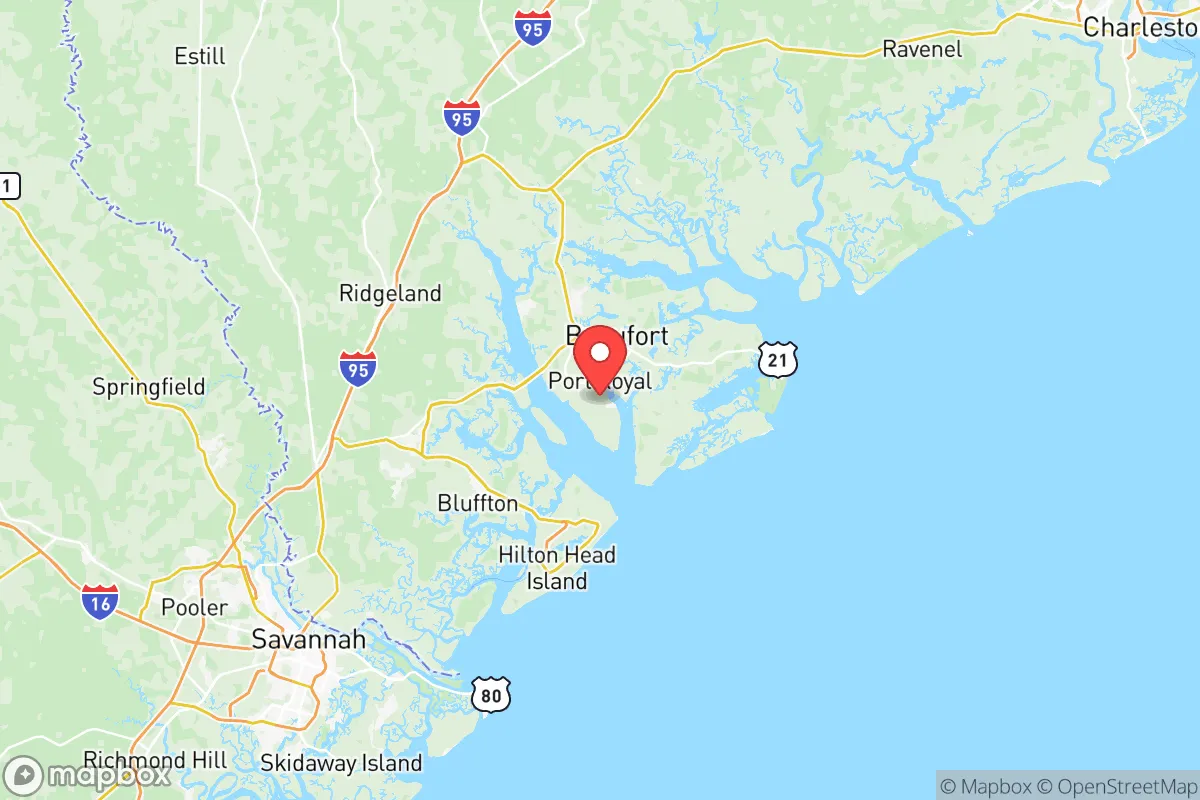
Beaufort County, South Carolina, is a politically fascinating place—a classic purple-to-light-red area that has been shifting leftward over the past decade, even as the rest of the state stays firmly red. The county’s Cook Partisan Voting Index (PVI) is R+6, meaning it votes about six points more Republican than the national average, but that’s actually two points less Republican than South Carolina as a whole (R+8). In practice, that means Beaufort County is a bellwether: it’s not quite as deep red as the Upstate or the Pee Dee, but it’s no Charleston either. The real story is the internal divide—the county is split between a growing, more liberal coastal population and a deeply conservative rural and suburban interior.
How it compares
When you stack Beaufort County against the rest of South Carolina, the difference is mostly about growth and demographics. The state’s R+8 PVI is driven by solidly red areas like Greenville and Spartanburg counties, plus the rural black belt that votes reliably Democratic but with lower turnout. Beaufort County, by contrast, has seen an influx of retirees, military families, and remote workers from blue states, especially in the towns of Hilton Head Island and Bluffton. These areas have shifted noticeably left in recent cycles—Hilton Head’s precincts around Sea Pines and the south end now often vote Democratic, while Bluffton’s newer subdivisions are swing territory. Meanwhile, Beaufort (the city) and Port Royal are the county’s blue anchors, with precincts regularly going 55-60% Democratic. On the flip side, Ridgeland and Hardeeville in the northern part of the county, along with rural areas around Sheldon and Seabrook, vote heavily Republican—often 65-70% GOP. The swing precincts are in the unincorporated areas between Bluffton and Beaufort, where new housing developments are drawing a mix of retirees and young families.
What this means for residents
For conservative residents, Beaufort County is still a comfortable place to live. The county council and school board have Republican majorities, and local elections are often decided in the GOP primary. Property taxes are relatively low, and the county’s growth has been managed with a pro-business, low-regulation approach. For liberal residents, the picture is more nuanced. You’ll find plenty of like-minded neighbors in Beaufort, Port Royal, and parts of Hilton Head, and the county’s Democratic Party is active and well-funded. But statewide policies—like the 2023 abortion ban and the lack of expanded Medicaid—still apply, and local school board decisions can feel out of step with progressive values. The key takeaway: Beaufort County is a place where both sides can live comfortably, but the political tension is real, especially around growth management, environmental regulations, and school funding.
Culturally, Beaufort County stands apart from much of South Carolina because of its strong military presence (Marine Corps Recruit Depot Parris Island and Marine Corps Air Station Beaufort) and its reliance on tourism and second-home development. This creates a unique blend: you’ve got retired colonels and young Marines alongside artists and environmental activists. The county’s politics are less about culture war issues and more about the practical trade-offs of rapid growth—traffic, infrastructure, and preserving the Lowcountry’s natural beauty. In the long term, expect Beaufort County to keep trending purple, with Hilton Head and Bluffton pulling it left and the rural north holding it right. It’s a microcosm of where the whole state might be headed in 10-15 years.

State Political ClimatePolitical Climate in South Carolina
State Political AnalysisPolitical Environment in the State
South Carolina is a solidly Republican state, carrying a Cook PVI of R+8, meaning it votes about eight points more Republican than the nation as a whole. That’s been the reality for a generation now, but the state’s politics are more layered than the top-line number suggests. Over the last 10-20 years, the GOP’s grip has tightened in rural areas and the Upstate, while the Lowcountry and the Columbia metro have become genuine battlegrounds. The dominant coalition is a mix of traditional fiscal conservatives, evangelical voters, and a growing number of transplants from the Northeast and Midwest who are often culturally conservative but economically pragmatic. The Democratic base is increasingly concentrated in the state’s majority-Black counties, college towns, and the city of Charleston, but it hasn’t been enough to flip a statewide race since 2006.
Urban vs. rural divide
The political map of South Carolina is a study in contrasts. The Upstate, anchored by Greenville and Spartanburg, is the GOP’s engine room. Greenville County alone delivered over 60% of its vote to Donald Trump in 2020, and the surrounding counties of Pickens, Oconee, and Anderson are even redder. This region has seen explosive growth from corporate relocations (BMW, Michelin, Proterra) and an influx of conservative-leaning professionals. In the Midlands, Columbia and its suburbs in Richland and Lexington counties tell a split story: Richland County (home to the state capital and the University of South Carolina) is reliably Democratic, while Lexington County to the west is a Republican stronghold. The Lowcountry is where the real tension lives. Charleston city proper has trended blue, but the surrounding suburbs—Mount Pleasant, Summerville, and especially Beaufort—are still red-leaning, though shifting. The rural “Corridor of Shame” counties along I-95, like Allendale and Williamsburg, are overwhelmingly Democratic and majority-Black, but their populations are shrinking. The net effect is a state that’s R+8 overall, but where a Democratic candidate could win by running up margins in Charleston, Richland, and a few rural Black-belt counties—if they could also make inroads in the fast-growing suburbs. That hasn’t happened yet.
Policy environment
South Carolina’s policy posture is unmistakably conservative, but with a pragmatic, low-tax bent. There is no state income tax on Social Security benefits, and the top marginal income tax rate was cut from 7% to 6.4% in 2022, with a path to 6% by 2025. Property taxes are among the lowest in the country, thanks to a 2006 law that caps owner-occupied assessments. The state is a right-to-work state, and union membership is negligible. Education policy has been a flashpoint: the 2023 “Parents’ Bill of Rights” (H. 3728) requires schools to notify parents of any changes to a student’s health or well-being, and it restricts instruction on sexual orientation and gender identity in K-5 classrooms. School choice is expanding, with a new Education Scholarship Trust Fund program offering up to $6,000 per student for private school expenses. On healthcare, South Carolina has not expanded Medicaid under the Affordable Care Act, leaving roughly 200,000 residents in the coverage gap. Abortion is banned after six weeks (the “Fetal Heartbeat Act,” S. 474), with no exceptions for rape or incest. Election laws tightened in 2021 with a voter ID requirement and restrictions on absentee ballot drop boxes. The state also passed a permitless carry law for handguns in 2024, allowing any law-abiding adult to carry a concealed weapon without a permit.
Recent policy direction
The last five years have seen South Carolina accelerate in a distinctly conservative direction, especially on cultural and Second Amendment issues. The 2024 permitless carry law (S. 116) was a top priority for the NRA and the state’s gun-rights groups, and it passed with strong bipartisan support in the legislature. The 2023 “Fetal Heartbeat Act” effectively ended most abortions in the state, and a 2024 law (H. 4624) banned gender-affirming care for minors, overriding a veto from Governor Henry McMaster. On education, the 2023 “Parents’ Bill of Rights” and the expansion of school choice through the Education Scholarship Trust Fund represent a clear tilt toward parental control and away from public school monopoly. Property rights got a boost with a 2022 law limiting the use of eminent domain for private economic development. On voting, the 2021 “Election Integrity Act” (S. 60) shortened the absentee ballot window and banned unsolicited mail-in ballot applications. There’s been no movement on marijuana legalization—medical or recreational—and the state remains one of the most restrictive in the Southeast on that front. For a relocator, the bottom line is that South Carolina is actively moving to the right on guns, abortion, education, and parental rights, while keeping taxes low and regulation light.
Civil unrest & political movements
South Carolina has a history of political flashpoints, but in recent years the most visible movements have been around Confederate monuments, abortion, and election integrity. In 2015, the state removed the Confederate battle flag from the Statehouse grounds after the Charleston church shooting, a move that was both celebrated and condemned. Since then, local debates over monument removals have flared in Charleston and Columbia, but they’ve largely been resolved through city council votes rather than street protests. The 2022 Dobbs decision triggered a wave of abortion-rights protests at the Statehouse, but the legislature’s conservative supermajority held firm. On the right, the “Stop the Steal” movement had a presence in 2020, but it was smaller than in states like Georgia or Arizona. Immigration politics are less heated than in border states, but there’s a vocal faction pushing for stricter enforcement, especially in the Upstate, where a growing Hispanic population has changed the demographics of towns like Greer. There’s no serious secession or nullification rhetoric—that’s more a Texas thing. What a new resident would notice is that political activism is mostly channeled through church groups, local school board meetings, and the state legislature, not street protests. The state’s political culture is polite but firm, with a strong sense of “we handle our own business.”
Projection
Over the next 5-10 years, South Carolina is likely to stay R+8 or even drift slightly redder, but the margins in the suburbs will tighten. The biggest demographic shift is in-migration: the state added over 500,000 new residents between 2010 and 2020, and the pace hasn’t slowed. Many of these newcomers are retirees from the Northeast and Midwest who are culturally conservative but fiscally moderate—they like low taxes and gun rights, but they also want good schools and healthcare. That could push the GOP toward a more pragmatic, pro-business stance on issues like Medicaid expansion and infrastructure. The Charleston and Greenville metros will continue to grow and diversify, which could make them more competitive for Democrats at the local level, but the rural vote will remain deeply Republican. The state’s congressional delegation will stay overwhelmingly GOP, and the governorship will likely remain Republican for the foreseeable future. The biggest wildcard is the state’s education system: if the school choice movement succeeds in drawing students out of public schools, it could hollow out rural districts and create a two-tier system that exacerbates existing inequalities. For a relocator, the projection is clear: South Carolina will remain a low-tax, culturally conservative state with a strong gun-rights culture and a growing economy, but the political battles will increasingly be fought in the suburbs, not the cities or the countryside.
For someone moving to South Carolina, the practical takeaway is that you’re choosing a state where conservative values are baked into the policy environment—low taxes, strong gun rights, parental control in schools, and a restricted abortion landscape. If you’re on the right, you’ll find a welcoming political climate and a government that’s actively moving in your direction. If you’re on the left, you’ll find a vibrant minority party in the cities and college towns, but you’ll face an uphill battle on most policy issues. The state’s growth is real, and the economy is strong, but the political culture is stable and unlikely to shift dramatically. Know that going in, and you’ll be fine.
* Values derived from national, state, county, city and local statistics and may differ in a specific area. Last updated: 2026-06-12T22:55:08.000Z
Narrative content on this page is AI-generated and may contain mistakes. Verify any details that matter before acting on them.
ReloMaps may earn a commission from affiliate links at no extra cost to you.

