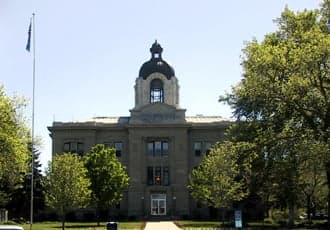
Photo: Wikipedia
Strategic Assessment of Brookings County
Strong survivability profile. Good buffer from population centers, with manageable environmental and tactical risks.
What does the Strategic Assessment tell us?
Our Strategic Assessment grades tactical survivability of an area. Major population centers, military targets, fallout zones, natural disasters, and border exposure all drive risk — lower exposure means a more defensible position in a crisis.
This is heavily inspired by Joel Skousen's Strategic Relocation book. Highly recommended you checkout the book ($)What does this tell us?
Our Strategic Assessment grades tactical survivability of an area. Major population centers, military targets, fallout zones, natural disasters, and border exposure all drive risk — lower exposure means a more defensible position in a crisis.
This is heavily inspired by Joel Skousen's Strategic Relocation book. Highly recommended you checkout the book ($)Strategic Pillars

Key Distances
Strategic Assessment Analysis
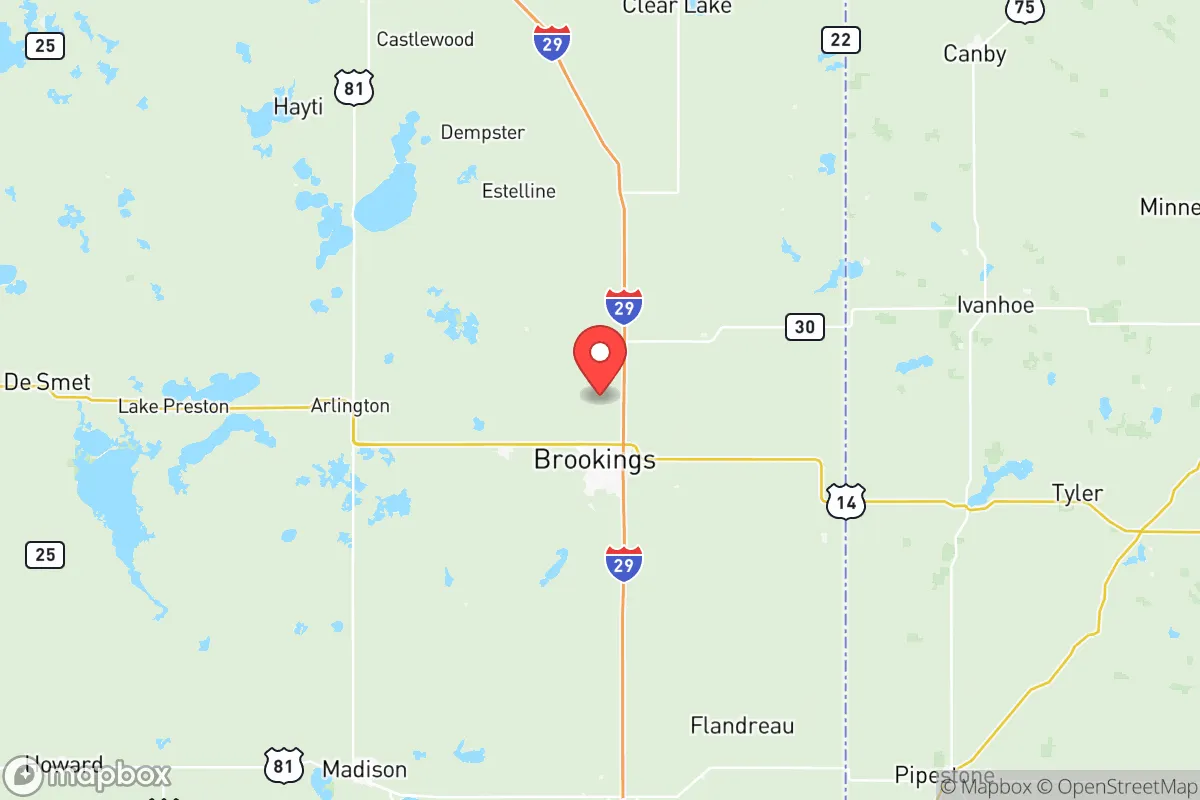
Brookings County, South Dakota, offers a compelling strategic position for those prioritizing resilience and self-sufficiency in an uncertain future. Its location along the I-29 corridor places it roughly 50 miles north of Sioux Falls and 45 miles south of Watertown, providing access to regional resources without the density and vulnerability of a major urban center. The county’s agricultural base, strong local governance, and distance from high-risk coastal zones make it a viable relocation target for conservative-minded individuals and families seeking to insulate themselves from cascading failures in larger systems. The presence of South Dakota State University in Brookings adds a layer of institutional stability, but the surrounding rural landscape is where the real strategic value lies.
Geographic position and natural advantages for long-term security
Brookings County sits in the eastern part of South Dakota, a region characterized by flat to gently rolling plains and rich topsoil. This is not mountainous terrain, but it offers distinct advantages: the county is far from any major seismic zones, hurricane-prone coastlines, or wildfire corridors. The Big Sioux River runs through the county, providing a surface water source that, while not pristine, can be treated for emergency use. The area’s cold winters and moderate summers mean less risk of heat-related infrastructure failures, though winter storms require serious preparation. The county’s position in the Upper Midwest places it well outside the fallout patterns of any plausible nuclear target—no major military bases, refineries, or ports are within 100 miles. The nearest significant military installation is Ellsworth Air Force Base near Rapid City, roughly 300 miles west, which is far enough to avoid direct fallout but close enough to be aware of broader strategic movements. For a relocator, the key natural advantage is the abundance of agricultural land and relatively low population density—roughly 34 people per square mile in the county, with the city of Brookings itself housing about 24,000 of the county’s 35,000 residents. That leaves vast stretches of open country for those who want space and defensibility.
Risks, exposures, and proximity to fallout-relevant landmarks
No location is without risk, and Brookings County has specific exposures that a strategic relocator must weigh. The most significant is the county’s reliance on the I-29 corridor for supply chains and transportation. In a crisis, this highway could become a chokepoint or a target for movement of displaced populations from Sioux Falls or even Minneapolis-St. Paul, which is about 200 miles northeast. Sioux Falls, with a metro population over 265,000, is the nearest major urban center and would be a source of potential unrest or refugee flow in a collapse scenario. The county also sits within 150 miles of the Missouri River, which hosts several hydroelectric dams and nuclear power plants—the closest being the Fort Calhoun Nuclear Station near Omaha, Nebraska, roughly 200 miles south. While that’s outside immediate fallout danger, prevailing winds from the south could carry particulate matter in a worst-case event. More locally, the county has no major industrial hazards—no refineries, chemical plants, or rail yards handling hazardous materials. The biggest man-made risk is the Brookings Municipal Airport, which could become a point of evacuation or military activity, drawing unwanted attention. For a prepper, the lack of high-value targets within the county is a net positive, but the proximity to Sioux Falls and the I-29 corridor means you need a plan for filtering incoming traffic and maintaining operational security.
Practical resilience for a relocator: food, water, energy, and defensibility
For a family or individual serious about self-sufficiency, Brookings County delivers on the basics. Food production is the county’s strongest asset: it sits in the heart of the Corn Belt, with soybeans, corn, and livestock operations dominating the landscape. A relocator with even a few acres can establish gardens, orchards, and small livestock operations with relative ease. The growing season is short—roughly 140 frost-free days—but cold-hardy crops and season extension techniques work well. Water access is generally good: the Big Sioux River and its tributaries provide surface water, and the underlying aquifer (the Sioux Falls aquifer) is deep but reliable for wells. Most rural properties in the county have private wells, which is a major resilience advantage over municipal systems. Energy infrastructure is mixed: the county is served by Xcel Energy and several rural electric cooperatives, but grid dependence is a vulnerability. Solar potential is moderate—South Dakota averages about 4.5 peak sun hours per day—and wind is abundant, making small-scale wind turbines a viable supplement. Defensibility is where the county shines for those who choose the right property. The flat terrain offers long sightlines, and the rural road network provides multiple egress routes. Neighbors in Brookings County tend to be self-reliant and community-oriented, which is a double-edged sword: you’ll find help in a crisis, but you’ll also be expected to pull your own weight. The county’s law enforcement presence is modest—the Brookings County Sheriff’s Office covers a large area with limited deputies—so personal security and neighborhood watch dynamics matter more than relying on rapid response.
The overall strategic picture for Brookings County is one of moderate but genuine resilience for a relocator with a conservative, prepper mindset. It lacks the dramatic natural defenses of mountainous regions or the isolation of the high desert, but it compensates with agricultural abundance, low population density, and distance from major target zones. The county’s biggest weakness is its position along a major transportation corridor that could funnel crisis-driven migration from Sioux Falls and points south. A savvy relocator would choose a property well off the main highways—ideally north or east of Brookings proper—and invest in deep winter preparedness, water storage, and off-grid energy. The local culture is generally aligned with conservative values of self-reliance, gun ownership, and community mutual aid, which reduces friction for newcomers who share those priorities. For a family or individual looking to build a long-term strategic position in the Upper Midwest, Brookings County is a solid, if unglamorous, choice—one that rewards preparation and punishes complacency.

* Values derived from national, state, county, city and local statistics and may differ in a specific area. Last updated: 2026-05-27T16:49:12.000Z
Narrative content on this page is AI-generated and may contain mistakes. Verify any details that matter before acting on them.
ReloMaps may earn a commission from affiliate links at no extra cost to you.

