Photo: Wikipedia
Demographics of Union County
Affluence Level in Union County
A middle-class area roughly in line with national averages across income, home values, education, and employment.
People of Union County
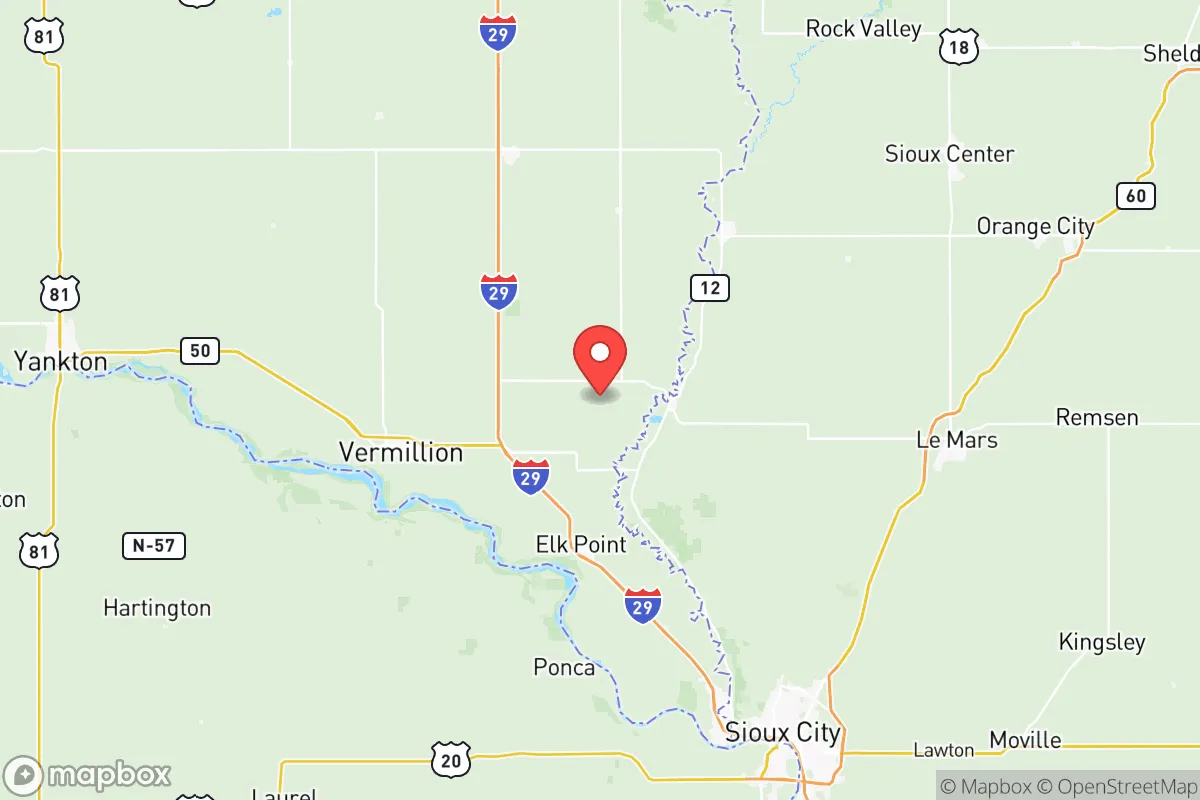
Union County, South Dakota, is a predominantly white, rural community of 16,916 residents, characterized by a strong agricultural heritage and a growing suburban influence from its proximity to Sioux City, Iowa. With 89.0% of the population identifying as white and only 1.4% foreign-born, the county retains a distinctly homogenous cultural identity rooted in its 19th-century European settlement. Its residents are slightly more educated than the state average, with 36.5% holding a college degree, and the county’s political and social leanings align with the conservative values common across southeastern South Dakota.
Settlement & growth (pre-1960)
Before American settlement, the area now known as Union County was part of the traditional territory of the Sioux (Lakota and Dakota) nations, who used the Missouri River and its tributaries for hunting and trade. The first European presence came with French fur traders in the 18th century, but no permanent European settlements were established until after the Louisiana Purchase in 1803. The U.S. government formally acquired the region, and the 1851 Treaty of Fort Laramie opened the area to American settlers.
The first major wave of settlers arrived in the 1850s and 1860s, primarily from the Upper Midwest states of Iowa, Illinois, and Wisconsin. These were largely of Yankee (English-descended) and German stock, drawn by the promise of fertile, cheap land under the Homestead Act of 1862. The county was officially organized in 1862, and the town of Elk Point was platted in 1859, quickly becoming the county seat and a commercial hub for the surrounding agricultural region. German immigrants, in particular, established strong farming communities in the townships around Alcester and Jefferson, where their descendants remain prominent today.
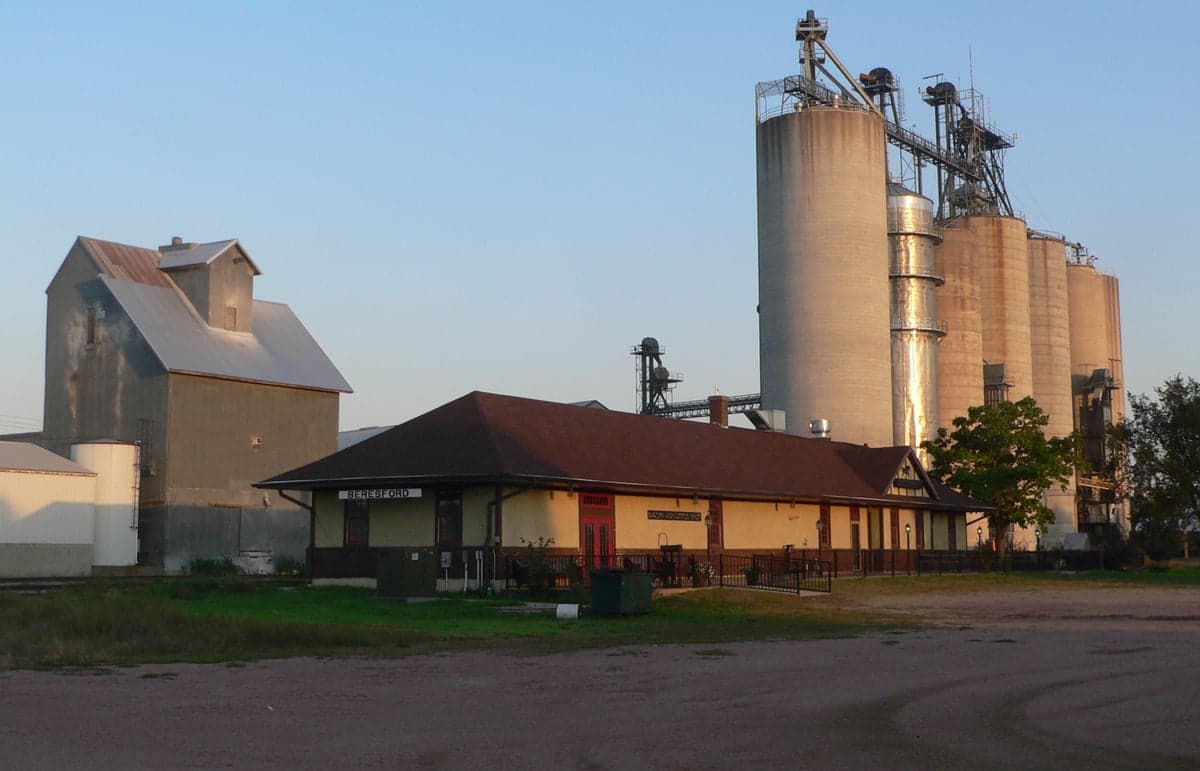
A second, smaller wave of settlement occurred in the 1870s and 1880s, as the railroad reached the area. The Chicago, St. Paul, Minneapolis & Omaha Railway built lines through the county, spurring the founding of towns like Akron, Beresford (partially in Union County), and North Sioux City. These towns attracted a mix of Scandinavian immigrants—primarily Norwegians and Swedes—who worked as railroad laborers and later as farmers. By 1900, the county’s population had reached roughly 12,000, a figure that would remain relatively stable for the next century.
The period from 1900 to 1960 saw little demographic change. The county’s economy remained dominated by corn, soybean, and livestock farming, with no major industrial or urban pull factors. The Dust Bowl and Great Depression of the 1930s caused some out-migration, but the county’s population held steady as families clung to their land. No significant new immigrant groups arrived during this era, and the county’s racial composition remained nearly 100% white.
Modern era (post-1965)
The 1965 Hart-Cellar Act, which dramatically increased immigration from Asia and Latin America, had almost no effect on Union County. The county’s foreign-born population today is just 1.4%, far below the national average. The small Hispanic population (4.4%) is the only notable minority group, and it is concentrated in North Sioux City and Elk Point, where workers have been drawn to meatpacking and food processing plants along the Missouri River corridor. These Hispanic residents are primarily of Mexican descent, with some families arriving as early as the 1990s to work at the Tyson Foods plant in nearby Dakota City, Nebraska.
The county’s East/Southeast Asian population (1.0%) and Indian subcontinent population (0.4%) are tiny and dispersed, with no visible ethnic enclaves. Most Asian residents are professionals or small business owners in Beresford and Elk Point, often associated with the county’s healthcare and education sectors. The Black population (0.8%) is similarly minimal, with most Black residents living in North Sioux City or commuting to Sioux City, Iowa, for work.
The most significant demographic shift since 1965 has been domestic: the growth of North Sioux City as a bedroom community for Sioux City, Iowa. From the 1980s onward, families seeking lower taxes, larger lots, and a rural lifestyle moved across the state line into Union County. This suburbanization has made North Sioux City the county’s largest municipality, with a population of roughly 3,000, and has driven the county’s overall growth from 12,000 in 1990 to 16,916 today. The new arrivals are overwhelmingly white, middle-class, and conservative, reinforcing the county’s existing cultural identity.
The future
Union County is likely to continue its slow, steady growth, driven by suburban expansion from Sioux City and, to a lesser extent, from Sioux Falls to the north. The county’s population is projected to reach 18,000–19,000 by 2040, with most growth concentrated in North Sioux City and along the Interstate 29 corridor. The Hispanic population is expected to grow modestly, potentially reaching 6–8% of the total, as meatpacking and construction jobs continue to attract workers. However, the county will remain overwhelmingly white and culturally homogenous.
The county is not tribalizing into distinct ethnic enclaves. Instead, it is homogenizing: new residents, whether white suburbanites or Hispanic workers, are being absorbed into the existing rural and small-town culture. There is no evidence of significant immigrant-driven cultural change, and the county’s political and social conservatism is likely to persist. The small East/Southeast Asian and Indian populations will remain niche groups, largely integrated into the professional class.
For someone moving in now, Union County offers a stable, predictable community with strong agricultural roots and a growing suburban convenience. It is not a place of rapid demographic change or cultural diversity, but rather a place where traditional Midwestern values—self-reliance, community involvement, and a slower pace of life—remain the norm. The county’s future is one of gradual, organic growth, not transformation.

* Values derived from national, state, county, city and local statistics and may differ in a specific area. Last updated: 2026-05-12T11:15:45.000Z
Narrative content on this page is AI-generated and may contain mistakes. Verify any details that matter before acting on them.
ReloMaps may earn a commission from affiliate links at no extra cost to you.

