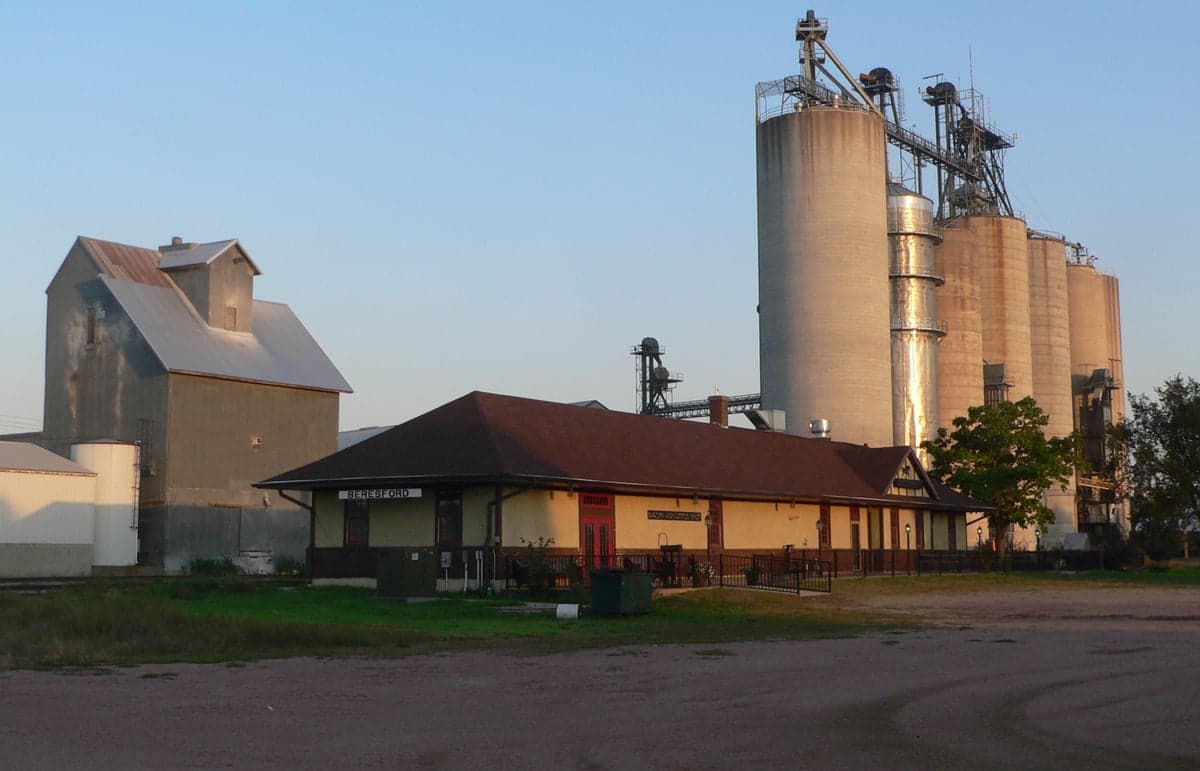
Photo: Wikipedia
Political ClimatePolitical Climate in Union County
Showing state-level results — no local-only data available.
Local Political AnalysisPolitical Analysis of Union County
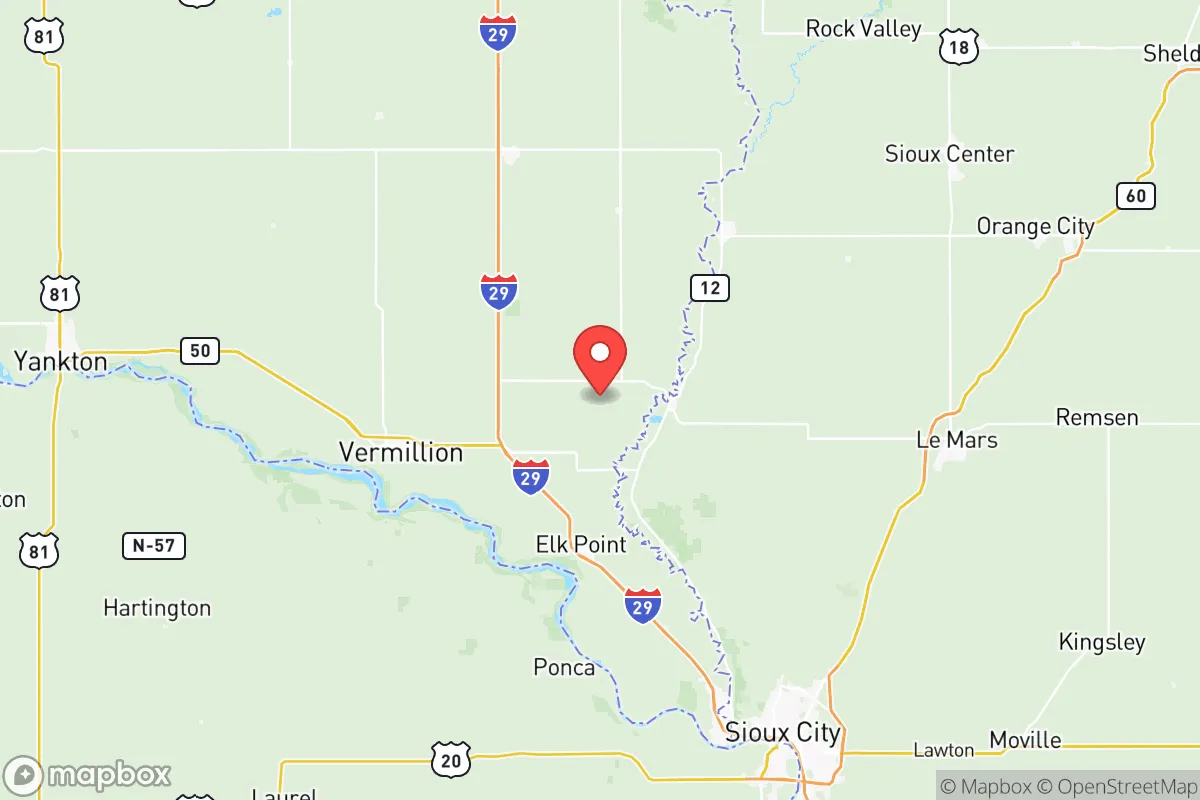
Union County, South Dakota, is a solidly conservative area with a Cook PVI of R+15, matching the state as a whole, but don’t let that uniform number fool you—there’s more nuance under the hood than you’d expect. The county has long been a Republican stronghold, but recent years have seen a subtle shift, especially in the southeastern corner near the Iowa border, where some precincts are starting to show a bit of purple. If you’re looking at the big picture, Union County still votes red by a wide margin, but the trajectory is worth watching, particularly as new folks move in from places like Sioux City or even further afield.
How it compares
Compared to the rest of South Dakota, Union County is actually a bit of a bellwether for the state’s conservative base. The state as a whole also sits at R+15, so on paper they’re identical, but the county’s politics are more influenced by its proximity to the Missouri River and the urban pull of Sioux Falls. Towns like Elk Point and Alcester are deeply red, with strong ties to agriculture and a no-nonsense, small-government mindset. Meanwhile, North Sioux City and parts of Jefferson have seen an influx of younger families and remote workers, which has nudged a few precincts toward the center—though still far from blue. The real contrast is with the state’s more rural counties like Harding or Perkins, which are even more conservative, but Union County’s mix of farming communities and growing suburban pockets gives it a unique flavor. The 2024 election saw the county vote for the Republican candidate by a comfortable margin, but the turnout in North Sioux City was notably closer than in the rest of the county, hinting at a potential shift if trends continue.
What this means for residents
For folks living here, the political climate means a lot of personal freedom and limited government overreach, which is a big reason many of us stay. You won’t see the kind of heavy-handed regulations or progressive social experiments that plague some other parts of the country. Property taxes are reasonable, gun rights are respected, and there’s a general sense that local decisions stay local. That said, the creeping influence from nearby Sioux City and the occasional wave of new residents from more liberal states is something to keep an eye on. Some of the newer developments in Beresford and Dakota Dunes have brought a slightly more progressive tilt, especially on issues like zoning and school policies. It’s not a crisis yet, but if you value the traditional way of life—where your neighbor doesn’t tell you how to live and the government stays out of your business—you’ll want to stay engaged in local elections. The county commission and school board races are where the real battles happen, and they’re still solidly conservative, but complacency isn’t a luxury we can afford.
Culturally, Union County stands apart from the rest of South Dakota in a few key ways. The influence of the Missouri River and the proximity to Iowa and Nebraska give it a bit of a tri-state feel, with more economic diversity than the ranching-heavy western counties. You’ll find a mix of family farms, small manufacturing, and a growing number of tech-adjacent businesses in the Dakota Dunes area. Policy-wise, the county has resisted the kind of statewide pushes for more centralized control, like the recent debates over land use and energy regulations. There’s a strong libertarian streak here—people want to be left alone to live their lives, and they’re wary of any government overreach, whether it comes from Pierre or Washington. If you’re considering a move, you’ll find a community that values self-reliance and common sense, but keep your ear to the ground on local issues, because the character of the place is still being shaped by who shows up and votes.

State Political ClimatePolitical Climate in South Dakota
State Political AnalysisPolitical Environment in the State
South Dakota is a deeply conservative state, with a Cook PVI of R+15 that has only hardened over the past two decades. The dominant coalition is a blend of rural traditionalists, libertarian-leaning ranchers, and a growing number of conservative refugees from the coasts. Over the last 10-20 years, the state has shifted further right, driven by an influx of people fleeing high-tax, high-regulation states and a native population that has consistently rejected progressive governance. The political center of gravity is in the eastern half, but the entire state votes red with a consistency that makes it one of the safest Republican strongholds in the nation.
Urban vs. rural divide
The political map is stark but not complicated. Sioux Falls (Minnehaha County) is the largest metro and the only real blue dot, but even there, the county votes Republican by a comfortable margin—it’s not a liberal stronghold like Denver or Austin. The city’s growth has brought some moderate Republicans and a few Democrats, but the overall lean remains conservative. Rapid City (Pennington County) is more reliably red, anchored by a strong military and ranching presence. The real action is in the rural counties: Harding County in the northwest routinely votes 90%+ Republican, while Lake County (Madison) and Brookings County (home to South Dakota State University) show a slight moderating influence from college populations, but still vote red. The Black Hills region, including Custer and Lawrence County (Spearfish), leans conservative but has a libertarian streak—more "leave me alone" than "government should enforce morality." The only place you’ll find any progressive organizing is on the Pine Ridge Reservation (Shannon County), which votes heavily Democratic, but that’s a small, isolated population with little influence on state policy.
Policy environment
South Dakota’s policy environment is a conservative dream: no state income tax, a flat property tax system, and a regulatory posture that is aggressively pro-business. The state has a right-to-work law, no mandatory paid leave mandates, and a very low minimum wage ($11.20 as of 2026, but many jobs pay above that due to labor shortages). Education policy is dominated by school choice—the state has a robust voucher-like program (the "South Dakota Education Savings Account") that lets parents use state funds for private or homeschool expenses. Healthcare is a mixed bag: the state expanded Medicaid under Trump-era waivers, but the system remains market-driven with no state-run insurance. Election laws are among the most secure in the nation: voter ID is required, same-day registration is not allowed, and mail-in voting is restricted to those with an excuse. The legislature has repeatedly rejected efforts to expand early voting or ballot harvesting. The state also has a constitutional carry law (no permit needed for concealed carry) and has passed laws protecting gun manufacturers from lawsuits. The regulatory environment is so light that many businesses report that the biggest headache is finding workers, not dealing with government red tape.
Trajectory & freedom
South Dakota is becoming more free by almost any measure, especially compared to its neighbors. In 2023, the legislature passed the "Parents’ Bill of Rights" (HB 1080), which requires schools to notify parents of any curriculum involving sexuality or gender identity and gives parents the right to opt their children out. In 2024, the state banned gender transition procedures for minors (SB 43), a move that has held up in court. On gun rights, the state passed a "Second Amendment Preservation Act" in 2021 that prohibits state enforcement of any future federal gun bans. Property rights were strengthened with a 2022 law limiting eminent domain for carbon pipelines—a direct response to the Summit Carbon Solutions project that landowners fought. Taxation has become more friendly: the legislature cut the state sales tax from 4.5% to 4.2% in 2023 and has discussed eliminating it entirely on groceries. The only area where freedom has arguably contracted is on medical autonomy: the state has a near-total abortion ban (trigger law from 2019, activated after Dobbs), with exceptions only for life of the mother. For conservatives, this is a feature, not a bug. The trajectory is clear: South Dakota is doubling down on low taxes, parental rights, and gun rights, while resisting federal overreach.
Civil unrest & political movements
South Dakota has seen remarkably little civil unrest compared to the coasts. The most visible flashpoint in recent years was the Keystone XL pipeline protests (2016-2021), which drew a mix of Native American activists and outside left-wing groups to the Rosebud Reservation area. Those protests fizzled after the pipeline was canceled. More recently, the Summit Carbon Solutions pipeline has sparked a grassroots property rights movement, with landowners in Spink County and Brown County organizing against eminent domain for CO2 pipelines. This movement is cross-ideological—libertarians and environmentalists both oppose it—but it’s been a major political force in the 2024 legislative session. On the right, the South Dakota Freedom Caucus has become a powerful faction in the legislature, pushing for further tax cuts, school choice expansion, and anti-ESG investing laws. There’s no significant left-wing protest movement; the state’s Democratic Party is so weak that it didn’t even field a candidate for governor in 2022. Immigration politics are quiet—the state has a small foreign-born population (about 4%), and there’s no sanctuary city movement. Election integrity is a settled issue: the 2020 and 2022 elections were uncontroversial, with no major fraud allegations. A new resident would notice that political activism here is mostly about property rights and local control, not culture war street protests.
Projection
Over the next 5-10 years, South Dakota will likely become even more conservative, driven by two forces: in-migration and demographic sorting. People moving from California, Illinois, and Minnesota are disproportionately conservative or libertarian—they’re fleeing high taxes and progressive policies. The Sioux Falls metro is growing at about 2% annually, and while some of those newcomers are moderate, the net effect is still a red shift. The rural counties are emptying out slowly, but the remaining population is aging and deeply conservative. The wildcard is the Native American population, which is growing faster than the white population but remains politically marginalized due to low turnout and geographic isolation. If the state ever sees a serious push for progressive policies, it would come from a coalition of tribal governments and Sioux Falls liberals, but that’s a long shot. The legislature will likely continue to cut taxes, expand school choice, and pass preemption laws to block any local progressive ordinances (like plastic bag bans or rent control). The biggest risk to freedom is federal overreach—if the EPA or ATF gets aggressive, South Dakota will likely pass more nullification-style laws. For someone moving in now, expect a state that is stable, predictable, and increasingly resistant to national trends.
Bottom line for a new resident: If you’re moving to South Dakota, you’re choosing a state that values personal responsibility, low taxes, and local control. You won’t find the culture wars of the coasts, but you will find a government that actively protects your right to own guns, educate your kids as you see fit, and keep more of your paycheck. The political climate is stable and getting more conservative—if that’s what you want, you’ll feel right at home in places like Rapid City, Sioux Falls, or Brookings. Just be prepared for long winters and a state that takes its independence seriously.
* Values derived from national, state, county, city and local statistics and may differ in a specific area. Last updated: 2026-05-12T11:15:45.000Z
Narrative content on this page is AI-generated and may contain mistakes. Verify any details that matter before acting on them.
ReloMaps may earn a commission from affiliate links at no extra cost to you.

