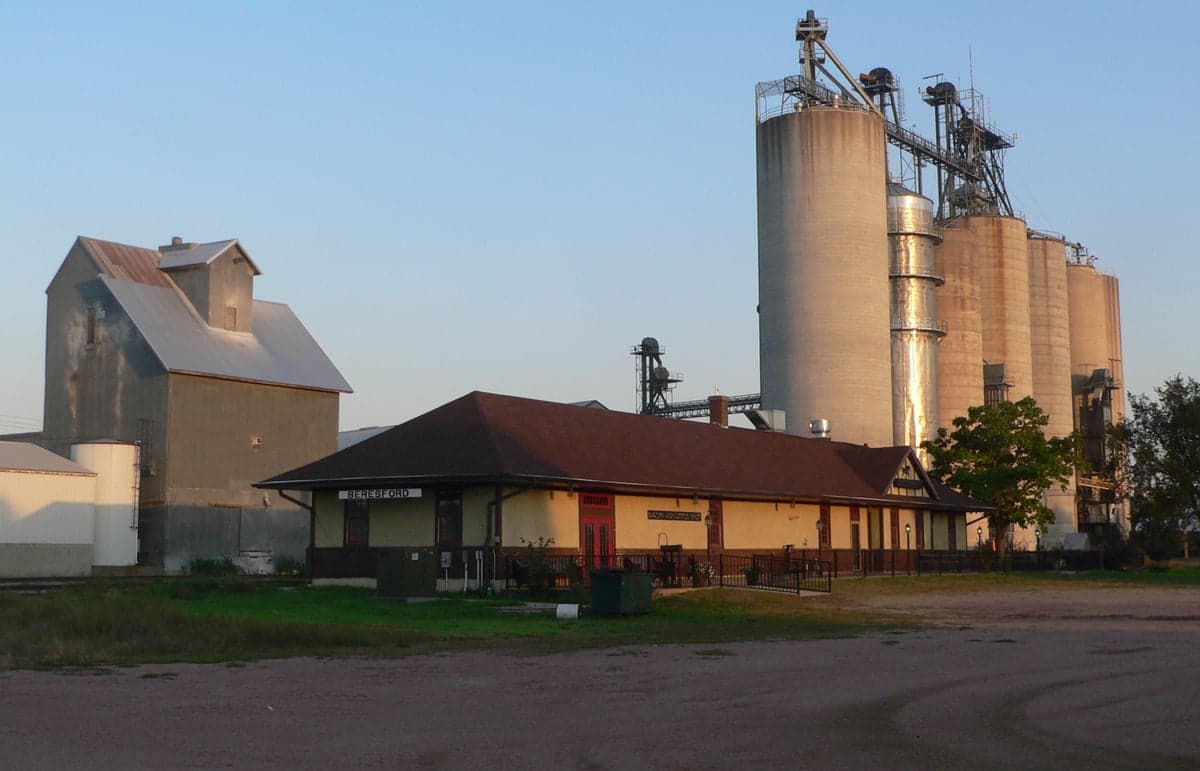
Photo: Wikipedia
Strategic Assessment of Union County
Strong survivability profile. Good buffer from population centers, with manageable environmental and tactical risks.
What does the Strategic Assessment tell us?
Our Strategic Assessment grades tactical survivability of an area. Major population centers, military targets, fallout zones, natural disasters, and border exposure all drive risk — lower exposure means a more defensible position in a crisis.
This is heavily inspired by Joel Skousen's Strategic Relocation book. Highly recommended you checkout the book ($)What does this tell us?
Our Strategic Assessment grades tactical survivability of an area. Major population centers, military targets, fallout zones, natural disasters, and border exposure all drive risk — lower exposure means a more defensible position in a crisis.
This is heavily inspired by Joel Skousen's Strategic Relocation book. Highly recommended you checkout the book ($)Strategic Pillars

Key Distances
Strategic Assessment Analysis
Union County, South Dakota, offers a strategic resilience profile that stands out in the Upper Midwest, combining low population density with proximity to critical infrastructure and natural resources. Located in the southeastern corner of the state, this county provides a buffer from major metropolitan chaos while still being within a practical distance of essential supply chains and medical facilities. For those assessing long-term security and self-sufficiency, Union County’s position along the Missouri River and its distance from high-risk coastal and urban targets make it a serious contender for relocation.
Geographic position and natural advantages for long-term security
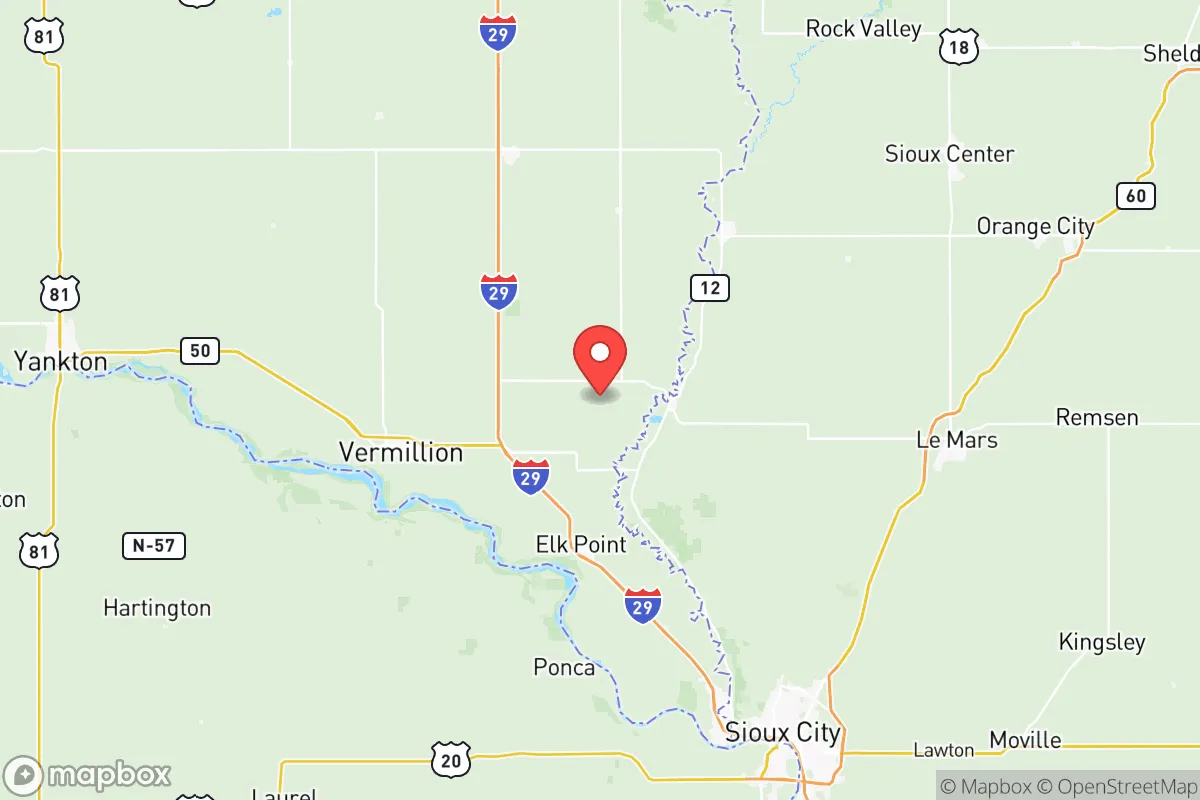
Union County sits at the intersection of the Missouri River and the Big Sioux River, giving it a dual water advantage that is rare in the Great Plains. The county seat, Elk Point, and the largest town, North Sioux City, both lie within the Missouri River floodplain, but the surrounding bluffs and rolling hills offer defensible high ground for those willing to build away from the immediate river bottom. The county’s location places it roughly 80 miles south of Sioux Falls, the state’s largest city, and about 100 miles north of Omaha, Nebraska. This distance is far enough to avoid the immediate fallout of civil unrest or a major disaster in those urban centers, yet close enough to access their hospitals, supply hubs, and transportation networks if needed. The Missouri River itself is a strategic asset—not just for water but as a natural barrier to movement from the west. The county’s agricultural land is some of the most productive in the state, with deep topsoil and reliable rainfall averaging around 26 inches per year, which supports year-round food production without heavy irrigation.
Risks, exposures, and proximity to fallout-relevant landmarks
No location is without risk, and Union County has specific exposures that a relocator must weigh. The most significant is the proximity to the Sioux City, Iowa metropolitan area, which lies just across the Missouri River to the southeast. Sioux City is a regional transportation and industrial hub, hosting a major rail yard, a port on the Missouri River, and the Sioux Gateway Airport, which also serves as an Air National Guard base. In a mass casualty event or civil unrest scenario, Sioux City could become a chokepoint for refugees or a target for disruption. The Union County Law Enforcement Center in Elk Point is a small facility, and the county’s sheriff’s office has limited personnel—roughly 10 sworn deputies for a population of about 15,000. This means that in a widespread crisis, residents would largely rely on mutual aid from neighboring counties or state resources, which could be slow to arrive. There are no major refineries or nuclear power plants within the county itself, but the Fort Calhoun Nuclear Station in Nebraska is about 60 miles southeast, and the Ponca State Park area along the Missouri River could see fallout-related traffic if that facility were compromised. The county’s rural nature also means that emergency medical services are spread thin; the nearest Level I trauma center is in Sioux Falls, a 90-minute drive from southern Union County.
Practical resilience for a relocator: food, water, energy, and defensibility
For a relocator focused on self-sufficiency, Union County delivers on the basics. Water is abundant—the Missouri River provides a surface source, and the underlying Dakota Aquifer offers reliable groundwater at depths of 100 to 300 feet. Many rural properties already have private wells, and the county’s soil drainage is good enough for rainwater catchment systems. Food production is straightforward: the county is part of the Corn Belt, with soybeans, corn, and alfalfa as primary crops. Small-scale livestock operations are common, and the Union County Farmers Market in Elk Point operates from June through October, giving newcomers a local network for seeds, tools, and knowledge. Energy resilience is a mixed bag. The county is served by MidAmerican Energy and Rural Electric Cooperative, both of which have above-ground transmission lines that are vulnerable to severe weather—ice storms and straight-line winds are the primary threats. Solar potential is good, with an average of 210 sunny days per year, and wind speeds are sufficient for small turbines. The county’s terrain is mostly open farmland with scattered woodlots, which means defensibility requires deliberate planning. Properties along the Big Sioux River bluffs or near the Spirit Mound area offer natural elevation and cover, while flat farmland is harder to secure. The Union County Sheriff’s Office does have a neighborhood watch program, but in practice, community cohesion is the real security asset—neighbors know each other, and the county’s low crime rate (violent crime is roughly 1.5 per 1,000 residents) suggests a population that is already inclined to look out for one another.
The overall strategic picture for Union County is one of balanced trade-offs. It is not a remote bunker location—it is close enough to regional cities to be affected by their problems, but far enough to avoid the worst of urban collapse. The water and agricultural advantages are genuine, and the county’s conservative, self-reliant culture aligns with a prepper mindset. The risks are manageable with proper planning: a well on a hillside property, a solar array, a root cellar, and a good relationship with neighbors in Elk Point or North Sioux City. For a single individual or a family looking to step away from the volatility of coastal or metropolitan life, Union County offers a solid foundation—not a fortress, but a place where preparation and community can make the difference.

* Values derived from national, state, county, city and local statistics and may differ in a specific area. Last updated: 2026-05-12T11:15:45.000Z
Narrative content on this page is AI-generated and may contain mistakes. Verify any details that matter before acting on them.
ReloMaps may earn a commission from affiliate links at no extra cost to you.

