
Photo: Wikipedia
Quality of Life in Walworth County
A livable area that tracks near national norms for affordability, walkability, and neighborhood health.
What does Quality of Life tell us?
Quality of Life measures an area by evaluating factors like cost of living, nearby amenities, country club access, airport proximity, socioeconomic signals and neighborhood character. For large states, this is a general average — quality of life can vary dramatically between metro areas, suburbs, and rural communities within the same state.
What does this tell us?
Quality of Life measures an area by evaluating factors like cost of living, nearby amenities, country club access, airport proximity, socioeconomic signals and neighborhood character. For large states, this is a general average — quality of life can vary dramatically between metro areas, suburbs, and rural communities within the same state.
Cost of Living
32% below national average
160%
The Real Cost of Living in Walworth County for 2026
| Tier | Individual | Family (4) |
|---|---|---|
| Survival | $15k | $29k |
| Comfortable | $27k | $39k |
| Luxury | $113k+ | $175k+ |
| Elite (Top 5%) | $132k+ | $205k+ |
Quality-of-Life Analysis
Walworth County, South Dakota, offers a quality-of-life spectrum that ranges from the modest commercial hub of Mobridge to the quiet, unincorporated prairie settlements of Akaska and Java, attracting everyone from lakeside retirees and regional healthcare workers to farmers and remote professionals seeking a low-cost, slow-paced lifestyle. The county’s character is defined by its position along the Missouri River and its vast agricultural flatlands, creating distinct living experiences within a 30-minute drive. With a cost-of-living index of 68 — 32 percent below the national average — and a median home value of $130,000, the county provides tangible financial breathing room, though the trade-off is limited urban amenities and long distances to larger cities like Aberdeen or Pierre.
Largest town(s) & population centers
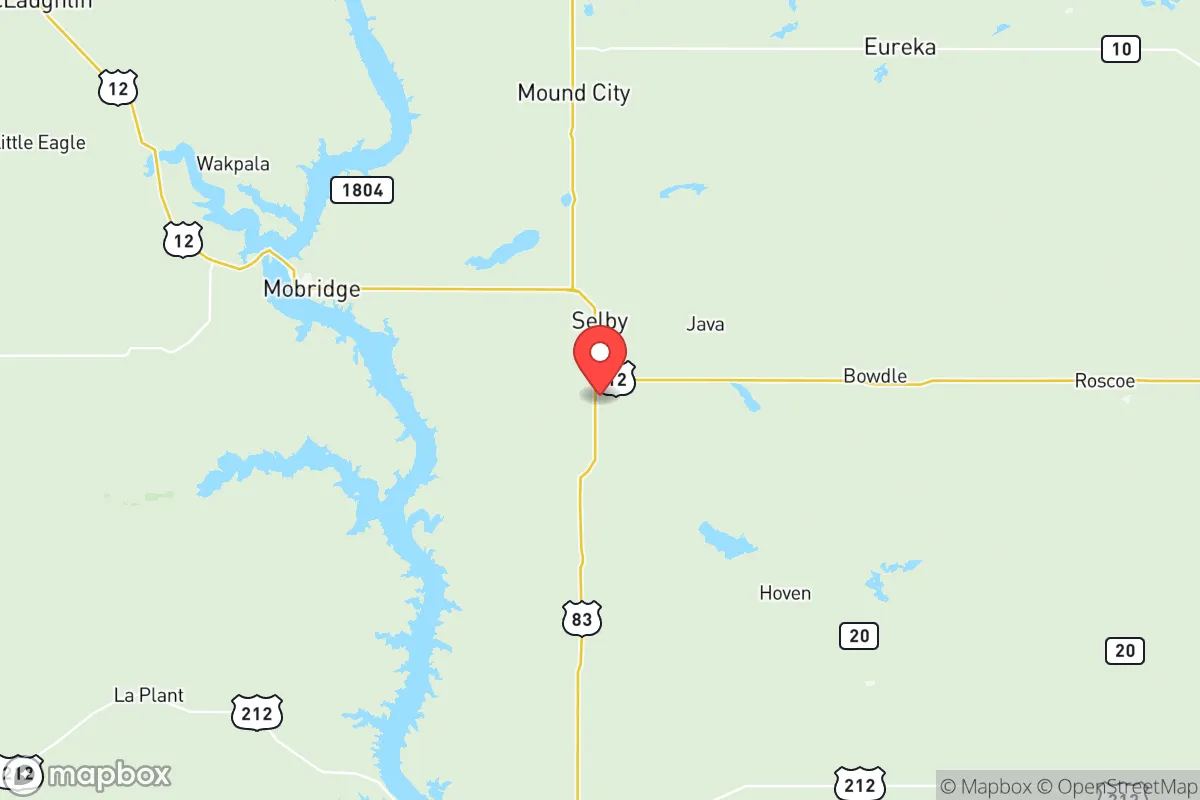
Mobridge, the county seat and largest town with roughly 3,500 residents, is the undisputed center of commerce, healthcare, and recreation. Daily life here revolves around the Missouri River — fishing, boating, and the popular Mobridge Marina draw both locals and seasonal visitors. The town hosts a regional hospital (Mobridge Regional Hospital), a Walmart Supercenter, and several chain restaurants, making it the only location in the county where residents can access most daily needs without a 45-minute drive. Housing in Mobridge is the county’s most expensive, with median home values closer to $150,000–$160,000, but still far below national averages. The community is a mix of retirees, healthcare workers, and small-business owners, with a noticeable seasonal influx of summer tourists and hunters. Selby, the second-largest town with about 650 residents, sits 15 miles east and offers a quieter alternative with a K-12 school, a grocery store, and a handful of local shops — it functions as a bedroom community for Mobridge commuters.
Smaller towns & rural pockets
Beyond the two main towns, Walworth County’s smaller communities offer a deeply rural, self-sufficient lifestyle. Akaska (population ~100) is a farming hamlet with a grain elevator and a post office, where residents typically drive 20 minutes to Mobridge for groceries or medical care. Java (population ~120) sits near the county’s eastern edge and has a small park, a church, and a volunteer fire department — its residents are almost entirely tied to agriculture or commute to Selby or Mobridge. Glenham (population ~100) lies along the Missouri River and is known for its proximity to the Glenham Dam and fishing access, attracting a handful of seasonal cabins. Unincorporated areas like Wetonka and Lowry are little more than crossroads with a few homes, where land is cheap and neighbors are few. These pockets offer the lowest housing costs in the county — vacant lots or older homes can sell for under $50,000 — but require self-reliance for services, as the nearest hospital, pharmacy, and supermarket are all in Mobridge.
Cost & lifestyle range
The cost-of-living spread across Walworth County is narrow by national standards but meaningful locally. At the high end, Mobridge offers median rents around $962 per month for a two-bedroom apartment — a figure that matches the county’s overall median rent — and home values that can reach $200,000 for riverfront properties. At the low end, rural areas like Akaska and Java see median home values closer to $80,000–$100,000, with rental options scarce but often under $700 per month for a single-family home. The lifestyle trade-off is clear: Mobridge provides walkable access to a grocery store, a clinic, and a public library, while rural residents accept longer drives in exchange for privacy, lower taxes, and acreage. Property taxes in Walworth County average about 1.1 percent of assessed value, among the lowest in the state, which keeps carrying costs low even for higher-priced homes. Utilities and transportation costs are higher in rural areas due to well water, septic systems, and longer commutes, partially offsetting the housing savings.
Walworth County is best suited for those who value affordability, outdoor recreation, and a tight-knit community over urban convenience. Retirees and remote workers with stable incomes thrive in Mobridge’s riverfront setting, while farmers, ranchers, and self-employed tradespeople find the rural pockets of Akaska, Java, and Glenham to be financially sustainable and peaceful. The county’s low cost of living and median home value of $130,000 make it accessible for first-time buyers, but the lack of public transit, limited job diversity, and harsh winters mean it is not a fit for those needing frequent access to specialized healthcare, higher education, or a vibrant social scene.

Crime in Walworth County
Generally safer than 61% of comparable U.S. locations.
Violent CrimeViolent Crime Analysis
Property CrimeProperty Crime Analysis
Crime Analysis
Walworth County, South Dakota, reports a violent crime rate of 293.3 per 100,000 residents and a property crime rate of 1,280.6 per 100,000, placing it above the national average for both categories. While the county is not among the state's most dangerous, these figures indicate a higher-than-desirable risk for residents and visitors, particularly in the county's largest town, Mobridge. The overall safety picture is mixed, with property crime being the more pressing concern, while violent incidents, though less frequent, still occur at a rate that warrants caution.
Crime in context
Walworth County's violent crime rate of 293.3 per 100,000 is roughly 20% higher than the national average of approximately 240 per 100,000. Property crime, at 1,280.6 per 100,000, exceeds the national average by about 15%. Compared to the rest of South Dakota, Walworth County's rates are elevated. For context, the statewide violent crime rate hovers around 300 per 100,000, placing Walworth slightly below that mark, but its property crime rate is notably higher than the state average of roughly 1,100 per 100,000. This suggests that while violent crime is in line with state trends, theft, burglary, and vehicle-related crimes are more prevalent here than in many other South Dakota counties. The county's rural character and limited law enforcement resources may contribute to these property crime numbers, as does its position along major transportation routes like U.S. Highway 12.
What residents experience
Residents of Walworth County most frequently encounter property crime, with theft and burglary being the primary concerns. The town of Mobridge, the county seat and largest population center, sees the highest concentration of both property and violent incidents. Smaller communities like Selby, Glenham, and Java generally report lower crime volumes, though their small populations mean that even a single incident can skew local rates. The county's judicial system, operating under the South Dakota Unified Judicial System's 5th Judicial Circuit, does not feature the progressive prosecutorial policies seen in some larger urban jurisdictions. This means that offenders in Walworth County are more likely to face traditional sentencing, which can act as a deterrent. However, the sheer geographic spread of the county—covering over 700 square miles—means that response times from law enforcement can be slow in outlying areas, leaving some properties vulnerable. Residents in unincorporated areas often rely on neighborhood watch practices and private security measures more than those in town.
Neighborhood-level variation within Walworth County is most pronounced between Mobridge and the smaller towns. In Mobridge, areas near the Missouri River and the main commercial corridor along U.S. 12 tend to see higher foot traffic and, consequently, more opportunistic property crime. Residential neighborhoods on the outskirts of Mobridge, as well as the quiet streets of Selby, typically experience fewer incidents. The county's overall crime picture is not driven by gang activity or organized crime, but rather by economic factors and substance abuse issues common to rural areas. For those considering relocation, the safest choice is likely a smaller town like Akaska or Lowry, where crime is rare, though amenities are limited. The trade-off is clear: Mobridge offers more services and employment but carries a higher crime risk, while the smaller communities provide greater security at the cost of convenience.
* Values derived from national, state, county, city and local statistics and may differ in a specific area. Last updated: 2026-05-09T19:29:46.000Z
Narrative content on this page is AI-generated and may contain mistakes. Verify any details that matter before acting on them.
ReloMaps may earn a commission from affiliate links at no extra cost to you.

