Photo: Wikipedia
Demographics of Spearfish, SD
Affluence Level in Spearfish, SD
A middle-class area roughly in line with national averages across income, home values, education, and employment.
People of Spearfish, SD
The people of Spearfish, South Dakota today number 12,551, forming a predominantly white (87.1%) and highly educated (43.6% college-educated) community with a distinctly low foreign-born share of just 0.8%. The city’s identity is shaped by its role as a regional education and healthcare hub, anchored by Black Hills State University, and by a population that is notably younger and more transient than the surrounding rural areas. Spearfish’s character is one of a tight-knit, family-oriented college town where outdoor recreation and conservative values blend, with a demographic profile that has remained remarkably stable over recent decades.
How the city was settled and grew
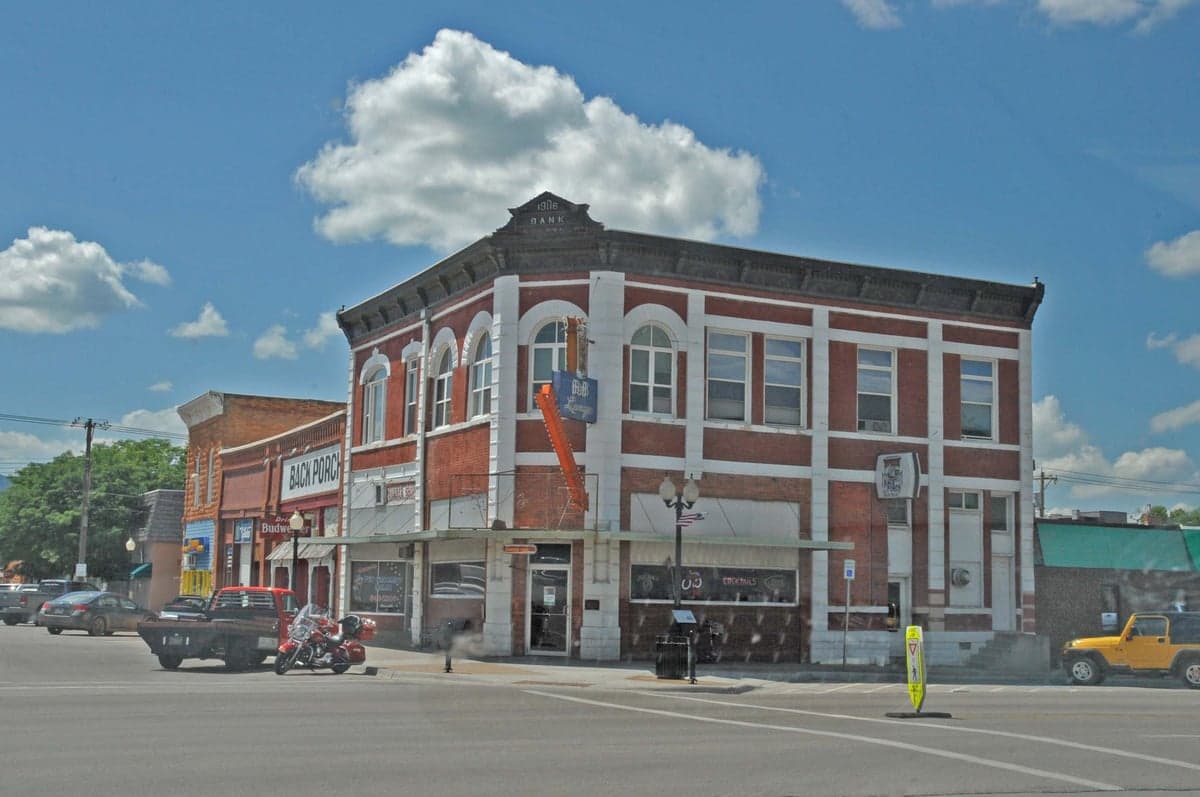
Spearfish’s original population was drawn by the 1876 Black Hills gold rush, but unlike the boomtowns of Deadwood and Lead, Spearfish developed as an agricultural service center. The first permanent settlers, primarily of Northern European (German, Scandinavian, and British) stock, arrived via the Spearfish Valley in the late 1870s and 1880s, establishing homesteads along Spearfish Creek. The founding of the Spearfish Normal School (now Black Hills State University) in 1883 shifted the town’s trajectory from farming to education, attracting a wave of teachers, administrators, and their families. The historic Downtown Spearfish district, centered on Main Street, was built by these early merchant and professional classes, with many original sandstone buildings still standing. The West Side neighborhood, west of the creek, developed as the residential area for university faculty and the town’s professional elite in the early 1900s, while East Side, east of the creek and closer to the railroad, housed the working-class families employed in the lumber mills and the nearby Homestake Mine in Lead. The city’s population grew slowly but steadily through the mid-20th century, reaching roughly 4,000 by 1950, with the university and the Veterans Administration hospital (opened 1934) as the primary economic anchors.
Modern era (post-1965)
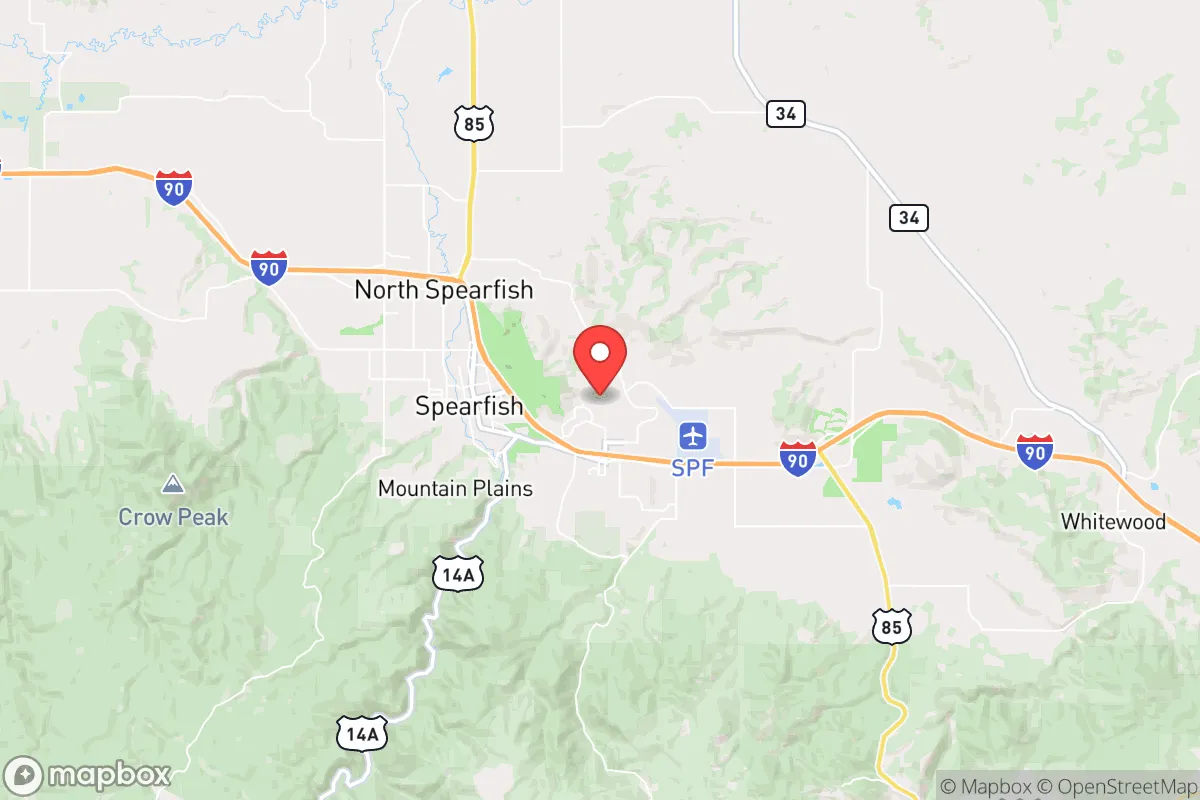
After the 1965 Hart-Cellar Act, Spearfish saw virtually no impact from new immigration, as the city’s remote location and lack of industrial jobs offered little draw for foreign-born populations. The foreign-born share today (0.8%) is among the lowest in the nation. Instead, the modern era has been defined by domestic in-migration from other parts of South Dakota and the upper Midwest. The expansion of Black Hills State University in the 1970s and 1980s brought a steady stream of students and faculty, many of whom stayed after graduation, contributing to the city’s high college attainment rate. The North Spearfish area, along Highway 85, saw the most suburban-style growth from the 1990s onward, with new subdivisions like Spearfish Valley Ranches attracting families and retirees from Rapid City and out of state. The South Canyon neighborhood, near the mouth of Spearfish Canyon, became a magnet for second-home buyers and outdoor enthusiasts. The Hispanic population, at 3.1%, is the largest minority group, concentrated in the East Side and North Spearfish areas, largely working in construction, hospitality, and agriculture. The East/Southeast Asian population (0.5%) is almost entirely tied to the university, with faculty and international students living near campus. The Black population (0.4%) and Indian subcontinent population (0.0%) are negligible.
The future
Spearfish’s population is projected to continue slow, steady growth, driven by domestic migration from retirees and remote workers seeking a lower cost of living and outdoor lifestyle. The city is not homogenizing into a single identity but rather developing distinct enclaves: Downtown is becoming more of a tourist and student-oriented district, North Spearfish is solidifying as the family and commuter suburb, and the West Side remains the established professional core. The immigrant communities are not growing; the foreign-born share has plateaued at under 1% for decades. The Hispanic population may see modest growth through natural increase and continued labor demand, but it will remain a small minority. The university’s role as a demographic engine will likely continue, but with declining enrollment trends nationwide, Spearfish may see a slight aging of its population over the next 10-20 years. The city is not tribalizing along racial lines, as the population is overwhelmingly white, but economic stratification is emerging between the university-adjacent professionals and the service-sector workforce.
For a conservative-leaning individual or family moving to Spearfish today, the city offers a stable, safe, and culturally homogeneous environment with strong educational infrastructure and a growing economy. The population is becoming slightly more diverse in age and income but remains one of the least ethnically diverse cities in the United States. The next decade will likely see continued suburban-style expansion in North Spearfish, a modest influx of remote workers, and a gradual shift toward a more retirement-oriented demographic, while the core identity as a conservative, family-friendly college town endures.

* Values derived from national, state, county, city and local statistics and may differ in a specific area. Last updated: 2026-04-30T18:33:59.000Z
Narrative content on this page is AI-generated and may contain mistakes. Verify any details that matter before acting on them.
ReloMaps may earn a commission from affiliate links at no extra cost to you.

