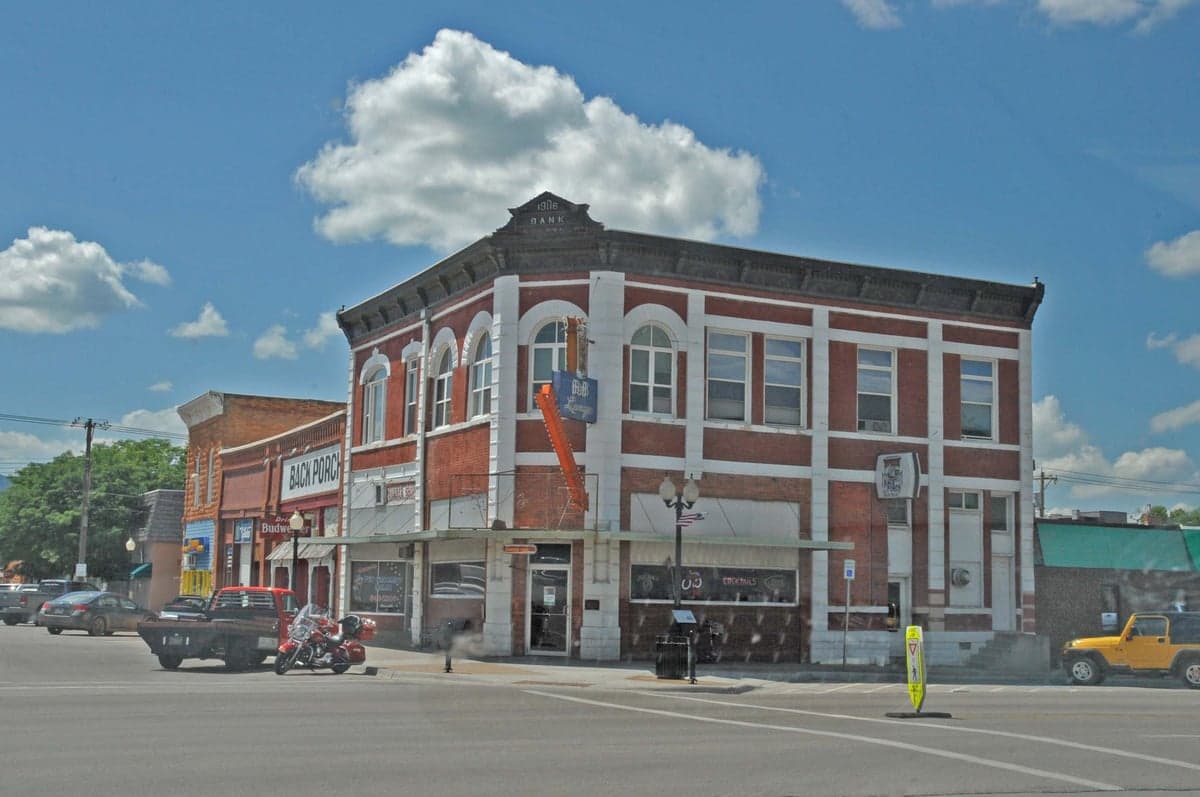
Photo: Wikipedia
Political ClimatePolitical Climate in Spearfish, SD
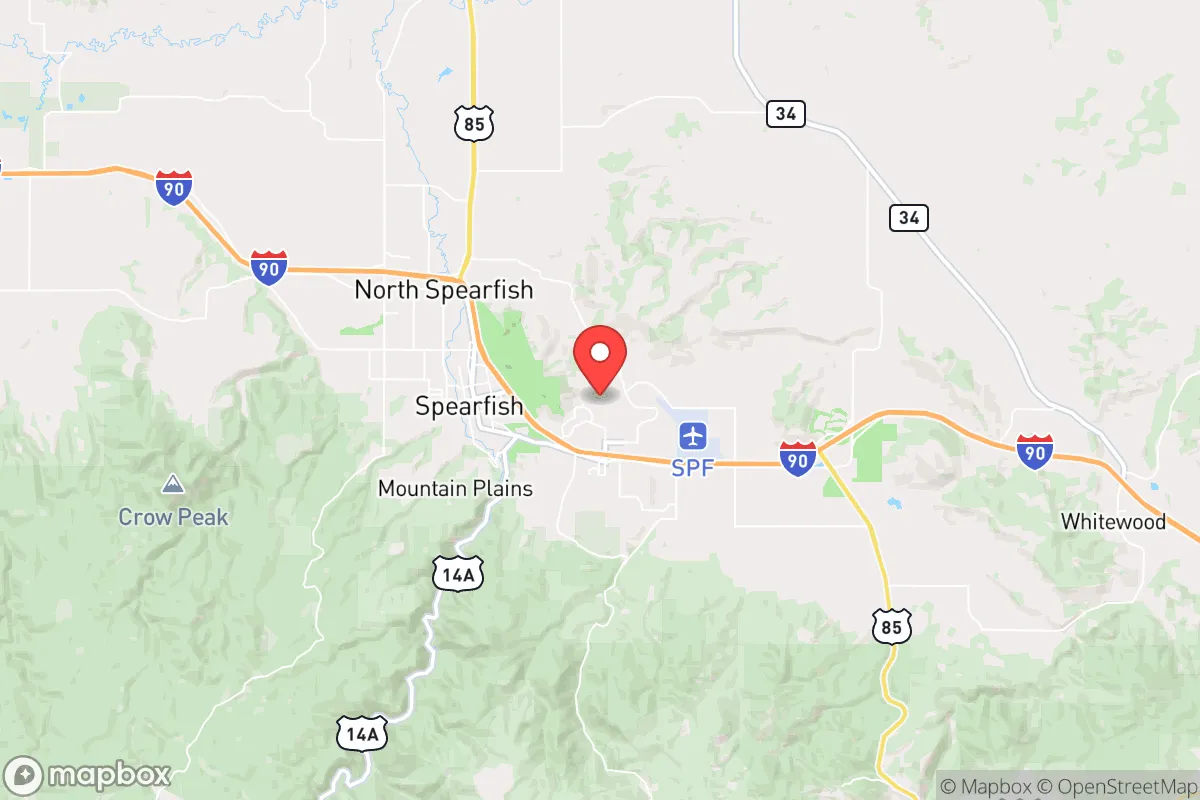
District shown is the primary district for this city’s centroid. Cities may span multiple districts.
Inherited from parent state — no local data available.
Local Political AnalysisPolitical Analysis of Spearfish, SD
Spearfish has long been a solidly conservative community, and that hasn't changed much on the surface. The Cook PVI of R+15 tells you the math: this area votes Republican by a comfortable margin, and it has for decades. But if you've lived here as long as I have, you notice the undertow. The real story isn't the election results—it's how the political culture is shifting beneath that red veneer, and what that means for folks who value personal freedom and limited government.
How it compares
Drive twenty minutes south to Deadwood or Lead, and you'll find a similar conservative bent, though Lead has a few more union households from the mining days that can swing a local election. Head east to Sturgis, and it's even more libertarian-leaning—people there really don't like being told what to do. The real contrast is west, toward Belle Fourche or up into Wyoming. Those areas are still the old-school, leave-me-alone kind of conservative. Spearfish, being a college town with Black Hills State University, has a younger, more transient population that brings in progressive ideas you just don't see in the surrounding ranch country. That's where the tension lives. The city council and county commission are still solidly conservative, but you'll see more "Black Lives Matter" signs in yards near campus than you would have ten years ago, and that's a red flag for anyone who thinks local government should stay out of our personal lives.
What this means for residents
For the average family here, the political climate still feels pretty safe. Property taxes are low, zoning is minimal, and you can build a shed on your land without three layers of permits. But there's a creeping concern. The city has started talking about "complete streets" and "equity" in planning documents—language that usually leads to more regulations, not fewer. The school board has had some heated meetings about curriculum, with a small but vocal group pushing for diversity, equity, and inclusion initiatives that sound an awful lot like government overreach into what your kids are taught. So far, common sense has held the line, but you have to stay engaged. If you're moving here for the freedom, you need to know that freedom isn't automatic—it has to be defended at every school board and city council meeting.
The biggest cultural distinction in Spearfish is the tension between the old-timers who remember when you could shoot a coyote in your backyard and the newcomers from California and Colorado who want bike lanes and farmers markets. That's not to say those things are bad—the farmers market is great—but the underlying philosophy matters. The newcomers often bring a "we know better" attitude that leads to more rules, more fees, and more oversight. If that trend continues, Spearfish could slowly become a place where personal rights are secondary to government planning. For now, it's still a great place to raise a family if you value your privacy and your guns. But keep an eye on the city council agenda. The fight for freedom here is quiet, but it's real.

State Political ClimatePolitical Climate in South Dakota
State Political AnalysisPolitical Environment in the State
South Dakota is one of the most reliably conservative states in the Union, with a Republican trifecta that has held firm for decades. The state voted for Donald Trump by a massive 30-point margin in 2024, and every statewide elected office is held by a Republican. Over the past 20 years, the GOP has only grown stronger here, driven by a rural, agricultural base that values limited government, gun rights, and traditional social values. The state’s small population and low diversity mean there’s little pressure to shift left, though the growing presence of remote workers and retirees from blue states is beginning to stir subtle changes in a few pockets.
Urban vs. rural divide
The political map is stark: the vast, sparsely populated western half of the state is deep red, while the eastern corridor—anchored by Sioux Falls and Rapid City—shows a slight purple tinge. Sioux Falls, the state’s largest city, is a growing economic hub that leans Republican but with a noticeable moderate streak; its suburbs like Harrisburg and Tea are solidly conservative, while the downtown core has a small but vocal progressive presence. Rapid City, the second-largest metro, is more reliably red, driven by a strong military and tourism economy. The rural counties—think Harding County in the northwest or Tripp County in the south—routinely vote 80%+ Republican. The only real exception is Brookings, home to South Dakota State University, which occasionally flips to Democrats in local races due to the academic population. But even there, the surrounding county is deeply conservative. The divide isn’t about ideology as much as density: the fewer people per square mile, the redder the vote.
Policy environment
South Dakota’s policy environment is a conservative dream. There is no state income tax, and the sales tax is a modest 4.5%, with local options adding maybe 2% more. Property taxes are low by national standards, and the state has a right-to-work law that keeps unions weak. The regulatory climate is business-friendly, with minimal red tape for startups and small farms. On education, the state passed a robust school choice law in 2024, allowing Education Savings Accounts for families who want alternatives to public schools. Healthcare is a mixed bag: the state did expand Medicaid under Trump-era waivers, but it’s administered with a conservative bent, and there’s a strong network of faith-based clinics. Election laws are among the most secure in the nation—voter ID is required, no-excuse absentee voting is limited, and the state has resisted mail-in ballot expansions. The legislature is currently debating a bill to ban ranked-choice voting outright. For a conservative, this is a state that actively protects its values through policy.
Trajectory & freedom
If anything, South Dakota is becoming more free, especially on the cultural front. In 2023, Governor Kristi Noem signed a package of bills that expanded gun rights—constitutional carry was already law, but new legislation removed permit requirements for concealed carry and preempted local gun ordinances. The state also passed a Parental Bill of Rights in 2022, requiring schools to notify parents about curriculum changes and medical services. On medical freedom, South Dakota banned COVID-19 vaccine mandates for state employees and private businesses, and in 2024, it passed a law prohibiting mRNA vaccine mandates entirely. Property rights are strong, with no statewide zoning and minimal eminent domain abuse. The only area where freedom has contracted is on abortion: after the Dobbs decision, the state enacted a near-total ban with exceptions only for life of the mother, and a 2024 law added civil liability for anyone who helps a minor cross state lines for the procedure. For a conservative, this is a state that is actively expanding personal liberty while protecting traditional values.
Civil unrest & political movements
South Dakota is remarkably stable. There have been no major protests or riots in recent memory—the 2020 BLM demonstrations in Sioux Falls drew maybe 200 people and fizzled quickly. The most visible political movement is the Wounded Knee activism on the Pine Ridge Reservation, which occasionally flares up over land rights and tribal sovereignty, but it’s localized and doesn’t affect daily life for most residents. On the right, the South Dakota Freedom Caucus has been a powerful force in the legislature, pushing for further tax cuts, school choice, and election integrity measures. There’s a growing secessionist sentiment in the western counties—some ranchers in Meade County have floated the idea of joining Wyoming or forming a separate state, but it’s mostly talk. Immigration is a non-issue here; the state has no sanctuary policies, and the small immigrant population is largely legal and integrated. A new resident would find a place where politics is discussed at the dinner table, not in the streets.
Projection
Over the next 5-10 years, South Dakota will likely stay deeply conservative, but with a few cracks forming. The biggest wildcard is in-migration: Sioux Falls is growing fast, attracting remote workers from California and New York who bring higher incomes but also more moderate politics. If that trend continues, the city could shift left in local races, but the state legislature is gerrymandered to favor rural areas, so the overall conservative majority is safe. The aging farm population is a concern—younger people are leaving rural counties, which could reduce the GOP’s rural base. But the state is also attracting conservative retirees to places like Spearfish and Custer, who are drawn by low taxes and mountain views. The biggest threat to freedom would be if the state ever adopts a sales tax on services or a property tax increase to fund growing infrastructure needs—but so far, the legislature has resisted. Expect more school choice expansion, further gun rights protections, and a continued resistance to federal overreach.
For a conservative moving here, the bottom line is simple: South Dakota is one of the last places where you can live without the state breathing down your neck. You’ll pay no income tax, carry a gun without a permit, send your kids to a school that respects your values, and live in a community where your neighbor’s business is your neighbor’s business. The trade-off is that you’re in a sparsely populated state with harsh winters and limited amenities—but for those who value freedom over convenience, it’s a trade worth making. Just keep an eye on Sioux Falls; that’s where the future will be decided.
* Values derived from national, state, county, city and local statistics and may differ in a specific area. Last updated: 2026-04-30T18:33:59.000Z
Narrative content on this page is AI-generated and may contain mistakes. Verify any details that matter before acting on them.
ReloMaps may earn a commission from affiliate links at no extra cost to you.

