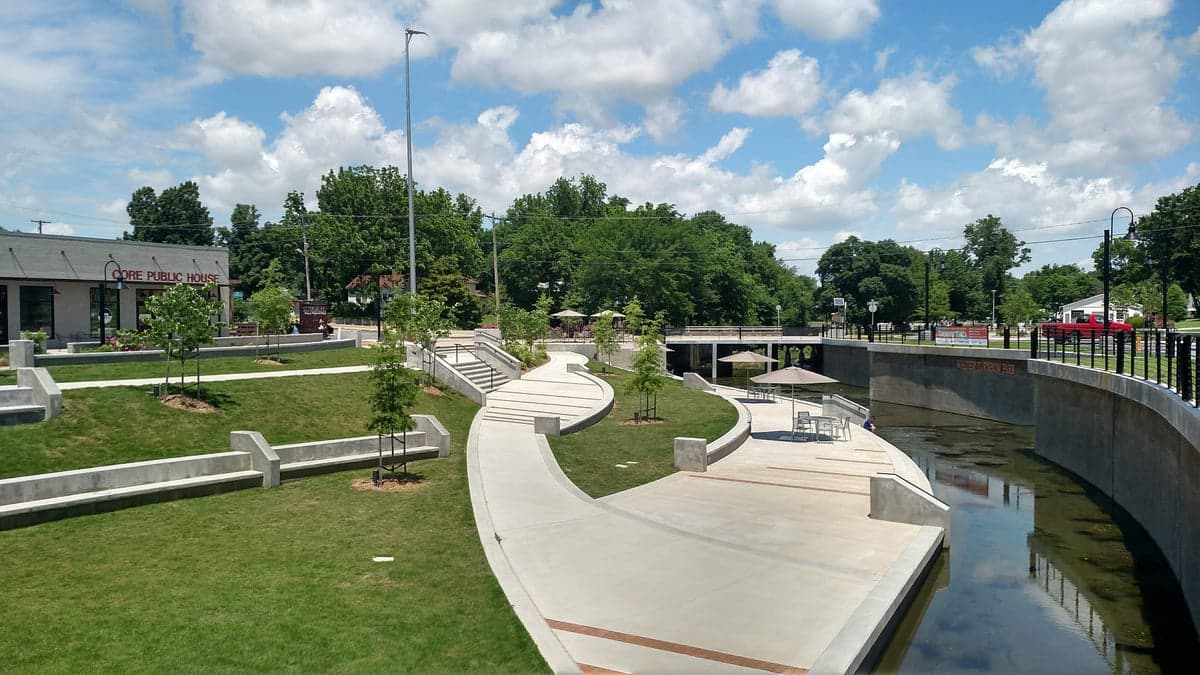
Photo: Wikipedia
Quality of Life in Springdale, AR
A high quality of life with strong walkability, manageable living costs, healthy neighborhood signals, and solid amenity access.
What does Quality of Life tell us?
Quality of Life blends cost of living, nearby amenities, socioeconomic signals, and neighborhood character. City-level scores represent the whole municipality; individual neighborhoods can differ.
What does this tell us?
Quality of Life blends cost of living, nearby amenities, socioeconomic signals, and neighborhood character. City-level scores represent the whole municipality; individual neighborhoods can differ.
Cost of Living
14% below national average
The Real Cost of Living in Springdale, AR for 2026
| Tier | Individual | Family (4) |
|---|---|---|
| Survival | $16k | $30k |
| Comfortable | $46k | $68k |
| Luxury | $119k+ | $185k+ |
| Elite (Top 5%) | $153k+ | $237k+ |
97%
The Area Signal
A metric tracking the socioeconomic signals of the area.
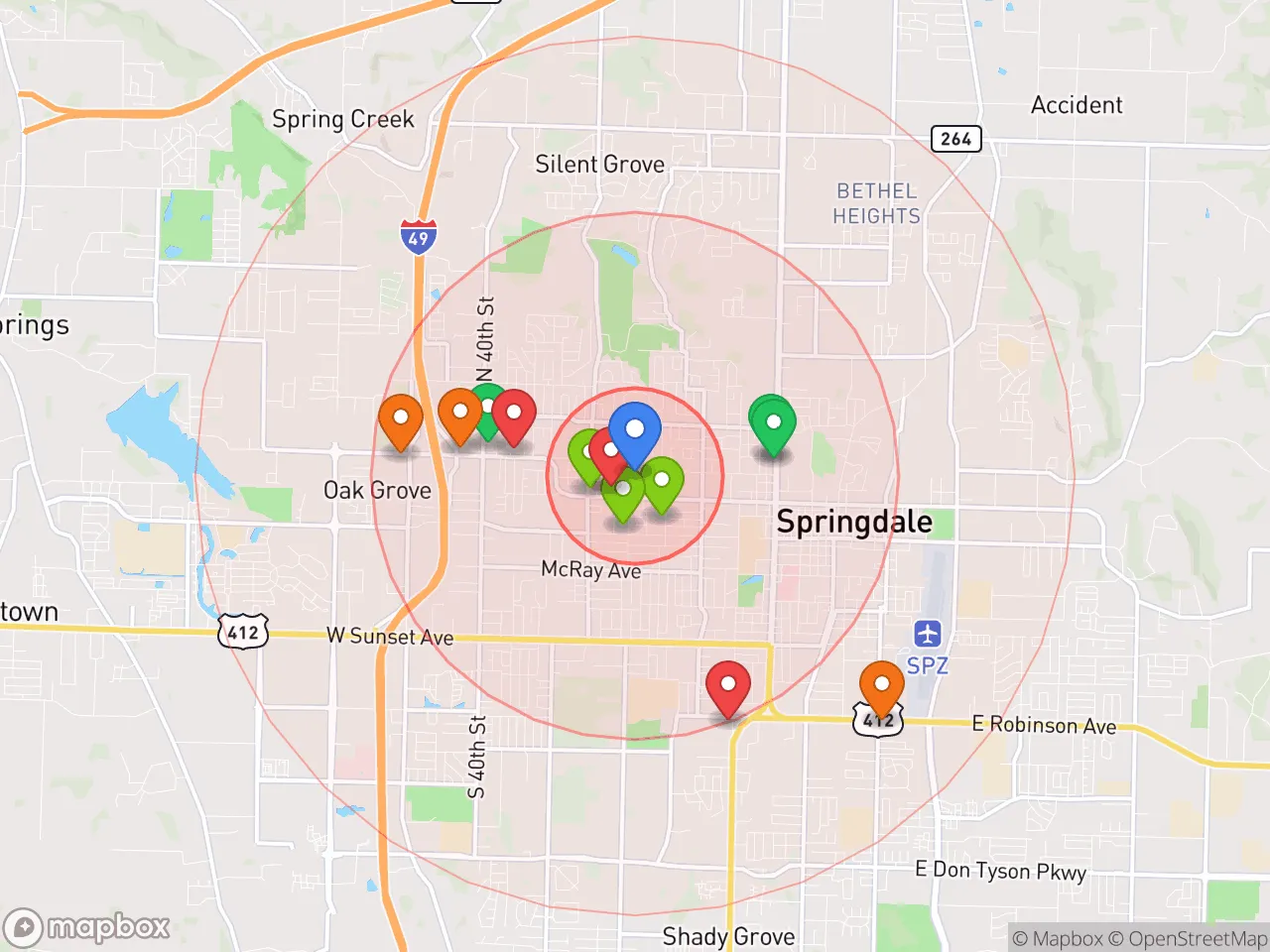
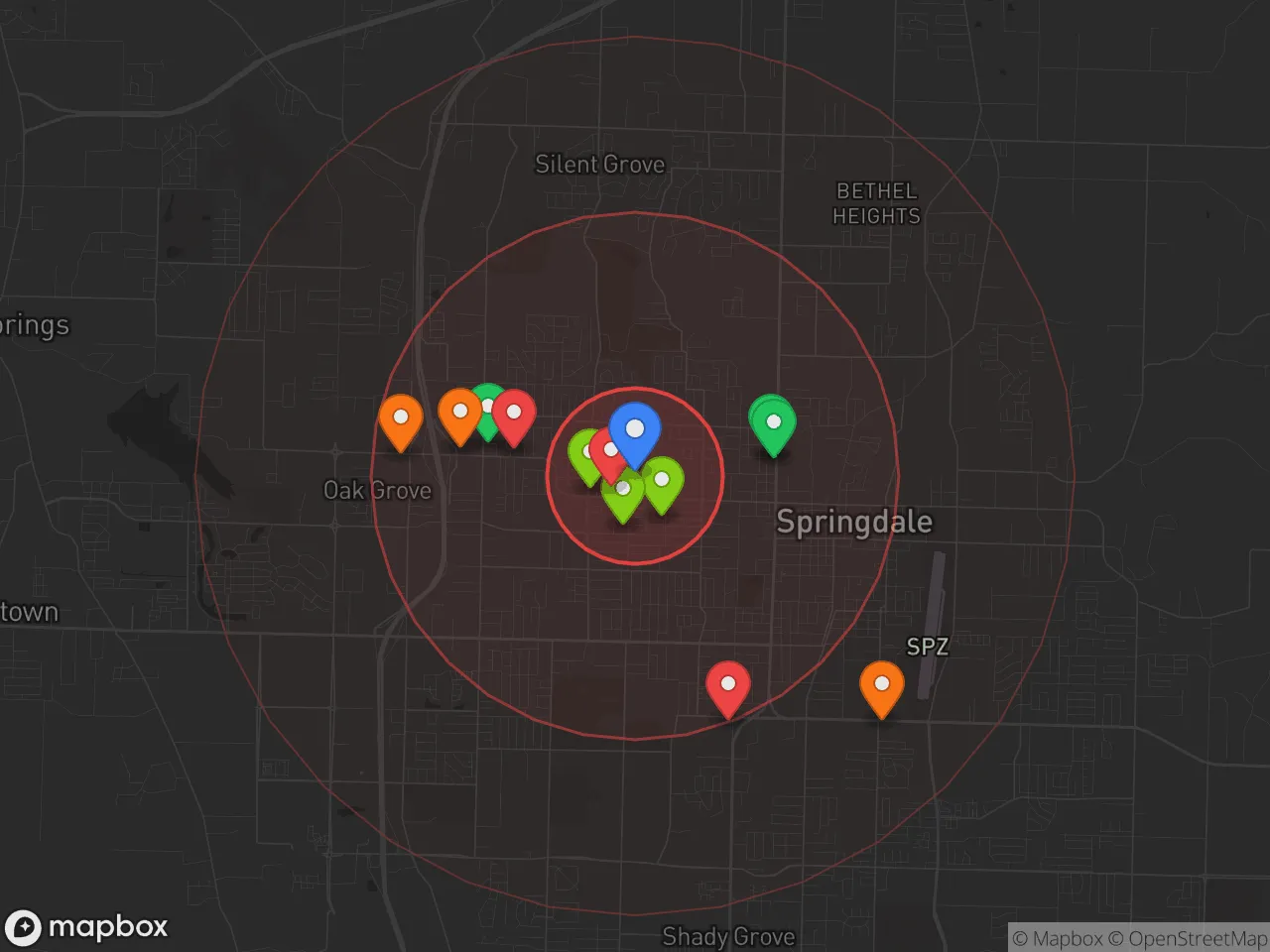
Hobbies
Explore the areaGroceries
6 within 10 miles
Gas
20 within 10 miles
Hospital
16 within 20 miles
Airport
MCI — Kansas City International
Post Office
USPS — Springdale, AR
Critical Amenities
Quality-of-Life Analysis
Springdale, Arkansas, offers a quality of life defined by solid middle-class affordability and a family-oriented atmosphere, with a cost of living index of 86 (14% below the U.S. average) that attracts a mix of young families, manufacturing workers, and professionals priced out of nearby Fayetteville. The city’s population skews younger and more diverse than the state average, driven by a strong job market anchored by Tyson Foods’ global headquarters and a growing logistics sector. While not as affluent as neighboring Bentonville, Springdale provides a practical, less-pretentious alternative for those who want Northwest Arkansas’s economic opportunities without the premium price tag.
Cost of living and housing affordability compared to Fayetteville and Bentonville
Springdale’s housing market is the most accessible among the region’s major cities, with a median home value of $237,200 and a median rent of $1,008 — roughly 15-20% cheaper than comparable properties in Bentonville or Fayetteville. The cost of living index of 86 means everyday expenses like groceries, utilities, and transportation all run below the national baseline, stretching a typical household income further than in most U.S. metro areas. The average commute of 19 minutes is notably short for a metro of 600,000+, largely because major employers like Tyson Foods, George’s Inc., and dozens of manufacturing plants are located within the city limits or along the I-49 corridor. Property taxes remain low by national standards (roughly 0.6% of assessed value), and Arkansas has no state-level property tax on vehicles or inventory, which keeps recurring costs manageable for homeowners and small business owners alike.
Everyday amenities, schools, and the daily rhythm of life
Daily life in Springdale revolves around a mix of practical amenities and outdoor recreation. The city’s school system, Springdale Public Schools, is the largest in Arkansas by enrollment and offers several magnet programs, including the Don Tyson School of Innovation (a STEM-focused campus) and the Springdale High School International Baccalaureate program. For families, the Jones Center provides a massive community recreation facility with an ice rink, indoor track, and swimming pool at subsidized rates. The Razorback Greenway, a 40-mile paved trail system, runs through Springdale and connects cyclists and pedestrians to Fayetteville, Rogers, and Bentonville without needing a car. Dining leans heavily toward Mexican and Central American cuisine — Springdale has one of the highest Hispanic population percentages in the state — with standout spots like El Pato and Taqueria Don Güero reflecting the city’s working-class roots. The weekday rhythm is early: most manufacturing shifts start by 6 a.m., and the downtown area (centered around Emma Avenue) sees a steady lunch crowd but quiets down by 8 p.m., making it a calm, low-key environment for raising children or saving money.
Springdale is best suited for families, first-time homebuyers, and workers in manufacturing, logistics, or food processing who want Northwest Arkansas’s job market without the high housing costs of Bentonville or the student-heavy vibe of Fayetteville. Retirees on fixed incomes also find the low cost of living and short commutes appealing, though those seeking high-end dining, luxury retail, or a vibrant nightlife will likely prefer neighboring cities. For anyone prioritizing financial stability, a reasonable commute, and access to solid public schools, Springdale delivers a quality of life that is both practical and undervalued relative to the region’s more famous suburbs.

Crime in Springdale, AR
Generally safer than 56% of comparable U.S. locations.
Violent CrimeViolent Crime Analysis
Property CrimeProperty Crime Analysis
Crime Analysis
Springdale, Arkansas, reports a violent crime rate of 515 incidents per 100,000 residents and a property crime rate of 1,349.4 per 100,000, placing it above both the state and national averages for overall crime. As part of the fast-growing Northwest Arkansas metro area, the city faces public safety challenges that are compounded by the region's progressive judicial policies, which prioritize offender rehabilitation over strict enforcement. This combination of elevated crime statistics and a lenient justice system creates a heightened risk environment for residents and businesses alike.
Crime in context
Springdale's violent crime rate is roughly 47% higher than the national average of approximately 350 per 100,000, while its property crime rate exceeds the U.S. median by about 25%. Compared to Arkansas as a whole, which reported a violent crime rate of roughly 470 per 100,000 in recent years, Springdale is also above the state figure. The city's proximity to larger metro hubs like Fayetteville and Rogers means that regional crime patterns—including drug trafficking and property theft—flow through Springdale. However, the most significant contextual factor is the judicial philosophy in Washington County and the broader Northwest Arkansas corridor, where progressive district attorneys and judges have adopted policies such as reduced cash bail, diversion programs for repeat offenders, and sentencing guidelines that emphasize alternatives to incarceration. These approaches, while well-intentioned, have been linked to higher recidivism rates and a revolving-door effect for property and violent offenders, directly undermining public safety.
What residents experience
For Springdale residents, the daily reality involves a tangible risk of both violent and property crime. The violent crime rate of 515 per 100,000 translates to roughly one violent incident per 194 residents annually, with aggravated assault making up the majority of cases. Property crime—at 1,349.4 per 100,000—means residents face a roughly 1 in 74 chance of experiencing burglary, theft, or motor vehicle theft each year. Auto theft and package theft are particularly common in apartment complexes and neighborhoods near major retail corridors like Thompson Street and Sunset Avenue. The progressive justice system's emphasis on "restorative justice" and reduced incarceration means that many property offenders are back on the street within days, creating a cycle of repeat victimization for residents in affected areas. Business owners report frequent shoplifting and vandalism, with police response times stretched thin due to the volume of calls.
Neighborhood-level variation is significant in Springdale. Areas west of Interstate 49, including newer subdivisions near the Arkansas Children's Hospital Northwest campus, tend to have lower crime rates, while older neighborhoods east of the interstate—particularly around downtown and the historic district—see higher concentrations of both violent and property offenses. The city's most crime-prone zones are along the Highway 412 corridor and near the Springdale High School area, where gang activity and drug-related incidents are more common. Prospective residents should research specific block-level data through the Springdale Police Department's online crime map and consider that the progressive judicial environment means even "safe" neighborhoods are not insulated from regional crime trends.
* Values derived from national, state, county, city and local statistics and may differ in a specific area. Last updated: 2026-04-29T19:14:58.000Z
Narrative content on this page is AI-generated and may contain mistakes. Verify any details that matter before acting on them.
ReloMaps may earn a commission from affiliate links at no extra cost to you.

