Quality of Life in St Albans, WV
Above-average quality of iife. The area offers a reasonable cost of living, decent mobility, and a mix of neighborhood amenities.
What does Quality of Life tell us?
Quality of Life blends cost of living, nearby amenities, socioeconomic signals, and neighborhood character. City-level scores represent the whole municipality; individual neighborhoods can differ.
What does this tell us?
Quality of Life blends cost of living, nearby amenities, socioeconomic signals, and neighborhood character. City-level scores represent the whole municipality; individual neighborhoods can differ.
Cost of Living
35% below national average
The Real Cost of Living in St Albans, WV for 2026
| Tier | Individual | Family (4) |
|---|---|---|
| Survival | $14k | $27k |
| Comfortable | $26k | $38k |
| Luxury | $91k+ | $141k+ |
| Elite (Top 5%) | $107k+ | $166k+ |
156%
The Area Signal
A metric tracking the socioeconomic signals of the area.
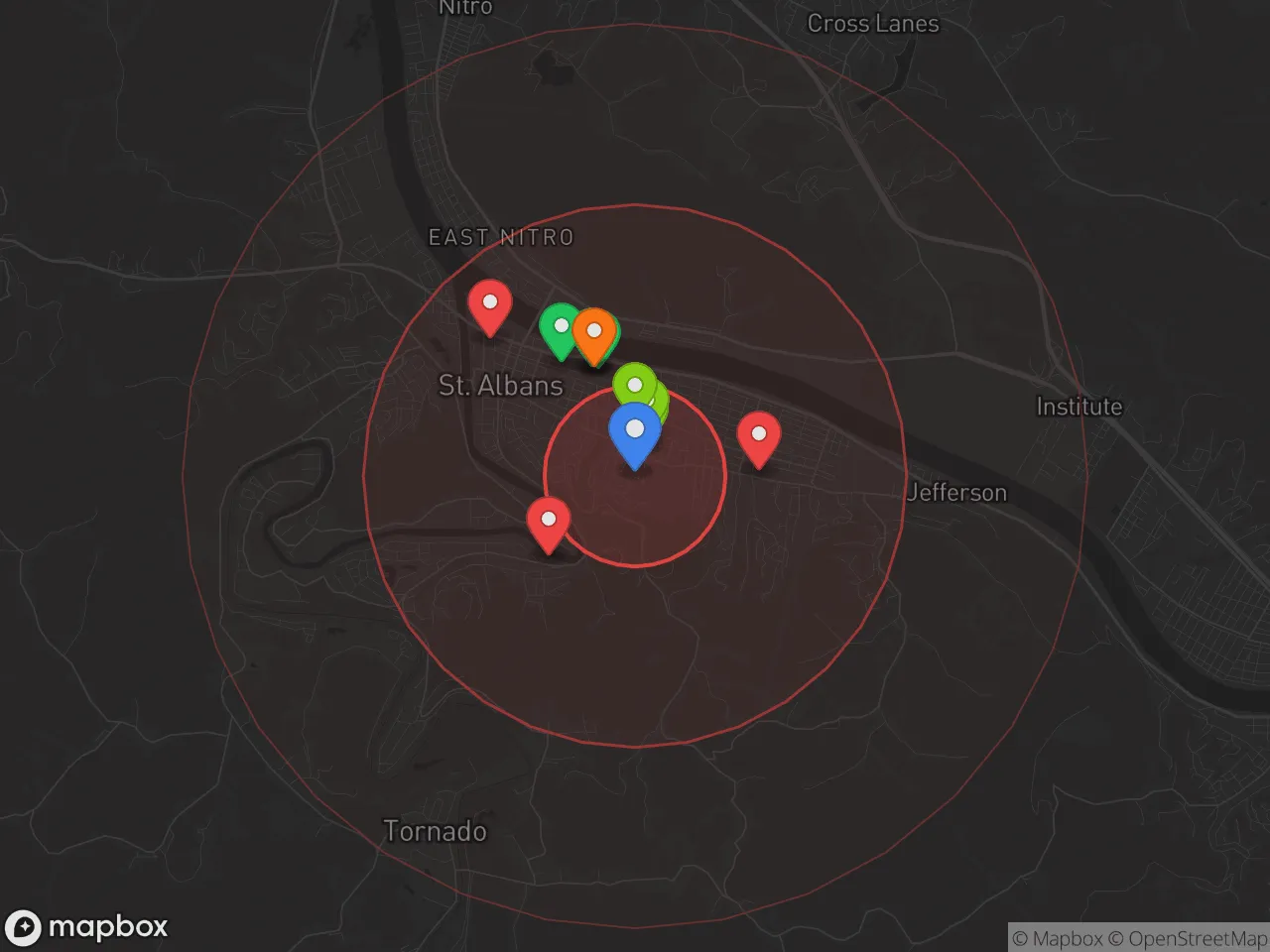
Hobbies
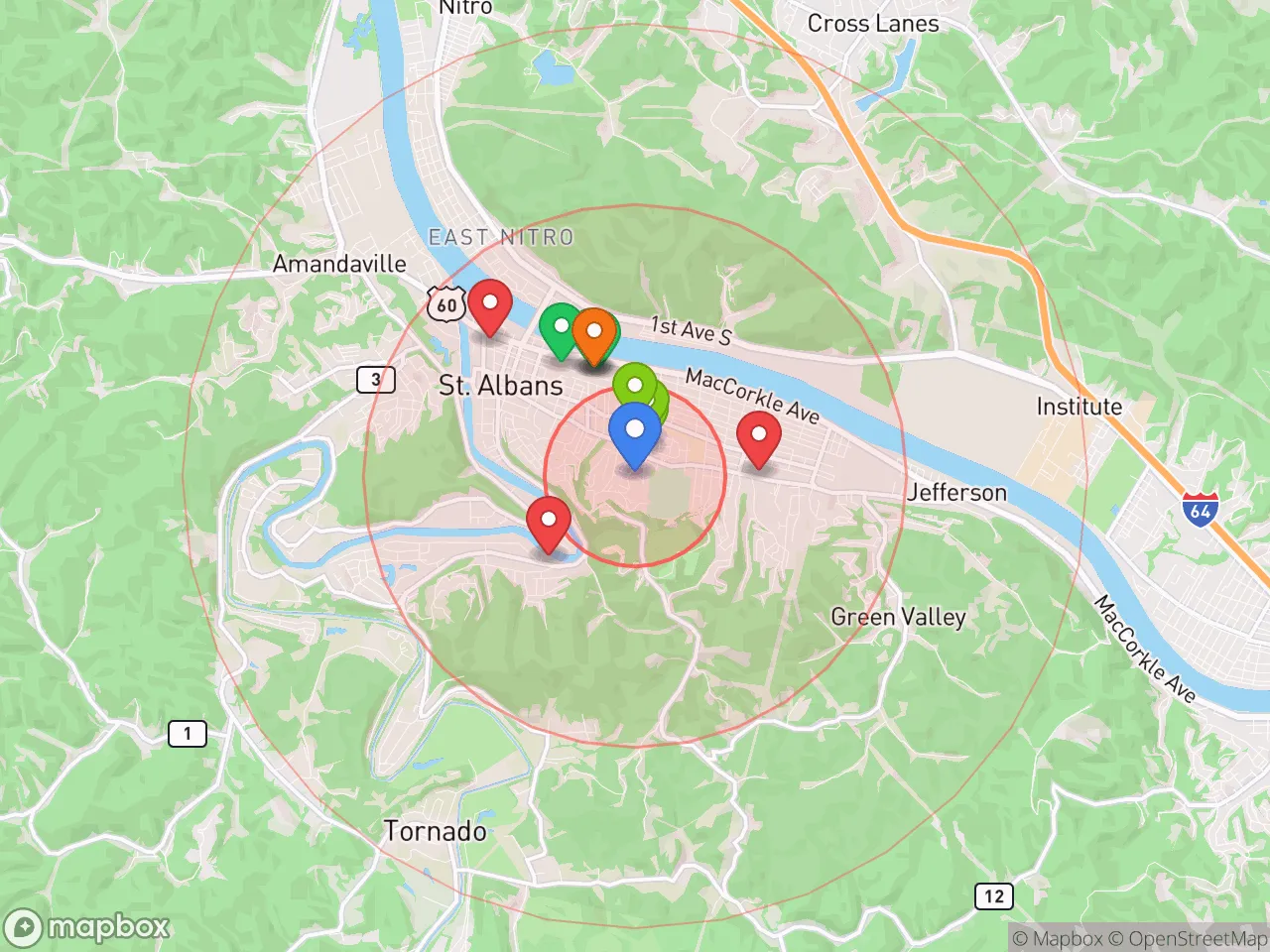
Explore the areaGroceries
5 within 10 miles
Gas
20 within 10 miles
Hospital
9 within 20 miles
Airport
John Glenn Columbus International Airport
Post Office
USPS — St. Albans, WV
Critical Amenities
Quality-of-Life Analysis
St Albans, West Virginia, presents a notably affordable quality of life that attracts a mix of long-standing Appalachian families, young professionals commuting to Charleston, and retirees seeking a lower cost of living. With a cost of living index of 65—well below the US average of 100—the city offers a financial ease that is increasingly rare in the broader region. The population skews toward middle-income households and blue-collar workers, with a growing number of remote workers drawn by the area's low housing costs and slower pace of life.
Cost of living and housing affordability compared to Charleston and Huntington
St Albans stands out for its exceptional housing affordability, even by West Virginia standards. The median home value sits at $131,800, which is roughly half the national median and significantly lower than nearby Charleston's median of around $165,000. Median rent is $888, making it a viable option for renters who cannot afford the $1,000+ averages seen in Kanawha County's more expensive suburbs. The average commute time of 22.2 minutes is shorter than the national average of 26 minutes, and most residents drive to jobs in Charleston (about 12 miles north) or to industrial employers along the I-64 corridor. While property taxes remain low—West Virginia's effective rate is about 0.55%—buyers should note that home insurance and utility costs can be slightly higher than the national average due to the region's weather risks and older housing stock. Overall, a household earning $45,000 can comfortably afford a median-priced home here, a threshold that is impossible in most US metro areas.
Schools, amenities, and the daily rhythm of life in St Albans
Daily life in St Albans revolves around its walkable downtown, the nearby Kanawha River, and a strong sense of community. The city is served by Kanawha County Schools, with St Albans High School and Andrews Heights Elementary receiving above-average ratings for the state. For higher education, West Virginia State University in Institute is a 15-minute drive, and BridgeValley Community and Technical College offers vocational programs. Amenities include the St Albans City Park, which hosts a farmers market and summer concerts, and the St Albans Mall for retail. The city lacks a major hospital, but Thomas Memorial Hospital in South Charleston is 10 minutes away. Dining options are modest—local staples like Pies & Pints and Gino's Pizza dominate—while grocery access is solid with a Kroger and Walmart Supercenter. The daily rhythm is quiet: most residents finish work by 5 p.m., and evenings are spent at local sports fields, the YMCA, or along the riverfront walking trail. Crime rates are below the national average, with property crime roughly 30% lower than the US median, though residents note occasional petty theft in downtown areas.
St Albans is best suited for those who prioritize affordability and a slower, community-oriented lifestyle over urban excitement. Families with school-age children, remote workers, and retirees on fixed incomes will find the low housing costs and short commutes particularly appealing. However, professionals seeking high-end dining, nightlife, or rapid career growth in specialized fields may find the options limited. For anyone willing to trade metropolitan energy for financial breathing room and a friendly, small-town atmosphere, St Albans delivers a stable and practical quality of life.

Crime in St Albans, WV
Generally safer than 69% of comparable U.S. locations.
Violent CrimeViolent Crime Analysis
Property CrimeProperty Crime Analysis
Crime Analysis
St Albans, West Virginia, presents a mixed safety profile for prospective residents. The city’s violent crime rate of 220 incidents per 100,000 residents is notably lower than the national average, while its property crime rate of 923 per 100,000 sits slightly above the national benchmark. However, as a small city within the Charleston metropolitan area, St Albans is subject to the broader criminal justice policies of Kanawha County, which can influence overall public safety outcomes.
Crime in context
When compared to state and national figures, St Albans’ violent crime rate is approximately 37% lower than the U.S. average of 350 per 100,000, placing it in a safer tier for personal security. The property crime rate, however, is about 8% higher than the national average of 850 per 100,000, meaning residents face a slightly elevated risk of theft, burglary, and vehicle-related crime. These numbers position St Albans as a relatively safe community for violent offenses but one where property crime warrants attention. The city’s proximity to Charleston means it shares some regional crime patterns, though it does not experience the same density of incidents as the urban core.
What residents experience
Daily life in St Albans involves a tangible awareness of property crime, with theft from vehicles and residential burglaries being the most common complaints. Violent incidents like assault and robbery are less frequent but do occur, often concentrated in specific areas. A key concern for residents is the influence of Kanawha County’s judicial philosophy. Progressive policies, including lenient sentencing and diversion programs championed by some local judges and district attorneys, have been criticized for prioritizing offender rehabilitation over public protection. This approach can result in repeat offenders cycling back into the community more quickly, undermining the deterrent effect of prosecution. For victims, this often means a sense that justice is incomplete, as property crimes may result in minimal consequences for perpetrators.
Neighborhood-level variation
Safety in St Albans is not uniform. The historic downtown and areas along the Kanawha River tend to see higher foot traffic and more police presence, which can deter opportunistic crime. In contrast, outlying residential subdivisions and streets near the I-64 corridor experience more property crime, likely due to easier access for transient offenders. Neighborhoods west of Route 35, particularly around the St Albans Mall and the Walmart shopping center, report the highest concentration of theft and vehicle break-ins. Prospective renters and buyers should consult local crime mapping tools and consider visiting at different times of day to gauge real-world conditions. Overall, while St Albans offers a lower violent crime rate than many peers, the combination of elevated property crime and a progressive justice system means residents must remain vigilant and proactive about security.
* Values derived from national, state, county, city and local statistics and may differ in a specific area. Last updated: 2026-05-01T13:39:36.000Z
Narrative content on this page is AI-generated and may contain mistakes. Verify any details that matter before acting on them.
ReloMaps may earn a commission from affiliate links at no extra cost to you.

