Political ClimatePolitical Climate in St Albans, WV
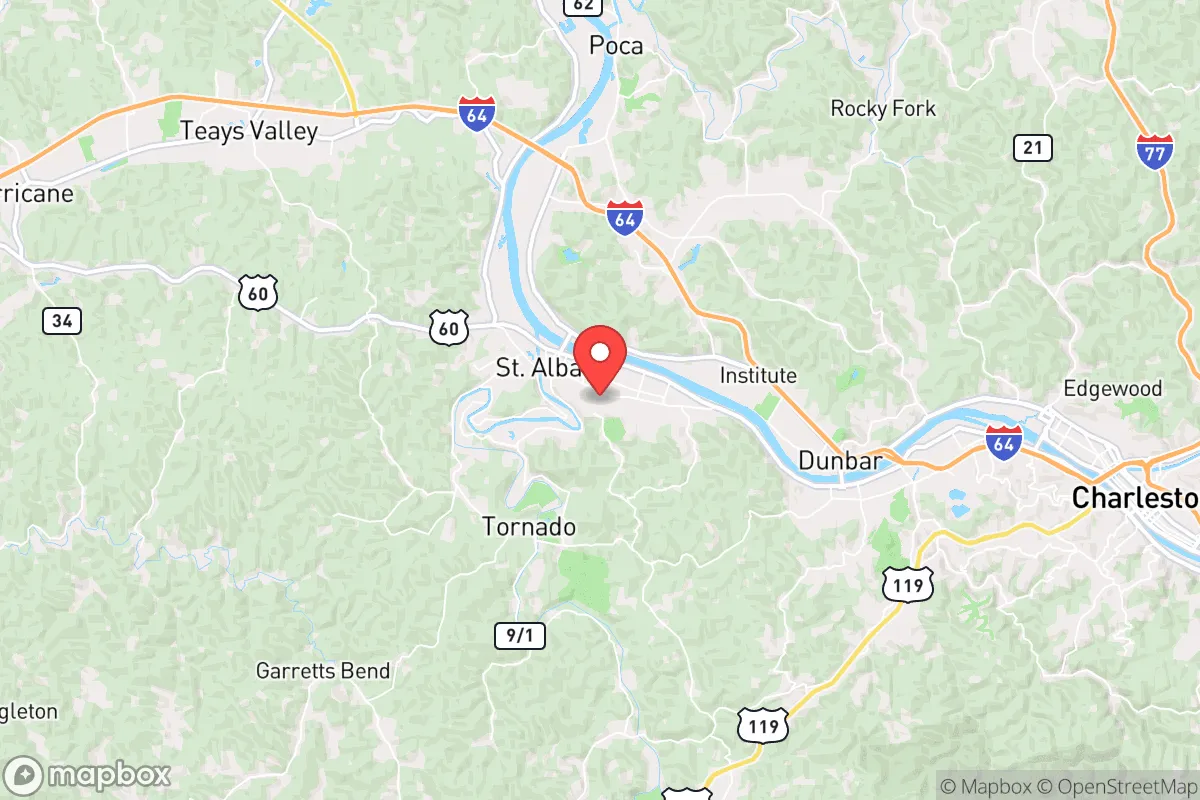
District shown is the primary district for this city’s centroid. Cities may span multiple districts.
Local Political AnalysisPolitical Analysis of St Albans, WV
St Albans, West Virginia, has long been a solidly conservative community, and the numbers back that up with a Cook PVI of R+22. That means the area votes about 22 points more Republican than the national average, and honestly, that feels about right if you've spent any time here. The political lean is deeply rooted in traditional values, a strong sense of personal responsibility, and a healthy skepticism of government overreach—especially when it comes to telling folks how to live their lives or run their small businesses. Lately, though, you can feel the winds shifting a bit, with some younger families moving in from places like Charleston or even out-of-state, bringing more progressive ideas that clash with the old guard. It's not a revolution, but it's a slow creep that has a lot of long-time residents watching closely.
How it compares
Compared to the immediate region, St Albans is a bit of a conservative anchor. Drive 15 minutes north into Charleston, and you'll hit a much more mixed political scene—the state capital has a stronger Democratic presence, especially in city government, and you'll see more progressive activism around issues like environmental regulations and social policies. Head south or west into the smaller towns like Nitro or Dunbar, and you'll find similar conservative values, but St Albans feels more settled in its identity. The contrast is sharpest when you look at the county level: Kanawha County as a whole leans red, but St Albans consistently votes more Republican than the county average. That's because folks here tend to prioritize local control and individual freedoms over top-down mandates, whether it's about school curriculum, property rights, or public health decisions. The surrounding rural areas, like Putnam County to the west, are even more conservative, but St Albans holds its own as a reliable conservative stronghold.
What this means for residents
For residents, the political climate translates into a daily life that largely avoids the heavy hand of government interference. You won't see the kind of aggressive zoning or business regulations that choke small towns in more liberal states. Property taxes stay reasonable, and there's a general expectation that the government's job is to keep the roads paved and the lights on, not to micromanage personal choices. That said, the recent push for more progressive policies—like diversity initiatives in schools or stricter environmental rules on local businesses—has created some tension. Long-time residents worry that these shifts could lead to higher costs, less freedom, and a loss of the community's character. The local school board and city council meetings have become more heated, with debates over library books and public health mandates drawing bigger crowds. It's a sign that the conservative base here is still active and vocal, but they're having to work harder to hold the line.
Culturally, St Albans still feels like a place where neighbors look out for each other and the Fourth of July parade is a bigger deal than any political rally. But there's a growing unease about where things are headed. The push for "equity" programs in local government and the slow adoption of more progressive language in official communications rubs many the wrong way—it feels like an erosion of the merit-based, individual-focused values that built this town. The real test will come in the next few election cycles, as more newcomers settle in and the old-timers age out. For now, St Albans remains a place where you can still have a frank conversation about politics without fear of being canceled, but the ground is shifting, and it's worth keeping an eye on.

State Political ClimatePolitical Climate in West Virginia
State Political AnalysisPolitical Environment in the State
West Virginia has been a reliably red state for the past two decades, but it wasn’t always that way. As recently as the 1990s, the Mountain State was a Democratic stronghold at the state and local level, with a strong union and coal-mining tradition. The shift began in earnest around 2000, when George W. Bush carried the state, and accelerated after 2012, when the state’s Democratic Party collapsed under the weight of national progressive policies on energy and gun control. Today, West Virginia is one of the most Republican states in the nation: Donald Trump won it by 39 points in 2020, and the GOP holds every statewide office, a supermajority in the legislature, and all three congressional seats. The dominant coalition is a mix of rural conservatives, former union Democrats who feel abandoned by the national party, and a growing number of out-of-state transplants seeking lower taxes and fewer restrictions.
Urban vs. rural divide
The political map of West Virginia is starkly divided between its small urban centers and its vast rural expanse. The state’s only real metro area, Charleston (Kanawha County), is a blue island in a red sea: Kanawha County voted for Joe Biden in 2020 by about 3 points, driven by state government workers, healthcare employees, and the remnants of organized labor. Morgantown (Monongalia County), home to West Virginia University, is another Democratic-leaning pocket, with a younger, more educated population that voted for Biden by about 8 points. Huntington (Cabell County) is more competitive but still leans slightly red, reflecting its working-class roots. Everywhere else—the coal fields of southern West Virginia, the Ohio River towns, the Potomac Highlands, and the Eastern Panhandle—is deeply Republican. Mingo County and Logan County in the south gave Trump over 80% of the vote. The Eastern Panhandle (Berkeley, Jefferson, Morgan counties) is a fast-growing region that has become a Republican stronghold, driven by retirees and commuters from the D.C. metro area who want lower taxes and more freedom. The urban-rural split is not just about population density; it’s about economic dependence on government versus private industry, and cultural attachment to traditional values versus progressive social norms.
Policy environment
West Virginia’s policy environment is aggressively conservative, with a focus on reducing taxes, limiting regulation, and expanding personal freedom. The state has no personal income tax on Social Security benefits, and in 2023, the legislature passed a bill to phase out the state’s personal income tax entirely over several years, pending revenue triggers. The corporate net income tax is a flat 6.5%, and the state has a right-to-work law, meaning no one can be forced to join a union as a condition of employment. On education, West Virginia has one of the strongest school choice programs in the nation: the Hope Scholarship, enacted in 2021, allows parents to use state education funding for private school tuition, homeschooling, or other educational expenses. The state also has a constitutional carry law (permitless carry of firearms) passed in 2016, and it is a “Second Amendment Sanctuary” state, meaning local governments are prohibited from enforcing federal gun laws they deem unconstitutional. On healthcare, West Virginia expanded Medicaid under the Affordable Care Act in 2014, but the state has resisted further federal encroachment, and there are no state-level mandates for paid family leave or vaccine requirements. Election laws are among the most secure in the nation: voter ID is required, same-day registration is not allowed, and absentee voting requires an excuse. The state also has a strong “parental bill of rights” law, passed in 2022, which requires schools to notify parents of any changes in a child’s emotional or physical health and prohibits instruction on sexual orientation or gender identity in grades K-3.
Trajectory & freedom
West Virginia is becoming more free, not less, and the trend is accelerating. The 2023 legislative session was a landmark for personal liberty: the state passed the “Medical Freedom Act,” which prohibits employers and government entities from requiring COVID-19 vaccines or masks, and it expanded the Hope Scholarship to cover more families. In 2024, the legislature passed a bill to ban the use of “digital currency” (central bank digital currency) as legal tender, a move aimed at protecting financial privacy. On gun rights, the state has consistently expanded access: in 2023, it passed a law allowing firearms in churches and other places of worship, and it eliminated the requirement for a permit to carry a concealed weapon. Property rights have also been strengthened: the state passed a “takings” law in 2022 that requires the government to compensate landowners for any loss of property value due to regulation. The only area where freedom has contracted is on abortion: West Virginia passed a near-total ban in 2022, with exceptions only for rape, incest, and medical emergencies. For conservatives, this is a net positive. For those who value medical autonomy, it’s a concern. Overall, the trajectory is toward less government interference in daily life, lower taxes, and more parental control over education.
Civil unrest & political movements
West Virginia has a history of labor unrest, but in recent years, political activism has shifted to cultural and constitutional issues. The 2018 teachers’ strike was the most visible protest in recent memory, shutting down schools across the state for nine days and leading to a 5% pay raise. That strike was organized by the West Virginia Education Association, a union that has since lost influence as the state has moved right. On the right, the “Second Amendment Sanctuary” movement began in West Virginia in 2019, with over 40 counties passing resolutions declaring they would not enforce federal gun laws. The “Constitutional Sheriffs” movement is also strong, with many county sheriffs publicly stating they will not enforce any law they believe violates the Second Amendment. Immigration politics are less visible here than in border states, but there is strong support for border security: the state legislature passed a resolution in 2023 calling on Congress to impeach Homeland Security Secretary Alejandro Mayorkas. There is no sanctuary city policy anywhere in West Virginia; in fact, the state passed a law in 2020 requiring all law enforcement to cooperate with federal immigration authorities. Election integrity is a major concern for many residents: the state’s voter ID law is popular, and there have been no major controversies, but the legislature has continued to tighten rules, including a 2024 law that requires all absentee ballots to be notarized. A new resident would notice that political signs are everywhere, especially in rural areas, and that people are not shy about discussing politics. The culture is one of self-reliance and distrust of distant authority, whether in Washington or Charleston.
Projection
Over the next 5-10 years, West Virginia will likely become even more conservative and more free. The state’s population is aging and shrinking, but the people who are moving in—mostly from the Northeast and California—are coming specifically for the low taxes, gun rights, and cultural values. The Eastern Panhandle, in particular, is growing fast, and those new residents tend to be even more conservative than the native population. The income tax phase-out, if it continues, will make the state even more attractive to remote workers and retirees. The biggest risk is economic: the state is still heavily dependent on coal and natural gas, and a national shift away from fossil fuels could devastate the southern coalfields. But the state is diversifying, with growth in tourism (New River Gorge National Park), manufacturing (a new Nucor steel plant in Mason County), and remote work. Politically, the Democratic Party is essentially extinct at the state level, and there is no sign of a comeback. The only potential flashpoint is the abortion ban, which could become a liability if national sentiment shifts, but for now, the state’s conservative majority is solid. A new resident moving in now should expect to find a state that values personal freedom, low taxes, and traditional values, and that is actively working to reduce the size and scope of government.
For someone choosing West Virginia as a relocation destination, the bottom line is this: you will find a state that respects your right to live as you see fit, as long as you don’t expect the government to solve your problems. The taxes are low, the gun laws are among the most permissive in the nation, and your children’s education is in your hands, not the state’s. The trade-offs are real: the economy is not booming, the infrastructure is aging, and the healthcare system is stretched thin, especially in rural areas. But if you value freedom over convenience, West Virginia is one of the best places in America to call home. Just be prepared for a lot of political signs in your neighbors’ yards, and a lot of conversations about why Washington doesn’t understand the Mountain State.
* Values derived from national, state, county, city and local statistics and may differ in a specific area. Last updated: 2026-05-01T13:39:36.000Z
Narrative content on this page is AI-generated and may contain mistakes. Verify any details that matter before acting on them.
ReloMaps may earn a commission from affiliate links at no extra cost to you.

