
Photo by Intricate Explorer on Unsplash
Political ClimatePolitical Climate in St Matthews, KY
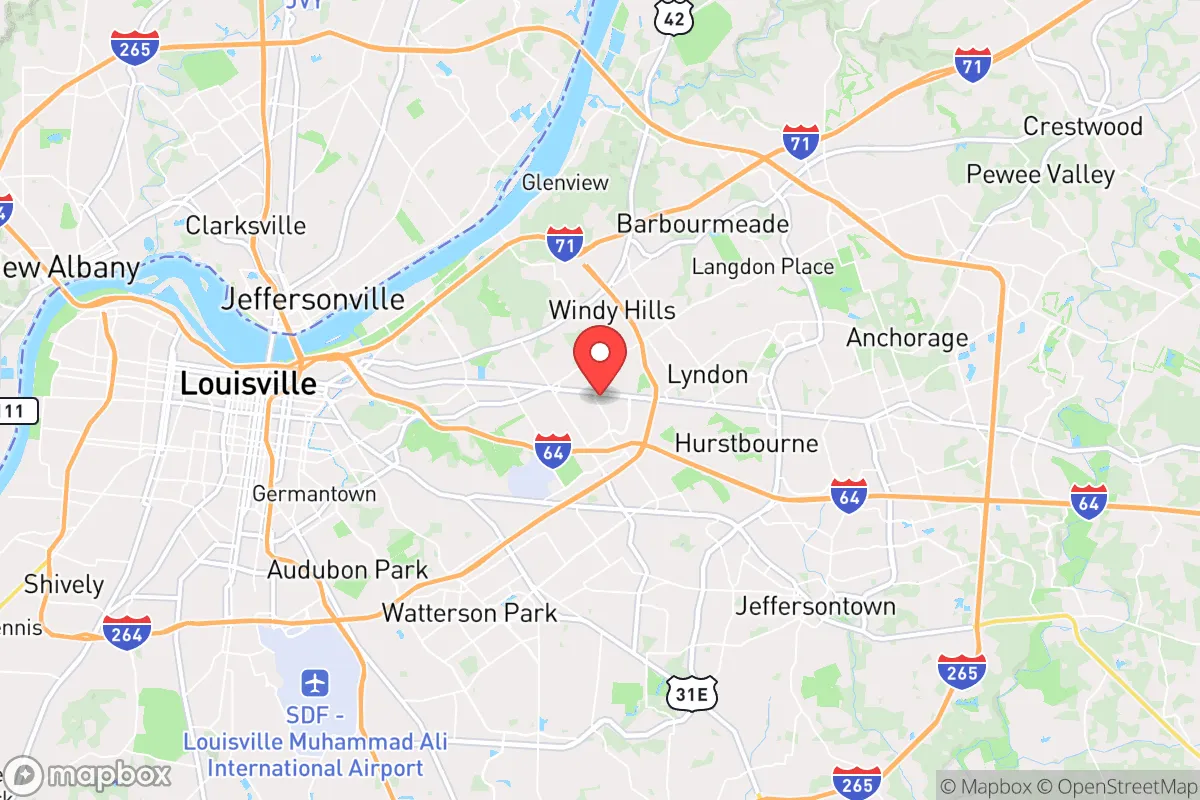
District shown is the primary district for this city’s centroid. Cities may span multiple districts.
Local Political AnalysisPolitical Analysis of St Matthews, KY
St Matthews, Kentucky, leans heavily Democratic with a Cook PVI of D+10, and honestly, that shift has been accelerating over the past decade. It wasn’t always this way—this used to be a pretty balanced, middle-of-the-road suburb where folks just wanted good schools and safe streets. But as Louisville’s progressive machine has pushed further east, St Matthews has absorbed a lot of that energy, and the local politics now reflect a place that’s increasingly comfortable with bigger government, higher taxes, and a more active hand in your personal life. If you’re looking for a place where the county commission still believes in limited government and individual responsibility, this isn’t it anymore.
How it compares
Drive ten minutes west into the Highlands or Old Louisville, and you’ll find the same D+10 vibe—maybe even more intense. But head east to Middletown or south to Jeffersontown, and the political landscape flips. Those areas still lean conservative, with more Republicans on city councils and a general skepticism of the tax-and-regulate approach that’s taken hold here. Even within St Matthews itself, you’ll notice the contrast: the older neighborhoods near Brownsboro Road still have a few independent-minded voters, but the newer apartment complexes and mixed-use developments are filled with transplants who brought their coastal voting habits with them. The surrounding Jefferson County suburbs are a patchwork, but St Matthews is now the epicenter of the county’s progressive tilt.
What this means for residents
For someone who values personal freedom, the trend is concerning. The city council has been quick to adopt Louisville Metro’s zoning overlays, which means more density and less say for homeowners about what gets built next door. Business regulations have crept up too—permits take longer, fees are higher, and there’s a growing appetite for “livability” ordinances that tell you what you can do with your own property. The school board, which is heavily influenced by the same political wave, has pushed curriculum changes that prioritize social agendas over academic rigor. If you’re a small-business owner or a parent who wants to raise your kids without government interference, you’ll feel the squeeze. The long-term trajectory points to more of the same: higher property taxes to fund programs you didn’t ask for, and a local government that sees itself as a manager of your life rather than a protector of your rights.
One cultural distinction worth noting: St Matthews still has a strong sense of community in its older neighborhoods, where block parties and church picnics are common. But the political leadership is increasingly out of step with that traditional, hands-off Kentucky spirit. The city’s embrace of “equity” initiatives and climate action plans feels imported from places like Portland or Austin, not rooted in local values. If you’re considering a move here, keep an eye on the next few election cycles—if the council flips further left, you can expect even more overreach into everything from housing to how you run your business. For now, it’s a comfortable place to live if you keep your head down, but the political winds are blowing in a direction that should give any freedom-minded person pause.

State Political ClimatePolitical Climate in Kentucky
State Political AnalysisPolitical Environment in the State
Kentucky has long been a reliably red state in federal elections, voting for the Republican presidential candidate in every election since 2000, with margins widening from a 15-point win in 2016 to a 26-point win in 2024. However, the state’s political climate is more nuanced than a simple red-blue map suggests, driven by a deep urban-rural divide, a strong cultural conservatism, and a recent shift toward more assertive conservative governance. Over the past 20 years, the state has moved from a competitive, often Democratic-leaning state at the local level to a solidly Republican stronghold, with the GOP now holding supermajorities in both chambers of the General Assembly and all but one statewide office.
Urban vs. rural divide
The political map of Kentucky is a textbook example of the urban-rural split. The state’s two major population centers—Louisville (Jefferson County) and Lexington (Fayette County)—are the only reliably Democratic strongholds, consistently voting blue in presidential and statewide races. In 2024, Jefferson County went for Kamala Harris by about 15 points, while Fayette County went for her by about 12 points. These two counties alone account for roughly 20% of the state’s population, but they are islands of blue in a sea of red. The rest of the state, from the Appalachian counties in the east to the western Purchase region, votes overwhelmingly Republican. The Northern Kentucky suburbs of Cincinnati—places like Boone, Kenton, and Campbell counties—have shifted from swing areas to reliably red, with Boone County voting +30 for Trump in 2024. Meanwhile, the Bowling Green area (Warren County) has become a conservative anchor in the south-central region, driven by a growing manufacturing base and a strong military presence at Fort Knox. The rural counties of Pikeville and Hazard in the east are among the most Republican in the nation, often delivering 80%+ margins for GOP candidates. This divide means that while the state’s overall lean is solidly red, the political conversation is dominated by rural and suburban values, with urban areas increasingly isolated in their progressive leanings.
Policy environment
Kentucky’s policy environment has shifted sharply rightward over the past decade. The state has a flat income tax that is being phased down from 5% to 4% by 2026, with a goal of eventual elimination—a move that aligns with conservative priorities of reducing the tax burden. Property taxes remain low, and there is no state-level estate or inheritance tax. The regulatory posture is business-friendly, with right-to-work legislation passed in 2017 and a tort reform package in 2018 that capped non-economic damages in medical malpractice cases. On education, the state has embraced school choice through the 2021 passage of a charter school law and the 2022 creation of education savings accounts (ESAs) for students in low-performing districts, though implementation has been slow. Healthcare policy is a mixed bag: the state expanded Medicaid under the Affordable Care Act in 2014, but the current administration has imposed work requirements and premiums for able-bodied adults. Election laws have been tightened, with a 2021 law requiring photo ID to vote and limiting absentee ballot drop boxes. The state also passed a constitutional carry law in 2019, allowing permitless carry of concealed firearms, and has a strong preemption law that prevents local governments from enacting stricter gun ordinances than the state.
Trajectory & freedom
Kentucky is clearly trending toward more personal freedom in the conservative sense, particularly on gun rights, parental rights, and economic liberty. The 2019 constitutional carry law was a landmark, removing the government’s role in granting permission to carry a firearm. In 2023, the legislature passed the “Parents’ Bill of Rights” (SB 150), which requires schools to notify parents of any changes to a student’s health or well-being, prohibits instruction on sexual orientation or gender identity in elementary school, and bans transgender girls from participating in girls’ sports. This law was a direct response to perceived government overreach in education and has been a flashpoint for both supporters and opponents. On medical autonomy, the state passed a law in 2022 banning nearly all abortions, with exceptions only for life of the mother or in cases of rape or incest (with reporting requirements). This aligns with the state’s strong pro-life stance. However, there are areas where freedom is constrained: the state’s occupational licensing requirements remain burdensome for many professions, and the alcohol control system is still heavily regulated, with state-run liquor stores in some counties. The overall trajectory, though, is toward less government interference in personal and economic life, with the legislature consistently passing bills that expand individual rights as defined by conservative values.
Civil unrest & political movements
Kentucky has seen its share of political flashpoints, most notably the Breonna Taylor protests in Louisville in 2020, which drew national attention and resulted in significant property damage, multiple injuries, and one death. The protests were largely confined to Louisville and were met with a heavy police response, including the use of tear gas and curfews. This event galvanized both progressive activists and conservative backlash, with the latter leading to a push for law-and-order policies in the 2021 legislative session, including increased penalties for rioting and blocking highways. On the right, the “Patriot” movement is active in rural areas, with groups like the Kentucky State Militia and various Second Amendment sanctuaries gaining traction after the 2020 protests. Immigration politics are less of a flashpoint here than in border states, but there is a strong undercurrent of concern about illegal immigration, with the state passing a law in 2023 requiring all businesses to use E-Verify. Election integrity remains a hot topic, with the 2020 election leading to widespread skepticism in rural counties, though no major fraud was found. The state’s sanctuary city debate is minimal, as no Kentucky city has declared itself a sanctuary for undocumented immigrants, and the legislature has passed laws to preempt any such moves. The most visible political movements are the pro-life and parental rights organizations, which hold regular rallies at the state capitol in Frankfort and have significant influence over legislation.
Projection
Over the next 5-10 years, Kentucky is likely to become more conservative, not less. The primary driver is demographic: the state is seeing net in-migration from more liberal states like California and Illinois, but these newcomers are largely moving to suburban and exurban areas like Richmond (Madison County) and Elizabethtown (Hardin County), where they tend to adopt the local political culture rather than change it. The urban cores of Louisville and Lexington are growing slowly, while rural areas are stable or declining, meaning the political weight of the countryside will remain dominant. The state’s Republican supermajority is unlikely to be challenged, as the Democratic Party has become almost entirely concentrated in the two major cities and has little presence elsewhere. Expect further tax cuts, continued expansion of school choice, and more laws aimed at protecting parental rights and gun rights. The only wild card is the potential for a federal shift in marijuana policy—Kentucky legalized medical marijuana in 2023, but full recreational legalization is unlikely in the near term due to conservative opposition. For a new resident, the state will feel increasingly like a haven for conservative values, with a government that is responsive to those priorities.
For a new resident, the bottom line is that Kentucky offers a political environment that is stable, predictable, and aligned with conservative principles. You won’t find the policy whiplash of swing states or the progressive overreach of blue states. The state government respects gun rights, parental authority, and economic freedom, and it is actively working to reduce taxes and regulation. The trade-off is that you’ll be living in a state where the urban areas are politically isolated and where the cultural conservatism of the countryside sets the tone. If you value personal liberty as defined by traditional American values—low taxes, strong Second Amendment protections, and minimal government interference in family life—Kentucky is a solid choice. Just be aware that the political conversation is dominated by rural and suburban voices, and that the state’s trajectory is firmly in the direction of more, not less, conservative governance.
* Values derived from national, state, county, city and local statistics and may differ in a specific area. Last updated: 2026-05-01T05:25:07.000Z
Narrative content on this page is AI-generated and may contain mistakes. Verify any details that matter before acting on them.
ReloMaps may earn a commission from affiliate links at no extra cost to you.

